
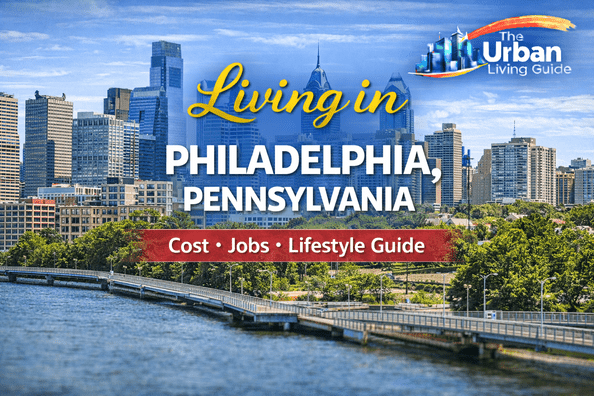
Living in Philadelphia, Pennsylvania – Introduction
Philadelphia is one of the most historic and influential cities in the United States. Located in southeastern Pennsylvania along the Delaware River, the city played a central role in the founding of the nation. Many people researching living in Philadelphia, Pennsylvania are attracted by its historic landmarks, strong job market, and vibrant cultural scene.
Philadelphia has a population of around 1.6 million residents, making it the largest city in Pennsylvania and one of the largest metropolitan areas on the East Coast. The city is widely known for its role in American history, including the signing of the Declaration of Independence and the U.S. Constitution.
👉 If you’re not familiar with the area, take a look at the map below to understand where the city is located.
Philadelphia is often called the “City of Brotherly Love.” Today it is recognized for its universities, healthcare institutions, financial sector, and growing technology industry.
People consider living in Philadelphia, Pennsylvania because the city offers big-city amenities with relatively affordable housing compared to cities like New York or Washington, D.C.
Watch a recent video by a popular vlogger to understand daily life and vibes in Philadelphia.
Information in this guide is compiled from publicly available data, official city resources, economic reports, and local housing databases to ensure accuracy and reliability.
What Makes Philadelphia So Popular
Philadelphia is known for its deep historical significance and strong cultural identity.
Several factors contribute to the city’s popularity:
• Rich American history and landmarks
• Strong healthcare and education sectors
• Major universities and research institutions
• Diverse neighborhoods and cultural districts
• Vibrant food and arts scene
Philadelphia is also famous for its culinary culture, especially the iconic Philly Cheesesteak, which has become a global food symbol.
Because of these advantages, living in Philadelphia, Pennsylvania attracts students, professionals, and families alike.
Famous Personalities, Sports & Major Brands from Philadelphia
Philadelphia has produced many famous personalities in sports, entertainment, and politics.
• Kevin Hart – Comedian and actor
• Will Smith – Actor and musician
• Kobe Bryant – NBA legend (raised in the region)
Philadelphia also has a passionate sports culture.
• Philadelphia Eagles – NFL
• Philadelphia Phillies – MLB
• Philadelphia 76ers – NBA
• Philadelphia Flyers – NHL
Major companies and institutions in Philadelphia include:
• Comcast Corporation
• Aramark
• Urban Outfitters
• Vanguard (regional presence)
Best Neighborhoods in Philadelphia
Philadelphia offers many neighborhoods with unique character and lifestyle options.
Center City
Center City is the downtown core with high-rise apartments, restaurants, and business offices.
Rittenhouse Square
This neighborhood is known for luxury housing, parks, and vibrant nightlife.
University City
University City is home to major universities and research institutions.
Fishtown
Fishtown is one of Philadelphia’s trendiest neighborhoods, known for art galleries and nightlife.
Chestnut Hill
Chestnut Hill offers a quieter suburban atmosphere with historic homes and tree-lined streets.
Housing & Rent in Philadelphia
Housing costs are a major factor when considering living in Philadelphia, Pennsylvania. Compared to other major East Coast cities, Philadelphia offers relatively affordable housing.
Average monthly rental estimates:
• Studio apartment – $1,300 to $1,700
• 1 Bedroom apartment – $1,700 to $2,300
• 2 Bedroom apartment – $2,400 to $3,100
• Family home rental – $3,200 to $4,500
Rental figures are based on aggregated listing data and recent market trends.
Job Market & Business Opportunities
Philadelphia has a diverse economy supported by several major industries.
Major industries include:
• Healthcare and biotechnology
• Education and research
• Finance and banking
• Technology and startups
• Tourism and hospitality
Average salaries in Philadelphia typically range between $70,000 and $120,000 annually, depending on profession and experience.
Many professionals consider living in Philadelphia, Pennsylvania because of the city’s growing job market.
Major Companies & Headquarters in Philadelphia
Several large corporations operate in Philadelphia.
Major employers include:
• Comcast Corporation
• Aramark
• Independence Blue Cross
• Jefferson Health
These companies contribute significantly to the city’s economic growth.
What It’s Really Like Living in Philadelphia, Pennsylvania
Daily life while living in Philadelphia, Pennsylvania offers a mix of historic charm and modern urban living.
Residents often spend weekends exploring historic landmarks, museums, and parks throughout the city.
Popular activities include:
• Visiting Independence Hall
• Exploring museums and art galleries
• Dining in historic restaurants
• Attending sports events
Philadelphia’s walkable neighborhoods and strong public transportation system make it easy to explore the city.
Cost of Living in Philadelphia
Philadelphia offers a moderate cost of living compared to other major East Coast cities.
Typical monthly expenses include:
• Rent – $1,700 to $3,100
• Utilities – $150 to $250
• Groceries – $400 to $650
• Transportation – $100 to $220
• Healthcare – $200 to $400
Compared to New York City or Washington D.C., Philadelphia is generally more affordable.
Transportation & Commute
Philadelphia has a well-developed transportation network.
Transportation options include:
• SEPTA subway and regional rail
• Bus networks
• Amtrak rail connections
• Philadelphia International Airport
Average commute times typically range between 25 and 40 minutes.
Weather & Environment
Philadelphia experiences four seasons typical of the northeastern United States.
Weather patterns include:
• Warm summers around 80–90°F
• Cold winters with occasional snow
• Beautiful autumn foliage
• Pleasant spring seasons
Popular Hotels, Cafes & Restaurants
Philadelphia has a vibrant hospitality scene.
Popular hotels include:
• The Ritz-Carlton Philadelphia
• Loews Philadelphia Hotel
• Kimpton Hotel Monaco
The city also offers a diverse restaurant scene with global cuisine.
Sightseeing & Attractions
Philadelphia has many historic and cultural attractions.
Popular places include:
• Independence Hall
• Liberty Bell
• Philadelphia Museum of Art
• Reading Terminal Market
• Eastern State Penitentiary
Budget Stay / Hostels
Visitors can find affordable accommodation options across the city.
Examples include:
• Apple Hostels of Philadelphia
• Budget hotels near downtown
• Guesthouses in surrounding neighborhoods
Quick Snapshot of Living in Philadelphia, Pennsylvania
• Population – Approximately 1.6 million
• Average rent – $1,700 to $3,100
• Average salary – $70,000 to $120,000
• Average commute – 25 to 40 minutes
• Climate – Four seasons with cold winters
Education & Universities
Philadelphia is home to several major universities.
Major institutions include:
• University of Pennsylvania
• Drexel University
• Temple University
• Thomas Jefferson University
Pros and Cons of Living in Philadelphia, Pennsylvania
Pros
• Rich historical heritage
• Strong job market
• Vibrant food and arts culture
• Relatively affordable housing
• Excellent universities 🙂
Cons
• Traffic congestion
• Cold winters
• Some neighborhoods still developing
• Busy urban environment
• Parking challenges
Is Philadelphia a Good Place to Live?
For people seeking a major East Coast city with historic charm and strong economic opportunities, living in Philadelphia, Pennsylvania can be an excellent choice.
The city offers a powerful mix of history, culture, education, and career opportunities while maintaining a lower cost of living than many other large U.S. cities.
Overall, Philadelphia continues to be one of the most dynamic cities in the northeastern United States.
FAQs
Is Philadelphia expensive to live in?
Philadelphia is more affordable than many major East Coast cities.
What salary is needed to live comfortably in Philadelphia?
Many residents find that salaries between $80,000 and $120,000 provide a comfortable lifestyle.
Is Philadelphia safe to live in?
Safety varies by neighborhood, so researching specific areas is important.
Is Philadelphia family friendly?
Yes, many neighborhoods offer parks, schools, and family-friendly communities.
What are the best neighborhoods in Philadelphia?
Center City, Rittenhouse Square, Fishtown, University City, and Chestnut Hill.
Can you live in Philadelphia without a car?
Yes, many residents rely on public transportation and walking.
🔗 Explore More Cities in Pennsylvania
If you’re exploring more options beyond Philadelphia, The Urban Living Guide has covered several other popular cities in Pennsylvania. You can also check:
These guides give you a complete picture of what it’s like living across different cities, covering everything from cost of living, housing, and job opportunities to neighborhoods, commute, weather, education, popular places, and major employers.
The Urban Living Guide brings together these local insights in one place, helping you compare cities easily and make a confident, well-informed decision based on your lifestyle and goals.