
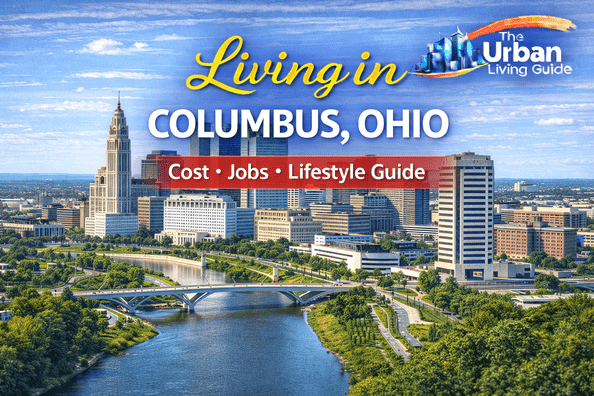
Living in Columbus, Ohio – Introduction
Columbus is the capital and largest city of Ohio and one of the fastest-growing metropolitan areas in the Midwestern United States. Located in the central part of the state, the city serves as a major hub for government, education, technology, and business. Many people researching living in Columbus, Ohio are attracted by its strong job market, vibrant downtown, and relatively affordable cost of living compared to other major U.S. cities.
Columbus has a population of nearly 920,000 residents, making it the largest city in Ohio and one of the largest cities in the Midwest. The metropolitan area is home to more than 2 million people and continues to grow rapidly as new businesses and startups move into the region.
The city is widely known for The Ohio State University, one of the largest universities in the United States and a major driver of innovation and economic development.
People consider living in Columbus, Ohio because the city offers a balanced lifestyle with strong career opportunities, growing neighborhoods, and a welcoming community atmosphere.
Watch a recent video by a popular vlogger to understand daily life and vibes in Columbus.
Information in this guide is compiled from publicly available data, official city resources, economic reports, and local housing databases to ensure accuracy and reliability.
What Makes Columbus So Popular
Columbus has become one of the most attractive cities in the Midwest for young professionals and families.
Several factors contribute to the city’s popularity:
• Rapid economic growth and job creation
• Large student population and university culture
• Affordable housing compared to coastal cities
• Growing technology and startup ecosystem
• Vibrant arts, sports, and entertainment scene
Columbus is often called a “Test Market City” because many companies launch new products here before expanding nationwide.
Because of these advantages, living in Columbus, Ohio appeals to students, entrepreneurs, and professionals relocating from larger cities.
👉 If you’re not familiar with this part of the state, the map below will help you understand the city’s exact location.
Famous Personalities, Sports & Major Brands from Columbus
Columbus has produced several well-known personalities in sports and entertainment.
• Simone Biles – Olympic gymnast (trained in Columbus region)
• R. L. Stine – Author of the Goosebumps series
The city also has strong sports culture.
• Columbus Blue Jackets – NHL
• Columbus Crew – Major League Soccer
Major companies headquartered in Columbus include:
• Nationwide Insurance
• L Brands (Victoria’s Secret)
• Cardinal Health
• Bath & Body Works
These companies make Columbus one of the most important business centers in Ohio.
Best Neighborhoods in Columbus
Columbus offers a variety of neighborhoods with different lifestyles and housing options.
Short North Arts District
Short North is one of the trendiest neighborhoods in Columbus, known for art galleries, restaurants, and nightlife.
German Village
German Village is a historic neighborhood with brick streets, charming homes, and local cafes.
Dublin
Dublin is a fast-growing suburb with excellent schools and family-friendly communities.
Clintonville
Clintonville offers a relaxed atmosphere with parks, local shops, and residential neighborhoods.
Downtown Columbus
Downtown features modern apartments, offices, and entertainment venues.
Housing & Rent in Columbus
Housing affordability is one of the biggest reasons people consider living in Columbus, Ohio.
Average monthly rental estimates:
• Studio apartment – $950 to $1,200
• 1 Bedroom apartment – $1,200 to $1,700
• 2 Bedroom apartment – $1,800 to $2,400
• Family home rental – $2,600 to $3,600
Rental figures are based on aggregated listing data and recent market trends.
Compared to cities like Chicago or New York, Columbus offers relatively affordable housing.
Job Market & Business Opportunities
Columbus has one of the strongest job markets in the Midwest.
Major industries include:
• Finance and insurance
• Healthcare and medical services
• Technology and startups
• Retail and logistics
• Education and research
Average salaries in Columbus typically range between $65,000 and $110,000 annually, depending on profession and experience.
Because of its growing economy, living in Columbus, Ohio has become increasingly popular for young professionals.
Major Companies & Headquarters in Columbus
Several major corporations are headquartered in Columbus.
Major employers include:
• Nationwide Insurance
• Cardinal Health
• OhioHealth
• JPMorgan Chase regional operations
These companies provide thousands of jobs across the metropolitan area.
What It’s Really Like Living in Columbus, Ohio
Daily life while living in Columbus, Ohio offers a vibrant mix of urban development and Midwestern hospitality.
Residents often enjoy parks, cultural events, and sports games throughout the city.
Popular weekend activities include:
• Visiting the Short North Arts District
• Exploring the Columbus Zoo and Aquarium
• Attending Ohio State football games
• Walking along the Scioto Mile riverfront
Columbus combines big-city energy with a friendly community atmosphere.
Cost of Living in Columbus
Columbus has a moderate cost of living compared to many major U.S. cities.
Typical monthly expenses include:
• Rent – $1,200 to $2,400
• Utilities – $140 to $220
• Groceries – $350 to $600
• Transportation – $90 to $170
• Healthcare – $180 to $350
Overall, Columbus offers a good balance between affordability and economic opportunity.
Transportation & Commute
Columbus has several transportation options.
• COTA public bus system
• Major interstate highways
• John Glenn Columbus International Airport
Average commute times typically range between 20 and 30 minutes.
Weather & Environment
Columbus experiences four seasons typical of the Midwest.
Weather patterns include:
• Warm summers around 80–90°F
• Cold winters with occasional snow
• Pleasant spring seasons
• Colorful autumn foliage
Popular Hotels, Cafes & Restaurants
Columbus has a rapidly growing hospitality and food scene.
Popular hotels include:
• Hilton Columbus Downtown
• Graduate Columbus
• Le Méridien Columbus
The city is also known for craft breweries and diverse restaurants.
Sightseeing & Attractions
Columbus offers several attractions and entertainment venues.
Popular places include:
• Columbus Zoo and Aquarium
• Franklin Park Conservatory
• Scioto Mile Riverfront
• Short North Arts District
Budget Stay / Hostels
Visitors can find affordable accommodation options across the city.
Examples include:
• Budget hotels near downtown
• Guesthouses near Ohio State University
• Motels near highways
Quick Snapshot of Living in Columbus, Ohio
• Population – Approximately 920,000
• Average rent – $1,200 to $2,400
• Average salary – $65,000 to $110,000
• Average commute – 20 to 30 minutes
• Climate – Four seasons with cold winters
Education & Universities
Columbus has several major universities and colleges.
Major institutions include:
• Ohio State University
• Columbus State Community College
• Franklin University
Pros and Cons of Living in Columbus, Ohio
Pros
• Strong job market
• Affordable housing compared to large cities
• Vibrant arts and food scene
• Excellent university presence
• Growing technology sector 🙂
Cons
• Cold winters
• Limited rail transit system
• Rapid population growth increasing housing demand
• Car dependency in suburbs
• Humid summers
Is Columbus a Good Place to Live?
For people looking for a growing city with strong economic opportunities and a relatively affordable cost of living, living in Columbus, Ohio can be an excellent choice. The city offers strong job prospects, a vibrant downtown, and diverse neighborhoods that appeal to both families and young professionals.
With continued population growth and expanding industries, Columbus is quickly becoming one of the most attractive relocation destinations in the Midwest.
FAQs
Is Columbus expensive to live in?
No, Columbus has a moderate cost of living compared to many major U.S. cities.
What salary is needed to live comfortably in Columbus?
Many residents find that salaries between $70,000 and $110,000 provide a comfortable lifestyle.
Is Columbus safe to live in?
Safety varies by neighborhood, but many areas are considered safe and family friendly.
Is Columbus family friendly?
Yes, the city offers parks, schools, and family-oriented neighborhoods.
What are the best neighborhoods in Columbus?
Short North, German Village, Dublin, Clintonville, and Downtown Columbus.
Can you live in Columbus without a car?
While possible in central neighborhoods, many residents prefer having a car.
🔗 Explore More Cities in Ohio
If you’re exploring more options beyond Columbus, The Urban Living Guide has covered several other popular cities in Ohio. You can also check:
These guides offer a comprehensive view of life in different cities, covering key aspects like cost of living, housing, job opportunities, neighborhoods, commute, weather, education, popular spots, and major employers.
The Urban Living Guide brings all these insights together in one place, making it easier to compare cities and choose the one that best fits your lifestyle, priorities, and long-term goals.