
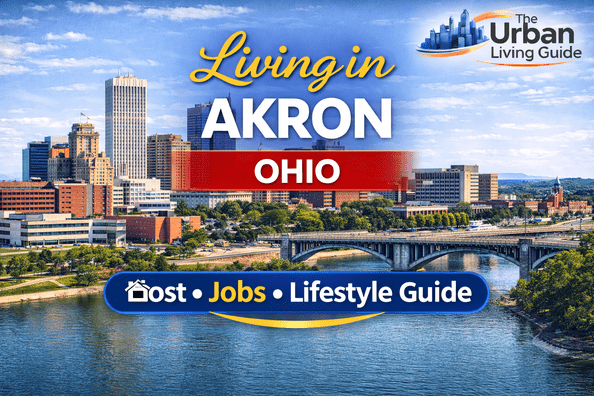
Living in Akron, Ohio – Introduction
Akron is a historic city located in northeastern Ohio, about 40 miles south of Cleveland. The city is widely known for its industrial history, particularly in the rubber and tire manufacturing industry. Many people researching living in Akron, Ohio are attracted by its affordable housing, growing healthcare sector, and family-friendly neighborhoods.
Akron has a population of around 190,000 residents and serves as an important economic center in Summit County. Historically, the city earned the nickname “The Rubber Capital of the World” because it was home to major tire manufacturers such as Goodyear, Firestone, and General Tire.
Today, Akron has transitioned into a diversified economy with strengths in healthcare, education, manufacturing, and polymer research. The city is also home to the University of Akron, which plays a major role in innovation and workforce development.
People consider living in Akron, Ohio because it offers a lower cost of living compared to many U.S. cities while still providing access to job opportunities and outdoor recreation.
Watch a recent video by a popular vlogger to understand daily life and vibes in Akron.
Information in this guide is compiled from publicly available data, official city resources, economic reports, and local housing databases to ensure accuracy and reliability.
What Makes Akron So Popular
Akron has become appealing for residents seeking affordable living and strong community connections.
Key reasons why people move to Akron include:
• Affordable housing compared to many American cities
• Strong healthcare and education sectors
• Beautiful parks and outdoor recreation areas
• Growing research and polymer industry
• Family-friendly neighborhoods
The city also benefits from its proximity to Cleveland, providing access to additional employment opportunities and entertainment.
Because of these advantages, living in Akron, Ohio appeals to families, professionals, and students.
👉 If you’re unfamiliar with the region, the map below helps you visualize the city’s location and surroundings.
Famous Personalities, Sports & Major Brands from Akron
Akron has produced several famous personalities.
• LeBron James – NBA basketball legend
• Chrissie Hynde – Lead singer of The Pretenders
Akron also has a strong sports presence.
• Akron RubberDucks – Minor League Baseball team
• University of Akron Zips – NCAA athletics
Major companies and organizations headquartered in Akron include:
• Goodyear Tire & Rubber Company
• FirstEnergy
• Summa Health
These institutions play a major role in the regional economy.
Best Neighborhoods in Akron
Akron offers several neighborhoods with different lifestyles and housing options.
Highland Square
A lively neighborhood known for restaurants, nightlife, and historic homes.
Fairlawn
A suburban area with shopping centers and residential communities.
Wallhaven
A quiet residential area with parks and family-friendly streets.
Downtown Akron
Offers modern apartments, offices, and entertainment venues.
North Hill
A culturally diverse neighborhood with a strong community atmosphere.
Housing & Rent in Akron
One of the biggest advantages of living in Akron, Ohio is the affordable housing market.
Average monthly rental estimates:
• Studio apartment – $700 to $900
• 1 Bedroom apartment – $900 to $1,200
• 2 Bedroom apartment – $1,200 to $1,600
• Family home rental – $1,700 to $2,500
Rental figures are based on aggregated listing data and recent market trends.
Compared to many American cities, Akron offers very affordable housing.
Job Market & Business Opportunities
Akron has a diversified economy supported by several industries.
Major industries include:
• Polymer and materials research
• Healthcare and medical services
• Manufacturing and engineering
• Education and research
Average salaries in Akron typically range between $55,000 and $90,000 annually depending on profession and experience.
Because of its affordability and employment opportunities, living in Akron, Ohio continues to attract new residents.
Major Companies & Headquarters in Akron
Several major companies operate in Akron.
Major employers include:
• Goodyear Tire & Rubber Company
• Summa Health
• FirstEnergy
• Akron Children’s Hospital
These companies support thousands of jobs across the region.
What It’s Really Like Living in Akron, Ohio
Daily life while living in Akron, Ohio offers a relaxed and community-oriented lifestyle.
Residents enjoy parks, local events, and outdoor recreation throughout the year.
Popular weekend activities include:
• Visiting Stan Hywet Hall & Gardens
• Exploring Cuyahoga Valley National Park nearby
• Walking through downtown Akron
• Attending Akron RubberDucks baseball games
The city offers a friendly environment with strong community culture.
Cost of Living in Akron
Akron has a very affordable cost of living compared to many U.S. cities.
Typical monthly expenses include:
• Rent – $900 to $1,600
• Utilities – $120 to $200
• Groceries – $320 to $520
• Transportation – $80 to $150
• Healthcare – $170 to $320
Overall, Akron offers a highly affordable lifestyle.
Transportation & Commute
Akron has a convenient transportation system.
Options include:
• METRO Regional Transit Authority buses
• Major interstate highways
• Akron–Canton Airport nearby
Average commute time is around 15–25 minutes.
Weather & Environment
Akron experiences four seasons typical of the Midwest.
• Warm summers around 75–85°F
• Cold winters with snowfall
• Mild spring seasons
• Colorful autumn foliage
Popular Hotels, Cafes & Restaurants
Popular hotels include:
• Courtyard by Marriott Akron Downtown
• Hilton Garden Inn Akron
• BLU-Tique Hotel Akron
The city also offers a growing local restaurant and cafe scene.
Sightseeing & Attractions
Major attractions include:
• Stan Hywet Hall & Gardens
• Akron Art Museum
• Akron Zoo
• Cuyahoga Valley National Park
Budget Stay / Hostels
Visitors can find affordable accommodation options throughout Akron.
• Budget hotels near downtown
• Motels near highways
• Guesthouses in residential areas
Quick Snapshot of Living in Akron, Ohio
• Population – Approximately 190,000
• Average rent – $900 to $1,600
• Average salary – $55,000 to $90,000
• Average commute – 15 to 25 minutes
• Climate – Four seasons with cold winters
Education & Universities
Major institutions include:
• University of Akron
• Stark State College
Pros and Cons of Living in Akron, Ohio
Pros
• Very affordable housing
• Strong healthcare sector
• Close to Cleveland metropolitan area
• Beautiful parks and nature
• Friendly community atmosphere 🙂
Cons
• Cold winters
• Smaller nightlife scene
• Limited public transportation
• Slower population growth
• Some aging infrastructure
Is Akron a Good Place to Live?
For people seeking affordability and a relaxed lifestyle, living in Akron, Ohio can be an excellent option. The city offers strong community connections, growing job opportunities, and easy access to nature.
With its low cost of living and proximity to Cleveland, Akron continues to attract residents looking for a balanced lifestyle in northeastern Ohio.
FAQs
Is Akron expensive to live in?
No, Akron is considered one of the more affordable cities in Ohio.
What salary is needed to live comfortably in Akron?
Many residents find that salaries between $60,000 and $90,000 provide a comfortable lifestyle.
Is Akron safe to live in?
Safety varies by neighborhood, but many areas are considered safe.
Is Akron family friendly?
Yes, the city offers parks, schools, and family-oriented communities.
What are the best neighborhoods in Akron?
Highland Square, Fairlawn, Wallhaven, Downtown Akron, and North Hill.
Can you live in Akron without a car?
While possible in some areas, many residents prefer having a car.
🔗 Explore More Cities in Ohio
If you’re exploring more options beyond Akron, The Urban Living Guide has covered several other popular cities in Ohio. You can also check:
These guides offer a comprehensive view of life in different cities, covering key aspects like cost of living, housing, job opportunities, neighborhoods, commute, weather, education, popular spots, and major employers.
The Urban Living Guide brings all these insights together in one place, making it easier to compare cities and choose the one that best fits your lifestyle, priorities, and long-term goals.