

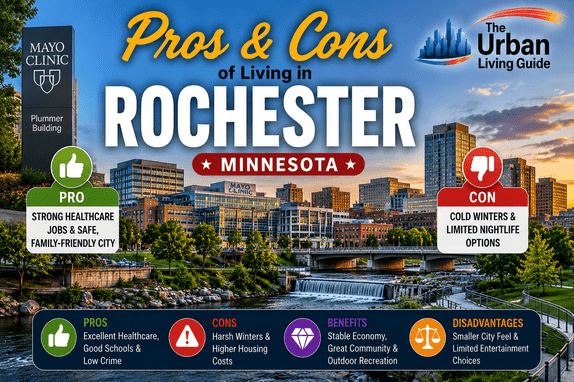
Pros and Cons of Living in Rochester in Minnesota’s Fast-Growing Medical City
If you’re planning a move to Minnesota, understanding the pros and cons of living in Rochester can help you decide whether this fast-growing healthcare-focused city fits your lifestyle and career goals.
Known worldwide as the home of the Mayo Clinic, Rochester is one of the most recognized medical cities in the United States. The city attracts healthcare professionals, students, families, and retirees looking for strong job opportunities, safe neighborhoods, and a high quality of life.
Compared to larger cities like Minneapolis or Saint Paul, Rochester offers a quieter atmosphere, less traffic, and a more suburban feel. However, residents may also find fewer entertainment options and colder winters challenging.
Watch local Rochester vlogs to get a closer look at the real pros and cons of living in Rochester before moving –
Whether you’re relocating for work, education, healthcare opportunities, or family living, this guide covers the real pros and cons of living in Rochester.
Pros of Living in Rochester
Strong Healthcare and Mayo Clinic Job Opportunities
One of the biggest advantages in the pros and cons of living in Rochester is the city’s healthcare-driven economy.
The globally recognized Mayo Clinic is the city’s largest employer and drives thousands of jobs across:
- Healthcare
- Research
- Technology
- Administration
- Education
Because of this, Rochester maintains a stable economy with strong professional opportunities, especially for healthcare workers and researchers.
The city also attracts professionals from around the world, creating a highly educated workforce.
Safe and Family-Friendly Environment
Safety is another major reason families choose Rochester.
Compared to many larger U.S. cities, Rochester is often considered cleaner, quieter, and more family-oriented.
The city offers:
- Low crime in many neighborhoods
- Good schools
- Clean public spaces
- Community-focused living
- Family-friendly parks
Residents often describe the city as calm, organized, and easy to navigate.
Excellent Healthcare Access
Living in the same city as the Mayo Clinic provides residents with access to some of the best healthcare facilities in the country.
Healthcare quality is one of the strongest positives when discussing the pros and cons of living in Rochester.
People living here benefit from:
- Top-rated specialists
- Advanced medical care
- Modern hospitals
- Specialized treatment centers
This makes the city particularly attractive for retirees and families.
Less Traffic and Easier Commutes
Unlike larger metro areas, traffic congestion in Rochester is relatively manageable.
Commutes are generally shorter and less stressful compared to cities like Minneapolis or Chicago.
Major highways around the city remain easier to navigate even during peak hours.
Residents appreciate spending less time stuck in traffic and more time at home or outdoors.
Growing Economy and Development
Rochester continues to grow rapidly because of healthcare expansion and economic development projects.
The city has seen:
- New housing developments
- Business growth
- Infrastructure improvements
- Expanding dining options
- Modern apartment construction
The long-term growth outlook remains strong due to continued investment connected to the Destination Medical Center initiative.
Parks and Outdoor Recreation
Outdoor recreation is another positive aspect of living in Rochester.
Popular outdoor areas include:
- Silver Lake Park
- Quarry Hill Nature Center
- Cascade Lake Park
- Douglas State Trail
Residents enjoy walking, biking, fishing, and seasonal outdoor activities throughout the year.
The city also maintains clean parks and recreational facilities.
Cons of Living in Rochester
Harsh Winters and Cold Weather
Like much of Minnesota, Rochester experiences long and extremely cold winters.
Snowfall, freezing temperatures, and icy roads are common between late fall and early spring.
Residents often deal with:
- Snow-covered streets
- Long heating seasons
- Winter driving challenges
- Limited outdoor activity during colder months
People moving from warmer states may need time to adjust to the climate.
Limited Nightlife and Entertainment
Compared to larger cities, Rochester has a quieter entertainment scene.
Residents looking for:
- Major nightlife districts
- Large concerts
- Extensive shopping districts
- Big-city energy
may feel somewhat limited living here.
Although the city has restaurants, breweries, and community events, entertainment options are more modest than larger metro areas.
Watch videos from Rochester locals to better understand the lifestyle, pace, and entertainment options before relocating.
Higher Housing Costs in Some Areas
Because of the strong healthcare economy and population growth, housing prices in certain neighborhoods have increased noticeably.
Some newer developments and desirable family areas can become expensive for buyers and renters.
Property taxes and winter utility bills may also increase overall living expenses.
Smaller City Feel
Some newcomers may feel Rochester lacks the energy and diversity of larger urban areas.
The city is generally:
- Quiet
- Residential
- Slower paced
- Less crowded
For some people, this creates a relaxing lifestyle. Others may prefer a bigger-city atmosphere.
Cold and Long Winters Can Feel Isolating
Another downside of living in Rochester is how winter weather can impact social activity and daily routines.
Long winters and reduced daylight hours may contribute to:
- Seasonal depression
- Cabin fever
- Lower outdoor activity
- Reduced social interaction
Many residents stay active indoors or travel during colder months to balance the winter season.
Public Transportation Is Limited
While Rochester does offer public transit services, most residents still depend heavily on personal vehicles.
Compared to larger cities, transportation options are more limited, especially for people without cars.
This can become inconvenient for commuters or students relying on public transportation daily.
Is Rochester a Good Place to Live?
For many people, yes.
Rochester offers excellent healthcare access, strong job opportunities, family-friendly neighborhoods, and a stable economy driven by the world-famous Mayo Clinic.
At the same time, colder winters, limited nightlife, and a quieter pace of life may not appeal to everyone.
People looking for a safe, organized, and healthcare-focused city often find Rochester to be one of the best places to live in Minnesota.
Final Thoughts on the Pros and Cons of Living in Rochester
Understanding the pros and cons of living in Rochester is important before making a relocation decision.
The city stands out for healthcare opportunities, safety, strong schools, and quality public services. However, residents should also prepare for harsh winters, higher housing costs in some neighborhoods, and a smaller-city atmosphere.
For healthcare professionals, families, retirees, and anyone seeking a quieter Midwest lifestyle, Rochester continues to be one of the most attractive cities in Minnesota.
FAQs
Is Rochester, Minnesota expensive to live in?
Housing costs in some areas of Rochester have increased, but the city can still be more affordable than many major U.S. metro areas.
Why is Rochester famous?
Rochester is internationally known as the home of the Mayo Clinic, one of the world’s leading healthcare institutions.
Does Rochester get a lot of snow?
Yes, Rochester experiences long winters with heavy snowfall and freezing temperatures.
Is Rochester a good place for families?
Many families choose Rochester because of its safety, schools, parks, and healthcare facilities.
Do you need a car in Rochester?
Most residents rely on personal vehicles because public transportation options are somewhat limited.
Thinking about Rochester? Here are a few must-read guides:
• Living in Rochester, Minnesota
• Cost of Living in Rochester, Minnesota