
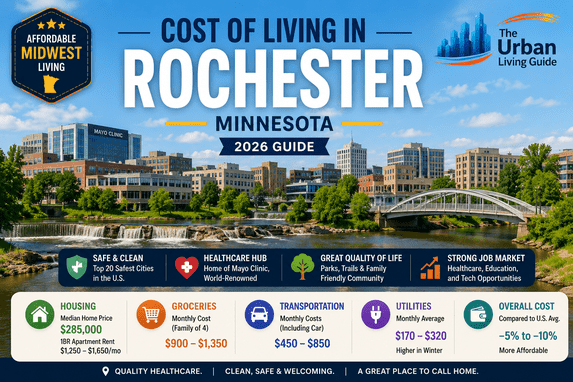
Understanding the Cost of Living in Rochester, Minnesota
Rochester is very different from the larger urban feel of Minneapolis or Saint Paul. Best known as the home of the world-famous Mayo Clinic, the city has built a reputation around healthcare, stability, safety, and strong quality of life. Many people moving here are healthcare workers, remote employees, retirees, or families looking for a calmer and more affordable Midwest city.
Located in southeastern Minnesota, Rochester feels cleaner, quieter, and more suburban than most cities of similar economic importance. One thing newcomers often notice is how organized and well-maintained the city feels, especially around downtown and the Mayo Clinic district.
The local economy is heavily centered around healthcare and medical research, which creates strong job stability compared to many manufacturing-based Midwest cities. At the same time, housing prices have steadily increased because of continued population growth and ongoing Mayo Clinic expansion projects.
📹 Watch recent relocation and apartment tour videos from Rochester locals to better understand the city’s daily lifestyle and housing market.
Information in this guide is based on regional housing reports, Minnesota economic data, local rental trends, and 2026 pricing estimates. Costs vary depending on neighborhood, housing availability, and lifestyle choices.
Rochester Cost of Living – What You’ll Actually Pay
The cost of living in Rochester is generally lower than many large US metro areas, but slightly higher than smaller Midwest towns because of the city’s strong healthcare economy and rising housing demand.
Compared to nearby cities:
- Usually cheaper than Minneapolis
- More affordable than Madison
- Slightly more expensive than smaller Minnesota towns
- Significantly cheaper than healthcare-heavy markets like Boston or Seattle
The city especially attracts:
- Mayo Clinic employees
- Healthcare professionals
- Families
- Retirees
- Remote workers seeking quieter living
Many residents describe Rochester as a “high-income small city” because salaries in healthcare and research sectors often outpace local living costs.
Housing Costs in Rochester, Minnesota
Housing remains the biggest expense for most residents, although Rochester still offers better affordability than many larger healthcare-driven cities.
Typical rental prices in 2026:
- Studio apartment: around $950–$1,250/month
- 1-bedroom apartment: roughly $1,200–$1,650/month
- 2-bedroom apartment: around $1,600–$2,300/month
- 3-bedroom home or townhouse: approximately $2,300–$3,500/month
Housing demand is strongest near:
- Downtown Rochester
- Mayo Clinic campus areas
- Kutzky Park
- Historic Southwest
- Baihly Meadows
Families often move toward quieter suburban-style neighborhoods on the city’s outer edges for larger homes and newer developments.
Housing prices in Rochester have increased steadily over recent years because of Mayo Clinic expansion projects and long-term economic stability. Many locals feel the market remains competitive but still more manageable than larger Minnesota metros.
Rental and purchase figures are approximate estimates based on current market conditions and may vary depending on neighborhood, property condition, and season.
Grocery & Everyday Living Expenses
Daily living costs in Rochester are fairly balanced for a growing Midwest city.
Estimated grocery costs:
- Single adult: around $325–$525/month
- Family of four: roughly $900–$1,350/month
Popular grocery stores include:
- Hy-Vee
- Target
- Costco
- Trader Joe’s
- Aldi
- Fresh Thyme Market
Restaurant prices remain reasonable compared to larger urban areas.
Average dining costs:
- Casual restaurant meal: $15–$22
- Mid-range dinner for two: $65–$110
- Coffee shop visit: $5–$8
- Brewery or casual night out: $20–$45
Downtown Rochester continues growing its restaurant and coffee scene, especially near the Mayo district and along Broadway Avenue.
One thing many newcomers notice is how early the city tends to quiet down compared to Minneapolis nightlife-heavy areas. Rochester has more of a professional and family-oriented atmosphere.
Cost of Living Transportation Expenses in Rochester
Transportation costs are usually moderate because Rochester is smaller and less congested than many major cities.
Most residents rely on personal vehicles, although the city’s road system is relatively manageable.
Typical transportation expenses:
- Car ownership costs: around $450–$850/month
- Gas and maintenance: roughly $180–$350/month
- Public transit pass: around $50–$70/month
- Downtown parking: generally lower than Minneapolis pricing
The city operates Rochester Public Transit, though many neighborhoods remain car-dependent.
Commute times are usually shorter than larger metro areas:
- Most city commutes stay within 10–25 minutes
- Traffic congestion is generally limited outside peak Mayo Clinic hours
Winter weather still creates seasonal vehicle expenses:
- Snow tires
- Winter maintenance
- Battery replacements
- Heating-related vehicle issues
Residents often appreciate how much easier parking and traffic feel here compared to the Twin Cities.
Utility Costs in Rochester
Minnesota winters heavily influence utility spending throughout the year.
Average monthly utility costs:
- Electricity, heat, water, trash: $170–$320/month
- Winter heating spikes: sometimes $350+
- Internet service: $60–$110/month
- Mobile phone plans: $60–$120/month
Heating bills become the biggest factor during winter months between November and March.
Newer apartment developments near downtown usually have better insulation and more efficient heating systems than older homes.
Long-time residents often recommend budgeting extra for winter utilities during the first year because colder Midwest climates surprise many out-of-state movers.
Healthcare Costs in Rochester
Healthcare access is one of Rochester’s biggest strengths because of the city’s connection to Mayo Clinic.
Major healthcare systems include:
- Mayo Clinic
- Olmsted Medical Center
Healthcare quality is considered among the best in the country, though costs still reflect broader US healthcare pricing.
Estimated healthcare expenses:
- Employer-sponsored insurance: roughly $180–$450/month
- Family plans: around $700–$1,300/month
- Urgent care visits: $100–$250
- Specialist appointments: $150–$400
Healthcare employment also creates unusually strong economic stability for a city this size.
Taxes in Rochester & Minnesota
Minnesota has relatively high taxes compared to many southern states.
- State income tax: up to roughly 9.85%
- Sales tax in Rochester: around 8.125%
- Property taxes: moderate to moderately high depending on neighborhood and county
Compared to states like Texas or Florida, residents pay more in income taxes, although many locals believe public infrastructure and services are stronger as a result.
Entertainment & Lifestyle Costs
Rochester has a calmer entertainment scene focused more on families, healthcare professionals, and community activities than nightlife.
Typical entertainment spending:
- Single professionals: roughly $250–$700/month
- Families: around $500–$1,400/month
Popular local attractions include:
- Soldiers Field Memorial Park
- Silver Lake Park
- Quarry Hill Nature Center
- Downtown Rochester restaurants
- Rochester farmers markets
- Local breweries and coffee shops
One thing people quickly notice is how clean and organized Rochester feels compared to many similarly sized cities.
The city also offers easy access to outdoor recreation and regional road trips throughout southeastern Minnesota and nearby Wisconsin.
Comparing the Cost of Living in Rochester to Other Cities
- Compared to Minneapolis, Rochester is generally cheaper overall
- Compared to Duluth, housing prices are usually slightly higher
- Compared to Madison, Rochester often offers lower overall living costs
- Compared to Chicago, housing and transportation are significantly cheaper
- Compared to Seattle or Boston, Rochester feels dramatically more affordable
Many healthcare workers specifically choose Rochester because salaries often align well with the city’s moderate living costs.
Is the Cost of Living in Rochester Affordable in 2026?
For a city with a globally recognized healthcare economy, Rochester remains relatively affordable in 2026.
The city works especially well for:
- Healthcare professionals
- Families seeking safety and stability
- Retirees
- Remote workers
- People wanting quieter Midwest living
The biggest financial considerations are usually:
- Rising housing costs
- Winter utility bills
- Minnesota taxes
Still, Rochester continues attracting new residents because of its strong healthcare economy, safety, stable job market, and overall quality of life.
FAQs About the Cost of Living in Rochester, Minnesota
Is Rochester cheaper than Minneapolis?
Yes, Rochester is usually more affordable than Minneapolis, especially when it comes to housing and transportation costs.
Why is Rochester, Minnesota expensive for its size?
The presence of Mayo Clinic creates strong housing demand, stable employment, and higher average salaries, which raises local prices compared to many smaller Midwest cities.
Do you need a car in Rochester?
Most residents rely on cars, although some downtown areas near Mayo Clinic are walkable and supported by public transit.
Are utilities expensive in Rochester?
Winter heating costs can become expensive during Minnesota winters, especially in older homes.
Is Rochester a good place for families?
Yes. Many families move to Rochester because of its safety, healthcare access, schools, and quieter suburban atmosphere.
🔗 Explore More Cities in Minnesota
Looking beyond Rochester? The Urban Living Guide has also covered multiple popular cities across Minnesota that you can explore further:
- Living in Minneapolis, Minnesota
- Living in Saint Paul, Minnesota
- Living in Duluth, Minnesota
- Living in Bloomington, Minnesota
These city guides provide detailed insights into everyday living, including housing costs, employment opportunities, neighborhoods, commute options, climate, education, local attractions, and key industries shaping each city.
By bringing all these insights together, The Urban Living Guide helps you compare different cities side by side and choose the one that aligns best with your lifestyle, priorities, and long-term goals.