

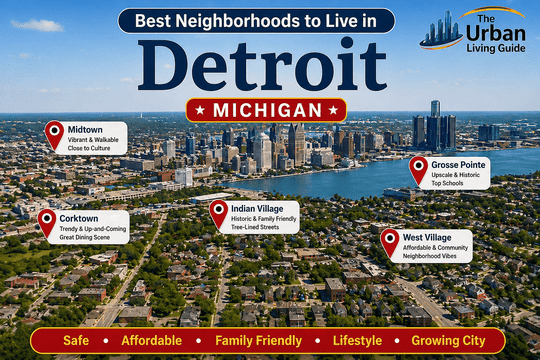
Best Neighborhoods in Detroit, Michigan – Overview
Choosing the right neighborhood in Detroit matters more than many newcomers expect. The city has transformed dramatically over the past decade, and different pockets of Detroit offer wildly different lifestyles — from walkable, artsy streets to quiet suburban-style communities with top-rated schools. Whether you are relocating for a job in the auto industry, drawn by the affordable housing market, or simply looking for a fresh start in the Midwest, Detroit has a neighborhood that fits your needs. The city’s diversity of options — luxury lofts, historic bungalows, waterfront living, and budget-friendly rentals — makes it one of the more interesting urban markets in Michigan.
Best Areas in Detroit at a Glance
- Best for families → Sherwood Forest
- Best for young professionals → Midtown / New Center
- Best affordable area → Mexicantown (Southwest Detroit)
- Best luxury area → Indian Village
📺 Watch this video to explore different neighborhoods and areas in Detroit before choosing where to live. It gives a great visual overview of popular areas and their lifestyle.
Top Neighborhoods in Detroit
Midtown
Midtown is arguably Detroit’s most energetic neighborhood right now, and for good reason. Anchored by Wayne State University and a dense cluster of cultural institutions — including the Detroit Institute of Arts on Woodward Avenue and the Detroit Medical Center — this area draws a mix of students, healthcare workers, artists, and tech employees. The walkability is genuine: coffee shops, independent restaurants, and boutique fitness studios line the streets without feeling forced.
Housing here leans toward apartments and converted lofts, with rents typically ranging from $900 to $1,800 per month for a one-bedroom. Many residents prefer Midtown because it genuinely feels like a neighborhood in motion — new businesses open regularly, and the street-level energy is unlike most parts of Detroit. One downside worth knowing: parking can be frustrating, especially near WSU’s campus during weekdays, and some blocks still show signs of earlier disinvestment just a street or two off the main corridors.
Best for: Young professionals, students, artists
Price level: Moderate to upper-moderate
Corktown
If you want to be in Detroit’s coolest zip code right now, Corktown is it. The city’s oldest neighborhood has reinvented itself in a big way — the renovation of Michigan Central Station (now a Ford innovation campus) has cemented the area’s status as a hub for tech and mobility-sector workers. Local hotspots like Slows Bar BQ on Michigan Avenue and the Cork Bar attract a steady crowd of professionals and creatives.
Housing is a mix of restored Victorian homes and newer apartment developments. Home prices here have risen considerably, and a modest bungalow can now run $250,000–$400,000, while rentals for a one-bedroom sit around $1,200–$1,700. One thing people love about Corktown is how it balances gritty authenticity with genuine reinvestment — it doesn’t feel like a sanitized tech campus. That said, this area is still in transition: some blocks near the train station remain under construction, and noise from ongoing development can be a factor.
Best for: Tech and mobility-sector professionals, creative types
Price level: Upper-moderate to higher
Indian Village
If budget is not your main concern and you want Detroit at its most architecturally beautiful, Indian Village is the neighborhood to explore. Situated along East Jefferson Avenue near the Detroit River, Indian Village is a historic district known for its stunning early 20th-century mansions — Tudor Revivals, Colonials, and Craftsman homes that attract architecture enthusiasts from across the state.
The neighborhood is quiet and well-maintained, with a strong sense of community pride — residents organize annual home tours and neighborhood clean-ups that newcomers often find welcoming. Schools in the immediate area are limited, so families typically rely on private options or magnet schools elsewhere in the city. Home prices range from $300,000 to well above $700,000 for larger estates, making it one of the pricier markets in Detroit proper. Traffic along East Jefferson can back up significantly during peak hours — something to factor in if you are commuting downtown.
Best for: Established professionals, history lovers, luxury buyers
Price level: High
Sherwood Forest
For families relocating to Detroit, Sherwood Forest consistently comes up in conversation. Located on the city’s northwest side near 7 Mile Road and Livernois Avenue, this neighborhood features well-preserved brick homes on tree-lined streets, giving it a decidedly suburban feel within city limits. The area borders Palmer Park and sits close to the University of Detroit Mercy, adding greenery and a sense of stability.
Locals often recommend Sherwood Forest specifically to families with school-age children, given its proximity to University of Detroit Jesuit High School and easier access to private schooling options in the area. Homes here are relatively affordable compared to Indian Village, typically priced between $150,000 and $350,000. The one realistic drawback: public transportation connectivity to downtown Detroit is limited, so car ownership is essentially a requirement for most daily routines.
Best for: Families, homebuyers seeking stability, those coming from suburban settings
Price level: Affordable to moderate
Mexicantown (Southwest Detroit)
Renters often consider Mexicantown when budget is the primary concern — and for good reason. This neighborhood, centered around Bagley Street and West Vernor Highway, offers some of the most affordable rents in the Detroit metro area, with one-bedrooms available for as low as $700–$950 per month. But Mexicantown is far more than a budget option: it has genuine cultural richness, from the Hubbard-Richard residential blocks to restaurants like El Rancho and Armando’s that have served the community for decades.
The neighborhood has strong community roots and a very active local business corridor. If commute matters more than rent, Southwest Detroit is also reasonably accessible to downtown via Michigan Avenue, and the Ambassador Bridge proximity makes it convenient for anyone working in cross-border trade or logistics. One honest downside: some blocks experience above-average traffic noise from heavy truck routes, and the neighborhood’s infrastructure — sidewalks, lighting — remains inconsistent in spots.
Best for: Budget-conscious renters, those seeking cultural community, logistics workers
Price level: Affordable
Which Neighborhood is Right for You?
- Families will find Sherwood Forest’s brick-lined streets and community feel closest to a traditional suburban experience within Detroit.
- Young professionals and students will thrive in Midtown, where walkability, dining, and career proximity come together naturally.
- Budget renters should start their search in Mexicantown, where rent is genuinely affordable and the neighborhood has authentic character.
- Luxury buyers and architecture enthusiasts should look at Indian Village, where the housing stock is simply unmatched in the city.
- Those working in tech or mobility sectors should put Corktown at the top of the list, especially with the Ford campus now fully operational nearby.
Safety & Livability Insights
Detroit’s safety picture is more nuanced than headlines suggest. Neighborhoods like Midtown, Corktown, Sherwood Forest, and Indian Village are generally considered among the safer, more stabilized areas within city limits — these are well-trafficked, well-lit, and have active business communities and neighborhood associations. Areas farther from the established corridors can vary significantly, so doing a neighborhood-by-neighborhood walkthrough before committing is always recommended.
Practical livability factors include access to grocery stores (Whole Foods is in Midtown; Southwest Detroit has local markets), quality of street lighting, and proximity to parks like Belle Isle and Palmer Park. Detroit is a car-dependent city for the most part — budget for transportation costs accordingly.
Tips for Choosing the Right Neighborhood
- Prioritize commute first. Detroit’s highway grid (I-75, I-94, M-10) moves well outside rush hours, but inner-city traffic near downtown can be unpredictable during peak times. Live close to where you work if possible.
- Balance rent with lifestyle. Mexicantown is cheaper than Midtown, but if you work in healthcare or at Wayne State, the reverse commute adds up. Run the math on time, not just dollars.
- Think about future growth. Corktown and areas adjacent to the Ford Michigan Central campus are seeing active investment. If you are buying, these corridors have upside potential. Many newcomers choose Midtown as a starting point — it lets you explore the city while staying connected to its core energy before deciding where to put down permanent roots.
Final Thoughts
Detroit’s neighborhoods are not one-size-fits-all, and that is actually a strength. Whether you are drawn by affordability, architecture, cultural community, or career proximity, there is a corner of this city that fits your life. Take the time to walk each neighborhood at different hours — Detroit rewards people who look closely. The city’s comeback is real, and choosing the right neighborhood puts you right in the middle of it.
FAQs
What is the best neighborhood in Detroit for young professionals?
Midtown is the top choice for young professionals, offering walkability, proximity to Wayne State University, the Detroit Medical Center, and a growing restaurant and café scene along Woodward Avenue.
What is the safest neighborhood in Detroit?
Neighborhoods like Midtown, Corktown, Sherwood Forest, and Indian Village are generally considered Detroit’s more stable and safe areas, each with active neighborhood associations and well-maintained streets.
What is the most affordable neighborhood in Detroit?
Mexicantown (Southwest Detroit) offers some of the lowest rents in the city — often $700–$950 per month for a one-bedroom — while still offering genuine character and community.
Is Detroit a good place to live for families?
Yes, particularly in Sherwood Forest and parts of the northwest side, where tree-lined streets, brick homes, and proximity to private schools make for a solid family environment.
What neighborhoods are best for professionals working near the Ford Michigan Central campus?
Corktown is the closest and most desirable option, followed by Midtown for those who want more urban walkability with an easy commute to the campus.
Is downtown Detroit worth living in?
Downtown Detroit works well for professionals who want to be steps from work, dining, and events like Tigers and Lions games. However, it is more suited to a younger, renter-focused lifestyle than families or long-term buyers.
How do I choose between Midtown and Corktown?
If walkability and cultural density matter most, Midtown edges ahead. If you work in tech or mobility and want proximity to the Ford campus, Corktown is the better fit. Both are solid options with rising property values.
What should newcomers know about living in Detroit?
A car is almost essential outside of Midtown. Research specific blocks before committing — quality can shift significantly within short distances. Detroit rewards patience and local exploration.
🔗 For a complete guide on cost, lifestyle, and relocation, explore our detailed post on Living in Detroit, Michigan.