

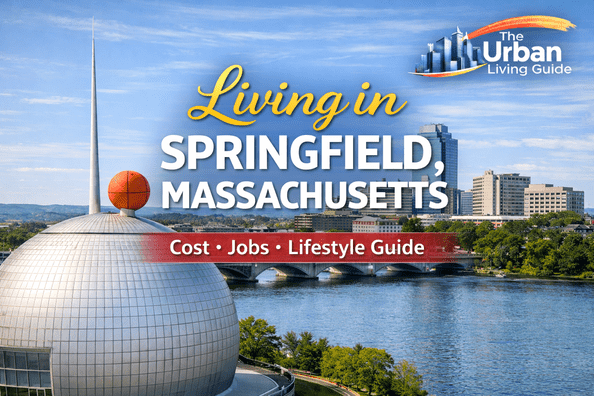
Living in Springfield, Massachusetts in 2026: The Complete Local Guide to Pioneer Valley Heritage, Basketball History, and New England Affordability
Positioned picturesquely along the broad banks of the Connecticut River in Western Massachusetts, living in Springfield, Massachusetts offers a compelling blend of rich industrial heritage, cultural resilience, and accessible New England living. As the largest city in the Pioneer Valley region with approximately 155,000 residents, Springfield serves as an essential economic, educational, and transportation cornerstone bridging Boston and New York City.
Proudly celebrated as the “City of Firsts”—where milestones ranging from the first American dictionary to the invention of basketball took place—Springfield seamlessly merges its legendary manufacturing legacy with modern healthcare innovation and urban revitalization. Whether you are strolling through the sprawling acreage of historic Forest Park or examining world-class art collections at the downtown museum quadrangle, the city provides a welcoming, high-value standard of living.
Municipal services, public safety programs, and community development initiatives are centrally managed through the official City of Springfield Government Portal.
Not sure where the city is? Check the map below to quickly understand its geographic position within western Massachusetts.
All quantitative metrics, economic indicators, and neighborhood insights compiled within this living guide are synthesized from official municipal records, regional economic boards, and verified long-term resident feedback.
What Makes Springfield So Popular & Unique
Over recent years, Springfield has emerged as a premier destination for individuals seeking financial breathing room without sacrificing cultural depth or geographic convenience. Key factors driving its sustained appeal include:
- Exceptional Housing Affordability: Offering some of the most accessible home purchase prices and rental rates in Massachusetts, providing a genuine alternative to high-cost eastern markets. Explore regional tourism and state initiatives via the Massachusetts Office of Travel and Tourism Portal.
- Profound Historical & Cultural Significance: A proud legacy of innovation, housing the world-famous Basketball Hall of Fame and the birthplace of beloved children’s author Dr. Seuss.
- Robust Healthcare & Higher Education: A powerful institutional sector anchored by elite teaching hospitals and respected local colleges.
- Strategic Pioneer Valley Positioning: Convenient access to major regional highways, Amtrak rail lines, and surrounding natural sanctuaries like the Berkshires.
Springfield at a Glance: Key Living Metrics
| Evaluation Metric | Local Data Overview & Regional Reality |
|---|---|
| Population | Approx. 155,000 within municipal city limits (Largest city in Western Massachusetts) |
| Median Monthly Rent | Ranges from $1,100 to $2,000+ depending on apartment vintage and neighborhood pocket |
| Average Annual Salary | Typically spans $55,000 to $90,000 across healthcare, finance, and education sectors |
| Primary Economic Pillars | Healthcare, insurance, higher education, manufacturing, and logistics |
| State Income Tax | Flat state income tax structure set at 5.0% across Massachusetts |
| Average Summer High | Routinely reaches 75°F to 85°F during comfortable July and August afternoons |
| Primary Transit Mode | Pioneer Valley Transit Authority (PVTA) buses, Amtrak rail connections, and regional highways |
Famous Personalities, Local Icons & Major Brands in Springfield
Springfield has a storied tradition of nurturing legendary authors, sports innovators, and massive corporate financial enterprises:
- Dr. Seuss (Theodor Geisel): The world-renowned and beloved children’s author and illustrator was born and raised in Springfield, inspiring the city’s whimsical sculpture gardens. Explore his artistic heritage via the Official Dr. Seuss Portal.
- James Naismith: The visionary physical education instructor who invented the sport of basketball at the local YMCA International Training School. Learn more via the Naismith Basketball Foundation Portal.
- Timothy Leary: The influential 1960s psychologist, writer, and counterculture icon who spent formative years connected to the region.
- MassMutual Financial Group: A massive mutual life insurance and financial services corporation anchoring the local economy from its downtown headquarters (MassMutual Official Portal).
- Naismith Memorial Basketball Hall of Fame: World-famous sports museum and shrine honoring basketball legends, drawing visitors from across the globe (Basketball Hall of Fame Portal).
Job Market & Business Opportunities with Major Employers
The employment landscape in Springfield provides steady professional stability, competitive salaries, and diverse career pathways across key sectors:
- Healthcare and Medical Services: Anchored by massive regional hospital networks delivering thousands of nursing, clinical, and medical administration roles.
- Insurance and Financial Services: Major corporate headquarters offering secure analytical, corporate finance, and customer service careers.
- Higher Education & Public Administration: Local colleges, school districts, and municipal agencies supporting thousands of educators and public servants.
- Manufacturing and Logistics: Long-standing industrial enterprises and distribution centers taking advantage of central New England highway access.
Housing & Real Estate Overview in Springfield
Navigating the real estate market in Springfield requires understanding its historic architectural variety, neighborhood diversity, and exceptional affordability:
- Varied Housing Stock: Features magnificent Victorian estates in Forest Park, multi-family homes in Sixteen Acres, and modern loft developments downtown. Track property assessments via the City Assessor Department Portal.
- Affordability Advantage: Home purchase prices and rental overhead remain significantly lower than in Greater Boston, making homeownership attainable for first-time buyers.
- Rental Market Inventory: Average monthly rent spans $900 to $1,200 for studio units, $1,100 to $1,500 for one-bedroom apartments, $1,500 to $2,000 for two-bedroom properties, and $2,200 to $3,000+ for single-family rental homes.
- Market Stability: Steady demand from healthcare workers and university staff ensures reliable long-term residential occupancy.
Best Neighborhoods in Springfield: Finding Your Ideal Community
| Neighborhood Name | Vibe & Lifestyle Character | Housing & Price Profile |
|---|---|---|
| Forest Park | Desirable historic residential enclave featuring tree-canopied streets and access to a massive urban park. | Historic grand homes, period architecture, and stable valuations. |
| Sixteen Acres | Quiet, family-oriented suburban-style community offering peaceful residential blocks and local schools. | Detached houses, split-level homes, and family-friendly pricing. |
| East Forest Park | Established neighborhood providing accessible home values and convenient retail and highway access. | Traditional single-family homes, duplexes, and moderate market entry points. |
| Downtown Springfield | Bustling urban core featuring entertainment venues, MGM Springfield, offices, and cultural attractions. | Modern urban apartments, historic lofts, and competitive rental rates. |
| Indian Orchard | Charming historic neighborhood preserving a distinct small-town atmosphere along the Chicopee River. | Historic character homes, multi-family houses, and budget-friendly pricing. |
Watch a recent video by a popular vlogger to understand daily life and vibes in Springfield.
What It’s Really Like Living in Springfield (Daily Life & Vibe)
Daily life in Springfield is characterized by a relaxed pace, rich historical charm, and strong community-oriented neighborhoods:
- Active Park & Outdoor Routines: Residents spend weekends exploring the 735 acres of green space in Forest Park or walking scenic paths along the Connecticut River. Explore park guidelines via the Springfield Parks & Recreation Department Portal.
- Cultural & Museum Exploration: Visiting the Springfield Museums quadrangle, exploring the Dr. Seuss sculpture garden, or attending vibrant seasonal community festivals.
- Dining & Entertainment: Enjoying local restaurants downtown, catching events at MGM Springfield, or visiting the Basketball Hall of Fame.
- Social Atmosphere: Friendly, unpretentious, historically proud, and deeply committed to community engagement and family life.
Cost of Living in Springfield: Monthly Expenses & Salary Needs
The cost of living in Springfield sits below both the national and Massachusetts state averages, offering vital financial relief for working households:
- Housing Overhead: $1,100 to $2,000 covering standard apartment and multi-family rentals across popular wards. Review regional economic trends via the Bureau of Labor Statistics Northeast Information Office.
- Utilities & Power: $150 to $220 monthly for electricity, heating, water, and municipal waste management.
- Groceries & Household Goods: $350 to $550 depending on household size and shopping preferences between local markets and major supermarkets.
- Transportation Expenses: $100 to $200 covering public bus passes, fuel, and vehicle maintenance.
- Required Household Income: Single professionals or working households typically require an annual income between $60,000 and $90,000 to comfortably cover local living expenses and long-term savings goals.
Transportation, Commute Dynamics & Transit Realities
Springfield provides robust transportation infrastructure connecting residents across Western Massachusetts and into neighboring states:
- PVTA Bus System: Comprehensive public transit network operated by the Pioneer Valley Transit Authority, offering extensive fixed bus routes across the city (Pioneer Valley Transit Authority Portal).
- Amtrak Rail Connections: Union Station providing vital passenger rail service linking Springfield to Boston, New York City, and Vermont.
- Major Highway Corridors: Excellent regional freeway access via Interstate 91, the Mass Pike (Interstate 90), and Interstate 291.
- International Aviation Proximity: Immediate convenience to Bradley International Airport (BDL) located just minutes south across the Connecticut border.
Weather Patterns, Seasonal Realities & Climate Factors
The environmental rhythm of Springfield follows a classic New England humid continental climate pattern:
- Warm Summers: Summer daytime high temperatures routinely average 75°F to 85°F, offering comfortable weather for outdoor recreation and park visits.
- Snowy Winters: Winter seasons bring freezing temperatures, crisp air, and moderate snowfall, transforming historic New England streets into picturesque winter wonderlands. Track active forecasts via the National Weather Service Boston-Springfield Portal.
-
Splendid Transition Seasons: Spring and autumn deliver vibrant New England foliage changes and pleasant crisp weather across residential parks.
Education, Schools & Major Universities
Educational institutions serve as premier anchors for academic excellence, professional training, and intellectual community development:
- Springfield College: A prestigious private university renowned for pioneering physical education and human service programs (Springfield College Official Portal).
- Western New England University: Comprehensive private university offering rigorous business, engineering, law, and arts programs.
- American International College (AIC): Vibrant private institution providing diverse undergraduate and graduate degree pathways (American International College Portal).
- Springfield Public Schools: Operating numerous elementary, middle, and high school facilities focused on student achievement.
Medical Facilities, Hospitals & Healthcare Systems
Healthcare infrastructure in Springfield is advanced, highly specialized, and anchored by premier regional medical networks:
- Baystate Health: A massive regional health system operating flagship medical centers, trauma care units, and specialized outpatient clinics across western Massachusetts (Baystate Health Official Portal).
- Mercy Medical Center: A major acute care facility delivering comprehensive emergency services, surgical suites, and specialized family medicine.
- Specialized Care Networks: Extensive network of medical clinics and community health centers serving every residential district.
Popular Hotels, Cafes, Dining & Culinary Scene
The hospitality and culinary identity of Springfield reflects historic downtown revitalization, entertainment tourism, and New England comfort:
- MGM Springfield Hotel: Sophisticated luxury resort and hotel offering upscale accommodations, vibrant entertainment, dining, and casino amenities (MGM Springfield Hotel Portal).
- Sheraton Springfield Monarch Place: Premier downtown hotel catering to business executives, travelers, and conference visitors.
- Vibrant Dining Districts: Bustling commercial blocks featuring independent coffee shops, bistros, and diverse culinary establishments.
Sightseeing, Cultural Spots & Tourist Attractions
Landmark cultural institutions and historic destinations significantly enhance the daily quality of life for local residents:
- Naismith Memorial Basketball Hall of Fame: World-famous sports shrine celebrating basketball history with interactive exhibits and courts (Basketball Hall of Fame Portal).
- Springfield Museums: Remarkable five-museum quadrangle featuring art, history, science, and the Dr. Seuss National Memorial Sculpture Garden (Springfield Museums Official Portal).
- Forest Park: Sprawling 735-acre historic urban park offering botanical gardens, zoo exhibits, and recreational lakes.
Regional Trade-offs: Pros and Cons of Living in Springfield
Pros of Living in Springfield
- Significantly more affordable housing purchase prices and rental rates compared to Boston and eastern Massachusetts.
- Robust healthcare and insurance employment sectors providing stable, high-paying career opportunities.
- Rich historical roots, world-class museums, and iconic cultural landmarks like the Basketball Hall of Fame.
- Excellent regional transit connectivity via Amtrak, major highways, and Bradley International Airport.
- Family-friendly suburban neighborhoods featuring expansive parks and historic New England architecture.
Cons of Living in Springfield
- Smaller overall private-sector job market and tech startup ecosystem compared to Greater Boston.
- Freezing winter temperatures, snowstorms, and seasonal maintenance requirements.
- Portions of the city feature older urban infrastructure undergoing gradual municipal revitalization.
- More relaxed evening entertainment options rather than expansive 24-hour mega-city nightlife.
- Socioeconomic disparities across specific urban wards requiring careful neighborhood research.
Who Is Springfield Ideal For — And Who Should Avoid It?
Who Springfield Is Ideal For
- Budget-Conscious New Englanders: Individuals and families seeking affordable housing, low property overhead, and homeownership within Massachusetts.
- Healthcare and Insurance Professionals: Workers pursuing stable long-term careers within major networks like Baystate Health and MassMutual.
- Families Seeking Historic Neighborhoods: Households wanting tree-lined streets, great parks, and family-oriented suburbs like Forest Park and Sixteen Acres.
- History and Sports Enthusiasts: Residents who appreciate revolutionary history, museum culture, and basketball heritage.
Who Should Avoid Springfield
- Mega-City Nightlife Seekers: Residents looking for non-stop 24-hour metropolitan downtown action, clubs, and dense urban nightlife.
- Warm-Weather Seekers: People who despise freezing winter temperatures, snowstorms, and extended seasonal chill.
- Car-Free Commuters Outside Rail: Individuals who refuse to own a personal automobile and live outside walking distance from Union Station.
- High-Tech Venture Capitalists: Professionals looking for massive venture-backed tech startup hubs and corporate finance headquarters.
Real Experiences: Perspectives from Long-Term Residents (5 to 10+ Years)
“Buying a historic home in Forest Park nine years ago was the best financial and lifestyle choice we’ve made. We got a gorgeous, spacious house for a fraction of what it would cost in eastern Mass, the park down the street is wonderful for the kids, and my healthcare job at Baystate is secure. Springfield has genuine charm and a strong community spirit if you take the time to explore it.”
[Source: r/springfieldma Community Discussions — synthesized/paraphrased]
“The big reality check for newcomers is that Springfield is a classic industrial New England city that is working hard on its downtown renewal, so you need to do your homework on neighborhoods. However, the trade-off is completely worth it. Commuting via Amtrak is easy, housing is actually affordable, and you’re close to the Berkshires and major highways.”
[Source: Local Resident Panels & Community Forums — synthesized/paraphrased]
Frequently Asked Questions About Living in Springfield, Massachusetts
Is Springfield expensive to live in compared to other Massachusetts cities?
No. Springfield maintains a highly affordable cost of living, offering median housing costs and rental rates significantly below Boston and eastern Massachusetts markets.
What level of annual salary do individuals need to live comfortably in Springfield?
Most single professionals and working households find that an annual income between $60,000 and $90,000 provides a comfortable lifestyle covering rent or mortgage payments, utilities, transportation, and discretionary spending.
Can residents successfully live in Springfield without owning a personal vehicle?
While PVTA bus lines and Amtrak rail connections serve central corridors effectively, most residents rely on personal automobiles due to the broader geographic layout of the Pioneer Valley region.
What are the best residential neighborhoods to consider in Springfield?
Top neighborhoods include Forest Park for historic grand homes and park access, Sixteen Acres for suburban family living, East Forest Park for budget value, and Downtown for urban convenience.
How does commuting work for professionals working across Springfield and the region?
Commuters primarily utilize Interstate 91 and the Mass Pike (I-90), enjoying short average commute times of around 20 to 30 minutes during standard rush hours.
What are the primary natural and cultural highlights of Springfield?
Residents enjoy exploring sports history at the Basketball Hall of Fame, viewing art at the Springfield Museums, relaxing in Forest Park, and traveling south to Bradley International Airport.
🔗 Explore More Cities in Massachusetts
Looking beyond Springfield? The Urban Living Guide has also covered multiple popular cities across Massachusetts that you can explore further:
- Living in Boston, Massachusetts
- Living in Worcester, Massachusetts
- Living in Cambridge, Massachusetts
- Living in Lowell, Massachusetts
Before moving to Springfield, make sure you check:
- Cost of Living in Springfield, Massachusetts
- Pros and Cons of Living in Springfield, Massachusetts
- Best Neighborhoods in Springfield, Massachusetts
For everything you need in one place, read our complete guide: Moving to Springfield, Massachusetts
These city guides provide detailed insights into everyday living, including housing costs, employment opportunities, neighborhoods, commute options, climate, education, local attractions, and key industries shaping each city.
By bringing all these insights together, The Urban Living Guide helps you compare different cities side by side and choose the one that aligns best with your lifestyle, priorities, and long-term goals.