
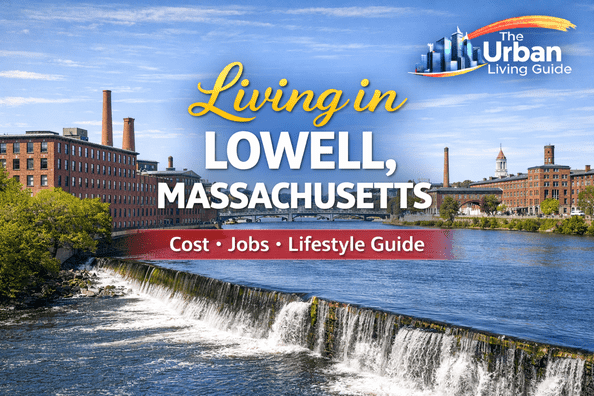
Living in Lowell, Massachusetts – Introduction
Lowell is one of the most historic industrial cities in the United States and an important cultural center in northeastern Massachusetts. Located along the Merrimack River about 30 miles northwest of Boston, the city played a major role during the American Industrial Revolution. Many people researching living in Lowell, Massachusetts are attracted by its historic character, growing economy, and relatively affordable housing compared to nearby Boston.
Lowell has a population of around 115,000 residents and continues to grow as a diverse and vibrant community. The city is widely known for its historic mill buildings, canals, and museums that highlight its industrial heritage.
Lowell is often referred to as the “Cradle of the American Industrial Revolution.” During the 19th century, the city became one of the largest textile manufacturing centers in the world.
People consider living in Lowell, Massachusetts because it offers a mix of historic charm, affordable housing options, and convenient access to the Greater Boston job market.
Watch a recent video by a popular vlogger to understand daily life and vibes in Lowell.
Information in this guide is compiled from publicly available data, official city resources, economic reports, and local housing databases to ensure accuracy and reliability.
What Makes Lowell So Popular
Lowell has gained attention in recent years as a city with rich history and increasing economic opportunities.
Several factors contribute to Lowell’s appeal:
• Historic mill architecture and canals
• More affordable housing than Boston
• Strong arts and cultural community
• Presence of a major public university
• Convenient commuter access to Boston
The city is also known for its cultural diversity and vibrant arts scene, including festivals, galleries, and music events.
Because of these advantages, living in Lowell, Massachusetts has become increasingly attractive for young professionals, students, and families.
Famous Personalities, Sports & Major Brands from Lowell
Lowell has produced several famous personalities and cultural figures.
• Jack Kerouac – Legendary Beat Generation writer
• Micky Ward – Professional boxer and subject of the film The Fighter
• Bette Davis – Classic Hollywood actress
Lowell also has an active sports and cultural environment.
• UMass Lowell River Hawks college sports teams
• Various music and arts festivals throughout the year
Several organizations and institutions operate in the city.
• UMass Lowell
• Lowell General Hospital
• Kronos Incorporated (now part of UKG)
These institutions contribute significantly to Lowell’s local economy.
Best Neighborhoods in Lowell
Lowell offers several neighborhoods with unique character and community atmosphere.
Belvidere
Belvidere is one of Lowell’s most historic and desirable neighborhoods, known for its beautiful homes and quiet residential streets.
Downtown Lowell
Downtown Lowell has undergone revitalization and now features apartments, restaurants, galleries, and historic buildings.
Highlands
The Highlands neighborhood offers a suburban feel with parks, schools, and family-friendly streets.
Pawtucketville
Located near the Merrimack River, Pawtucketville provides scenic views and residential areas close to the university.
Centralville
Centralville offers affordable housing options and convenient access to downtown and nearby cities.
👉 If you haven’t explored this area before, the map below will give you a better sense of its location.
Housing & Rent in Lowell
Housing affordability is one of the main reasons people consider living in Lowell, Massachusetts.
The city offers a mix of historic apartments, renovated mill lofts, and suburban homes.
Average monthly rental estimates:
• Studio apartment – $1,200 to $1,500
• 1 Bedroom apartment – $1,500 to $2,000
• 2 Bedroom apartment – $2,000 to $2,600
• Family home rental – $2,800 to $3,700
Rental figures are based on aggregated listing data and recent market trends.
Compared to nearby Boston, Lowell provides more affordable housing options.
Job Market & Business Opportunities
Lowell has a diverse local economy supported by several industries.
Major industries include:
• Education and research
• Healthcare and medical services
• Technology and software development
• Manufacturing
• Retail and hospitality
Average salaries in Lowell typically range between $60,000 and $100,000 annually, depending on profession and experience.
Because of its proximity to Boston and growing local economy, many people consider living in Lowell, Massachusetts.
Major Companies & Headquarters in Lowell
Several important employers operate in Lowell.
Major companies include:
• UMass Lowell
• Lowell General Hospital
• UKG (Ultimate Kronos Group)
• Raytheon Technologies (regional presence)
These organizations support thousands of jobs in the region.
What It’s Really Like Living in Lowell, Massachusetts
Daily life while living in Lowell, Massachusetts offers a blend of historic atmosphere and modern development. The city’s canals, brick mill buildings, and cultural institutions create a distinctive environment.
Residents often enjoy exploring the city’s historic downtown district, which features restaurants, music venues, and art galleries.
Popular weekend activities include:
• Visiting Lowell National Historical Park
• Exploring museums and cultural festivals
• Walking along the Merrimack River canals
• Dining in local restaurants
Lowell offers a balanced lifestyle between city living and community-focused neighborhoods.
Cost of Living in Lowell
Lowell offers a moderate cost of living compared to other cities in Massachusetts.
Typical monthly expenses include:
• Rent – $1,500 to $2,600
• Utilities – $150 to $220
• Groceries – $350 to $600
• Transportation – $100 to $220
• Healthcare – $180 to $350
Compared to Boston, Lowell provides a significantly more affordable lifestyle.
Transportation & Commute
Lowell offers several transportation options for residents.
• MBTA commuter rail to Boston
• Lowell Regional Transit Authority buses
• Major highway access
• Regional airports nearby
Average commute times typically range between 25 and 40 minutes.
Weather & Environment
Lowell experiences four distinct seasons.
Weather patterns include:
• Warm summers around 75–85°F
• Cold winters with snow
• Beautiful autumn foliage
• Mild spring seasons
Popular Hotels, Cafes & Restaurants
Lowell has a growing hospitality and dining scene.
Popular hotels include:
• UMass Lowell Inn & Conference Center
• Sonesta Select Lowell
• Courtyard by Marriott Lowell
The city also offers diverse restaurants and cafes throughout downtown.
Sightseeing & Attractions
Lowell has several historic and cultural attractions.
Popular places include:
• Lowell National Historical Park
• Boott Cotton Mills Museum
• Merrimack Repertory Theatre
• Jack Kerouac Park
Budget Stay / Hostels
Visitors can find affordable accommodations throughout Lowell.
Examples include:
• Budget hotels near downtown
• Guesthouses near university areas
• Affordable motels along highways
Quick Snapshot of Living in Lowell, Massachusetts
• Population – Approximately 115,000
• Average rent – $1,500 to $2,600
• Average salary – $60,000 to $100,000
• Average commute – 25 to 40 minutes
• Climate – Four seasons with snowy winters
Education & Universities
Lowell has several respected educational institutions.
Major institutions include:
• University of Massachusetts Lowell
• Middlesex Community College
These institutions play an important role in the city’s academic environment.
Pros and Cons of Living in Lowell, Massachusetts
Pros
• Affordable housing compared to Boston
• Rich industrial history and cultural heritage
• Growing arts and music scene
• Convenient access to Boston job market
• Strong university presence 🙂
Cons
• Cold winters
• Some older infrastructure
• Limited nightlife compared to major cities
• Public transportation options are moderate
• Traffic during commuting hours
Is Lowell a Good Place to Live?
For people seeking affordability and historic character, living in Lowell, Massachusetts can be an excellent option. The city offers a rich cultural heritage, strong university presence, and access to the Greater Boston job market.
While the city may not have the same economic scale as Boston or Cambridge, it provides a balanced lifestyle with lower housing costs and a vibrant community environment.
Overall, Lowell continues to grow as an attractive city for students, professionals, and families in Massachusetts.
FAQs
Is Lowell expensive to live in?
Lowell is more affordable than Boston and many other cities in Massachusetts.
What salary is needed to live comfortably in Lowell?
Many residents find that salaries between $65,000 and $95,000 provide a comfortable lifestyle.
Is Lowell safe to live in?
Safety varies by neighborhood, but many areas are considered safe and family friendly.
Is Lowell family friendly?
Yes, Lowell offers parks, schools, and community-focused neighborhoods.
What are the best neighborhoods in Lowell?
Belvidere, Downtown Lowell, Highlands, Pawtucketville, and Centralville.
Can you live in Lowell without a car?
Yes, but many residents prefer using a car for convenience.
🔗 Explore More Cities in Massachusetts
Looking beyond Lowell? The Urban Living Guide has also covered multiple popular cities across Massachusetts that you can explore further:
These city guides provide detailed insights into everyday living, including housing costs, employment opportunities, neighborhoods, commute options, climate, education, local attractions, and key industries shaping each city.
By bringing all these insights together, The Urban Living Guide helps you compare different cities side by side and choose the one that aligns best with your lifestyle, priorities, and long-term goals.