

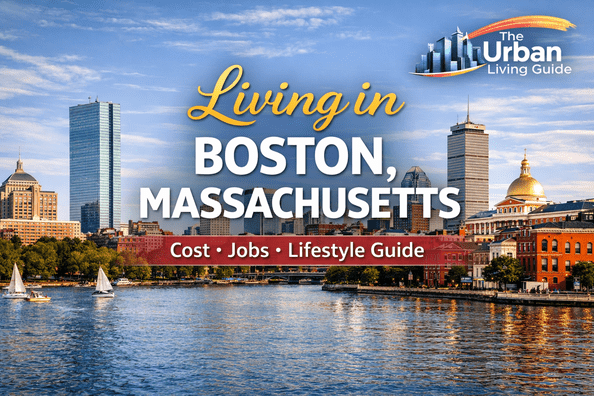
Living in Boston, Massachusetts in 2026: The Complete Local Guide to Freedom Trail Heritage, Biotech Innovation, and New England Culture
Perched gracefully along the historic waters of Boston Harbor, living in Boston, Massachusetts offers an extraordinary fusion of revolutionary American history, world-class academic prestige, and cutting-edge urban sophistication. As the cultural, educational, and financial heartbeat of New England, this vibrant municipality accommodates approximately 675,000 residents within city limits while anchoring a sprawling Greater Boston metropolitan population approaching 5 million people.
From the cobblestone gas-lit alleys of Beacon Hill to the state-of-the-art life sciences laboratories in Kendall Square across the Charles River, Boston effortlessly bridges its 17th-century colonial roots with a high-powered modern economy. Whether you are catching a game at historic Fenway Park, navigating the MBTA transit network, or studying at global institutions, the city provides an intellectual and dynamic standard of living that remains unmatched in the Northeast.
Municipal governance, public safety initiatives, and community services are centrally administered through the official City of Boston Government Portal.
If you’re not familiar with the area, take a look at the map below to understand where the city is located within coastal Massachusetts.
All quantitative metrics, economic indicators, and neighborhood insights compiled within this living guide are synthesized from official municipal records, regional economic boards, and verified long-term resident feedback.
What Makes Boston So Popular & Unique
Over the past few decades, Boston has maintained its status as one of the most desirable and economically resilient metropolitan centers in the United States. Key factors driving its sustained popularity include:
- Unrivaled Educational Ecosystem: Home to the world’s highest concentration of elite universities, research institutions, and academic scholars. Explore regional heritage and tourism initiatives via the Massachusetts Office of Travel and Tourism Portal.
- Global Biotechnology and Medical Capital: A groundbreaking life sciences and healthcare hub driving breakthrough research, pharmaceuticals, and specialized clinical care.
- Deep Historical Significance: A legendary revolutionary past commemorated along the Freedom Trail, featuring centuries-old museums, meeting houses, and maritime landmarks.
- Pedestrian-First Urban Design: Meticulously walkable neighborhoods, expansive public green spaces like the Boston Common, and comprehensive public transit lines.
Boston at a Glance: Key Living Metrics
| Evaluation Metric | Local Data Overview & Regional Reality |
|---|---|
| Population | Approx. 675,000 within city limits (Metro population approaches 5 million) |
| Median Monthly Rent | Ranges from $2,200 to $4,500+ depending on neighborhood and apartment vintage |
| Average Annual Salary | Typically spans $80,000 to $140,000+ across healthcare, biotech, finance, and tech sectors |
| Primary Economic Pillars | Healthcare, biotechnology, higher education, financial services, and technology |
| State Income Tax | Flat state income tax structure set at 5.0% across Massachusetts |
| Average Summer High | Routinely reaches 80°F to 88°F during humid July and August afternoons with coastal breezes |
| Primary Transit Mode | MBTA subway system (“The T”), commuter rail lines, bus networks, and pedestrian grids |
Famous Personalities, Local Icons & Major Brands in Boston
Boston has a storied history of producing influential political leaders, award-winning cinematic talent, legendary athletes, and global corporate giants:
- John F. Kennedy: The 35th President of the United States was born in the region, with his presidential library and museum preserving his enduring political legacy (John F. Kennedy Presidential Library Portal).
- Matt Damon & Ben Affleck: Acclaimed Hollywood actors, screenwriters, and filmmakers who grew up in the local area, frequently celebrating their Boston roots.
- Conan O’Brien: The iconic television host, comedian, and writer who attended local schools and launched his legendary entertainment career.
- Fidelity Investments: A massive multinational financial services corporation anchoring the city’s robust financial sector from its downtown towers (Fidelity Investments Official Portal).
- Boston Red Sox, Celtics, Bruins & Patriots: Legendary professional sports franchises bringing intense championship pride to passionate New England fanbases.
Job Market & Business Opportunities with Major Employers
The employment landscape in Boston offers exceptional professional stability, competitive compensation packages, and robust career mobility across knowledge-based industries:
- Biotechnology and Life Sciences: A world-leading cluster of research labs, pharmaceutical enterprises, and biotech startups driving high-tech biological engineering careers.
- Healthcare Systems: Elite teaching hospitals and medical centers providing thousands of clinical, nursing, and specialized research positions.
- Financial Services and Banking: Major investment firms, asset management corporations, and commercial banks headquartered in the financial district.
- Higher Education and Research: Dozens of colleges and universities supporting extensive academic, administrative, and student support roles.
Housing & Real Estate Overview in Boston
Navigating the real estate market in Boston requires understanding its intense demand, historic architectural preservation, and neighborhood variations:
- Varied Housing Stock: Features iconic Victorian brownstones in Back Bay, historic brick townhomes in Beacon Hill, and luxury high-rise waterfront condos. Track property assessments via the City Assessing Department Portal.
- High Market Valuations: Severe housing supply constraints driven by student populations and high-tech migration keep purchase prices and rental overhead well above national averages.
- Rental Market Inventory: Average monthly rent spans $2,200 to $2,700 for studio units, $2,700 to $3,400 for one-bedroom apartments, $3,500 to $4,500 for two-bedroom properties, and $4,500 to $6,500+ for family home rentals.
- Suburban Corridors: Nearby municipalities like Cambridge, Somerville, and Brookline provide alternative housing options with strong transit connectivity.
Best Neighborhoods in Boston: Finding Your Ideal Community
| Neighborhood Name | Vibe & Lifestyle Character | Housing & Price Profile |
|---|---|---|
| Back Bay | Iconic historic district featuring grand Victorian brownstones, high-end shopping, and scenic tree-lined avenues. | Historic brownstone condos, luxury high-rises, and premium valuations. |
| Beacon Hill | Picturesque historic neighborhood boasting gas-lit cobblestone streets, antique brick homes, and old-world charm. | Historic townhomes, upscale apartments, and high-end pricing. |
| South End | Vibrant artistic community known for Victorian residential squares, independent art galleries, and acclaimed dining. | Historic row houses, modern loft conversions, and upscale market values. |
| Charlestown | Historic waterfront neighborhood offering maritime views, revolutionary landmarks, and quiet residential streets. | Historic timber homes, brick row houses, and competitive valuations. |
| Cambridge (Nearby Area) | Dynamic intellectual hub located across the Charles River, home to elite universities and tech incubators. | Academic housing, modern multi-family apartments, and high market demand. |
Watch a recent video by a popular vlogger to understand daily life and vibes in Boston.
What It’s Really Like Living in Boston (Daily Life & Vibe)
Daily life in Boston is characterized by a brisk, highly educated, and culturally rich rhythm that seamlessly blends historic tradition with modern urban ambition:
- Active Waterfront & Park Routines: Residents spend weekends walking along the Charles River Esplanade, jogging through the historic Boston Common and Public Garden, or exploring the harbor islands. Explore park guidelines via the Boston Parks and Recreation Department Portal.
- Culinary and Seafood Exploration: Evenings feature world-class dining ranging from historic oyster houses downtown to authentic Italian trattorias in the North End.
- Legendary Sports Culture: Participating in passionate game-day traditions across professional baseball, basketball, hockey, and football.
- Social Atmosphere: Intellectual, fast-paced, progressive, and deeply appreciative of history, literature, and community civic involvement.
Cost of Living in Boston: Monthly Expenses & Salary Needs
The cost of living in Boston sits substantially above the national average, reflecting its affluent knowledge-based economy and high housing demand:
- Housing Overhead: $2,700 to $4,500+ covering standard apartment rentals across central residential districts. Review regional economic data via the Bureau of Labor Statistics Northeast Information Office.
- Utilities & Power: $150 to $250 monthly for electricity, heating, water, and municipal waste services.
- Groceries & Household Goods: $400 to $700 depending on shopping habits between specialty food markets and major supermarkets.
- Transportation Costs: $100 to $250 covering monthly MBTA transit passes and rideshares.
- Required Household Income: Single professionals or working households typically require an annual income between $90,000 and $140,000 to comfortably cover local living expenses and savings goals.
Transportation, Commute Dynamics & Transit Realities
Boston boasts one of the oldest and most integrated public transportation systems in North America:
- MBTA Subway System (“The T”): Extensive rapid transit rail network featuring the Red, Green, Orange, and Blue lines connecting Boston to Cambridge and surrounding suburbs (MBTA Official Transit Portal).
- Commuter Rail and Ferries: Comprehensive regional rail and passenger ferry services linking outer Massachusetts communities directly to downtown terminals.
- Pedestrian and Bike Grid: A compact, highly walkable urban layout supported by expanding bike lane networks and greenway trails.
- Global Aviation Gateway: Immediate proximity to Boston Logan International Airport (BOS), accessible within minutes via subway, tunnel, or highway (Boston Logan International Airport Portal).
Weather Patterns, Seasonal Realities & Climate Factors
The environmental rhythm of Boston follows a classic northeastern humid continental climate pattern:
- Warm Summers: Summer daytime high temperatures routinely average 80°F to 88°F, with refreshing Atlantic coastal breezes offering relief along harbor parks.
- Snowy Winters: Winter seasons bring freezing temperatures, icy winds, and significant nor’easter snowfalls that transform historic streets into winter wonderlands. Track active forecasts via the National Weather Service Boston-Norton Portal.
-
Splendid Transition Seasons: Spring and autumn deliver vibrant New England foliage changes and comfortable crisp weather across historic public gardens.
Education, Schools & Major Universities
Educational infrastructure stands as the crown jewel of community identity, scientific research, and intellectual capital across the region:
- Harvard University: The nation’s oldest and most globally revered institution of higher learning, located just across the river in Cambridge (Harvard University Official Portal).
- Massachusetts Institute of Technology (MIT): A world-leading center for scientific research, engineering innovation, and technological development (MIT Official Portal).
- Boston University & Northeastern University: Major urban research universities offering world-class undergraduate and graduate programs.
- Boston Public Schools: Operating numerous neighborhood schools, specialized exam schools, and educational enrichment programs.
Medical Facilities, Hospitals & Healthcare Systems
Healthcare infrastructure in Boston is world-renowned, highly specialized, and anchored by elite academic medical centers:
- Massachusetts General Hospital (MGH): A premier 1,000+ bed academic medical center and principal teaching hospital offering advanced trauma care, specialized surgery, and cutting-edge research (Mass General Hospital Portal).
- Brigham and Women’s Hospital: A world-class teaching hospital delivering specialized medicine, oncology, and groundbreaking clinical trials.
- Boston Children’s Hospital: Nationally ranked pediatric healthcare institution providing exceptional specialized care for families worldwide.
Popular Hotels, Cafes, Dining & Culinary Scene
The hospitality and culinary identity of Boston reflects historic elegance, maritime heritage, and upscale urban hospitality:
- The Langham Boston: Sophisticated luxury hotel housed within a historic Federal Reserve building in the financial district, offering refined New England hospitality (The Langham Boston Portal).
- Fairmont Copley Plaza: Iconic historic landmark hotel operating in Back Bay since 1912, welcoming travelers with timeless architectural grandeur.
- Historic Culinary Landmarks: Famous seafood spots like the Union Oyster House and historic cafes lining downtown historic districts.
Sightseeing, Cultural Spots & Tourist Attractions
Cultural institutions and landmark historic destinations significantly enhance the quality of life for local residents:
- The Freedom Trail: A 2.5-mile red-brick walking path connecting 16 nationally significant historic sites, including the Paul Revere House and Old North Church.
- Museum of Fine Arts (MFA): World-class art museum housing an expansive collection spanning ancient Egyptian artifacts to contemporary masterpieces (Museum of Fine Arts Portal).
- Fenway Park: America’s most beloved historic ballpark, serving as the legendary home of the Boston Red Sox since 1912 (Fenway Park Official Portal).
Regional Trade-offs: Pros and Cons of Living in Boston
Pros of Living in Boston
- Powerful Job Market: Exceptional career opportunities in biotechnology, healthcare, finance, and higher education.
- World-Class Universities: Immediate access to elite academic institutions, libraries, and research networks.
- Rich History and Culture: Immersive historical landmarks, museums, and a vibrant arts community.
- Walkable Urban Transit: Compact city grid supported by the MBTA subway system, reducing car dependency.
- Sports and Entertainment: Passionate professional sports culture and lively entertainment venues.
Cons of Living in Boston
- High Housing Costs: Steep home purchase prices and rental rates driven by severe market competition.
- Cold Winter Weather: Freezing temperatures and heavy winter nor’easters requiring rigorous seasonal property maintenance.
- Traffic Congestion: Narrow historic street layouts leading to commuter congestion during peak travel hours.
- Competitive Rental Market: Rapid lease turnover and high security deposit requirements for new tenants.
- High Cost of Living: Above-average everyday expenses across dining, services, and utilities.
Who Is Boston Ideal For — And Who Should Avoid It?
Who Boston Is Ideal For
- Biotech and Healthcare Professionals: Researchers, physicians, and scientists pursuing careers in world-leading medical institutions.
- Academics and Students: Scholars seeking proximity to elite higher education universities and research libraries.
- Career-Driven Urban Professionals: Workers in finance, technology, and consulting who value walkable city living and robust networking.
- History and Culture Enthusiasts: Individuals who appreciate revolutionary history, classical museums, and rich cultural traditions.
Who Should Avoid Boston
- Budget-Conscious Renters: Individuals seeking low-cost housing or bargain real estate markets on modest financial budgets.
- Warm-Weather Seekers: People who despise freezing winter temperatures, heavy snowstorms, and extended seasonal chill.
- Drivers Detesting Traffic: Residents who rely entirely on personal automobiles and dislike narrow streets, congestion, and parking fees.
- Those Requiring Sprawling Space: Homebuyers looking for massive suburban estates and sprawling acreage on standard budgets.
Real Experiences: Perspectives from Long-Term Residents (5 to 10+ Years)
“Living in the South End for over eight years has been an incredible experience. You can step out your door and walk to wonderful restaurants, catch the T to work in the financial district without ever needing a car, and enjoy the incredible neighborhood parks. Housing costs are definitely steep, but the intellectual energy, career opportunities, and historical charm make it impossible to imagine living anywhere else.”
[Source: r/boston Community Discussions — synthesized/paraphrased]
“The big reality check for newcomers is learning to navigate apartment hunting in September and budgeting for high rent and utilities. Winters require patience with snow removal and public transit delays. However, the trade-off is completely worth it because the city is gorgeous, the healthcare and biotech job market is bulletproof, and the culture is world-class.”
[Source: Local Resident Panels & Community Forums — synthesized/paraphrased]
Frequently Asked Questions About Living in Boston, Massachusetts
Is Boston expensive to live in compared to other U.S. cities?
Yes, Boston maintains one of the highest costs of living and housing markets in the United States, driven by strong demand from professionals, students, and institutional growth.
What level of annual salary do individuals need to live comfortably in Boston?
Most single professionals and households require an annual income between $90,000 and $140,000 to comfortably cover high housing costs, utilities, transportation, and discretionary spending.
Can residents successfully live in Boston without owning a personal vehicle?
Yes. Many residents live entirely car-free by utilizing the MBTA subway system (“The T”), commuter rail lines, bus networks, and highly walkable urban neighborhood grids.
What are the best residential neighborhoods to consider in Boston?
Top neighborhoods include Back Bay for historic brownstone luxury, Beacon Hill for old-world charm, South End for arts and dining, Charlestown for waterfront history, and nearby Cambridge for tech and academia.
How does commuting work for professionals working across Greater Boston?
Commuters primarily utilize the MBTA subway and commuter rail lines, experiencing average commute times of around 25 to 40 minutes depending on their residential origin.
What are the primary natural and cultural highlights of Boston?
Residents enjoy walking the Freedom Trail, relaxing along the Charles River Esplanade, exploring world-class collections at the Museum of Fine Arts, and catching games at Fenway Park.
🔗 Explore More Cities in Massachusetts
Looking beyond Boston? The Urban Living Guide has also covered multiple popular cities across Massachusetts that you can explore further:
- Living in Worcester, Massachusetts
- Living in Springfield, Massachusetts
- Living in Cambridge, Massachusetts
- Living in Lowell, Massachusetts
Want to learn more about Boston? Check out these helpful guides:
- Cost of Living in Boston, Massachusetts
- Pros and Cons of Living in Boston, Massachusetts
- Best Neighborhoods in Boston, Massachusetts
Ready to make your decision? Explore our complete guide here: Moving to Boston, Massachusetts
These city guides provide detailed insights into everyday living, including housing costs, employment opportunities, neighborhoods, commute options, climate, education, local attractions, and key industries shaping each city.
By bringing all these insights together, The Urban Living Guide helps you compare different cities side by side and choose the one that aligns best with your lifestyle, priorities, and long-term goals.