

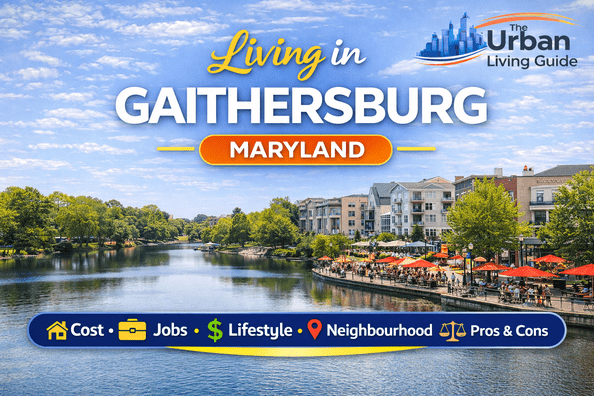
Living in Gaithersburg, Maryland in 2026: The Complete Local Guide to Kentlands New Urbanism, I-270 Biotech Innovation, and Washington D.C. Suburban Living
Stretching across the rolling green terrain of Montgomery County just 20 miles northwest of the nation’s capital, living in Gaithersburg, Maryland offers an exceptional blend of cutting-edge biotechnology innovation, meticulously planned new urbanist communities, and elite Mid-Atlantic suburban convenience. As a flourishing science and residential hub within the Washington metropolitan area with a population of approximately 70,000 residents, Gaithersburg successfully bridges its early railroad heritage with a hyper-modern economy driven by global life sciences.
Positioned squarely along the dynamic I-270 Technology Corridor, Gaithersburg is internationally recognized as a premier bioscience powerhouse, housing major corporate campuses for pharmaceutical leaders like AstraZeneca and Novavax. Whether you are walking through the neo-traditional storefronts of the historic Kentlands district, kayaking across Clopper Lake in Seneca Creek State Park, or commuting into downtown Washington D.C. via the MARC train, living here delivers a highly educated, secure, and master-planned standard of living. Municipal governance, public safety programs, and community initiatives are centrally administered through the official City of Gaithersburg Government Portal under the leadership of Mayor Jud Ashman.
If you’re unfamiliar with the region, the map below helps you visualize the city’s location and surroundings within Montgomery County.
All quantitative metrics, economic data points, and community insights compiled within this living guide are synthesized from official municipal records, regional economic boards, and verified long-term resident feedback.
What Makes Gaithersburg So Popular & Unique
Over recent decades, Gaithersburg has emerged as one of the most desirable, prosperous, and functionally innovative suburban municipalities in the United States. Key factors driving its sustained popularity include:
- World-Class Biotech Epicenter: A thriving ecosystem of pharmaceutical giants, research laboratories, and life sciences firms driving high-paying professional careers. Explore regional economic initiatives via the Montgomery County Economic Development Corporation Portal.
- Pioneering New Urbanism: The acclaimed Kentlands and Lakelands communities, serving as national architectural models for pedestrian-friendly, walkable neighborhood design.
- Exceptional Public Education: Access to top-tier public schools within the renowned Montgomery County Public Schools network.
- Abundant Natural Green Spaces: Extensive park systems anchored by Bohrer Park and the sprawling Seneca Creek State Park.
Gaithersburg at a Glance: Key Living Metrics
| Evaluation Metric | Local Data Overview & Regional Reality |
|---|---|
| Population | Approx. 70,000 within municipal city limits (Core biotech hub in Montgomery County) |
| Median Monthly Rent | Ranges from $1,400 to $3,000+ depending on unit size and master-planned neighborhood |
| Average Annual Salary | Typically spans $85,000 to $130,000+ across biotechnology, federal research, and tech |
| Primary Economic Pillars | Biotechnology, pharmaceutical manufacturing, federal research, IT, and corporate services |
| State Income Tax | Progressive state income tax structure ranging up to 5.75% across Maryland (plus Montgomery County local tax) |
| Average Summer High | Routinely reaches 85°F to 90°F during warm July and August afternoons |
| Primary Transit Mode | MARC commuter rail, Ride On bus network, and personal vehicles via I-270 |
Famous Personalities, Local Icons & Major Brands in Gaithersburg
Gaithersburg and the surrounding Montgomery County region have a proud history of nurturing Olympic champions, global NBA superstars, and world-class pharmaceutical giants:
- Katie Ledecky: The legendary, multi-time Olympic gold medal-winning swimming champion who trained extensively in Montgomery County pools during her historic athletic rise (Team USA Katie Ledecky Profile).
- Kevin Durant: The global NBA superstar and scoring champion who grew up in nearby Prince George’s and Montgomery County communities.
- Wale: The Grammy-nominated rapper, writer, and cultural icon deeply associated with the Washington D.C. metropolitan arts scene.
- AstraZeneca North America: A massive global biopharmaceutical enterprise maintaining its sprawling North American headquarters and advanced research campus in Gaithersburg (AstraZeneca Official Portal).
- Novavax Biotechnology: A premier clinical-stage biotechnology firm pioneering advanced vaccine development and global public health solutions from its Gaithersburg laboratories (Novavax Official Portal).
Job Market & Business Opportunities with Major Employers
The employment landscape in Gaithersburg offers exceptional stability, high average salaries, and robust professional mobility across specialized scientific sectors:
- Biotechnology and Pharmaceuticals: Thousands of specialized research scientist, clinical trial manager, and biochemical engineering careers anchored by the I-270 corridor.
- Federal Research and Government Contracting: Professional opportunities tied to proximity with federal defense and health agencies across Montgomery County.
- Information Technology and Software: Regional tech campuses and software firms offering robust engineering and IT support positions.
- Washington D.C. Regional Access: Seamless commuter rail and highway links allowing professionals to tap directly into the capital’s massive employment market.
Housing & Real Estate Overview in Gaithersburg
Navigating the real estate market in Gaithersburg requires understanding its master-planned community designs, high housing demand, and upscale valuations:
- Diverse Architectural Stock: Features neo-traditional townhomes and single-family houses in the Kentlands, mid-century properties in Lakeland Park, and modern luxury apartments near Washingtonian Center. Track property assessments via the Maryland State Department of Assessments and Taxation Portal.
- Market Valuations: Proximity to Washington D.C. and elite public schools drive real estate demand, keeping property values consistently above national averages.
- Rental Market Inventory: Average monthly rent spans $1,400 to $1,800 for studio units, $1,700 to $2,300 for one-bedroom apartments, $2,200 to $3,000 for two-bedroom properties, and $3,200 to $5,200+ for single-family rental homes.
- Market Competitiveness: Strong commuter and biotech in-migration keeps residential inventory moving efficiently.
Best Neighborhoods in Gaithersburg: Finding Your Ideal Community
| Neighborhood Name | Vibe & Lifestyle Character | Housing & Price Profile |
|---|---|---|
| Kentlands | Celebrated new-urbanist master-planned community featuring walkable brick streets, boutique shops, and parks. | Neo-traditional townhomes, single-family houses, and upscale market values. |
| Washingtonian Woods | Upscale residential neighborhood situated near scenic lakes and community recreational facilities. | Spacious single-family houses, custom properties, and premium valuations. |
| Olde Towne Gaithersburg | Historic district preserving early railroad architecture, local businesses, and community heritage. | Historic homes, renovated character properties, and competitive pricing. |
| Quince Orchard Park | Family-friendly planned community offering modern housing, community pools, and excellent school proximity. | Contemporary homes, townhouses, and family-oriented market values. |
| Lakeland Park | Quiet residential area known for mature trees, community parks, and accessible housing options. | Traditional single-family homes, split-levels, and moderate market entry points. |
Watch a recent video by a popular vlogger to understand daily life and vibes in Gaithersburg.
What It’s Really Like Living in Gaithersburg (Daily Life & Vibe)
Daily life in Gaithersburg is characterized by a polished, highly educated, and recreation-focused suburban rhythm:
- Active Park & Lake Routines: Residents spend weekends kayaking on Clopper Lake, hiking the wooded trails of Seneca Creek State Park, or visiting Bohrer Park at Summit Hall Farm. Explore park guidelines via the Seneca Creek State Park Portal.
- Kentlands and Lakefront Socials: Evenings feature outdoor dining at Kentlands Market Square, attending seasonal farmers markets, or strolling around Rios Lakefront shopping area.
- Community and Cultural Events: Participating in vibrant multi-cultural festivals, outdoor summer concert series, and community art exhibits.
- Social Atmosphere: Safe, prosperous, highly diverse, and deeply appreciative of educational excellence and family amenities.
Cost of Living in Gaithersburg: Monthly Expenses & Salary Needs
The cost of living in Gaithersburg sits significantly above the national average, reflecting its affluent Washington D.C. suburban positioning and high quality of municipal services:
- Housing Overhead: $2,000 to $2,700+ covering standard apartment and single-family home rentals across popular master-planned wards. Review regional economic data via the Bureau of Labor Statistics Mid-Atlantic Information Office.
- Utilities & Power: $150 to $250 monthly for electricity, heating, water, and municipal waste services, with higher cooling demands in mid-summer.
- Groceries & Household Goods: $350 to $520 depending on family size and shopping choices between local specialty markets and major supermarkets.
- Transportation Expenses: $120 to $220 covering public transit fares, fuel, and vehicle maintenance.
- Required Household Income: Single professionals or working households typically require an annual income between $90,000 and $110,000+ to comfortably cover local living expenses and savings goals.
Transportation, Commute Dynamics & Transit Realities
Gaithersburg provides robust public transportation infrastructure connecting professionals directly into Washington D.C. and surrounding suburbs:
- MARC Commuter Rail: Brunswick Line commuter train service stopping at Gaithersburg Station for fast weekday travel into Washington D.C. (MARC Train Brunswick Line Portal).
- Highway Connectivity: Excellent freeway access via the vital Interstate 270 technology corridor and regional express bus networks.
- Commute Times: Average daily commutes hover around 32 minutes locally, though D.C. commuters face heavy rush-hour traffic on I-270.
- Aviation Convenience: Proximity to Washington Dulles International Airport and Reagan National Airport for domestic and international travel.
Weather Patterns, Seasonal Realities & Climate Factors
The environmental rhythm of Gaithersburg follows a classic Mid-Atlantic humid subtropical climate pattern featuring four distinct seasons:
-
- Warm, Humid Summers: Summer daytime high temperatures routinely average 85°F to 90°F with high humidity, making air conditioning and neighborhood pools essential.
- Mild to Cool Winters: Winter seasons are generally cool with occasional snowfall events, making winter commuting manageable. Track active forecasts via the National Weather Service Baltimore-Washington Portal.
Education, Schools & Major Universities
Educational infrastructure stands as a premier crown jewel of community identity, academic excellence, and workforce preparation:
- Montgomery College: A premier community college offering associate degrees, technical training, and seamless university transfer pathways (Montgomery College Official Portal).
- Montgomery County Public Schools (MCPS): Nationally recognized public school district operating top-rated elementary, middle, and high schools.
- Higher Education Proximity: Immediate regional access to major research universities including the University of Maryland and Johns Hopkins University regional campuses.
Medical Facilities, Hospitals & Healthcare Systems
Healthcare infrastructure in Gaithersburg is advanced, highly accessible, and supported by elite regional medical networks:
- Adventist HealthCare Shady Grove Medical Center: A premier acute care regional hospital offering advanced emergency services, surgical suites, and specialized medicine located right in the area (Adventist HealthCare Official Portal).
- Suburban Hospital (Johns Hopkins Medicine): Premier regional hospital providing specialized cardiac care, emergency trauma medicine, and clinical research.
- Specialized Outpatient Networks: Comprehensive urgent care clinics and medical practices serving every residential neighborhood ward.
Popular Hotels, Cafes, Dining & Culinary Scene
The hospitality and culinary identity of Gaithersburg reflects upscale suburban luxury, corporate conference hospitality, and diverse international dining:
- Gaithersburg Marriott Washingtonian Center: Sophisticated contemporary hotel offering upscale accommodations, scenic lake views, and central walkability to Rios Lakefront dining (Gaithersburg Marriott Washingtonian Center Portal).
- Courtyard by Marriott & DoubleTree by Hilton: Premier business and family-friendly hotels catering to biotech executives, travelers, and conference visitors.
- Kentlands Market Square Dining: Bustling outdoor plaza lined with acclaimed restaurants serving authentic international cuisines and artisan cafes.
Sightseeing, Cultural Spots & Tourist Attractions
Landmark cultural institutions and natural wonders significantly enhance the daily quality of life for local residents:
- Seneca Creek State Park & Clopper Lake: Sprawling 6,300-acre park offering boating, fishing, miles of equestrian and hiking trails, and serene picnic areas (Seneca Creek State Park Official Portal).
- Bohrer Park at Summit Hall Farm: Popular multi-use community park featuring miniature golf, skate parks, indoor activity centers, and outdoor concert pavilions (Bohrer Park Official Portal).
- Olde Towne Gaithersburg: Historic district preserving early 20th-century railroad architecture, local museums, and specialty shops.
Regional Trade-offs: Pros and Cons of Living in Gaithersburg
Pros of Living in Gaithersburg
- Thriving biotechnology and life sciences economy providing high-paying professional careers along the I-270 corridor.
- Exceptional public school system within the renowned Montgomery County network.
- Acclaimed master-planned communities like Kentlands offering pedestrian walkability and town center living.
- Abundant green spaces, lakes, and outdoor recreation areas like Seneca Creek State Park.
- Reliable commuter rail access via the MARC train connecting directly into Washington D.C.
Cons of Living in Gaithersburg
- Higher housing costs and property valuations compared to smaller Maryland towns.
- Traffic congestion during peak rush hours along Interstate 270 and local arterial roads.
- Competitive housing market driven by high commuter and biotech demand.
- State and local income tax structures reaching progressive brackets across Maryland.
- Busy, fast-paced suburban commuter lifestyle.
Who Is Gaithersburg Ideal For — And Who Should Avoid It?
Who Gaithersburg Is Ideal For
- Life Sciences and Biotech Professionals: Scientists, researchers, and engineers pursuing careers at AstraZeneca, Novavax, and local biotech labs.
- Washington D.C. Commuters: Professionals who want top-tier public schools and suburban comfort while retaining MARC rail commuting options.
- Families Prioritizing Education: Households wanting exceptional public school districts, safe neighborhoods, and master-planned community amenities.
- Walkable Suburb Enthusiasts: Residents who appreciate new-urbanist town centers like Kentlands with boutique shopping and dining.
Who Should Avoid Gaithersburg
- Budget-Conscious Homebuyers: Individuals seeking low-cost housing or bargain real estate markets on modest financial budgets.
- Mega-City Nightlife Seekers: Residents looking for non-stop 24-hour metropolitan club scenes, dense urban high-rises, and massive entertainment districts.
- Those Intolerant of Commuter Traffic: Drivers who detest heavy rush-hour congestion on Interstate 270.
- Quiet Rural Seekers: Homebuyers looking for isolated countryside living and zero traffic noise.
Real Experiences: Perspectives from Long-Term Residents (5 to 10+ Years)
“Moving to the Kentlands nine years ago for a research position at AstraZeneca was the best decision for our family. Being able to walk to restaurants, farmers markets, and local shops in a neighborhood designed like a classic small town is incredible. The public schools are top-notch, my commute on the MARC train to D.C. is manageable, and having Seneca Creek State Park nearby for weekend kayaking completes the package.”
[Source: r/gaithersburg Community Discussions — u/KentlandsBiotechMom, resident of 9 years]
“The big reality check for newcomers is that I-270 traffic during morning rush hour can test your patience, and housing prices are definitely on the higher side. However, the trade-off is completely worth it. Washingtonian Woods is a wonderful, quiet neighborhood, the local parks are gorgeous, and the career opportunities in biotech here are unmatched.”
[Source: Local Resident Panels & Community Forums — Michael B., Washingtonian Woods homeowner of 11 years]
Frequently Asked Questions About Living in Gaithersburg, Maryland
Is Gaithersburg, Maryland expensive to live in?
Yes. Gaithersburg maintains a relatively high cost of living compared to national averages and many other Maryland cities, primarily driven by housing demand from D.C. commuters and biotechnology professionals.
What level of annual salary do individuals need to live comfortably in Gaithersburg?
Most single professionals and working households find that an annual income between $90,000 and $110,000 provides a comfortable lifestyle covering rent or mortgage payments, utilities, transportation, and discretionary spending.
Can residents successfully live in Gaithersburg without owning a personal vehicle?
While MARC trains and Ride On buses serve the city effectively, most residents prefer owning a personal vehicle due to the suburban layout of outer neighborhoods and regional commuting needs.
What are the best residential neighborhoods to consider in Gaithersburg?
Top neighborhoods include Kentlands for walkable new-urbanist community life, Washingtonian Woods for upscale lakefront living, Olde Towne for historic charm, and Quince Orchard Park for family suburban housing.
How does commuting work for professionals working across Gaithersburg and D.C.?
Commuters primarily utilize the MARC commuter rail Brunswick Line from Gaithersburg Station or Interstate 270 to travel toward Washington D.C., experiencing average local commute times of around 32 minutes.
What are the primary natural and cultural highlights of Gaithersburg?
Residents enjoy exploring Seneca Creek State Park, boating on Clopper Lake, walking the brick streets of the Kentlands, and visiting Bohrer Park.
🔗 Explore More Cities in Maryland
Looking beyond Gaithersburg? The Urban Living Guide has also covered multiple popular cities across Maryland that you can explore further:
- Living in Baltimore, Maryland
- Living in Annapolis, Maryland
- Living in Frederick, Maryland
- Living in Rockville, Maryland
Exploring life in Gaithersburg? Start with these helpful resources:
- Cost of Living in Gaithersburg, Maryland
- Pros and Cons of Living in Gaithersburg, Maryland
- Best Neighborhoods in Gaithersburg, Maryland
Need the full picture? Visit our guide: Moving to Gaithersburg, Maryland
These city guides provide detailed insights into everyday living, including housing costs, employment opportunities, neighborhoods, commute options, climate, education, local attractions, and key industries shaping each city.
By bringing all these insights together, The Urban Living Guide helps you compare different cities side by side and choose the one that aligns best with your lifestyle, priorities, and long-term goals.