
Living in Indiana – Overview
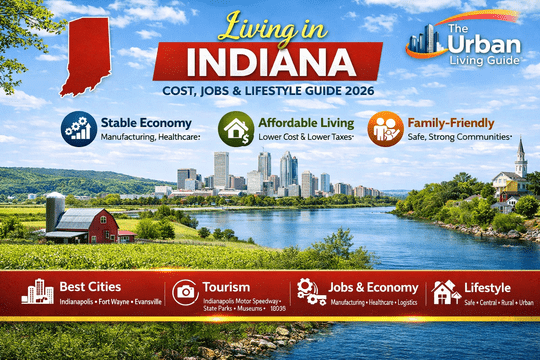
Indiana, located in the Midwestern United States, is known for its affordability, stable economy, and strong manufacturing base. The state offers a practical and comfortable lifestyle, making it a popular choice for families and working professionals.
If you’re considering Living in Indiana, it provides opportunities in manufacturing, healthcare, logistics, education, and agriculture. Cities like Indianapolis, Fort Wayne, and Evansville are key economic centers.
Compared to states like Illinois, Indiana offers a lower cost of living, lower taxes, and affordable housing, making it highly attractive for budget-conscious individuals. While salaries may be slightly lower than coastal states, the overall savings potential is strong.
Many people choose Indiana because of its affordability, job stability, and family-friendly environment, making it ideal for long-term living.
What Makes Indiana Unique
Indiana features a mix of farmland, rivers like the Ohio River, forests, and small cities. It is not heavily urbanized, which contributes to its calm and manageable lifestyle.
Culturally, Indiana reflects Midwestern values, sports culture (especially basketball), and community-driven living. The state is known for events like the Indianapolis 500, which highlights its strong racing culture.
Unlike many states, Indiana offers a combination of low living costs, central location, and economic stability, making it a practical choice for relocation.
🗺️ Explore the map of Indiana to understand its regions and geography
Location, Geography & Climate
Indiana has a humid continental climate, meaning:
- Cold winters
- Warm summers
- Moderate rainfall
The northern region is cooler, while southern Indiana has slightly milder weather. Seasonal changes are noticeable throughout the year.
Top Cities in Indiana
- Indianapolis – The capital and largest city, offering strong job opportunities and urban lifestyle.
- Fort Wayne – Affordable city with a growing economy and family-friendly environment.
- Evansville – Known for healthcare and manufacturing jobs with lower living costs.
- South Bend – Education hub, home to major universities.
- Bloomington – A college town with vibrant culture and good quality of life.
Tourism, Attractions & Things to Do in Indiana
Indiana offers a mix of attractions:
- Indianapolis Motor Speedway – World-famous racing track
- Indiana Dunes National Park – Nature and beaches
- Brown County State Park – Scenic landscapes
- Downtown Indianapolis – Culture and entertainment
- Holiday World (Santa Claus, IN) – Family attraction
The state is known for its sports culture, parks, and family-friendly tourism.
Cost of Living in Indiana
The cost of living in Indiana is low, making it one of the most affordable states in the US. Housing is especially budget-friendly.
Compared to Wisconsin, Indiana offers slightly lower taxes and similar affordability levels.
Overall, Indiana provides a high value for money lifestyle.
Job Market & Economy
Indiana has a stable economy driven by:
- Manufacturing
- Healthcare
- Logistics
- Agriculture
The job market is consistent, with steady demand in key industries.
Major Industries & Economic Strength
Indiana leads in:
- Manufacturing and automotive
- Agriculture
- Distribution and logistics
Compared to many states, Indiana has a strong industrial economy.
Rural Living in Indiana
Rural Indiana offers quiet living with farmland and small communities. Agriculture plays a major role, especially corn and soybean production.
Living costs are low, making it ideal for families and retirees.
Pros:
- Very affordable housing
- Peaceful environment
- Strong community support
Cons:
- Limited job diversity
- Fewer healthcare facilities
- Limited entertainment options
Top Counties in Indiana
- Marion County – Indianapolis region
- Allen County – Fort Wayne area
- Vanderburgh County – Evansville region
- St. Joseph County – South Bend area
- Monroe County – Bloomington region
Infrastructure & Connectivity
Indiana has strong highway connectivity and is centrally located, making travel and logistics efficient.
Public transport is limited, so most residents rely on personal vehicles.
Government, Safety & Policies
Indiana has low taxes and business-friendly policies. Safety varies by region, with suburban and rural areas generally safer.
The state is known for supporting economic growth.
Lifestyle & Culture
Life in Indiana is simple, affordable, and community-focused. Residents enjoy sports, local events, and a slower pace of life.
It is ideal for those who prefer stability over fast-paced urban living.
Education & Healthcare
Indiana has solid institutions like Indiana University and improving healthcare systems.
Urban areas offer better access compared to rural regions.
Pros and Cons of Living in Indiana
Pros:
- Very affordable cost of living and housing
- Stable job market in manufacturing and healthcare
- Central location with strong connectivity
- Family-friendly and safe communities
- Lower taxes compared to many states
Cons:
- Limited high-paying job opportunities
- Less urban development compared to major states
- Cold winters and seasonal weather extremes
- Limited public transportation options
- Fewer entertainment and lifestyle options in smaller towns
Who Should Move to Indiana
- Families looking for affordability and stability
- Retirees seeking low-cost living
- Manufacturing and logistics professionals
- Remote workers who prefer quiet environments
Major Companies & Investments
Indiana hosts companies like Eli Lilly, Cummins, Anthem, contributing to its stable economy.
The state continues to attract investments in manufacturing and healthcare sectors.
Transport & Connectivity (Expanded)
Indiana offers excellent road connectivity and access to major highways. Indianapolis acts as a central hub for transportation.
Public transport is limited, but logistics infrastructure is strong.
Final Thoughts
Living in Indiana offers affordability, stability, and a comfortable lifestyle. While it may not provide the high salaries or fast-paced lifestyle of larger states, its low costs and strong community environment make it a smart choice for long-term living.
FAQs
Is Indiana a good state to live in?
Yes, Indiana is a great choice for those seeking affordability, job stability, and a family-friendly lifestyle with lower living costs.
What is the cost of living in Indiana?
The cost of living is low, especially for housing, making it one of the most affordable states in the US.
Which city is best in Indiana?
Indianapolis for jobs, Bloomington for lifestyle, and Fort Wayne for affordability.
Does Indiana have high taxes?
No, Indiana has relatively low taxes compared to many states.
Is Indiana safe?
Yes, most suburban and rural areas are safe, though safety varies by city.
What jobs are in demand in Indiana?
Manufacturing, healthcare, logistics, and agriculture sectors.
How is Indiana weather?
Cold winters and warm summers with seasonal variation.