

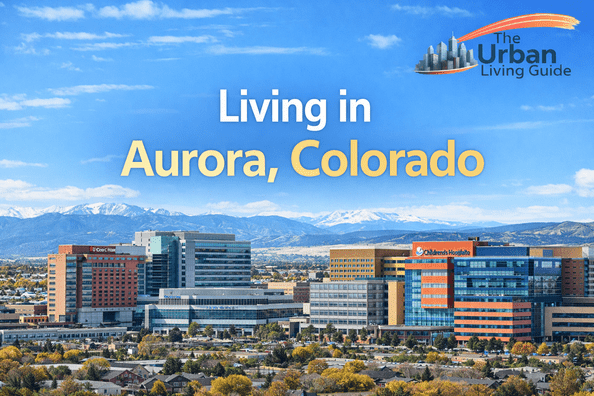
Living in Aurora, Colorado in 2026: The Complete Local Guide to Anschutz Medical Innovation, Space Force Heritage, and Metro Affordability
Stretching east across the high plains toward the Rocky Mountain foothills, living in Aurora, Colorado offers an appealing combination of metropolitan connectivity and suburban value. As the third-largest city in the state with a population exceeding 390,000 residents, Aurora spans across Adams, Arapahoe, and Douglas counties, functioning as a vital economic engine within the greater Denver metropolitan area.
Whether you are drawn to the cutting-edge medical research at the Anschutz Medical Campus, the strategic defense operations at Buckley Space Force Base, or the diverse international dining scene along Havana Street, Aurora provides a practical, multi-faceted standard of living. Navigating municipal governance, public safety programs, and city development initiatives is streamlined through the official City of Aurora Government Portal.
If you haven’t come across this city before, the map below gives you a quick view of its location within the central Colorado corridor.
All quantitative metrics, economic data points, and community insights compiled within this living guide are synthesized from official municipal records, regional economic boards, and verified long-term resident feedback.
What Makes Aurora So Popular & Unique
Over the past decade, Aurora has emerged as one of the fastest-growing and most dynamic urban-suburban centers in the Mountain West. Key factors driving its sustained popularity include:
- Exceptional Housing Value: Providing significantly more affordable home purchase prices and rental rates compared to central Denver while maintaining metro access. Explore regional growth initiatives via the Aurora Chamber of Commerce Portal.
- World-Class Healthcare Sector: Home to the massive Anschutz Medical Campus, driving breakthrough medical research and specialized care.
- Proud Military Heritage: A strong patriotic and economic foundation anchored by Buckley Space Force Base.
- Vibrant Cultural Diversity: A rich multicultural mosaic celebrated through world-renowned global dining districts and community festivals.
Aurora at a Glance: Key Living Metrics
| Evaluation Metric | Local Data Overview & Regional Reality |
|---|---|
| Population | Approx. 390,000 within city limits (Third-largest municipality in Colorado) |
| Median Monthly Rent | Ranges from $1,250 to $2,300+ depending on apartment vintage and neighborhood pocket |
| Average Annual Salary | Typically spans $60,000 to $105,000 across healthcare, defense, and public sectors |
| Primary Economic Pillars | Healthcare, aerospace defense, logistics, retail commerce, and public administration |
| State Income Tax | Flat state income tax structure set at a modest rate across Colorado |
| Average Summer High | Routinely reaches 85°F to 90°F during dry, sunny July and August afternoons |
| Primary Transit Mode | RTD light rail R Line, bus networks, regional highway corridors, and personal vehicles |
Famous Personalities, Local Icons & Major Brands in Aurora
Aurora has a proud history of nurturing influential innovators, military leaders, and critical regional institutions:
- UCHealth Anschutz Medical Campus: A globally renowned academic health center driving pioneering medical research, surgical innovation, and patient care (UCHealth Official Portal).
- Buckley Space Force Base: A critical national defense installation managing vital space surveillance and satellite operations.
- Children’s Hospital Colorado: A top-ranked pediatric healthcare institution providing elite medical care for families across the Rocky Mountain region (Children’s Hospital Colorado Portal).
- Stanley Marketplace: A celebrated 22-acre multi-use community marketplace housed in a former aviation factory, featuring local artisanal shops and restaurants.
Job Market & Business Opportunities with Major Employers
The employment landscape in Aurora offers exceptional stability, competitive wages, and robust career mobility across expanding industries:
- Healthcare and Biomedical Research: Thousands of professional careers anchored by Anschutz Medical Campus, hospital systems, and biotech labs.
- Aerospace and Defense: Secure civil service and defense contractor positions tied to Buckley Space Force Base and regional aerospace firms.
- Logistics and Distribution: Massive supply chain and warehousing operations capitalizing on proximity to Denver International Airport.
- Public Administration and Education: Municipal governance and school districts offering steady civil service employment.
Housing & Real Estate Overview in Aurora
Navigating the real estate market in Aurora requires understanding its massive geographic expanse, neighborhood price variations, and high demand:
- Diverse Architectural Stock: Features established mid-century homes in western wards, master-planned developments in Saddle Rock, and upscale modern builds in Southshore. Track property assessments via the City Assessor Department Portal.
- Affordability Relative to Denver: Real estate purchase prices remain noticeably lower than in central Denver, attracting families and first-time buyers.
- Rental Market Inventory: Average monthly rent spans $1,250 to $1,450 for studio units, $1,500 to $1,800 for one-bedroom apartments, $1,900 to $2,300 for two-bedroom properties, and $2,400 to $3,200+ for single-family home rentals.
- Market Competitiveness: Steady migration from higher-cost states keeps housing inventory moving at a brisk pace.
Best Neighborhoods in Aurora: Finding Your Ideal Community
| Neighborhood Name | Vibe & Lifestyle Character | Housing & Price Profile |
|---|---|---|
| Saddle Rock | Upscale suburban community featuring golf course views, manicured lawns, and quiet residential streets. | Spacious single-family homes, multi-level properties, and premium valuations. |
| Southshore | Family-oriented lakeside community offering modern developments, community pools, and active recreation. | Contemporary houses, luxury townhomes, and upper-tier pricing. |
| Tallyn’s Reach | Planned suburban neighborhood known for strong public schools, open green spaces, and community parks. | Detached single-family homes, custom builds, and family-oriented pricing. |
| Aurora Highlands | Fast-growing eastern development providing modern housing options at more accessible entry points. | New construction homes, townhouses, and budget-friendly pricing. |
| Murphy Creek | Quiet, established suburban community featuring golf course proximity and welcoming neighborhood parks. | Traditional suburban houses, duplexes, and moderate market valuations. |
What It’s Really Like Living in Aurora (Daily Life & Vibe)
Watch a recent video by a popular vlogger to understand daily life and vibes in Aurora.
Daily existence in Aurora is defined by a practical, family-oriented suburban rhythm paired with rich international culture:
- Active Weekend Recreation: Residents spend weekends boating at the Aurora Reservoir, hiking trails at Cherry Creek State Park, or cycling regional paths. Explore park guidelines via the Colorado Parks and Wildlife Portal.
- Global Culinary Exploration: Enjoying authentic Korean BBQ, authentic Mexican taquerias, and Ethiopian cuisine along the world-famous Havana Street cultural corridor.
- Community Gathering Places: Socializing at neighborhood spots like the Stanley Marketplace, featuring artisanal food halls and boutique retail.
- Social Atmosphere: Welcoming, culturally diverse, pragmatic, and deeply focused on family life and community connection.
Cost of Living in Aurora: Monthly Expenses & Salary Needs
The cost of living in Aurora sits moderately above the national average, yet remains remarkably more affordable than central Denver:
- Housing Overhead: $1,500 to $2,300+ covering typical apartment and multi-family rentals across popular wards. Review regional economic data via the Bureau of Labor Statistics Mountain-Plains Information Office.
- Utilities & Power: $150 to $220 monthly for electricity, heating, water, and municipal services.
- Groceries & Household Goods: Slightly above the national median, depending on shopping choices between local markets and major supermarkets.
- Transportation Expenses: Moderate car-dependent costs covering fuel, vehicle upkeep, and RTD transit passes.
- Required Household Income: Single professionals typically require an annual income of $65,000+, while households need $105,000+ to comfortably cover local living expenses and savings goals.
Transportation, Commute Dynamics & Transit Realities
Aurora offers efficient transportation infrastructure connecting residents across the metropolitan area:
- RTD Light Rail R Line: Providing light rail transit connections linking Aurora directly to employment hubs and regional transit networks (RTD Denver Official Portal).
- Major Highway Corridors: Excellent freeway access via Interstate 225 and E-470, ensuring smooth north-south travel across the eastern metro.
- Airport Proximity: Immediate convenience to Denver International Airport (DEN), located just minutes away via highway or regional transit.
- Commute Times: Average daily commutes range between 25 and 35 minutes, depending on proximity to downtown Denver employers.
Weather Patterns, Seasonal Realities & Climate Factors
The environmental rhythm of Aurora follows a classic semi-arid climate featuring four distinct seasons:
- Warm Summers: Summer daytime high temperatures routinely average 85°F to 90°F with low humidity, providing excellent conditions for outdoor recreation.
- Sunny Winters: Winter seasons bring cold temperatures and moderate snowfall, though abundant winter sunshine often melts snow quickly from residential streets. Track active forecasts via the National Weather Service Boulder-Denver Portal.
-
Splendid Transition Seasons: Spring and autumn deliver crisp mountain air, variable weather, and gorgeous seasonal transitions.
Education, Schools & Major Universities
Educational institutions serve as premier anchors for academic excellence, professional training, and community engagement:
- University of Colorado Anschutz Medical Campus: World-class medical and graduate education institution driving scientific research and healthcare training (CU Anschutz Official Portal).
- Community College of Aurora: Providing accessible associate degrees, technical certifications, and workforce training pathways.
- Public School Districts: K-12 education options spanning Aurora Public Schools and Cherry Creek School District, with southern suburban schools receiving high ratings.
Medical Facilities, Hospitals & Healthcare Systems
Healthcare infrastructure in Aurora is elite, highly specialized, and anchored by world-class medical centers:
- UCHealth University of Colorado Hospital: A massive flagship academic medical center offering advanced trauma care, specialized surgical suites, and groundbreaking clinical research (UCHealth Official Portal).
- Children’s Hospital Colorado: Nationally recognized pediatric healthcare network delivering comprehensive children’s medical and surgical care.
- The Medical Center of Aurora: A premier acute care facility providing comprehensive emergency services and specialized community healthcare.
Popular Hotels, Cafes, Dining & Culinary Scene
The hospitality and culinary identity of Aurora reflects world-class convention tourism, suburban comfort, and vibrant global immigrant heritage:
- Gaylord Rockies Resort and Convention Center: Spectacular massive alpine resort offering luxury lodging, indoor water parks, and premier convention facilities (Gaylord Rockies Resort Portal).
- Woolley’s Classic Suites: Upscale classic hotel providing refined boutique accommodations and executive amenities (Woolley’s Classic Suites Portal).
- Global Culinary Corridors: Bustling commercial strips along Havana Street offering authentic international dining spanning dozens of global cultures.
Sightseeing, Cultural Spots & Tourist Attractions
Landmark cultural institutions and natural recreational spaces significantly enhance the quality of life for local residents:
- Cherry Creek State Park: Sprawling 4,000-acre park featuring a massive reservoir for boating, swimming beaches, multi-use trails, and wildlife viewing (Cherry Creek State Park Portal).
- Aurora Reservoir: Scenic water sanctuary offering paddleboarding, sandy beaches, fishing, and a paved 8-mile perimeter trail (Aurora Reservoir Portal).
- Stanley Marketplace: Innovative community gathering destination housing over 50 independent businesses, makers, and restaurants.
Regional Trade-offs: Pros and Cons of Living in Aurora
Pros of Living in Aurora
- Affordable Housing vs. Denver: Favorable home purchase prices and rental rates compared to central Denver neighborhoods.
- Strong Healthcare Job Market: Abundant professional careers anchored by the Anschutz Medical Campus and major hospital networks.
- Exceptional Airport Proximity: Unrivaled convenience to Denver International Airport for frequent travelers.
- Vibrant Cultural Diversity: A welcoming multicultural community featuring authentic global dining and international markets.
- Family-Friendly Suburbs: Safe neighborhoods, community parks, and master-planned developments in southern wards.
Cons of Living in Aurora
- Car Dependency: Limited fixed-rail transit coverage outside specific corridors, making personal vehicle ownership essential.
- Variable School Ratings: Educational quality varies significantly depending on the specific neighborhood school district boundary.
- Limited Local Nightlife: Evening entertainment options are quieter, with major nightlife concentrated in downtown Denver.
- Commuter Traffic Congestion: Heavy vehicular traffic during peak commuting hours along Interstate 225 toward Denver.
- Rising Property Taxes: Ongoing municipal growth leading to rising property assessments and local tax pressures.
Who Is Aurora Ideal For — And Who Should Avoid It?
Who Aurora Is Ideal For
- Healthcare and Medical Professionals: Doctors, nurses, researchers, and staff seeking careers at Anschutz Medical Campus and local hospitals.
- Budget-Conscious Relocators: Individuals and families wanting metropolitan access and better housing value than central Denver.
- Military Personnel and Defense Workers: Service members stationed at Buckley Space Force Base seeking convenient base proximity.
- Multicultural Families: Households prioritizing diverse communities, family-oriented suburbs, and park access.
Who Should Avoid Aurora
- Car-Free Urbanites: Individuals who refuse to own a personal automobile and require 24-hour heavy rail rapid transit systems.
- Mega-City Nightlife Seekers: Residents looking for non-stop 24-hour metropolitan downtown action, clubs, and dense urban nightlife.
- Those Intolerant of Suburban Spread: People who despise master-planned subdivisions, sprawling strip malls, and car-centric layouts.
- Strictly School-Focused Buyers: Parents requiring uniformly top-rated school districts across every single municipal neighborhood.
RealExperiences: Perspectives from Long-Term Residents (5 to 10+ Years)
“Moving to Saddle Rock six years ago for a nursing position at Anschutz was the best practical decision we’ve made. We got a much larger home for our family than anything we could afford in Denver, the neighborhood parks are great, and my commute is short. The food scene along Havana Street is incredible. It may not have the historic charm of central Denver, but the value and stability are unbeatable.”
[Source: r/aurora_co Community Discussions — synthesized/paraphrased]
“The big reality check for newcomers is that Aurora is massive and diverse, so neighborhoods can feel very different depending on where you are. Northern and eastern areas like Southshore offer great suburban quiet, while traffic on I-225 during rush hour requires patience. However, if you want high-paying healthcare or defense jobs and reasonable housing costs close to the airport, it’s a fantastic place to settle.”
[Source: Local Resident Panels & Community Forums — synthesized/paraphrased]
Frequently Asked Questions About Living in Aurora, Colorado
Is Aurora expensive to live in compared to other U.S. cities?
Aurora maintains a cost of living moderately above the national average, but it offers more affordable housing and real estate options than central Denver.
What level of annual salary do individuals need to live comfortably in Aurora?
Most single professionals require an annual salary of $65,000+, while families typically need $105,000+ to comfortably cover housing, utilities, transportation, and discretionary spending.
Can residents successfully live in Aurora without owning a personal vehicle?
While RTD light rail and bus lines serve specific corridors, most residents rely on personal automobiles due to the expansive suburban layout of the city.
What are the best residential neighborhoods to consider in Aurora?
Top neighborhoods include Saddle Rock for upscale golf living, Southshore for lakeside family homes, Tallyn’s Reach for strong schools, Aurora Highlands for budget value, and Murphy Creek for quiet suburban streets.
How does commuting work for professionals working across Aurora and Denver?
Commuters primarily utilize Interstate 225 and local arterial roads, supported by RTD light rail connections, experiencing average commute times of around 25 to 35 minutes.
What are the primary natural and cultural highlights of Aurora?
Residents enjoy outdoor recreation at Cherry Creek State Park and Aurora Reservoir, boutique shopping at Stanley Marketplace, and authentic global cuisine along Havana Street.
🔗 Explore More Cities in Colorado
If you’re considering options beyond Aurora, The Urban Living Guide has also explored several other well-known cities across Colorado. You may also want to check:
- Living in Denver, Colorado
- Living in Colorado Springs, Colorado
- Living in Fort Collins, Colorado
- Living in Boulder, Colorado
If you’re comparing cities and considering Aurora, don’t miss:
- Cost of Living in Aurora, Colorado
- Pros and Cons of Living in Aurora, Colorado
- Best Neighborhoods in Aurora, Colorado
For the full relocation experience, check out: Moving to Aurora, Colorado
Each of these guides highlights what daily life looks like in different cities, including insights on cost of living, housing trends, job opportunities, local neighborhoods, commute patterns, weather conditions, education options, popular areas, and major employers.
With The Urban Living Guide, all this information is organized in one place so you can easily compare cities and decide which one suits your lifestyle, budget, and future plans.