

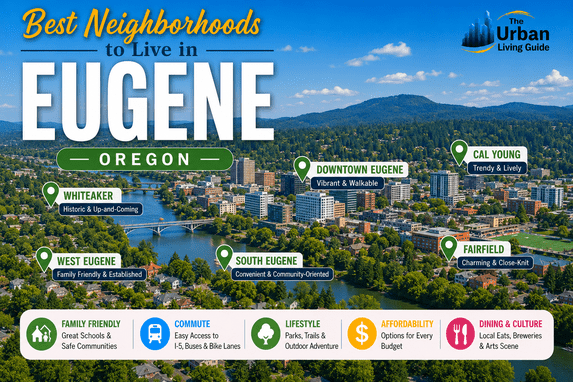
Best Neighborhoods in Eugene, Oregon – University Town, Outdoor Access, and Willamette Valley Living (2026)
Eugene often gets reduced to one identity — University of Oregon town, home of the Ducks. But the city of roughly 175,000 is significantly more layered than that. Sitting at the southern end of the Willamette Valley where the Willamette and McKenzie Rivers converge, Eugene is Oregon’s second-largest city and a legitimate hub for outdoor recreation, arts, healthcare (PeaceHealth Sacred Heart Medical Center), and a growing tech and sustainability sector. Major employers include the University of Oregon, PeaceHealth, SERV-U-SUCCESS, and Hynix Semiconductor. The city’s best neighborhoods range from walkable urban cores to quiet riverside enclaves and affordable family-oriented suburbs — each serving a different version of Willamette Valley living.
The best neighborhoods in Eugene, Oregon reward movers who look past the campus and ask what kind of daily life they actually want.
Best Areas in Eugene, Oregon at a Glance
| 🏠 Best for Families | South Eugene — top-rated schools, quiet streets, trail access |
| 💼 Best for Young Professionals | Whiteaker — arts district, walkable, affordable energy |
| 💰 Best Affordable Area | West Eugene — competitive rents, improving infrastructure |
| 🏙️ Best Luxury Area | South Hills — wooded lots, panoramic valley views, prestige |
| 🌲 Best for Outdoor Access | River Road — Willamette River trails, open space, relaxed pace |
📺 Watch this video to explore different neighborhoods and areas in Eugene before choosing where to live.
Top Neighborhoods in Eugene, Oregon
1. South Eugene – The Family Neighborhood That Sets the Standard
South Eugene stretches from Amazon Park south toward the Ridgeline Trail system along Willamette Street and High Street, a mature residential neighborhood of mid-century and Craftsman homes with some of Oregon’s most consistently lauded public schools. South Eugene High School has produced Rhodes Scholars, Olympic athletes, and sends graduates to top universities at rates that rival private school feeders in larger cities. For families researching the best neighborhoods in Eugene, Oregon, South Eugene is almost always the first recommendation locals make.
- Housing: Primarily single-family homes from the 1940s–1970s. Purchase prices range $420K–$750K. Limited rentals; 2BR homes average $1,500–$1,900/month.
- Commute: About 15–20 minutes to University of Oregon campus. 10 minutes to PeaceHealth Sacred Heart main campus via Willamette Street.
- Nearby: Amazon Park (pool, trails, disc golf), Ridgeline Trail system (walking distance), Willamette Street independent dining strip, Whiteaker neighborhood (15-min bike).
Who it’s best for: Families relocating for University of Oregon faculty positions or PeaceHealth roles who want Eugene’s strongest school access in a genuinely settled neighborhood.
⚠️ Drawback: Entry-level purchase prices are Eugene’s highest. Limited rental inventory means buyers dominate — short-term movers may find options thin.
2. Whiteaker – Eugene’s Creative District With the Best Price-to-Character Ratio
Whiteaker — locals call it “the Whit” — sits just northwest of downtown Eugene, a dense grid of older homes, converted warehouses, and independent businesses along Blair Boulevard and Chambers Street. It’s Eugene’s arts and counterculture heartland — Ninkasi Brewing Company (one of Oregon’s best-known craft breweries) is headquartered here, the WOW Hall concert venue anchors the music scene, and the Eugene Saturday Market draws the broader city every weekend. Among the best areas in Eugene, Oregon for renters who want neighborhood energy at accessible prices, Whiteaker consistently leads.
- Housing: Older single-family homes, duplexes, and apartments. 1BR rents average $950–$1,300/month — Eugene’s best value in a connected neighborhood. Purchase prices range $300K–$500K.
- Commute: About 10–15 minutes to University of Oregon by bike or bus. 5–8 minutes to downtown Eugene on foot.
- Nearby: Ninkasi Brewing Company, WOW Hall, Eugene Saturday Market, Skinner Butte Park (10-min walk), downtown Eugene (walking distance).
Who it’s best for: Young professionals, grad students, and creatives who want Eugene’s most vibrant neighborhood identity at its lowest connected price point. Many UO graduate students and young faculty choose Whiteaker specifically for the walkability and the Blair Boulevard energy.
⚠️ Drawback: Some blocks remain rough — Whiteaker’s transition is real but uneven. Street noise from WOW Hall and Blair Boulevard bars can carry on weekend nights.
3. South Hills – Eugene’s Prestige Address With Valley Views
South Hills rises above South Eugene toward the Ridgeline Trail on the city’s southeastern edge, a neighborhood of larger custom homes on wooded lots with panoramic views across the Willamette Valley toward the Coast Range. It shares South Eugene’s school feeds and adds the kind of privacy and landscape that makes it Eugene’s most sought-after address for established professionals. One thing people love about South Hills is the view on a clear morning — the valley stretches west in a way that reminds residents exactly why they chose Oregon.
- Housing: Custom single-family homes and estates. Purchase prices range $550K–$1.2M+. Very limited rental inventory.
- Commute: About 20–25 minutes to University of Oregon campus. 15 minutes to PeaceHealth Sacred Heart.
- Nearby: Ridgeline Trail (direct access), Mount Pisgah Arboretum (20-min drive), Amazon Park (10-min drive), Willamette Street dining (10-min drive).
Who it’s best for: Established professionals, senior UO faculty, and PeaceHealth physicians who want Eugene’s best residential addresses with direct trail access and valley views.
⚠️ Drawback: Total car dependency — no transit, no walkable amenities. Steep hillside roads require caution in winter ice conditions, which Eugene does occasionally see.
4. River Road – Affordable, Relaxed, and Underrated
River Road runs north of downtown Eugene along the Willamette River, a long residential corridor of older homes, small farms at its northern edge, and a quiet pace that attracts long-term Eugene residents who’ve stopped chasing neighborhood prestige. The River Road trail system connects directly to the Willamette River path network — one of the best urban cycling and running corridors in Oregon — and the neighborhood’s distance from downtown keeps rents genuinely accessible.
- Housing: Older single-family homes and duplexes. Purchase prices range $280K–$460K. 1BR rents average $900–$1,200/month.
- Commute: About 15–20 minutes to University of Oregon by bike via river trail. 10–15 minutes to downtown Eugene by car.
- Nearby: Willamette River trail system (walking distance), Delta Ponds City Park, River Road Park, Santa Clara retail corridor (10-min drive north).
Who it’s best for: Outdoor-oriented renters and budget buyers who want Willamette River access and a slower pace without leaving Eugene’s city limits. Remote workers who need trail access over urban energy consistently rate River Road among the best affordable neighborhoods in Eugene, Oregon.
⚠️ Drawback: Limited walkable commercial amenities — daily errands require a car or bike. The northern end of River Road feels more rural than urban, which suits some movers and surprises others.
5. West Eugene – Budget-Friendly With Improving Infrastructure
West Eugene stretches along West 11th Avenue and Barger Drive, the city’s most affordable residential zone and its most improving one. The West Eugene Collaborative has driven real investment in parks, street improvements, and community services over the past decade, and the area’s proximity to I-105 and OR-126 gives it straightforward highway access to both downtown Eugene and Springfield across the river. It’s not Eugene’s most exciting neighborhood, but it’s where the value equation works best for first-time buyers.
- Housing: Older single-family homes, apartments, and mobile home parks. 1BR rents average $850–$1,150/month — Eugene’s most accessible. Purchase prices range $230K–$380K.
- Commute: About 15–20 minutes to University of Oregon via West 11th or Amazon Parkway. 10 minutes to PeaceHealth RiverBend in Springfield.
- Nearby: Alton Baker Park (20-min bike via Amazon Trail), Valley River Center mall (10-min drive), Fern Ridge Reservoir (20-min drive — boating, birding), Eugene Airport (10-min drive).
Who it’s best for: First-time buyers, budget renters, and PeaceHealth RiverBend staff who want Eugene’s lowest price point without sacrificing city connectivity.
⚠️ Drawback: Some stretches of West 11th are heavily commercial and pedestrian-unfriendly. The neighborhood’s identity is functional rather than distinctive — it’s where you live affordably, not where you build a lifestyle around.
Best Neighborhoods in Eugene, Oregon – Quick Comparison
| Neighborhood | Vibe | Avg. 1BR Rent | Commute to UO | Best For |
|---|---|---|---|---|
| South Eugene | Family / Established | $1,500–$1,900 (2BR) | 15–20 min | Families, faculty buyers |
| Whiteaker | Creative / Affordable | $950–$1,300 | 10–15 min bike | Young professionals, grad students |
| South Hills | Luxury / Views | Limited rentals | 20–25 min | Established buyers, senior faculty |
| River Road | Outdoor / Relaxed | $900–$1,200 | 15–20 min bike | Remote workers, value buyers |
| West Eugene | Affordable / Practical | $850–$1,150 | 15–20 min | First-time buyers, budget renters |
Final Thoughts
The best neighborhoods in Eugene, Oregon each serve a different version of Willamette Valley living. South Eugene and South Hills anchor the family and prestige end. Whiteaker delivers the most character per dollar in the city. River Road is the right call for outdoor-first movers. West Eugene keeps homeownership achievable when other neighborhoods don’t.
Eugene’s overall value relative to Portland remains significant — home prices run 30–40% lower for comparable quality, and the outdoor access — Cascade Mountains, Oregon Coast, Willamette River trails — is arguably better given the city’s position at the valley’s southern end. For movers who want Oregon living without Portland prices or density, Eugene continues to make a compelling case.
Frequently Asked Questions
What is the safest neighborhood in Eugene?
South Eugene and South Hills consistently report the lowest crime rates — both predominantly owner-occupied with stable, long-term demographics.
Best neighborhoods in Eugene for young professionals?
Whiteaker for energy and affordability. South Eugene for professionals prioritizing schools and stability over nightlife proximity.
Where should families live in Eugene?
South Eugene — the school quality alone justifies the price premium for most relocating families. South Hills for families who can stretch the budget further.
Is Eugene affordable compared to Portland?
Yes — home prices run 30–40% lower and rents are meaningfully below comparable Portland neighborhoods across all types.
Is Eugene a good place to live in 2026?
Strongly yes — University of Oregon, PeaceHealth, outdoor access, and a genuine arts scene make Eugene one of Oregon’s most complete mid-size cities. The Willamette Valley climate — mild, green, with less rain than Portland — is a bonus most newcomers don’t expect.
Explore More
Planning your Eugene move? Here are more detailed guides from The Urban Living Guide:
-
- Living in Eugene, Oregon
- Cost of Living in Eugene, Oregon
- Pros and Cons of Living in Eugene, Oregon