

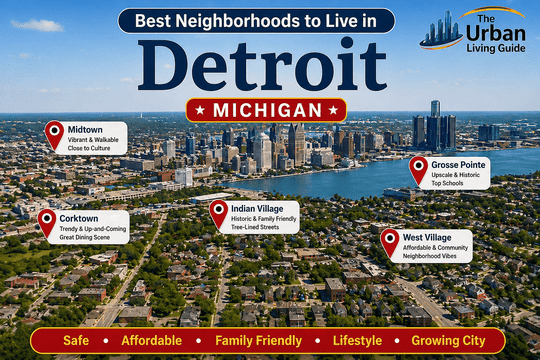
Best Neighborhoods in Detroit, Michigan: Historic Estates, Waterfront Mansions & Downtown High-Rises in 2026
Covering approximately 139 square miles of land area along the Detroit River in Wayne County, the incorporated municipality of Detroit operates under the mayor-council governance of the City of Detroit. Housing an incorporated municipal core population exceeding 620,000 residents and anchoring Southeast Michigan’s primary economic, cultural, and industrial gateway within the burgeoning Metro Detroit region, “Motor City” stands as an essential global center for automotive manufacturing, technological innovation, higher education, medical research, and urban architectural revival.
Relocating across the Motor City requires evaluating distinct municipal boundaries, historic preservation districts, and multi-modal transit corridors managed by the Detroit Department of Transportation (DDOT), SMART bus systems, and regional expressways.
Inbound movers consistently balance direct daily access to primary regional employers—including global corporate headquarters and technology hubs for General Motors (GM Renaissance Center), Ford Motor Company (Michigan Central in Corktown), Rocket Companies, Ally Financial, and healthcare systems anchored by the Detroit Medical Center (DMC) and Henry Ford Health—against daily transit commutes across Interstate 75 (Chrysler Freeway), Interstate 94 (Ford Freeway), Interstate 96, John C. Lodge Freeway (I-10), and Woodward Avenue, with international transit connections via the Detroit-Windsor Tunnel, Ambassador Bridge, and Detroit Metropolitan Airport (DTW).
Join an authentic local tour exploring the historic tree-canopied streets, exclusive waterfront enclaves, and dynamic neighborhoods across Detroit, Michigan:
Key Residential Districts in Detroit, Michigan at a Glance in 2026
| Neighborhood | Location | Distance to Downtown Detroit | Development Status | Transit Connectivity | Cost Level | Best Fit For |
|---|---|---|---|---|---|---|
| Palmer Woods (Northwest Detroit) | Northwest Forested Enclave | ~11 mi north (~15 min drive) | Prestigious Historic Estate Canopies | High (Woodward Ave, 7 Mile Rd, I-94) | High-to-Premium | Executives, Physicians & Historic Architecture Lovers |
| Morgan Waterfront Estates (East Side) | Detroit Riverfront Basin | ~6 mi east | Gated Modern Riverfront Luxury | Moderate (Jefferson Ave, I-375) | Premium | Boating Enthusiasts & Luxury Riverfront Buyers |
| Arden Park (Central Detroit) | Historic Boulevard Core | ~4 mi north | Gilded Age Industrialist Mansions | High (Woodward Ave, I-75, I-94) | Mid-to-High | History Buffs & Industrialist Estate Seekers |
| Downtown Detroit (Central Business District) | Core Urban Commercial Center | 0 mi (Core Hub) | Rapid High-Rise Infill & Riverwalk | Exceptional (QLine, People Mover, DDOT) | Mid-to-High | Tech Professionals, Corporate Staff & Urban Dwellers |
| Indian Village (East Side) | East Riverfront Community | ~4.5 mi east | Meticulously Preserved Century Homes | High (Jefferson Ave, East Vernor Hwy) | Mid-to-High | Community-Minded Buyers & Eastsiders |
Comprehensive Breakdown of Living Options Across Detroit
Palmer Woods (Northwest Detroit) — Gilded Age Estates, Tree-Canopied Streets & Private Security
Situated in northwest Detroit bounded by Seven Mile Road and Woodward Avenue, Palmer Woods is celebrated as one of the Motor City’s most historic, prestigious, and architecturally breathtaking residential neighborhoods. Spanning approximately 188 acres with nearly 295 custom-designed homes, the community operates under active neighborhood preservation standards and maintains dedicated private security patrols.
The neighborhood is defined by grand architectural styles ranging from majestic Colonials and English Tudors to rare Frank Lloyd Wright creations, all set on expansive country-like estate parcels beneath a dense, beautiful canopy of mature trees.
- Housing: Real estate stock features massive, unique historic single-family estates with bespoke millwork and sprawling lawns. Purchase prices typically range from $600,000 to $800,000+ depending on updates, with premier historic market listings extending significantly higher.
- Safety & Crime Rate: Patrolled by the Detroit Police Department (DPD) 12th Precinct and heavily reinforced by dedicated private security patrols funded by the Palmer Woods Association, maintaining a secure enclave environment.
- School District & Education Quality: Governed by Detroit Public Schools Community District (DPSCD), with access to prominent local magnet schools and prestigious private academies across the metropolitan area.
- Walkability & Daily Conveniences: Highly walkable residential interior lanes for recreation and strolling, with commercial convenience shopping, specialty dining, and grocery retailers located just minutes away along Woodward Avenue and McNichols Road.
- Parks & Green Spaces / Pet-Friendliness: Exceptional natural setting anchored by dense natural tree canopies throughout the neighborhood, with nearby access to the Detroit Golf Club and Palmer Park recreation areas. Exceptionally pet-friendly.
- Parking & Traffic Congestion: Private multi-car driveways and detached carriage houses keep the tree-lined avenues free of heavy street congestion. Commuter traffic moves smoothly along Woodward Avenue and nearby thoroughfares.
- Nearby: Under a 15-minute drive south to Downtown Detroit, 20 minutes to Metro Airport (DTW), and easy access to major suburban retail hubs in Birmingham and Royal Oak.
- Noise Levels & Vibe: Quiet, stately, and serene, characterized by birdsong, whispering tree branches, stately historic architecture, and peaceful evening surroundings.
- Medical Facilities & Hospitals: Convenient drive south to the Detroit Medical Center campus, Henry Ford Hospital, and major medical centers in nearby Southfield and Royal Oak.
- Transit Connectivity: Direct roadway positioning along Woodward Avenue (Route 1) and Seven Mile Road, offering rapid connection north toward suburban corridors and south directly into downtown.
- Affordability: Premium luxury tier for Detroit proper; delivers extraordinary architectural square footage and estate prestige at values favorable compared to outer northern suburbs.
- Who It’s Best For: Corporate executives, physicians, attorneys, historic preservationists, and families seeking maximum privacy and architectural distinction.
- Drawbacks: Substantial historic upkeep requirements, higher property tax evaluations on estate parcels, and reliance on personal vehicles for daily errands.
Morgan Waterfront Estates (East Side) — Gated Riverfront Living, Private Docks & Skyline Views
Located along the scenic banks of the Detroit River on the city’s east side near Sandbar Lane, Morgan Waterfront Estates represents one of the most exclusive, gated waterfront enclaves within Detroit proper. Championed by private community association management, this high-end development offers rare direct riverfront access and specialized marine infrastructure.
The neighborhood is defined by massive contemporary waterfront residences featuring expansive multi-story balconies, private boat docks, and panoramic views overlooking the vibrant Detroit River and international shipping channels.
- Housing: Real estate stock features large luxury single-family homes built in the 2000s with private deep-water slips and custom modern finishes. Purchase prices typically range from $700,000 to $1,300,000+ when properties become available on the market.
- Safety & Crime Rate: Patrolled by the DPD 5th Precinct and secured behind private electronic security gates, ensuring a controlled, private residential environment.
- School District & Education Quality: Governed by DPSCD, with convenient access to specialized city magnet programs and private educational institutions throughout Wayne County.
- Walkability & Daily Conveniences: Gated private enclave optimized for waterfront tranquility; everyday shopping, dining, and professional services along Jefferson Avenue are just a short drive away.
- Parks & Green Spaces / Pet-Friendliness: Direct connection to the Detroit Marina and riverfront aquatic recreation, with close proximity to city parks and river trails. Exceptionally pet-friendly.
- Parking & Traffic Congestion: Private multi-car garages and private driveways within the secure gated community grounds keep traffic non-existent. Fast connections onto East Jefferson Avenue.
- Nearby: 12-minute drive to Downtown Detroit, 5 minutes to Belle Isle Park, and 25 minutes to Detroit Metropolitan Airport (DTW).
- Noise Levels & Vibe: Quiet, exclusive, and marine-focused, featuring gentle river breezes, boat traffic on the water, and secluded luxury living.
- Medical Facilities & Hospitals: Direct 10-minute drive to major medical facilities including the Detroit Medical Center and Henry Ford Health downtown campuses.
- Transit Connectivity: Convenient roadway access via East Jefferson Avenue connecting directly into the financial and legal core of downtown Detroit.
- Affordability: Premium waterfront pricing tier; offers rare private boat docks and modern luxury construction unavailable in standard urban neighborhoods.
- Who It’s Best For: Boating enthusiasts, executives, marine lifestyle seekers, and buyers prioritizing gated riverfront privacy.
- Drawbacks: Low housing inventory turnover due to exclusive size, and mandatory homeowners association fees.
Arden Park (Central Detroit) — Gilded Age Industrialist Heritage, Handcrafted Woodwork & Grand Boulevards
Positioned along Arden Park Boulevard and Boston Boulevard just east of the Boston-Edison district, Arden Park is celebrated as a crown jewel of early 20th-century Detroit architecture. Developed originally for the city’s wealthiest industrial titans and corporate executives, the neighborhood operates under strict historic preservation guidelines.
The community is defined by magnificent, large-scale historic homes featuring grand foyers, intricate handcrafted woodwork, and unique historic details such as hidden bookshelf doors, standing as a testament to Detroit’s golden manufacturing era.
- Housing: Real estate inventory consists of grand multi-story historic mansions (often exceeding 6,000 to 8,000 square feet). Purchase prices typically range from $450,000 to $650,000+, with fully restored showcase estates reaching $875,000+.
- Safety & Crime Rate: Patrolled by the DPD 10th Precinct, supported by active neighborhood historic associations and vigilant community block networks.
- School District & Education Quality: Governed by DPSCD, featuring access to nearby public magnet schools and renowned regional private college-preparatory academies.
- Walkability & Daily Conveniences: Beautiful wide median boulevards ideal for walking and jogging; retail plazas, cafes, and markets along Woodward Avenue are easily accessible.
- Parks & Green Spaces / Pet-Friendliness: Defined by majestic landscaped parkway medians, mature shade trees, and quick access to central urban parks. Exceptionally pet-friendly.
- Parking & Traffic Congestion: Ample private carriage houses and wide residential boulevard space prevent parking crowding. Smooth commuter flow via Woodward Avenue and nearby I-75.
- Nearby: 8-minute drive to Downtown Detroit, 5 minutes to New Center medical hubs, and 20 minutes to Detroit Metro Airport (DTW).
- Noise Levels & Vibe: Dignified, historical, and architectural, filled with old-school Motor City character, quiet evenings, and proud homeowner pride.
- Medical Facilities & Hospitals: Immediate 5-minute proximity to Henry Ford Hospital’s main New Center campus and the Detroit Medical Center.
- Transit Connectivity: Immediate access to Woodward Avenue transit lines and the I-75 / I-94 interchange for fast regional transit.
- Affordability: Exceptional value for monumental historic square footage compared to coastal or northern suburban markets.
- Who It’s Best For: Architecture preservationists, history buffs, creative professionals, and buyers wanting grand industrial-era mansions.
- Drawbacks: High historic restoration and utility maintenance costs associated with grand multi-story Gilded Age homes.
Downtown Detroit (Central Business District) — Hudson’s Tower, Riverwalk & Urban Energy
Covering the central commercial core centered along Woodward Avenue, Campus Martius Park, and the Detroit International Riverwalk, Downtown Detroit serves as the financial, entertainment, and cultural heartbeat of Southeast Michigan. Backed by massive multi-billion-dollar investments from corporate leaders and developers, the urban center merges historic skyscraper restorations with ultra-luxury modern high-rises.
The urban core delivers an authentic car-optional lifestyle supported by the QLine streetcar, People Mover, and regional transit systems connecting residents directly to major sports arenas, dining, and employment hubs.
- Housing: Real estate features luxury high-rise condominiums and high-end rental towers—including landmark developments like the newly opened Hudson’s Tower. Purchase and luxury rental prices range widely from $200,000 for compact urban co-ops to $1,000,000 to $1,800,000+ for premier ultra-luxury penthouse suites.
- Safety & Crime Rate: Patrolled by the DPD Central District and heavily supplemented by Downtown Detroit Partnership security ambassadors, maintaining safe, bustling pedestrian foot traffic day and night.
- School District & Education Quality: Governed by DPSCD, with specialized city magnet schools and nearby higher education anchors including Wayne State University and local professional colleges.
- Walkability & Daily Conveniences: Premier pedestrian walkability (Walk Score exceeding 92/100). Residents walk to Whole Foods Market, independent cafes, rooftop lounges, theaters, and professional sports venues (Lions, Tigers, Red Wings, Pistons).
- Parks & Green Spaces / Pet-Friendliness: Anchored by the award-winning Detroit Riverwalk, Campus Martius Park, and Hart Plaza. Extremely pet-friendly urban community.
- Parking & Traffic Congestion: Managed via multi-level structured parking garages and subterranean decks. Event nights at Ford Field, Comerica Park, or Little Caesars Arena bring temporary game-day traffic surges.
- Nearby: Immediate walk to financial district, 5 minutes to Corktown or Eastern Market, and 20 minutes to Detroit Metro Airport (DTW).
- Noise Levels & Vibe: High-energy, cosmopolitan, and fast-paced, featuring bustling outdoor dining, summer festivals, riverfront concerts, and vibrant city nightlife.
- Medical Facilities & Hospitals: Rapid 5-minute drive north to the Detroit Medical Center and Henry Ford Health hospital complexes.
- Transit Connectivity: Outstanding multi-modal transit anchored by the QLine, DDOT bus lines, and fast connections to major expressways including I-75, I-375, and Lodge Freeway.
- Affordability: Mid-to-high urban price bracket; provides brand-new luxury high-rise amenities at pricing more accessible than comparable downtowns in Chicago or New York.
- Who It’s Best For: Tech professionals, corporate executives, sports fans, medical fellows, and urbanites seeking a vibrant, walkable lifestyle.
- Drawbacks: Monthly garage parking fees, major sports and concert event crowds, and limited inventory of detached single-family houses.
Indian Village (East Side) — Century-Old Historic Mansions, Butler Pantries & Close-Knit Community
Covering the historic east-side residential territory nestled just west of West Village along tree-lined avenues, Indian Village is celebrated as one of Detroit’s most architecturally intact, tight-knit, and prestigious historic neighborhoods. Operating under active neighborhood governance, the community features homes over a century old that have been meticulously maintained through generations of dedicated resident stewardship.
The neighborhood is defined by magnificent stone fireplaces, original historic millwork, butler pantries galore, and generous residential lots located just minutes from the Detroit River and Belle Isle.
- Housing: Real estate features meticulously preserved historic 100-plus-year-old architectural masterwork homes. Purchase prices typically range from $450,000 to $800,000+, with top-tier active listings reaching $1,900,000. Many desirable homes trade smoothly through strong off-market community networks.
- Safety & Crime Rate: Patrolled by the DPD 5th Precinct, bolstered by highly active neighborhood watch groups and strong inter-neighbor communication networks.
- School District & Education Quality: Governed by DPSCD, with access to local community schools and premier private academic options across Wayne County.
- Walkability & Daily Conveniences: Exceptional pedestrian-friendly neighborhood streets connecting directly to local coffee shops, boutique fitness gyms, and dining spots in the adjacent West Village commercial corridor.
- Parks & Green Spaces / Pet-Friendliness: Outstanding proximity to nature, featuring short travel distances to Belle Isle Park, riverfront trails, and green neighborhood parkways. Exceptionally pet-friendly.
- Parking & Traffic Congestion: Private multi-car driveways and detached carriage houses keep residential streets clear. Traffic along Jefferson Avenue and local side streets remains manageable.
- Nearby: 10-minute drive to Downtown Detroit, 3 minutes to Belle Isle, and 25 minutes to Detroit Metro Airport (DTW).
- Noise Levels & Vibe: Warm, historic, and community-centric, characterized by friendly neighbors, historic tree-lined walks, and quiet evening ambiance.
- Medical Facilities & Hospitals: Direct 8-minute drive to the Detroit Medical Center and Henry Ford Health systems downtown.
- Transit Connectivity: Fast roadway connections via East Jefferson Avenue and I-375 providing seamless travel across the metropolitan area.
- Affordability: Mid-to-high historic property value tier; delivers unmatched century-old craftsmanship and strong long-term equity growth.
- Who It’s Best For: Community-oriented families, east-side enthusiasts, historic home connoisseurs, and buyers seeking proximity to Belle Isle and the river.
- Drawbacks: High demand causes competitive bidding and fast-moving inventory when homes hit the open market.
Neighborhood Trade-offs: Living Advantages & Drawbacks Across Detroit, Michigan
| Neighborhood | Core Advantages (Pros) | Core Limitations (Cons) |
|---|---|---|
| Palmer Woods | Magnificent historic estate architecture; dense tree-canopied streets; private security patrols; spacious country-like lots. | Substantial historic home maintenance costs; higher property valuations; automobile dependence for everyday shopping. |
| Morgan Waterfront Estates | Exclusive gated community; direct Detroit River frontage; private boat slips and docks; modern luxury layouts. | Very low market inventory turnover; mandatory association fees; premium price tag. |
| Arden Park | Gilded Age industrialist heritage; grand handcrafted woodwork and fireplaces; wide landscaped boulevard medians. | High historic heating and structural upkeep demands; property tax evaluations on grand square footage. |
| Downtown Detroit | Vibrant urban walkability; QLine transit access; Campus Martius Park & Riverwalk; sports arenas and dining. | Monthly structured parking expenses; sports and concert event crowds; limited single-family homes. |
| Indian Village | Meticulously maintained century-old homes; strong community bond; close to Belle Isle Park and West Village cafes. | Fierce buyer competition; fast-moving inventory with many homes trading through private networks. |
Voices of the Community: What Residents Say About Living in Detroit, Michigan
“Moving to Palmer Woods gave us the absolute best of both worlds—stunning historic architecture on estate-size lots under a gorgeous canopy of trees, yet we are just minutes away from everything happening in the city.”
— Marcus Vance, Corporate Director (Verified Local Contributor, Detroit Relocation Insights)
“Living in Indian Village is like stepping back in time to an era of unmatched craftsmanship. Our home has original woodwork, a butler pantry, and a community of neighbors who truly care about preserving the historic fabric of the east side.”
— Sarah Jenkins, Architectural Historian (Verified Resident Review, Metro Detroit Living Forum)
Finding Your Ideal Residential Fit in the Motor City
Selecting your ideal neighborhood in Detroit requires balancing your household budget with daily workplace destinations, family schooling priorities, and regional transportation logistics. Because Wayne County is framed by the Detroit River and interconnected by major expressways like Interstate 75, Interstate 94, and Woodward Avenue, your chosen location dictates whether your daily commute relies on urban streetcar transit in Downtown, private security enclaves in Palmer Woods, or riverfront boating access in Morgan Waterfront Estates.
Corporate professionals at General Motors or Rocket Companies, healthcare practitioners at the Detroit Medical Center or Henry Ford Health, tech innovators in Corktown, and automotive executives should evaluate regional transit corridors to optimize daily convenience.
Beyond transportation corridors, evaluate essential municipal utility and building infrastructure realities. Southeast Michigan experiences four distinct seasons with cold winter conditions and warm summers, making home heating and cooling efficiency through DTE Energy an essential consideration.
In addition, prospective homebuyers evaluating historic Gilded Age mansions in Palmer Woods or Arden Park should inspect slate roofs, boiler heating units, and plumbing systems, while buyers of downtown high-rises should verify HOA policies and parking agreements. Before executing a residential lease or property purchase agreement, verify high-speed fiber broadband availability (such as AT&T Fiber or Xfinity Gigabit) and confirm DPSCD school assignment boundaries.
Essential Local Insights & FAQs for Detroit, Michigan
Which neighborhood in Detroit is considered best for historic architecture and large estate lots?
Palmer Woods and Arden Park are widely regarded as premier historic estate communities in Detroit. Both neighborhoods feature massive, custom-built Gilded Age and early 20th-century mansions designed by prominent architects on expansive, beautifully landscaped grounds.
What is the most walkable neighborhood in Detroit for urban professionals and sports fans?
Downtown Detroit offers the highest walkability in the city, boasting Walk Scores above 92. The urban core allows residents to walk directly to Campus Martius Park, the Detroit Riverwalk, local theaters, and professional sports stadiums including Ford Field, Comerica Park, and Little Caesars Arena.
Are there gated waterfront communities with private boat docks within Detroit proper?
Yes, Morgan Waterfront Estates on the city’s east side provides exclusive gated luxury living along the Detroit River, offering private deep-water slips, secure entry gates, and direct marine access to the river and Detroit Marina.
What are the most affordable areas for historic home buyers and renovators in Detroit?
Historic east-side districts like Indian Village, alongside select boulevards in Arden Park and central neighborhoods, offer exceptional value for historic architectural square footage compared to outer northern suburbs and coastal metropolitan regions.
How manageable is the daily commute from Detroit neighborhoods into regional job centers?
Commuting from Detroit is highly efficient due to direct access to major expressways including I-75, I-94, I-96, and Woodward Avenue. The QLine and DDOT transit systems further streamline travel between residential enclaves, the New Center medical district, and Downtown.
Which Detroit neighborhood is best for healthcare professionals working at major medical centers?
Downtown, Arden Park, and neighborhoods surrounding the New Center district provide the fastest commutes (under 5 to 8 minutes) to major medical institutions including the Detroit Medical Center (DMC) and Henry Ford Health.
Is Detroit an affordable place to live compared to other major Midwestern cities?
Yes, Detroit’s overall cost of living and housing purchase prices remain significantly more accessible than major coastal metros and regional hubs like Chicago, offering spacious historic homes and luxury high-rises at a fraction of typical metropolitan real estate costs.
Detroit, Michigan Relocation Resources & Living Guides
The Urban Living Guide creates deeply researched, practical, and informative city relocation resources designed to help individuals, working professionals, and families navigate complex urban landscapes. By analyzing municipal infrastructure, hyper-local zoning patterns, commuter realities, and housing markets, our guides provide actionable insights so you can make confident, data-backed decisions when moving to major metropolitan areas.
Explore our regional guides across Detroit and Southeast Michigan:
- Living in Detroit, Michigan
- Cost of Living in Detroit, Michigan
- Pros and Cons of Living in Detroit, Michigan
Made your decision to move to the Motor City? Read our comprehensive relocation roadmap: Moving to Detroit, Michigan.
Follow The Urban Living Guide for ongoing regional insights, neighborhood developments, and expert local coverage across Greater Detroit and the state of Michigan.