

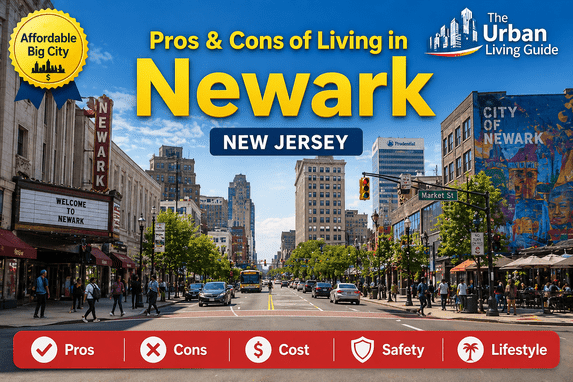
Pros and Cons of Living in Newark, New Jersey
Choosing the right city to call home is never a simple decision — especially when that city carries as much complexity as Newark. Whether you’re relocating for work, looking for an affordable base near New York City, or simply exploring your options in the Garden State, understanding the pros and cons of living in Newark, New Jersey can save you time, money, and surprises.
Newark isn’t a city you can judge from a headline. It has rough edges, yes — but also genuine energy, cultural depth, and a location that very few cities in America can match. Before you decide, here’s an honest, grounded look at what life here actually feels like.
📺 This video by a popular vlogger gives a realistic look at both the advantages and challenges of living in Newark.
Advantages of Living in Newark
1. Unbeatable Access to New York City Newark sits just 8–10 miles from Manhattan, with direct PATH train and NJ Transit connections. Many residents appreciate the ability to work in NYC while paying significantly lower rent — a trade-off that makes real financial sense in 2026.
2. Surprisingly Affordable Housing Compared to Jersey City or Hoboken, Newark offers notably lower rents and home prices. One thing people often mention is how much space you get for your dollar — a 2-bedroom apartment here can cost nearly half of what you’d pay across the Hudson.
3. Newark Liberty International Airport — Right There Living near a major international hub is a genuine lifestyle perk. Frequent travelers love the convenience of a 10-minute drive to one of the East Coast’s busiest airports.
4. Diverse Food and Culture Scene Newark’s Ironbound district is famous for its Portuguese and Spanish restaurants — a food scene that rivals much bigger cities. Many residents appreciate the authentic cultural experience that feels nothing like a tourist-polished neighborhood.
5. Growing Job Market and Investment Major employers like Prudential Financial, Panasonic North America, and several hospital systems are headquartered here. The city has seen steady commercial investment, making it increasingly attractive for young professionals.
Challenges of Living in Newark
1. Crime and Safety Concerns This is the elephant in the room. Some newcomers find it challenging that Newark’s crime rate remains higher than both state and national averages. Neighborhood selection matters enormously — some areas are safe and gentrifying, others genuinely require caution.
2. Public School System Struggles For families with children, the public school quality is a serious consideration. The district has faced long-term funding and performance challenges, pushing many parents toward charter or private school options — an added expense.
3. Traffic and Infrastructure Frustrations If you’re moving from a smaller city, the congestion around the airport corridor and downtown can feel relentless. Some newcomers find it challenging that infrastructure improvements haven’t kept pace with the city’s growth ambitions.
4. Perception Problem Newark’s reputation — sometimes unfairly shaped by outdated narratives — affects everything from social conversations to property values. Even as the city improves, the stigma can be slow to fade for outsiders.
5. Limited Walkable Retail Outside the Ironbound and downtown core, everyday shopping options are thinner than you’d expect for a city this size. Many residents drive to suburban malls for routine errands.
Who Should Consider Living in Newark?
Newark works well for NYC commuters wanting to cut housing costs, young professionals in finance, healthcare, or logistics, and immigrants and multicultural families who thrive in diverse communities. Remote workers who value airport proximity will also find it practical.
Who should think twice? Families prioritizing public school quality and those sensitive to urban safety concerns may find nearby suburbs a better fit.
Final Verdict – Is Newark Right for You?
Newark is a city of real trade-offs. If you can navigate its challenges — particularly around safety and schools — the pros and cons of living in Newark, New Jersey ultimately tip toward value for the right person. The NYC proximity alone is worth serious consideration. For ambitious, practical movers who want urban energy without Manhattan prices, Newark in 2026 delivers more than its reputation suggests.
FAQs
Is Newark, NJ safe to live in? Safety varies by neighborhood. Areas like the Ironbound, Forest Hill, and downtown core are considerably safer than others. Research specific zip codes before committing to a location.
What is the cost of living in Newark compared to NYC? Newark is roughly 30–40% more affordable than Manhattan for housing. Overall cost of living is lower, though NYC wages often offset the difference for commuters.
Is Newark good for families? It depends on priorities. The city offers cultural diversity and affordability, but public school quality is a concern. Many families use charter schools or private options.
What is the average salary needed to live comfortably in Newark? A single person generally needs $55,000–$70,000 annually to live comfortably, accounting for rent, transportation, and daily expenses in 2026.
How is the commute from Newark to New York City? Very manageable. PATH train takes about 20–25 minutes to Midtown Manhattan. NJ Transit offers additional rail options, making it one of the better NYC commuter cities.
Is Newark up and coming? Yes — downtown Newark and several surrounding neighborhoods have seen notable investment, new restaurants, and development activity over the past few years.
Explore More
Explore more details about cost, lifestyle, and neighborhoods in New Jersey’s cities.
Check the detailed guide by The Urban Living Guide on Living in Newark, New Jersey for a complete relocation breakdown.