

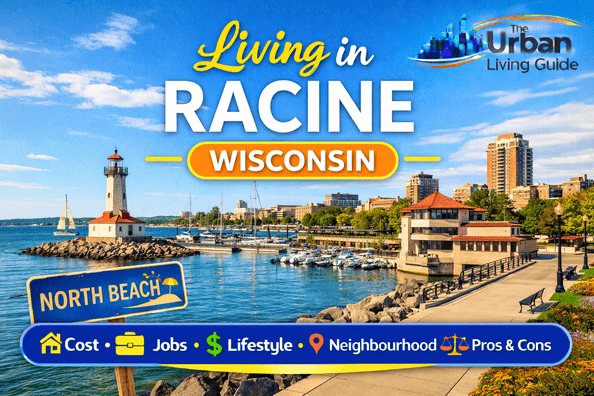
Living in Racine, Wisconsin in 2026: The Complete Local Guide to Belle City Lakefronts, Frank Lloyd Wright Architecture, and Danish Kringle Culture
Stretching across the scenic bluffs where the Root River empties into the shimmering western shore of Lake Michigan, living in Racine, Wisconsin offers an extraordinary fusion of historic industrial innovation, award-winning freshwater beaches, celebrated Danish heritage, and exceptional housing affordability. As the fifth-largest municipality in Wisconsin with a population of approximately 77,000 residents, Racine anchors a vibrant urban center in southeastern Wisconsin, positioned strategically between Milwaukee and the greater Chicago metropolitan area.
Universally celebrated as “The Belle City of the Lakes” and proudly recognized as the “Kringle Capital of America,” Racine commands a distinct cultural identity rooted in nineteenth-century manufacturing prowess, architectural masterpieces, and culinary tradition. Whether you are walking along the pristine sands of North Beach, touring the world-famous Frank Lloyd Wright-designed SC Johnson Administration Building, or sampling fresh buttery kringle pastries from local bakeries, life here delivers an art-infused, highly connected standard of living. Local municipal governance, neighborhood development programs, and public safety initiatives are centrally administered through the official City of Racine Government Portal.
If you haven’t explored this area before, the map below will give you a better sense of its location.
What Makes Racine So Popular & Unique
Over recent decades, Racine has captured widespread recognition as a premier destination for commuters, families, and first-time homebuyers seeking high-quality lakefront living without Chicago or Milwaukee housing pressures. Key factors driving its sustained popularity include:
- Spectacular Lake Michigan Shoreline: Home to world-class freshwater beaches like North Beach, scenic marinas such as Reefpoint Marina, and miles of Root River recreational trails. Explore regional tourism initiatives via the Greater Racine County Tourism Portal.
- World-Renowned Architectural Heritage: A stunning concentration of historic structures, including structures designed by legendary architect Frank Lloyd Wright.
- Exceptional Housing Affordability: A real estate market that allows buyers to secure historic homes, modern apartments, and spacious yards well below national median prices.
- Thriving Manufacturing and Design Economy: A resilient employment engine driven by global corporate headquarters, precision engineering, and specialized industrial manufacturing.
Racine At a Glance: Key Living Metrics
Famous Personalities, Local Icons & Major Brands in Racine
Racine boasts a proud history of nurturing world-famous modernist artists, legendary architects, professional athletes, and global consumer product corporations:
- Georgia O’Keeffe: The world-famous, pioneering modernist artist whose early creative roots connected her deeply to Wisconsin arts education (Georgia O’Keeffe Museum Portal).
- Tyrese Haliburton: The electrifying NBA All-Star and elite playmaker who maintains strong personal roots and community connections throughout Wisconsin.
- Frank Lloyd Wright: The visionary, legendary architect who left an indelible architectural mark on Racine through iconic commercial and residential structures (Frank Lloyd Wright Foundation Portal).
- SC Johnson Headquarters: The globally recognized consumer products giant maintaining its award-winning architectural campus in downtown Racine (SC Johnson Official Portal).
- Twin Disc & InSinkErator: Major industrial leaders maintaining vital manufacturing operations and supporting high-skilled local employment (Twin Disc Official Portal).
Job Market & Business Opportunities with Major Employers
The employment landscape in Racine offers robust career stability, competitive compensation packages, and recession-resistant industrial sectors:
- Advanced Manufacturing and Industrial Production: A historic manufacturing powerhouse supporting machinery fabrication, consumer packaging, and mechanical engineering. Track regional economic indicators via the Bureau of Labor Statistics Midwest Information Office.
- Healthcare and Clinical Services: Anchored by major regional hospital networks delivering extensive nursing, medical research, and patient care careers.
- Logistics and Supply Chain Distribution: Strategically positioned along southeastern Wisconsin transport routes supporting parcel shipping and freight distribution.
- Higher Education and Public Administration: Respected technical colleges and school districts supporting professional education and administrative careers.
Housing & Real Estate Overview in Racine
Navigating the real estate market in Racine requires understanding its neighborhood diversity, historic preservation, and waterfront appeal:
- Diverse Architectural Stock: Features charming Victorian homes in historic districts, mid-century properties in Mount Pleasant, and modern suburban builds across Caledonia and Wind Point. Track property assessments via the Racine County Treasurer and Assessment Portal.
- Market Valuations: Strong commuter interest and lakefront desirability have driven steady appreciation, yet home prices remain significantly more accessible than Milwaukee or Chicago.
- Rental Market Inventory: Average monthly rent spans $700 to $900 for studio units, $900 to $1,200 for one-bedroom apartments, $1,200 to $1,700 for two-bedroom properties, and $1,800 to $3,000+ for single-family rental homes.
- Suburban Alternatives: Surrounding residential communities offer quiet neighborhood streets, modern floor plans, and top-tier public school systems.
Best Neighborhoods in Racine: Finding Your Ideal Community
- Historic Downtown Racine
- Charming urban center packed with historic 19th-century architecture, local boutiques, artisan bakeries, and dining venues. Features historic character properties, loft rentals, and competitive downtown pricing.
- Wind Point
- Upscale lakeside residential community known for stunning estate homes, quiet wooded blocks, and iconic lighthouse views. Features custom lakefront properties, expansive lots, and premium valuations.
- Mount Pleasant
- Thriving suburban-style community offering immaculate parks, excellent public schools, and modern residential developments. Features spacious single-family homes, family neighborhoods, and strong demand.
- North Side Racine
- Established residential neighborhood featuring family-friendly communities, local parks, and accessible everyday amenities. Features mid-century bungalows, split-level homes, and stable residential valuations.
- West Racine
- Popular commercial and residential ward offering highly accessible housing and convenient shopping corridors. Features affordable single-family homes, duplexes, and excellent value for first-time buyers.
- Caledonia Area
- Growing suburban community featuring scenic countryside surroundings, open green spaces, and custom residential builds. Features acreage properties, newer construction homes, and peaceful living.
Watch a recent video by a popular vlogger to understand daily life and vibes in Racine.
What It’s Really Like Living in Racine (Daily Life & Vibe)
Daily life in Racine is characterized by a relaxed, community-focused rhythm that blends lakefront recreation with architectural heritage:
- Lakefront and Beach Routines: Residents spend summer weekends relaxing on the award-winning sands of North Beach, sailing out of Reefpoint Marina, or walking the Root River trails. Check municipal recreation schedules via the Racine Parks and Recreation Portal.
- Bakery and Downtown Strolls: Mornings begin with traditional Danish kringle pastries from local bakeries, followed by afternoon visits to the Racine Art Museum.
- Community Festival Engagement: Participating in vibrant downtown First Fridays, lakeside art fairs, and community celebrations throughout the year.
- Social Atmosphere: Friendly, unpretentious, deeply welcoming, and fiercely proud of local industrial roots and lakeside lifestyle.
Cost of Living in Racine: Monthly Expenses & Salary Needs
Transportation, Commute Dynamics & Transit Realities
Racine provides efficient transportation infrastructure that connects residents smoothly to major regional employment centers:
- Local Bus Services: Comprehensive municipal bus routes connecting downtown commercial centers and residential wards (Racine Belvedere Transit Portal).
- Major Highway Conduits: Excellent regional freeway access via Interstate 94, connecting drivers directly to Milwaukee and Chicago.
- Commute Times: Average daily commutes remain refreshingly brief at approximately 23 minutes during peak hours.
- Aviation Convenience: Proximity to Milwaukee Mitchell International Airport (MKE) and Chicago O’Hare International Airport (ORD) for regional and international travel.
Weather Patterns, Seasonal Realities & Climate Factors
The environmental rhythm of Racine follows a traditional humid continental climate featuring pleasant summers and snowy winters moderated by Lake Michigan:
- Warm, Breezy Summers: Summer daytime highs routinely average 70°F to 85°F with refreshing lake breezes, providing magnificent weather for beach days and outdoor dining. Track active meteorological forecasts via the National Weather Service Milwaukee / Racine Portal.
- Crisp, Snowy Winters: Winter seasons bring brisk temperatures and seasonal snowfall, maintaining a picturesque backdrop along the harbor.
Education, Schools & Major Universities
Educational infrastructure stands as a cornerstone of community growth, workforce development, and academic excellence:
- University of Wisconsin–Parkside: A prominent public university offering comprehensive undergraduate and graduate degree programs nearby (UW–Parkside Official Portal).
- Gateway Technical College: Comprehensive technical college supporting professional skill training and continuing education (Gateway Technical College Portal).
- Carthage College: Respected private liberal arts institution located nearby along the lakefront.
- Racine Unified School District (RUSD): Operating numerous neighborhood schools focused on academic achievement and student enrichment (RUSD Official Portal).
Medical Facilities, Hospitals & Healthcare Systems
Healthcare infrastructure in Racine is advanced, highly specialized, and anchored by premier regional medical networks:
- Ascension All Saints Hospital: Premier regional acute care hospital and medical center delivering emergency medicine, surgical care, and specialty health services (Ascension All Saints Portal).
- Froedtert South & Aurora Health Care: Major regional hospital networks operating specialized outpatient centers and emergency departments across the county.
- Specialized Outpatient Centers: Extensive network of rehabilitation clinics, urgent care centers, and specialized pediatric care providers.
Popular Hotels, Cafes, Dining & Culinary Scene
The hospitality and culinary identity of Racine reflects boutique waterfront hotel comfort, historic downtown dining, and legendary Danish bakery traditions:
- DoubleTree by Hilton Racine Harbourwalk: Sophisticated waterfront hotel located along the harbor, featuring striking marina views and refined hospitality (DoubleTree Racine Harbourwalk Portal).
- Delta Hotels Racine & Clarion Pointe: Modern business and family accommodations providing convenient access to major highways and corporate centers.
- Danish Bakeries & Supper Clubs: Acclaimed local pastry shops serving famous kringle pastries, Friday fish fries, and Wisconsin cheese dishes.
Sightseeing, Cultural Spots & Tourist Attractions
Landmark cultural institutions and natural wonders significantly enhance the daily quality of life for local residents:
- North Beach Racine: Nationally recognized award-winning freshwater beach featuring wide sandy shores and summer concerts.
- Wind Point Lighthouse: Historic 1880 lighthouse standing as one of the oldest and tallest working beacons on the Great Lakes.
- Racine Art Museum (RAM): Nationally acclaimed museum housing North America’s largest contemporary craft collection (Racine Art Museum Portal).
Regional Trade-offs: Pros and Cons of Living in Racine
Who Is Racine Ideal For — And Who Should Avoid It?
Who Racine Is Ideal For
- Families and First-Time Homebuyers: Residents seeking affordable real estate, safe neighborhood schools, and community parks.
- Manufacturing and Healthcare Professionals: Workers pursuing robust career opportunities across SC Johnson and Ascension All Saints.
- Lakefront and Beach Enthusiasts: Individuals who prioritize summer beach days, sailing, boating, and scenic waterfront parks.
- Retirees and Commuters: People looking to maximize their financial budget while enjoying easy access to Milwaukee and Chicago.
Who Should Avoid Racine
- Year-Round Warmth Seekers: Individuals who struggle with freezing winter weather, snowstorms, and extended cold seasons.
- Mega-City Nightlife Seekers: Residents looking for massive 24-hour ultra-dense metropolitan club and theater districts.
- Subway and Heavy-Rail Purists: People requiring extensive underground heavy-rail rapid transit systems without driving.
- Corporate Conglomerate Climbers: Workers requiring massive Fortune 500 financial and tech headquarters found only in top-tier global metros.
Real Experiences: Perspectives from Long-Term Residents (5 to 10+ Years)
“Purchasing our home in Mount Pleasant eight years ago was the best financial and lifestyle choice we’ve ever made. The historic charm, the quiet tree-lined streets, and being minutes away from North Beach give us an incredible quality of life. Winters get cold, but summer beach days and the local Danish bakeries make staying here an absolute joy.”
[Source: r/racine Community Discussions — u/MountPleasantDad018, resident of 9 years]
“Relocating here for a manufacturing engineering role opened my eyes to how far a paycheck can actually stretch in Wisconsin. My commute is less than twenty minutes, housing is reasonable, and weekend visits to the Frank Lloyd Wright buildings downtown are an absolute dream. It’s a city that punches way above its weight class for families.”
[Source: Local Resident Panels & Community Forums — Brenda K., Wind Point homeowner of 11 years]
Frequently Asked Questions About Living in Racine, Wisconsin
Is Racine expensive to live in compared to other U.S. metropolitan areas?
No, Racine maintains a highly affordable cost of living that sits comfortably below the national average, particularly regarding housing costs and everyday consumer goods.
What level of annual salary do individuals need to live comfortably in Racine?
Most single professionals and small families require an annual household income between $60,000 and $85,000 to comfortably cover housing, utilities, transportation, and discretionary spending.
Can residents successfully navigate daily life in Racine without owning a personal vehicle?
While local bus services serve primary corridors, most residents find owning a personal vehicle necessary for efficient commuting and weekend recreation across southeastern Wisconsin.
What are the standout residential neighborhoods recommended for new residents?
Top residential districts include Historic Downtown Racine for urban walkability, Wind Point for upscale lakeside estates, Mount Pleasant for family schools, and West Racine for first-time buyers.
How do daily commute dynamics function for working professionals across the city?
Commuters primarily utilize Interstate 94 and local thoroughfares, enjoying exceptionally brief average daily commute times of around 23 minutes during standard hours.
What core cultural and natural highlights define the local Racine experience?
Residents enjoy exploring North Beach, touring the SC Johnson Frank Lloyd Wright buildings, visiting the Racine Art Museum, and walking along the harbor marina.
🔗 Explore More Cities in Wisconsin
If you’re considering options beyond Racine, The Urban Living Guide has also explored several other well-known cities across Wisconsin. You may also want to check:
- Living in Milwaukee, Wisconsin
- Living in Madison, Wisconsin
- Living in Green Bay, Wisconsin
- Living in Kenosha, Wisconsin
If you’re comparing cities and considering Racine, don’t miss:
- Cost of Living in Racine, Wisconsin
- Pros and Cons of Living in Racine, Wisconsin
- Best Neighborhoods in Racine, Wisconsin
For the full relocation experience, check out: Moving to Racine, Wisconsin
Each of these guides highlights what daily life looks like in different cities, including insights on cost of living, housing trends, job opportunities, local neighborhoods, commute patterns, weather conditions, education options, popular areas, and major employers.
With The Urban Living Guide, all this information is organized in one place so you can easily compare cities and decide which one suits your lifestyle, budget, and future plans.