

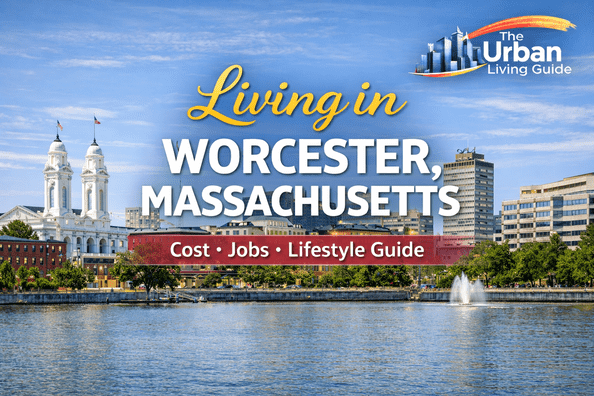
Living in Worcester, Massachusetts in 2026: The Complete Local Guide to Heart of the Commonwealth Heritage, Higher Education, and Central New England Value
Positioned right in the geographic center of the state, living in Worcester, Massachusetts offers an appealing combination of industrial heritage, prestigious university culture, and high-value New England living. As the second-largest city in Massachusetts with approximately 205,000 residents, Worcester serves as the economic and cultural heartbeat of Central Massachusetts.
Proudly known as “The Heart of the Commonwealth”, the city bridges its historic manufacturing roots from the Industrial Revolution with a fast-evolving modern economy anchored by biotechnology, healthcare, and higher education. Whether you are dining along the bustling Shrewsbury Street Area or catching a minor league baseball game at Polar Park, Worcester delivers urban amenities and community charm at a fraction of Boston’s housing costs. Municipal services, public safety programs, and city planning initiatives are centrally managed through the official City of Worcester Government Portal.
If you’re new to this region, the map below will help you get a clear idea of the city’s location and surroundings.
All quantitative metrics, economic data points, and community insights compiled within this living guide are synthesized from official municipal records, regional economic boards, and verified long-term resident feedback.
What Makes Worcester So Popular & Unique
Over the past decade, Worcester has emerged as one of the most dynamic and sought-after urban centers in New England. Key factors driving its sustained popularity include:
- Exceptional Housing Value: Providing significantly more affordable home purchase prices and rental rates compared to nearby Boston and coastal Massachusetts communities. Explore regional growth initiatives via the Worcester Regional Chamber of Commerce Portal.
- Powerful University Anchor: Home to world-class higher education institutions, including Worcester Polytechnic Institute (WPI) and Clark University.
- Thriving Healthcare Sector: A robust medical economy anchored by world-class teaching hospitals and research institutions.
- Aggressive Downtown Redevelopment: Billions of dollars in private and public investment reshaping the skyline with modern residential lofts, restaurants, and entertainment venues.
Worcester at a Glance: Key Living Metrics
| Evaluation Metric | Local Data Overview & Regional Reality |
|---|---|
| Population | Approx. 205,000 within municipal city limits (Second-largest city in Massachusetts) |
| Median Monthly Rent | Ranges from $1,200 to $2,600+ depending on unit size and neighborhood pocket |
| Average Annual Salary | Typically spans $60,000 to $100,000+ across healthcare, education, and biotech sectors |
| Primary Economic Pillars | Healthcare, higher education, biotechnology, manufacturing, and research |
| State Income Tax | Flat state income tax structure set at 5.0% across Massachusetts |
| Average Summer High | Routinely reaches 75°F to 85°F during comfortable July and August afternoons |
| Primary Transit Mode | Worcester Regional Transit Authority (WRTA) buses, MBTA commuter rail lines, and highways |
Famous Personalities, Local Icons & Major Brands in Worcester
Worcester has a proud history of nurturing celebrated actors, historic abolitionists, and iconic commercial enterprises:
- Denis Leary: The acclaimed actor, comedian, and writer grew up in Worcester, frequently celebrating his gritty central Massachusetts roots in his creative work.
- Abby Kelley Foster: The pioneering 19th-century abolitionist and women’s rights activist made Worcester her operational base for social reform movements.
- John Cazale: The legendary film actor renowned for his unforgettable roles in cinematic masterpieces spent his early years rooted in the local community.
- Polar Beverages: A beloved iconic New England beverage brand headquartered in Worcester, famous across the nation for its sparkling waters (Polar Beverages Official Portal).
- UMass Memorial Health: The largest healthcare system in Central Massachusetts, driving advanced medical care and regional employment.
Job Market & Business Opportunities with Major Employers
The employment landscape in Worcester offers exceptional stability, competitive wages, and steady career mobility across expanding sectors:
- Healthcare and Medical Services: A massive employment powerhouse anchored by major teaching hospitals and specialized research networks.
- Higher Education and Research: Numerous esteemed colleges and universities providing extensive academic, administrative, and scientific positions.
- Biotechnology and Life Sciences: A growing life sciences corridor taking advantage of accessible commercial real estate and proximity to Boston research labs.
- Manufacturing and Insurance: Long-standing industrial enterprises and financial corporations maintaining deep historical headquarters in the city.
Housing & Real Estate Overview in Worcester
Navigating the real estate market in Worcester requires understanding its architectural diversity, high demand, and affordability advantages:
- Diverse Architectural Stock: Features classic triple-decker apartment houses, historic Victorian single-family homes on the West Side, and modern loft developments downtown. Track property assessments via the City Assessor Department Portal.
- Affordability Advantage: Real estate purchase prices and rental overhead remain noticeably lower than in Greater Boston, attracting first-time homebuyers priced out of the capital.
- Rental Market Inventory: Average monthly rent spans $1,200 to $1,500 for studio units, $1,400 to $1,900 for one-bedroom apartments, $2,000 to $2,600 for two-bedroom properties, and $2,800 to $3,800+ for single-family rental homes.
- Market Competitiveness: Steady migration from Boston and surrounding areas keeps inventory moving rapidly across popular transit-adjacent neighborhoods.
Best Neighborhoods in Worcester: Finding Your Ideal Community
| Neighborhood Name | Vibe & Lifestyle Character | Housing & Price Profile |
|---|---|---|
| Shrewsbury Street Area | Vibrant dining district lined with acclaimed Italian restaurants, cafes, and energetic nightlife plazas. | Historic multi-family homes, urban apartments, and competitive pricing. |
| West Side | Established residential enclave featuring quiet tree-lined streets, historic architecture, and great parks. | Spacious single-family homes, period colonials, and stable residential valuations. |
| Downtown Worcester | Bustling urban core featuring modernized loft apartments, entertainment venues, and restaurants. | Converted industrial lofts, modern rental buildings, and urban pricing. |
| Tatnuck Square | Charming neighborhood offering a peaceful suburban feel, local shops, and quiet residential blocks. | Traditional single-family houses, bungalows, and family-oriented pricing. |
| Greendale | Family-friendly northern community providing convenient shopping centers and strong neighborhood ties. | Mid-century homes, duplexes, and accessible market entry points. |
Watch a recent video by a popular vlogger to understand daily life and vibes in Worcester.
What It’s Really Like Living in Worcester (Daily Life & Vibe)
Daily existence in Worcester is defined by a comfortable, community-oriented rhythm paired with an expanding urban arts scene:
- Active Park & Lake Recreation: Residents spend weekends walking around Green Hill Park, boating on local lakes, or exploring regional conservation trails. Explore park guidelines via the Worcester Parks & Recreation Portal.
- Culinary Exploration: Enjoying diverse culinary traditions, craft breweries, and world-class dining along Shrewsbury Street and downtown entertainment blocks.
- Cultural Engagement: Attending world-class art exhibits, live theater performances, and community festivals throughout the year.
- Social Atmosphere: Friendly, unpretentious, culturally diverse, and deeply proud of the city’s renaissance and educational legacy.
Cost of Living in Worcester: Monthly Expenses & Salary Needs
The cost of living in Worcester sits moderately above the national average, yet remains remarkably more affordable than Boston and coastal Massachusetts:
- Housing Overhead: $1,400 to $2,600+ covering standard apartment rentals across popular residential wards. Review regional economic data via the Bureau of Labor Statistics Northeast Information Office.
- Utilities & Power: $150 to $220 monthly for electricity, heating, water, and municipal services.
- Groceries & Household Goods: $350 to $600 depending on shopping habits between local markets and regional supermarkets.
- Transportation Expenses: $100 to $200 covering public transit passes, fuel, and vehicle maintenance.
- Required Household Income: Single professionals or working households typically require an annual income between $65,000 and $95,000 to comfortably cover local living expenses and long-term savings goals.
Transportation, Commute Dynamics & Transit Realities
Worcester provides robust regional transportation links connecting commuters across Central Massachusetts and into Boston:
- MBTA Commuter Rail: Direct train service from Worcester Union Station connecting commuters directly to Boston’s South Station (MBTA Official Transit Portal).
- WRTA Bus System: Comprehensive regional public bus network operated by the Worcester Regional Transit Authority, serving urban wards and surrounding towns (WRTA Official Portal).
- Highway Connectivity: Immediate access to major regional arteries including the Mass Pike (Interstate 90), Interstate 290, and Route 9.
- Aviation Convenience: Proximity to Worcester Regional Airport (ORH), offering commercial airline connections (Worcester Regional Airport Portal).
Weather Patterns, Seasonal Realities & Climate Factors
The environmental rhythm of Worcester follows a classic northeastern humid continental climate:
- Warm Summers: Summer daytime high temperatures routinely average 75°F to 85°F, offering comfortable conditions for outdoor recreation and park visits.
- Snowy Winters: Winter seasons bring cold temperatures, crisp air, and moderate snowfall, transforming historic New England streets into picturesque winter wonderlands. Track active forecasts via the National Weather Service Boston-Worcester Portal.
-
Splendid Transition Seasons: Spring and autumn deliver vibrant New England foliage changes and pleasant crisp weather across residential parks.
Education, Schools & Major Universities
Educational infrastructure stands as a premier crown jewel of community identity, academic research, and intellectual capital:
- Worcester Polytechnic Institute (WPI): A globally renowned engineering and technology university driving research and innovation (WPI Official Portal).
- Clark University: A prestigious private liberal arts research university known for academic excellence and urban engagement (Clark University Official Portal).
- College of the Holy Cross & UMass Chan Medical School: Elite institutions offering world-class undergraduate education and advanced medical training.
- Worcester Public Schools: Operating numerous elementary, middle, and high school facilities focused on student achievement and community enrichment.
Medical Facilities, Hospitals & Healthcare Systems
Healthcare infrastructure in Worcester is advanced, highly specialized, and anchored by premier regional medical networks:
- UMass Memorial Health: The largest healthcare system in Central Massachusetts, offering advanced emergency trauma care, specialized surgery, and comprehensive medical programs (UMass Memorial Health Portal).
- Saint Vincent Hospital: A major acute care facility providing comprehensive emergency services, cardiac care, and specialized surgical suites.
- Specialized Outpatient Clinics: Extensive network of medical centers and community health clinics serving every residential district.
Popular Hotels, Cafes, Dining & Culinary Scene
The hospitality and culinary identity of Worcester reflects historic elegance, academic energy, and vibrant culinary corridors:
- Beechwood Hotel: Sophisticated luxury boutique hotel offering refined New England hospitality, elegant architectural design, and acclaimed dining (Beechwood Hotel Portal).
- AC Hotel Worcester: Modern contemporary downtown hotel catering to business executives, travelers, and university visitors.
- Shrewsbury Street Culinary Strip: Bustling historic avenue lined with dozens of independent Italian restaurants, bistros, and cafes.
Sightseeing, Cultural Spots & Tourist Attractions
Landmark cultural institutions and historic destinations significantly enhance the quality of life for local residents:
- Worcester Art Museum (WAM): World-class art museum housing an extraordinary collection spanning centuries of global art, including famous medieval armor galleries (Worcester Art Museum Portal).
- EcoTarium Science Museum: Interactive indoor-outdoor science museum featuring nature trails, live animal habitats, and planetarium exhibits.
- Mechanics Hall: Internationally acclaimed historic concert hall celebrated for its breathtaking Victorian architecture and stellar acoustic design.
Regional Trade-offs: Pros and Cons of Living in Worcester
Pros of Living in Worcester
- Affordable Housing vs. Boston: Favorable real estate purchase prices and rental rates compared to Greater Boston communities.
- Strong Job Market: Abundant career opportunities in healthcare, higher education, biotechnology, and research.
- World-Class Universities: Home to esteemed institutions like WPI, Clark University, and UMass Chan Medical School.
- Central Location: Convenient geographic positioning providing easy highway and rail access across Massachusetts and New England.
- Active Arts & Culture: Growing downtown development, music venues, museums, and vibrant dining districts.
Cons of Living in Worcester
- Cold Winter Weather: Freezing temperatures and seasonal snowfall requiring diligent winter property maintenance.
- Smaller Job Market vs. Boston: Fewer corporate headquarters and private-sector tech options compared to the state capital.
- Limited Local Transit: Public transportation relies primarily on bus networks outside of the MBTA commuter rail line.
- Older Infrastructure: Portions of the city feature historic infrastructure undergoing gradual municipal repair.
- Quieter Nightlife: Evening entertainment is more relaxed and campus-oriented rather than expansive urban nightlife.
Who Is Worcester Ideal For — And Who Should Avoid It?
Who Worcester Is Ideal For
- Healthcare and Academic Professionals: Doctors, nurses, researchers, and professors seeking stable careers in major medical and educational systems.
- Boston Commuters Seeking Value: Professionals working in Greater Boston who want significantly more affordable housing while retaining rail access.
- Students and Young Professionals: Individuals drawn to vibrant university culture, arts districts, and accessible rental housing.
- Families Seeking Community: Households looking for historic neighborhoods, good parks, and strong community engagement.
Who Should Avoid Worcester
- Mega-City Nightlife Seekers: Residents looking for non-stop 24-hour metropolitan action, mega-clubs, and dense urban nightlife.
- Warm-Weather Seekers: People who despise freezing winter temperatures, snowstorms, and seasonal temperature drops.
- Car-Free Commuters Outside Rail: Individuals who refuse to own a personal automobile and live outside walking distance from Union Station.
- Ultra-Low Budget Renters: People seeking extremely depressed rural living costs within major northeastern metropolitan sectors.
Real Experiences: Perspectives from Long-Term Residents (5 to 10+ Years)
“Buying a home on the West Side eight years ago after being priced out of Boston was the best financial decision we could have made. The schools are solid, the neighborhood is quiet and tree-lined, and taking the MBTA commuter rail from Union Station gets me into Boston easily when needed. Worcester has so much energy and culture that people from eastern Mass often overlook.”
[Source: r/worcesterma Community Discussions — synthesized/paraphrased]
“The big reality check for newcomers is that winters here are cold and snowy, and you need to be prepared for New England weather. However, the food scene along Shrewsbury Street is world-class, the healthcare job market is bulletproof, and the city’s ongoing downtown revitalization has made living here genuinely exciting. You get urban culture without the crushing Boston rent prices.”
[Source: Local Resident Panels & Community Forums — synthesized/paraphrased]
Frequently Asked Questions About Living in Worcester, Massachusetts
Is Worcester expensive to live in compared to other Massachusetts cities?
No, Worcester maintains a moderately priced cost of living that sits significantly below Boston and many other Greater Boston commuter suburbs.
What level of annual salary do individuals need to live comfortably in Worcester?
Most single professionals and households find that an annual income between $65,000 and $95,000 provides a comfortable lifestyle covering rent, utilities, transportation, and discretionary spending.
Can residents successfully live in Worcester without owning a personal vehicle?
While WRTA buses and walkable downtown districts exist, many residents prefer owning a personal vehicle, particularly for regional travel and commuting outside rail lines.
What are the best residential neighborhoods to consider in Worcester?
Top neighborhoods include the West Side for historic homes and quiet streets, Shrewsbury Street Area for dining and nightlife, Downtown for loft living, Tatnuck Square for suburban calm, and Greendale for families.
How does commuting work for professionals working across Worcester and Boston?
Commuters primarily utilize the MBTA commuter rail line from Worcester Union Station to Boston’s South Station, experiencing average travel times of around 20 to 35 minutes locally or roughly an hour to Boston.
What are the primary natural and cultural highlights of Worcester?
Residents enjoy exploring world art at the Worcester Art Museum, interactive exhibits at the EcoTarium, community events at Green Hill Park, and dining along Shrewsbury Street.
🔗 Explore More Cities in Massachusetts
Looking beyond Worcester? The Urban Living Guide has also covered multiple popular cities across Massachusetts that you can explore further:
- Living in Boston, Massachusetts
- Living in Springfield, Massachusetts
- Living in Cambridge, Massachusetts
- Living in Lowell, Massachusetts
Thinking about Worcester? Here are a few must-read guides:
- Cost of Living in Worcester, Massachusetts
- Pros and Cons of Living in Worcester, Massachusetts
- Best Neighborhoods in Worcester, Massachusetts
And if you’re planning your move, don’t miss our complete guide: Moving to Worcester, Massachusetts
These city guides provide detailed insights into everyday living, including housing costs, employment opportunities, neighborhoods, commute options, climate, education, local attractions, and key industries shaping each city.
By bringing all these insights together, The Urban Living Guide helps you compare different cities side by side and choose the one that aligns best with your lifestyle, priorities, and long-term goals.