
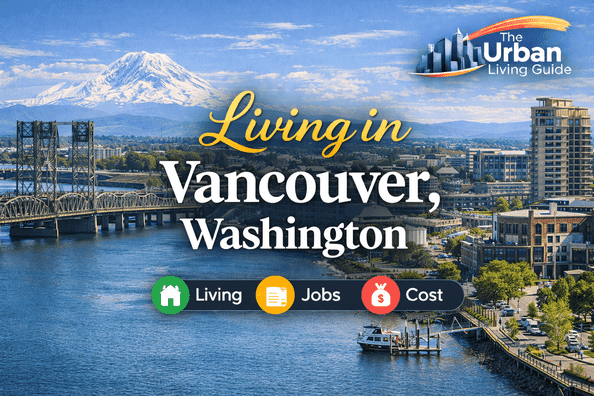
Living in Vancouver, WA: Columbia River Views, Lower Taxes & Family-Friendly Living
Vancouver is a growing city located in southwest Washington along the Columbia River, directly across from Portland, Oregon. Because of its strategic location and expanding economy, many people researching living in Vancouver, Washington are attracted to the city’s balance between suburban comfort and metropolitan accessibility.
The city has a population of around 200,000 residents, making it one of the fastest-growing cities in Washington state. Vancouver is part of the Portland metropolitan area and serves as an important residential and economic hub in the Pacific Northwest.
Vancouver has a rich history and is one of the oldest cities in Washington. The area was originally developed around Fort Vancouver, a historic fur trading post established in the early 19th century.
👉 If you’re exploring this city for the first time, use the map below to get a sense of where it sits.
People considering living in Vancouver, Washington often appreciate its relatively lower housing costs compared to nearby Portland and Seattle, while still enjoying access to large job markets, shopping districts, and outdoor recreation.
The city also offers scenic riverfront parks, modern residential neighborhoods, and strong infrastructure that make it attractive for families and professionals.
Watch a recent video by a popular vlogger to understand daily life and vibes in Vancouver.
Information in this guide is compiled from publicly available data, official city resources, economic reports, and local housing databases to ensure accuracy and reliability.
What Makes Vancouver So Popular
Vancouver has gained popularity in recent years as more people look for affordable alternatives within the Portland metropolitan region. The city offers a quieter suburban lifestyle while still being close to a major urban center.
Key reasons why people choose Vancouver include:
-
- Close proximity to Portland job market
- No state income tax in Washington
- Growing residential neighborhoods
- Scenic Columbia River waterfront
- Access to mountains, forests, and outdoor recreation
The city has also invested heavily in revitalizing its waterfront district, which now features restaurants, parks, walking trails, and residential developments.
Because of these advantages, living in Vancouver, Washington has become increasingly attractive for commuters, families, and remote workers.
Famous Personalities, Sports & Major Brands from Vancouver
Vancouver has produced several notable personalities across sports, entertainment, and media.
-
- Tonya Harding – Olympic figure skater
- Sam Elliott – Hollywood actor known for Western films
- Derek Anderson – Former NFL quarterback
While Vancouver itself does not host major professional sports teams, residents frequently support nearby Portland teams such as:
-
- Portland Trail Blazers (NBA)
- Portland Timbers (MLS)
Several major companies and institutions operate in the Vancouver area.
-
- Nautilus Inc. (fitness equipment company)
- ZoomInfo Technologies
- HP Inc. (large corporate campus nearby)
These businesses contribute significantly to Vancouver’s local economy.
Best Neighborhoods in Vancouver
Vancouver offers a range of neighborhoods suitable for families, professionals, and retirees.
-
Felida
Felida is one of the most desirable neighborhoods in Vancouver. It offers quiet residential streets, parks, and scenic river views.
-
Fishers Landing
Fishers Landing is a popular suburban neighborhood with good schools, shopping centers, and modern housing developments.
-
Downtown Vancouver
Downtown Vancouver has experienced major revitalization in recent years. The area now offers apartments, restaurants, and riverfront parks.
-
Cascade Park
Cascade Park is a family-friendly area known for its affordability and convenient access to highways and schools.
-
Salmon Creek
Salmon Creek is located in north Vancouver and is popular for its suburban environment and proximity to Washington State University Vancouver.
Housing & Rent in Vancouver
Housing affordability is one of the reasons many people consider living in Vancouver, Washington. While prices have increased in recent years, they are still generally more affordable than Seattle.
The city offers a mix of apartments, suburban homes, and new residential developments.
Average monthly rental estimates:
-
- Studio apartment – $1,100 to $1,400
- 1 Bedroom apartment – $1,300 to $1,700
- 2 Bedroom apartment – $1,800 to $2,300
- Family home rental – $2,500 to $3,500
Rental figures are based on aggregated listing data and recent market trends.
Because of its proximity to Portland and attractive housing options, Vancouver has become a popular relocation destination.
Job Market & Business Opportunities
The economy of Vancouver is supported by several industries.
Major industries include:
-
- Healthcare and medical services
- Technology and corporate offices
- Manufacturing and logistics
- Retail and service industries
- Education
Many residents also commute to Portland for employment in technology, finance, and creative industries.
Average salaries in the Vancouver region typically range between $60,000 and $110,000 annually, depending on profession and experience.
This combination of job opportunities and suburban lifestyle makes living in Vancouver, Washington appealing to many professionals.
Major Companies & Headquarters in Vancouver
Several major employers operate in the Vancouver area.
Major companies include:
-
- ZoomInfo Technologies
- Nautilus Inc.
- PeaceHealth Medical Group
- HP Inc. (regional offices)
- Fisher Investments (nearby)
These organizations provide thousands of jobs across the region.
What It’s Really Like Living in Vancouver, Washington
Daily life while living in Vancouver, Washington offers a comfortable suburban environment combined with access to a large metropolitan region.
Residents enjoy scenic parks, riverfront trails, and family-friendly neighborhoods. The Vancouver Waterfront area has become one of the city’s most popular destinations with restaurants, cafes, and walking paths along the Columbia River.
Weekend activities often include:
-
- Exploring Columbia River waterfront parks
- Hiking in nearby forests and mountains
- Visiting farmers markets
- Day trips to Portland or the Pacific Coast
Because of its location and lifestyle benefits, Vancouver has become one of the fastest-growing cities in Washington.
Cost of Living in Vancouver
The cost of living in Vancouver is moderately high but still more affordable than many large West Coast cities.
Typical monthly expenses include:
-
- Rent – $1,300 to $2,300
- Utilities – $150 to $220
- Groceries – $350 to $600
- Transportation – $120 to $250
- Healthcare – $180 to $400
Compared to Seattle, Vancouver offers lower housing costs while still providing access to a strong regional economy.
Transportation & Commute
Vancouver provides several transportation options for residents.
-
- C-TRAN public bus network
- Interstate 5 highway access
- Commuting routes into Portland
- Portland International Airport nearby
Average commute times range between 20 and 35 minutes, depending on destination.
Weather & Environment
Vancouver has a typical Pacific Northwest climate.
Weather patterns include:
-
- Mild summers with temperatures around 70–80°F
- Cool and rainy winters
- Beautiful green landscapes
- Comfortable spring and autumn seasons
The region’s natural beauty is one of the major reasons people enjoy living in Vancouver, Washington.
Popular Hotels, Cafes & Restaurants
Vancouver’s hospitality industry has expanded rapidly in recent years.
Popular hotels include:
-
- Hilton Vancouver Washington
- AC Hotel Vancouver Waterfront
- Heathman Lodge
The city also has many cafes, restaurants, and breweries throughout downtown and the waterfront district.
Sightseeing & Attractions
Vancouver offers several attractions and historic landmarks.
Popular places include:
-
- Fort Vancouver National Historic Site
- Vancouver Waterfront Park
- Esther Short Park
- Pearson Air Museum
- Columbia River trails
These locations highlight the city’s history and natural beauty.
Budget Stay / Hostels
Visitors can find affordable accommodation options in Vancouver.
Examples include:
-
- Budget hotels near Interstate 5
- Guesthouses near downtown
- Affordable motels along major highways
These options are suitable for travelers exploring the region.
Education & Universities
Vancouver has several well-known educational institutions.
Major universities include:
-
- Washington State University Vancouver
- Clark College
- University of Portland (nearby)
These institutions contribute to the region’s education and research environment.
Quick Snapshot of Living in Vancouver, Washington
| Category | Snapshot |
|---|---|
| Population | Approximately 200,000 residents, making Vancouver the fourth-largest city in Washington |
| Typical Rent | Around $1,300–$2,300 per month, depending on neighborhood and apartment size |
| Typical Home Price | Generally $450,000–$650,000+, often offering better value than nearby Portland suburbs |
| Average Salary | Roughly $60,000–$110,000+, with opportunities in healthcare, technology, manufacturing, and professional services |
| Major Industries | Healthcare, Technology, Manufacturing, Logistics, Professional Services |
| Average Commute | About 20–35 minutes, with many residents commuting to the Portland metro area |
| Climate | Mild Pacific Northwest climate with wet winters, pleasant summers, and limited snowfall |
| Best Known For | No state income tax, Columbia River access, and proximity to Portland without living in Oregon |
| Lifestyle | Family-friendly, outdoor-oriented, and popular with professionals seeking lower taxes and suburban comfort |
| Outdoor Access | Columbia River waterfront, hiking trails, parks, lakes, and easy access to the Columbia River Gorge |
Pros and Cons of Living in Vancouver, Washington
Pros
-
- No state income tax in Washington
- Access to Portland job market
- Scenic riverfront parks
- Growing economy and infrastructure
- Family-friendly communities 🙂
Cons
-
- Traffic during Portland commutes
- Rainy winters
- Housing prices increasing
- Limited nightlife compared to large cities
- Some suburban areas still developing
Is Vancouver, Washington a Good Place to Live?
Whether Vancouver is a good place to live depends on what you’re looking for. If your priorities include lower taxes, access to Portland-area jobs, family-friendly neighborhoods, and outdoor recreation, Vancouver can be a very attractive option. However, those seeking a highly urban lifestyle may prefer living closer to downtown Portland.
Vancouver may be a good fit if you:
-
- Want to benefit from Washington’s no state income tax
- Work in the Portland metro area but prefer a quieter community
- Are looking for more housing value than many West Coast cities offer
- Enjoy outdoor activities, waterfront areas, and nearby hiking destinations
- Want a family-friendly environment with established neighborhoods
- Need access to a large regional economy without living in a major city center
Bottom Line:
Vancouver is often a strong choice for families, commuters, and remote workers who want to balance affordability, lifestyle, and access to the broader Portland job market. The right decision ultimately depends on your budget, commute preferences, and desired pace of life.
FAQs
Is Vancouver expensive to live in?
Vancouver is moderately expensive but still more affordable than Seattle.
What salary is needed to live comfortably in Vancouver?
Many residents find that salaries between $65,000 and $100,000 allow a comfortable lifestyle.
Is Vancouver safe to live in?
Yes, Vancouver is generally considered a safe city with family-friendly neighborhoods.
Is Vancouver family friendly?
Yes, the city offers parks, schools, and community facilities suitable for families.
What are the best neighborhoods in Vancouver?
Felida, Fishers Landing, Downtown Vancouver, Cascade Park, and Salmon Creek.
Can you live in Vancouver without a car?
It is possible, but most residents prefer using a car for convenience.
🔗 Explore More Cities in Washington
If you’re exploring more options beyond Vancouver, The Urban Living Guide has covered several other popular cities in Washington. You can also check:
Want to learn more about Vancouver? Check out these helpful guides:
Ready to make your decision? Explore our complete guide here: Moving to Vancouver, Washington
These guides give you a complete picture of what it’s like living across different cities, covering everything from cost of living, housing, and job opportunities to neighborhoods, commute, weather, education, popular places, and major employers.
The Urban Living Guide brings together these local insights in one place, helping you compare cities easily and make a confident, well-informed decision based on your lifestyle and goals.