

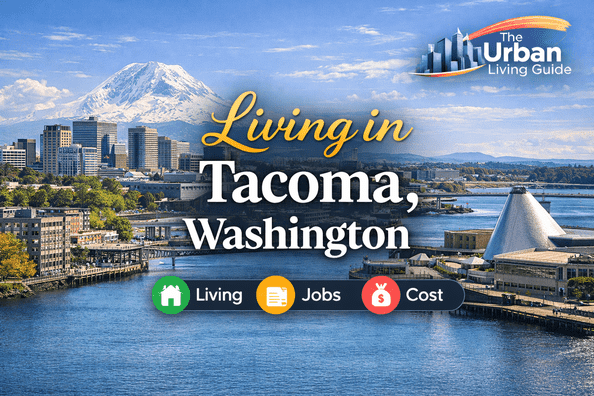
Living in Tacoma, WA: Museum Districts, Puget Sound Views & Affordable City Living
If you’re considering living in Tacoma, Washington, you’re probably looking for a city that offers access to the Pacific Northwest lifestyle without Seattle’s crushing price tag. Tacoma combines waterfront living, growing job opportunities, historic neighborhoods, and a thriving arts scene, making it one of the most appealing relocation destinations in the Puget Sound region. Spanning across Pierce County, this dynamic city supports roughly 220,000 residents, serving as a major economic and cultural anchor south of Seattle.
From the revitalized downtown and world-class Museum District to scenic, snow-capped views of Mount Rainier and the deep waters of the Puget Sound, the city delivers an unbeatable blend of urban convenience and natural beauty. Historically nicknamed “The City of Destiny” due to its selection as the western terminus of the Northern Pacific Railroad in the late 1800s, Tacoma has transformed into a vibrant urban center. Whether you are an arts enthusiast drawn to its glass-blowing culture or a commuter seeking reasonable housing options within reach of major employment hubs, Tacoma provides a practical and inspiring alternative to nearby metropolitan centers.
What Makes Tacoma So Popular & Unique
Tacoma commands immense popularity because it offers a thriving coastal lifestyle, rich cultural institutions, and striking natural backdrops at a more approachable cost of living than Seattle. Centered around its dramatic waterfront and thriving commercial corridors, the city has undergone massive downtown revitalization, bringing new apartments, award-winning restaurants, and entertainment venues to the South Sound. For newcomers looking to access municipal services, utility information, or local event calendars, the official City of Tacoma portal serves as an essential digital resource.
- World-Class Museum District: Home to internationally acclaimed cultural institutions like the Museum of Glass and the Tacoma Art Museum.
- Stunning Natural Backdrop: Breathtaking coastal vistas overlooking the Puget Sound with towering views of Mount Rainier on clear days.
- The Port of Tacoma: A massive economic driver and one of the largest shipping ports on the West Coast, anchoring regional trade and logistics.
- Exceptional Outdoor Access: Immediate proximity to the 700-acre wonderland of Point Defiance Park and pristine Pacific Northwest wilderness.
Tacoma at a Glance: Key Relocation Metrics
Reviewing these baseline statistics can help set realistic expectations for your transition to Pierce County. These figures reflect current Puget Sound market conditions and economic benchmarks.
| Metric | Tacoma City Data | Regional Context |
|---|---|---|
| City Population | ~220,000 Residents | Core economic hub for the South Puget Sound region |
| Average 1BR Rent | $1,400 – $1,800 | More affordable than Seattle, though rising steadily |
| Median Home Price | $450,000 – $530,000 | Significantly below Seattle and Bellevue real estate medians |
| Average Commute | 25 – 40 Minutes | Shorter locally; longer via Sound Transit for Seattle commuters |
| Top Industries | Healthcare, Maritime, Logistics, Education | Port operations, government services, and tech |
If you haven’t come across this city before, the map below gives you a quick view of its location.
Famous Personalities, Glass Artists & Major Brands in Tacoma
Tacoma’s cultural footprint is deeply linked to world-class artistic innovation, legendary musical roots, and massive maritime commerce that powers the western seaboard.
- Notable Personalities: The city is famous as the early home of legendary singer and actor Bing Crosby, the birthplace of world-renowned glass sculptor Dale Chihuly, and notable athletes like NBA player Isaiah Thomas and former NCAA champion Adam Morrison.
- Professional Sports: Sports run through the local culture, supported by passionate fanbases cheering for the Tacoma Rainiers (Triple-A Minor League Baseball) and the Tacoma Stars (indoor professional soccer).
- Corporate Footprint: The regional economy is anchored by massive healthcare and utility organizations, including MultiCare Health System, Tacoma Public Utilities, Columbia Bank, and TrueBlue Inc.
Job Market & Business Opportunities with Major Employers
Tacoma’s job market is robust, diversified, and strategically positioned to benefit from both local industrial strength and commuter access to the wider Puget Sound economy. Key sectors include advanced healthcare administration, higher education, international maritime shipping via the Port of Tacoma, and government services.
Major employers providing thousands of stable careers include MultiCare Health System, Tacoma Public Utilities, the University of Washington Tacoma, and Columbia Bank. Official economic reference data from the Washington State Employment Security Department highlights that average local salaries range comfortably between $60,000 and $110,000 annually, providing strong middle-class purchasing power relative to housing costs.
- Entry-level roles: Typically range between $45,000 – $60,000 across administrative, retail, and hospitality sectors.
- Mid-career professionals: Generally span $65,000 – $95,000 for experienced nurses, educators, and logistics managers.
- Specialized healthcare or corporate roles: Frequently scale to $110,000+, supporting comfortable homeownership across the South Sound.
Housing & Real Estate Overview in Tacoma
Housing affordability remains the single biggest catalyst drawing homebuyers to Tacoma from expensive northern enclaves like Seattle. In 2026, median home prices range between $450,000 and $530,000, allowing buyers to purchase gorgeous historic homes in the North End or craftsman properties with yards for significantly less than King County prices.
The rental market is active and diverse, offering everything from downtown high-rise apartments to suburban rental homes. Current average monthly rent projections are:
- Studio Apartment: $1,200 – $1,500
- 1 Bedroom Apartment: $1,400 – $1,800
- 2 Bedroom Apartment: $1,900 – $2,400
- Family Home Rentals: $2,800 – $3,800+
Securing property here provides exceptional long-term equity potential, though rising demand has made swift action essential for prospective buyers.
Best Neighborhoods in Tacoma: Finding Your Ideal Community
Choosing the right neighborhood in Tacoma defines your daily commute, architectural surroundings, and community vibe. Neighborhood insights are based on local housing trends, safety reports, and resident surveys. The table below outlines the most prominent residential zones.
| Neighborhood / Category | Location, Pricing & Community Overview |
|---|---|
| North End (Desirable & Historic) | One of Tacoma’s most prestigious and sought-after areas. Features magnificent historic homes, tree-lined streets, and stunning panoramic views across the Puget Sound. |
| Downtown Tacoma (Urban Core) | Ideal for people who enjoy urban living. Features modern loft apartments, world-class museums, trendy restaurants, and entertainment venues within walking distance. |
| Proctor District (Charming & Walkable) | A charming, highly walkable neighborhood known for local artisan shops, weekend farmers markets, specialty bakeries, and an inviting community atmosphere. |
| Stadium District (Architectural & Scenic) | Offers breathtaking historic buildings, unique brick architecture, and scenic waterfront views. Highly popular among young professionals and couples. |
| South Tacoma (Affordable & Accessible) | Provides more affordable housing options, spacious lots, and convenient access to commercial shopping centers and major transportation arteries. |
What It’s Really Like Living in Tacoma, Washington (Daily Life & Vibe)
Daily life in Tacoma combines a rugged maritime identity with a burgeoning arts culture and relaxed Pacific Northwest pacing. Residents enjoy a comfortable routine filled with weekend strolls through Point Defiance Park, exploring glass galleries in the Museum District, and dining at local waterfront bistros along Ruston Way. Because Tacoma is smaller than Seattle, daily commutes are shorter and neighborhood interactions feel much more personal.
Weekends are practically designed for outdoor exploration, whether that means hiking alpine trails near Mount Rainier, kayaking along Puget Sound inlets, or visiting neighborhood farmers markets in Proctor. While the city maintains an industrial edge, its dramatic coastal scenery and vibrant creative community create an exceptionally rewarding place to call home.
Step into the rhythm of the South Sound and explore everyday sights through the lens of local creators:
Cost of Living in Tacoma: Monthly Expenses & Salary Needs
Tacoma offers a more approachable cost of living than nearby Seattle, though expenses sit moderately above the national average. Cost estimates are derived from official statistics and city-level cost databases. To maintain a secure, comfortable standard of living, cover housing costs, and enjoy local dining, an individual professional should target a salary of $65,000+, while households generally require $100,000+.
- Average Rent: $1,400 to $2,400 depending on apartment size and neighborhood.
- Monthly Utilities: $140 – $220 (Covering electricity, water, and heating).
- Groceries & Household Goods: $350 – $600 per month based on household needs.
- Transportation: $100 – $250 for public transit passes or vehicle operation.
- Healthcare Costs: Aligned with regional benchmarks, supported by massive health networks.
Transportation, Commute Dynamics & Transit Realities
Getting around Tacoma and connecting to the wider Puget Sound region is supported by a robust multi-modal transportation network:
- Sound Transit Commuter Rail: Providing reliable passenger train service connecting Tacoma commuters straight up to Seattle for work.
- Pierce Transit & Light Rail: Comprehensive local bus networks alongside the T Line light rail connecting downtown and the Stadium District.
- Highway Access: Immediate access to Interstate 5, providing direct driving routes north toward Seattle or south toward Olympia.
- Commute Times: Average daily commute times range between 25 and 40 minutes depending on your final destination.
- Airport Proximity: Seattle–Tacoma International Airport (SEA) is easily accessible via a convenient drive up I-5.
Weather Patterns, Seasonal Realities & Climate Factors
Tacoma experiences a mild Pacific Northwest marine climate characterized by distinct seasonal conditions:
- Spring: Mild temperatures and blossoming flora, offering wonderful conditions for exploring regional parks and waterfront trails.
- Summer: Pleasant, warm, and dry, with daytime temperatures hovering comfortably between 70°F and 80°F.
- Autumn: Crisp coastal air accompanied by frequent overcast skies and transition rain showers.
- Winter: Cool with frequent rain and overcast days, though heavy snow remains rare in the immediate coastal basin.
- Climate Reference: Official meteorological tracking and climate data are provided by the National Weather Service Western Washington region.
Education, Schools & Major Universities
Higher education serves as an important intellectual anchor for the local community. Tacoma hosts respected higher education institutions such as the University of Washington Tacoma, Pacific Lutheran University, and Tacoma Community College. For families navigating K-12 education, the city offers public options alongside specialized community magnet programs and local private schools.
Medical Facilities, Hospitals & Healthcare Systems
Access to advanced medical care is one of Tacoma’s greatest community strengths. The city is home to massive regional health networks, anchored by MultiCare Health System (operating Tacoma General Hospital and Allenmore Hospital) and CHI Franciscan Health (St. Joseph Medical Center). These premier hospital systems provide comprehensive emergency care, specialized surgical units, and wellness clinics locally.
Popular Hotels, Cafes, Dining & Culinary Scene
Tacoma’s hospitality and culinary scene has blossomed significantly, blending historic industrial brick venues with Pacific Northwest creativity.
- Popular Hotels: Visitors and business travelers frequently book stays at standout local design properties like Hotel Murano, McMenamins Elks Temple, or the Silver Cloud Hotel Tacoma on the waterfront.
- Cafes & Social Hubs: Artisan coffee roasters and historic bakeries thrive throughout the Proctor District, Stadium District, and Downtown, acting as popular morning gathering spots.
- Restaurants: From fresh Pacific seafood and farm-to-table bistros along Ruston Way to independent gastropubs and craft breweries, Tacoma’s food scene is diverse and thriving.
Sightseeing, Cultural Spots & Tourist Attractions
Residents live surrounded by world-class museums, historic maritime sites, and stunning coastal parks.
- Museum of Glass: A striking architectural landmark featuring live hot-shop glassblowing performances and a magnificent outdoor reflecting pool.
- Point Defiance Park: A sprawling 700-acre oasis offering old-growth forests, an award-winning zoo, beaches, and dramatic Puget Sound viewpoints.
- Tacoma Art Museum: Showcasing a premier collection of Northwest art and national glass masterpieces in the heart of downtown.
- LeMay – America’s Car Museum: A massive museum complex celebrating the history and design of the American automobile.
Regional Trade-offs: Pros and Cons of Living in Tacoma
Every major city requires compromise. Here is the unvarnished reality for anyone planning a move to the City of Destiny in 2026:
Pros:
- Significantly more affordable housing compared to nearby Seattle.
- Stunning waterfront parks, marinas, and scenic views of Mount Rainier.
- A thriving, nationally recognized arts, museum, and glass-blowing culture.
- Strong access to major Puget Sound employment markets and port careers.
- Fantastic outdoor recreation opportunities right in your backyard.
Cons:
- Cool, rainy winter weather with frequent overcast skies.
- Traffic congestion along Interstate 5 during peak commuting hours.
- Rising real estate prices as more buyers move south from Seattle.
- A more modest late-night nightlife and entertainment infrastructure than Seattle.
- Urban development varies significantly across different neighborhood pockets.
Who Is Tacoma Ideal For (and Who Should Avoid It?)
Ideal For: Homebuyers priced out of Seattle, commuters utilizing Sound Transit, healthcare professionals, art enthusiasts, and families seeking coastal Pacific Northwest living.
Who Should Avoid It: Individuals requiring the massive corporate scale and dense nightlife of a tier-one metropolis, buyers expecting cheap rural home prices, and those who despise rainy winter climates.
Real Experiences: Perspectives from Long-Term Residents (5 to 10+ Years)
Data gives you the metrics, but daily life gives you the truth. Here is what veteran locals have to say about navigating Tacoma:
“We got priced out of Seattle years ago and moving to the Stadium District was the best decision we ever made. You still get the Puget Sound views, incredible restaurants, and a real community feel, but your mortgage doesn’t give you a heart attack. Taking the Sound Transit train up to Seattle for a concert is super easy.”
[Source: r/Tacoma Community Discussions]
“Point Defiance Park and the Ruston Way waterfront alone make living here worth it. The city has a gritty industrial charm that some people don’t get, but the arts scene and the local pride are totally real. Rent and home prices have jumped up, so you have to shop around, but it’s an amazing place to live.”
[Source: Local Neighborhood Survey Threads]
Frequently Asked Questions About Living in Tacoma, Washington
Is Tacoma, Washington expensive to live in?
Tacoma is moderately expensive due to its Pacific Northwest location, but it remains significantly more affordable than nearby Seattle and Bellevue.
What salary do you need to live comfortably in Tacoma?
Many residents find that an annual salary between $65,000 and $100,000 provides a comfortable lifestyle, depending heavily on housing choices and family size.
Is Tacoma safe for residents and families?
Yes, Tacoma is generally safe, though safety conditions and crime rates vary significantly by neighborhood district, with areas like the North End and Proctor being very secure.
How do commuters travel from Tacoma to Seattle?
Commuters frequently utilize the Sound Transit commuter rail line, express buses, or drive north via Interstate 5 depending on their exact work destination.
What are the best neighborhoods for families in Tacoma?
The North End, Proctor District, and Stadium District are widely praised for their historic charm, walkability, family parks, and community safety.
What is Tacoma best known for culturally?
Tacoma is internationally celebrated for its rich glass art culture—anchored by the Museum of Glass and Dale Chihuly—as well as its historic maritime port.
🔗 Explore More Cities in Washington
If you’re exploring more options beyond Tacoma, The Urban Living Guide has covered several other popular cities in Washington. You can also check:
- Living in Seattle, Washington
- Living in Spokane, Washington
- Living in Vancouver, Washington
- Living in Bellevue, Washington
Thinking about Tacoma? Here are a few must-read guides:
- Cost of Living in Tacoma, Washington
- Pros and Cons of Living in Tacoma, Washington
- Best Neighborhoods in Tacoma, Washington
And if you’re planning your move, don’t miss our complete guide: Moving to Tacoma, Washington
These guides give you a complete picture of what it’s like living across different cities, covering everything from cost of living, housing, and job opportunities to neighborhoods, commute, weather, education, popular places, and major employers.
The Urban Living Guide brings together these local insights in one place, helping you compare cities easily and make a confident, well-informed decision based on your lifestyle and goals.