
What Everyday Life in Wilmington Feels Like Near North Carolina’s Coast
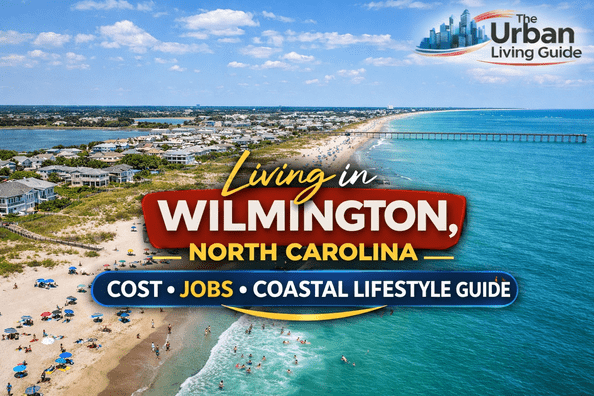
Living in Wilmington, North Carolina offers a unique mix of coastal charm, tourism-driven economy, and relaxed beach lifestyle. Located in southeastern North Carolina along the Atlantic coast, Wilmington has a population of approximately 125,000 residents, with the broader metro area nearing 300,000.
Unlike Charlotte’s finance-heavy environment or Raleigh’s tech ecosystem, Wilmington’s economy is driven by tourism, healthcare, film production, education, and marine industries. The city is home to University of North Carolina Wilmington (UNCW) and benefits from steady healthcare employment through Novant Health New Hanover Regional Medical Center. Wilmington has also been known as a filming location for major productions, earning the nickname “Hollywood East.”
👉 If you haven’t explored this area before, the map below will give you a better sense of its location.
Many people relocate here for coastal living, retirement appeal, and slower-paced lifestyle. The overall vibe is scenic, community-oriented, and outdoor-focused.
Relocating to Wilmington often attracts retirees, remote workers, hospitality professionals, healthcare employees, and small business owners. While the city offers strong lifestyle appeal, housing costs have risen due to coastal demand. Living in Wilmington, North Carolina works best for those prioritizing beach access and quality of life over large-city salaries.
Watch a recent video by a popular vlogger to understand daily life and vibes in Wilmington.
“Information in this guide is compiled from publicly available data, official city resources, economic reports, and local housing databases to ensure accuracy and reliability.”
Last updated: February 2026
🌴 What Makes Wilmington So Popular?
Wilmington is popular for its beaches, historic downtown riverwalk, boating lifestyle, and mild winters. It offers a rare combination of coastal access, university energy, and retirement-friendly communities.
Nationally, it’s recognized as one of the top small coastal cities for relocation and retirement.
🏘 Best Neighborhoods in Wilmington
Choosing the right neighborhood significantly impacts hurricane risk exposure, commute times, insurance costs, and daily convenience.
“Neighborhood insights are based on local housing trends, safety reports, and resident surveys.”
🔹 Luxury & Waterfront Areas
Landfall
Gated golf and waterfront community with upscale homes.
Median Home Price: $900,000+
Best for: High-income retirees and executives.
Figure Eight Island
Private coastal community with oceanfront luxury properties.
🔹 Family-Friendly Areas
Ogden
Popular suburban zone with access to good schools and beach proximity.
Porters Neck
Growing residential area with newer developments.
Leland (across Cape Fear River)
More affordable alternative while staying near Wilmington.
🔹 Budget-Friendly Areas
Monkey Junction
More affordable housing options compared to coastal zones.
Carolina Beach outskirts
Lower pricing than Wrightsville Beach but still coastal access.
🔹 Young Professionals & Urban Living
Downtown Wilmington
Historic riverfront district with apartments, nightlife, restaurants.
Midtown
Convenient access to shopping and UNCW.
Read full breakdown in our detailed guide on Best Neighborhoods in Wilmington.
🏠 Housing & Rent in Wilmington
Housing is the largest expense, especially due to coastal demand and insurance premiums.
Average Rent (2026 estimates):
-
- Studio: $1,200–$1,500
- 1 Bedroom: $1,400–$1,800
- 2 Bedroom: $1,800–$2,400
- Median Home Price: $420,000–$550,000
Waterfront properties can exceed $1M.
Living in Wilmington, North Carolina often includes higher home insurance due to hurricane exposure.
“Rental figures are based on aggregated listing data and recent market trends.”
💼 Job Market & Business Opportunities
Wilmington’s job market is smaller but stable.
Major industries:
-
- Tourism & Hospitality
- Healthcare
- Education
- Marine & Port operations
- Film production
Key employers:
-
- Novant Health
- UNC Wilmington
- PPD (Thermo Fisher Scientific subsidiary)
Salary ranges:
-
- Entry-level: $40,000–$55,000
- Mid-level: $60,000–$85,000
- Senior roles: $100,000+
Official source: North Carolina Department of Commerce.
Remote workers are increasingly relocating due to lifestyle appeal.
📺 What It’s Really Like Living in Wilmington
Daily life revolves around weather, tourism seasons, and beach access. Summers bring high visitor traffic, especially near Wrightsville Beach and Carolina Beach. Winters are mild and quieter.
Work culture is relaxed compared to larger cities. Commutes are typically under 25 minutes unless peak tourist season traffic builds near coastal bridges.
Weekends often include boating, fishing, kayaking, beach walks, and exploring the historic downtown riverwalk. Social life is community-focused, with festivals and waterfront events.
The lifestyle emphasizes outdoor living over corporate hustle.
💰 Cost of Living in Wilmington
Wilmington’s cost of living is slightly above the North Carolina average due to coastal demand.
“Cost estimates are derived from official statistics and city-level cost databases.”
Average Monthly Costs:
-
- Rent (1BR): ~$1,600
- Utilities: $150–$220
- Groceries: $350–$450
- Transportation: $250+
- Coastal Home Insurance: Higher than inland cities
Comfortable salary
-
- $75,000+ single
- $110,000+ family
Living in Wilmington, North Carolina may feel expensive relative to local salaries but affordable compared to major coastal cities nationwide.
Compared to Raleigh, North Carolina, housing costs in Wilmington can be similar, but insurance and seasonal tourism pressures make expenses slightly higher overall.
See full salary breakdown in our Wilmington Salary Guide.
🚗 Transportation & Traffic
Wilmington is car-dependent.
Average commute: 20–25 minutes (longer during summer tourism).
Wilmington International Airport (ILM) provides regional connectivity.
Bridges and limited highway routes can create seasonal congestion.
🌤 Weather & Environment
-
- Humid subtropical coastal climate.
- Hot summers, mild winters.
- High humidity.
- Hurricane and tropical storm exposure risk.
Climate reference: National Weather Service – Coastal North Carolina.
Flood zones and insurance planning are important considerations.
🏨 Popular Hotels, Cafes & Restaurants
Popular Hotels:
-
- Hotel Ballast (Downtown Riverfront)
- Blockade Runner Beach Resort
- Embassy Suites Wilmington
Cafes:
-
-
Bitty & Beau’s Coffee
-
Blue Cup Roastery
-
Restaurants:
-
-
Elijah’s (Riverfront seafood)
-
The Basics
-
Dockside Restaurant
-
The food scene blends seafood, Southern cuisine, and beach casual dining.
🗺 Sightseeing & Attractions
-
- Wrightsville Beach
- Carolina Beach
- Historic Downtown Riverwalk
- USS North Carolina Battleship
- Airlie Gardens
Tourism authority reference: Visit Wilmington Official Tourism Board.
🎒 Hostels & Budget Stay Options
Limited traditional hostels. Budget motels and short-term rentals common.
Student housing near UNCW offers shared options.
“Cheap stay in Wilmington” searches often focus on off-season travel.
📊 Quick Snapshot of Living in Wilmington
-
- Population: ~125,000
- Median Home: ~$500,000
- Average Salary: ~$65,000
- Commute: ~25 mins
- Climate: Coastal humid subtropical
🎓 Education & Universities
Major institution:
Public schools vary by district; suburban zones often preferred by families.
Student population influences rental demand.
👍 Pros and Cons of Living in Wilmington
Pros:
-
- Coastal lifestyle
- Mild winters
- Strong retirement appeal
- Outdoor recreation
- Growing remote work hub
Cons:
-
- Hurricane risk
- Higher home insurance
- Smaller job market
- Seasonal tourism traffic
- Rising housing costs
Lifestyle-focused city with trade-offs 😊
🏡 Is Wilmington a Good Place to Live?
Wilmington is ideal for retirees, remote workers, healthcare professionals, and beach lifestyle seekers. It suits those prioritizing environment and community over corporate salary ceilings.
Those seeking large tech ecosystems or rapid career scaling may prefer Raleigh or Charlotte.
With proper financial and insurance planning, Living in Wilmington, North Carolina can offer a balanced coastal lifestyle in 2026. 🙂
FAQs
Is Wilmington expensive?
It is moderately priced but higher than inland North Carolina cities due to coastal housing demand and insurance costs.
What salary do you need in Wilmington?
Around $75,000 for comfortable single living and $110,000+ for families.
Is Wilmington safe?
Many suburban and beach areas are considered safe, though safety varies by neighborhood.
Is it family-friendly?
Yes, especially in suburban zones like Ogden and Porters Neck.
Biggest expense?
Housing and coastal home insurance.
Can you live without a car?
Difficult. Public transit options are limited.
Best neighborhoods?
Landfall, Ogden, Porters Neck, Downtown Wilmington.
Is it better than Raleigh?
Wilmington offers beach lifestyle and slower pace, while Raleigh offers stronger tech and corporate job markets.
🔗 Explore More Cities in North Carolina
If you’re exploring more options beyond Wilmington, The Urban Living Guide has covered several other popular cities in North Carolina. You can also check:
- Living in Charlotte, North Carolina
- Living in Raleigh, North Carolina
- Living in Greensboro, North Carolina
- Living in Durham, North Carolina
Thinking about Wilmington? Here are a few must-read guides:
- Cost of Living in Wilmington, North Carolina
- Pros and Cons of Living in Wilmington, North Carolina
- Best Neighborhoods in Wilmington, North Carolina
And if you’re planning your move, don’t miss our complete guide: Moving to Wilmington, North Carolina
These guides offer a comprehensive view of life in different cities, covering key aspects like cost of living, housing, job opportunities, neighborhoods, commute, weather, education, popular spots, and major employers.
The Urban Living Guide brings all these insights together in one place, making it easier to compare cities and choose the one that best fits your lifestyle, priorities, and long-term goals.