
Why Charlotte Attracts Professionals, Families, and Remote Workers
Living in Charlotte, North Carolina offers a mix of Southern charm, fast-growing job opportunities, and modern urban development. Located in the southern part of the state near the South Carolina border, Charlotte is the largest city in North Carolina and one of the fastest-growing metro areas in the United States. With a population of over 900,000 in the city and nearly 2.8 million in the metro region, Charlotte has transformed into a major financial and commercial hub.
The city is widely recognized as the second-largest banking center in the U.S., home to major institutions like Bank of America and large operations of Wells Fargo. Its economy is driven by finance, healthcare, energy, logistics, and a growing tech sector. Many professionals relocate here for better job prospects, moderate taxes, and a relatively lower cost of living compared to large cities like New York City or San Francisco.
👉 If you’re not familiar with the area, take a look at the map below to understand where the city is located.
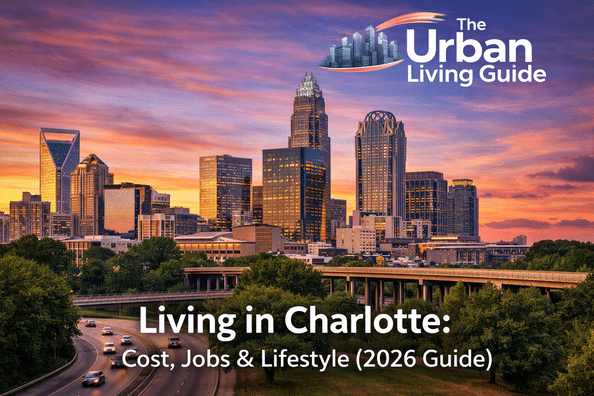
Charlotte offers a balanced lifestyle — urban skyline, suburban comfort, green parks, and strong community culture.
Moving to Charlotte often comes with opportunity — but also financial realities. Rent prices have increased due to demand, and competition for housing is growing. Families, young professionals, remote workers, and students move here expecting career growth, safer neighborhoods, and better quality of life. Living in Charlotte, North Carolina can be rewarding if expectations align with income and lifestyle goals.
Watch a recent video by a popular vlogger to understand daily life and vibes in Charlotte.
“Information in this guide is compiled from publicly available data, official city resources, economic reports, and local housing databases to ensure accuracy and reliability.”
Last updated: May 2026
🌴 What Makes Charlotte So Popular?
Charlotte has become one of the fastest-growing cities in the United States thanks to its strong banking industry, corporate headquarters, expanding tech sector, and business-friendly economy. As the nation’s second-largest banking center after New York, the city attracts professionals from across the country while maintaining a relatively affordable cost of living compared to other major financial hubs.
-
- Known as the second-largest banking center in the United States
- Home to major employers including Bank of America, Truist, Wells Fargo, Lowe’s, and Atrium Health
- Strong job market in finance, technology, healthcare, logistics, and professional services
- One of the fastest-growing metro areas in the Southeast
- Features a modern skyline, thriving Uptown district, and expanding business community
- Famous for its NASCAR heritage and motorsports culture
- Popular among professionals, families, entrepreneurs, and remote workers
- Offers professional sports teams, entertainment districts, and a growing food scene
- Family-friendly suburbs with highly rated communities and schools
- Located within driving distance of both the Blue Ridge Mountains and the Atlantic Coast
- Continues to attract corporate investments, startups, and new residents each year
Its reputation is built on financial strength, career opportunities, rapid growth, and Southern livability, making Charlotte one of the most desirable cities in the Southeast.
🏠 Housing & Rent in Charlotte
Housing is the largest expense for most residents, and Charlotte’s market has become competitive due to migration from higher-cost states.
Average Rent Ranges (2026 estimates):
-
- Studio: $1,300 – $1,600
- 1 Bedroom: $1,500 – $1,900
- 2–3 Bedroom Family Apartment: $1,900 – $2,800
- Single-family home purchase price (median): $380,000 – $450,000
Buying vs Renting: Mortgage rates and rising property values have made buying competitive, but long-term investment potential remains strong.
Rental competition is moderate to high, especially near business districts.
Living in Charlotte, North Carolina requires budgeting carefully for housing.
“Rental figures are based on aggregated listing data and recent market trends.”
🏘 Best Neighborhoods in Charlotte
Choosing the right neighborhood is one of the most important decisions when moving to Charlotte. Your location can affect housing costs, commute times, school options, and overall lifestyle. As one of the fastest-growing cities in the Southeast, Charlotte offers everything from luxury urban living in Uptown to family-friendly suburbs and rapidly developing communities near major employment centers.
🔹 Luxury & Premium Areas in Charlotte
Uptown Charlotte
The financial heart of the city with modern condos, skyline views, and walkability. Popular among banking professionals working at Bank of America or Wells Fargo.
-
- Average Rent (1BR): $1,900–$2,400
- Best for: Executives, young professionals, corporate employees.
SouthPark
Upscale residential area known for luxury apartments, high-end shopping at SouthPark Mall, and strong schools.
Median Home Price: $600,000+
-
- Best for: High-income families and senior professionals.
Dilworth
Historic charm with tree-lined streets and renovated bungalows. Close to Uptown but quieter.
-
- Best for: Professionals wanting charm + central location.
🔹 Family-Friendly Suburbs
Ballantyne
One of the most sought-after suburban areas with top-rated schools, safe neighborhoods, and corporate parks.
-
- Commute to Uptown: 25–30 minutes.
- Best for: Families and long-term homeowners.
Steele Creek
Growing suburban area with newer housing developments and more affordable family homes.
-
- Best for: Middle-income families.
Huntersville (just north of Charlotte)
Popular with families seeking suburban peace while staying within metro reach.
🔹 Budget-Friendly Areas
University City
Close to University of North Carolina at Charlotte (UNC Charlotte), making it popular among students and entry-level professionals.
-
- Average Rent (1BR): $1,300–$1,600
- Best for: Students, early-career workers.
North Charlotte (Selected Zones)
More affordable housing options but research specific streets carefully.
East Charlotte
Lower rent areas with ongoing redevelopment projects.
🔹 Best for Young Professionals & Urban Living
NoDa (North Davidson)
Art district with breweries, music venues, and creative energy.
Best for: Young professionals, creatives.
Plaza Midwood
Trendy restaurants, nightlife, and walkable streets.
Popular among remote workers and startup employees.
South End
Highly walkable area along the LYNX Blue Line with modern apartments and coworking spaces.
💼 Job Market & Business Opportunities
Charlotte’s economy is one of the strongest in the Southeast.
Major industries:
-
- Banking & Finance
- Healthcare
- Energy
- Technology
- Logistics & Distribution
Key employers include Bank of America, Wells Fargo, and Atrium Health. The city is also home to growing fintech startups and regional headquarters.
The average salary range:
-
- Entry-level: $45,000 – $60,000
- Mid-level professional: $70,000 – $100,000
- Senior roles: $110,000+
Hiring competition is moderate but skills-based industries (IT, finance, healthcare) remain strong.
Official reference: North Carolina Department of Commerce Economic Reports.
📺 What It’s Really Like Living in Charlotte
Charlotte has a steady weekday rhythm centered around corporate work culture. Uptown gets busy during office hours, while residential neighborhoods stay calm and family-oriented.
The work culture is professional but not overly aggressive compared to cities like New York City. Networking events, fintech meetups, and community groups are common.
Weekends often include visiting breweries, attending Carolina Panthers games at Bank of America Stadium, exploring Freedom Park, or short trips to the Blue Ridge Mountains.
Socially, the city is friendly but somewhat car-dependent. Community events, farmers markets, and church groups are significant parts of social life.
Overall, life here feels structured, comfortable, and growth-oriented rather than chaotic.
💰 Cost of Living in Charlotte
Charlotte’s cost of living is slightly above the national average but lower than major metropolitan cities.
“Cost estimates are derived from official statistics and city-level cost databases.”
Average Monthly Costs:
-
- Rent (1BR): $1,600
- Utilities: $150 – $220
- Groceries (single person): $350 – $450
- Transportation: $120 (public transit) / $300+ (car expenses)
- Healthcare: Varies by employer coverage
Comfortable Salary Estimate:
$75,000 – $90,000 annually for a single professional; $110,000+ for families.
Living in Charlotte, North Carolina requires stable income planning due to housing growth.
Compared to Atlanta, living costs in Charlotte are generally slightly lower in housing and transportation, while similar in utilities and groceries.
🚗 Transportation & Traffic
Charlotte has limited but improving public transit via the LYNX Blue Line light rail. Most residents rely on personal vehicles.
Average commute time: 25–30 minutes.
Charlotte Douglas International Airport provides strong domestic and international connectivity.
Traffic congestion is moderate during peak hours.
🌤 Weather & Environment
Charlotte has a humid subtropical climate with hot summers and mild winters. Snowfall is rare but possible.
Air quality is generally acceptable but can fluctuate during summer.
Natural risks include occasional hurricanes and severe thunderstorms.
Climate reference: National Weather Service – North Carolina region.
🏨 Popular Hotels, Cafes & Restaurants
Charlotte has an expanding hospitality scene.
Popular Hotels:
-
- The Ritz-Carlton, Charlotte
- The Westin Charlotte
- JW Marriott Charlotte
Cafes & Cultural Spots:
-
- Not Just Coffee
- Amélie’s French Bakery
- NoDa Arts District
Restaurants:
-
- Kindred (fine dining)
- Midwood Smokehouse (local BBQ)
- Sea Level NC (seafood)
The food scene blends Southern comfort and modern cuisine.
🗺 Sightseeing & Tourist Attractions
Charlotte offers a mix of sports, culture, and outdoor attractions.
-
- NASCAR Hall of Fame
- Freedom Park
- U.S. National Whitewater Center
- Discovery Place Science
- Uptown skyline & cultural district
Tourism authority reference: Visit Charlotte Official Tourism Board.
🎒 Hostels & Budget Stay Options
Budget travelers can find:
-
- Shared housing in University City
- Affordable motels near airport
- Extended stay hotels
Charlotte has limited traditional backpacker hostels, but student areas offer cheaper rentals.
📊 Quick Snapshot of Living in Charlotte
| Factor | Charlotte, NC Snapshot |
|---|---|
| Population | 900,000+ residents |
| Median Home Price | ~$400,000 |
| Median Rent | ~$1,700/month |
| Average Salary | ~$75,000/year |
| Major Industries | Banking, Finance, Healthcare, Technology |
| Top Employers | Bank of America, Truist, Wells Fargo, Atrium Health |
| Average Commute | 25–30 minutes |
| Climate | Humid Subtropical |
| Best For | Professionals, Families, Remote Workers |
| Famous For | Banking Industry, NASCAR, Corporate Headquarters |
| Lifestyle | Business-Friendly, Family-Oriented, Fast-Growing |
🎓 Education & Universities
Charlotte is home to University of North Carolina at Charlotte (UNC Charlotte) and multiple community colleges.
Public schools vary by district, with strong suburban schools in South Charlotte.
The city attracts both domestic and international students due to affordable tuition compared to northern states.
👍 Pros and Cons of Living in Charlotte
Charlotte offers career growth, but also rising costs.
Pros:
-
- Strong banking & finance hub
- Growing tech opportunities
- Mild winters
- Family-friendly suburbs
- Lower taxes than many states
Cons:
-
- Rising housing costs
- Car dependency
- Limited public transit
- Humid summers
- Competitive rental market
Overall, it’s balanced but requires financial planning 😊
🏡 Is Charlotte a Good Place to Live in 2026?
Charlotte is ideal for finance professionals, IT workers, healthcare employees, and families seeking suburban comfort with urban job access. It works well for mid-career professionals aiming for stability and property ownership.
Those who prefer heavy public transportation, extreme nightlife, or ultra-low living costs may struggle.
With proper budgeting and long-term planning, Living in Charlotte, North Carolina offers solid career prospects and lifestyle balance in 2026. 🙂
FAQs
Is Charlotte expensive?
It is moderately priced compared to major U.S. cities but has rising housing costs.
What salary do you need in Charlotte?
$75,000+ is comfortable for singles; $110,000+ for families.
Is Charlotte safe?
Many suburbs are safe; crime varies by neighborhood.
Is it family-friendly?
Yes, with good suburban schools and parks.
Biggest expense?
Housing is the largest monthly cost.
Can you live without a car?
Possible near Uptown, but generally difficult.
Best neighborhoods?
SouthPark, Dilworth, Ballantyne, University City.
Is it better than Atlanta?
Charlotte is smaller and calmer; Atlanta offers more diversity and nightlife.
🔗 Explore More Cities in North Carolina
If you’re exploring more options beyond Charlotte, The Urban Living Guide has covered several other popular cities in North Carolina. You can also check:
New to Charlotte? These resources can help you get started:
- Cost of Living in Charlotte, NC
- Pros and Cons of Living in Charlotte, NC
- Best Neighborhoods in Charlotte, NC
For a complete moving guide, read: Moving to Charlotte, NC
These guides offer a comprehensive view of life in different cities, covering key aspects like cost of living, housing, job opportunities, neighborhoods, commute, weather, education, popular spots, and major employers.
The Urban Living Guide brings all these insights together in one place, making it easier to compare cities and choose the one that best fits your lifestyle, priorities, and long-term goals.