

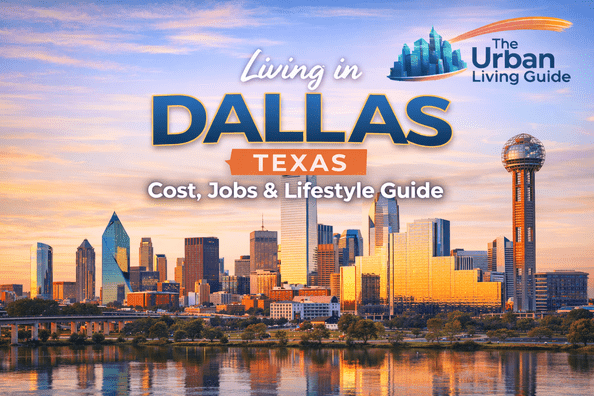
Living in Dallas, Texas: The Unfiltered Reality of Big-D DNA and Modern Texas Life
Moving to Dallas, Texas is far more than just swapping zip codes; it is a step into a high-powered economic flywheel where corporate ambition meets deep-rooted Southern hospitality. From the shimmering glass skyscrapers framing Klyde Warren Park in Downtown Dallas to the sprawling suburban hubs extending north toward Plano and Frisco, the city radiates an unmistakable, fast-paced energy. As a cornerstone of the Dallas–Fort Worth Metroplex (DFW)—the fourth-largest metropolitan area in the United States—this region continues to attract thousands of new residents every month who are eager to tap into a booming job market and enjoy a modern metropolitan lifestyle.
However, relocating to Big D requires a grounded understanding of the financial and geographical realities. While Texas boasts the massive economic advantage of 0% state income tax, navigating Dallas means managing higher-than-average local property taxes, dynamic housing market shifts, and scorching summer temperatures where the heat index frequently pushes past 100°F. Additionally, navigating daily commutes across major arteries like I-35E, US-75 (North Central Expressway), and I-635 (LBJ Freeway) requires strategic planning. This guide delivers an authentic, hyper-local look at housing expenses, career pathways, distinct urban pockets, and the long-term cost of living in 2026.
What Makes Dallas So Unique & Popular
Over the past decade, Dallas has established itself as one of the premier business capitals of the American South. The city’s unique charm stems from its ability to blend high-powered corporate commerce with diverse cultural districts, legendary sports entertainment, and culinary innovation.
Primary drivers fueling relocation to Dallas include:
- Tax-Friendly Business Environment: Texas imposes 0% personal state income tax and 0% corporate state income tax, giving households and business owners significant tax relief compared to coastal markets.
- Robust Fortune 500 Network: Dallas serves as an international nerve center for corporate headquarters across telecommunications, technology, finance, aviation, and global real estate.
- High-Velocity Job Market: Steady job growth spanning regional healthcare systems, defense manufacturing, logistics, and tech startups maintains an unemployment rate consistently below 4.0%.
- Massive Transport & Infrastructure Network: Powered by two major commercial hubs—DFW International Airport and Dallas Love Field Airport—residents can reach almost any major North American city within a 4-hour flight.
- World-Class Professional Sports Culture: Home to iconic franchises including the Dallas Cowboys (NFL), Dallas Mavericks (NBA), Texas Rangers (MLB), and Dallas Stars (NHL).
- Dynamic Cultural & Entertainment Hubs: From the historic brick streets and live music venues of Deep Ellum to the trendy boutiques in Bishop Arts District and the lush outdoor spaces at White Rock Lake, the city offers rich lifestyle diversity.
Interactive Map of Dallas, Texas
Use this interactive geographic overview to navigate key highways, business districts, and surrounding suburban regions across the Dallas–Fort Worth Metroplex.
Dallas at a Glance: Key Relocation Metrics
To evaluate whether relocating to Dallas, Texas fits your financial goals, it helps to review the essential demographic and economic data defining the city in 2026.
| Relocation Metric | Dallas City / DFW Metroplex Data |
|---|---|
| Total Population | 1.3 Million+ (City of Dallas) | 8.1 Million+ (DFW Metroplex) |
| Median Single-Family Home Price | $390,000 – $425,000 (City limits varies greatly by neighborhood) |
| Average Monthly Rent (1-2 Bed) | $1,550 – $2,100/month |
| Average Local Property Tax Rate | 1.9% – 2.3% (Varies by county and school district) |
| State Income Tax Rate | 0.00% |
| Average Household Income | $65,000 – $72,000 (City) | $82,000+ (Metro Area) |
| Primary Commute Arteries | I-35E, US-75, I-30, Dallas North Tollway, I-635 |
Famous Personalities, Sports Teams & Major Brands in Dallas
The cultural footprint of Dallas extends globally through groundbreaking enterprise brands, legendary sports figures, and civic icons. The area’s legendary sports identity revolves around AT&T Stadium in nearby Arlington, where the Dallas Cowboys play, and the bustling American Airlines Center in Victory Park, home court for the Dallas Mavericks and ice rink for the Dallas Stars. Sports culture here is a year-round passion that deeply connects local communities.
On the commercial and retail front, Dallas is the historical birthplace of retail giant Neiman Marcus, convenience store pioneer 7-Eleven, and global tech innovators. High-profile figures ranging from business mogul Mark Cuban to basketball legend Dirk Nowitzki and modern star Luka Dončić have cemented the city’s place in modern pop culture and sports history.
Job Market & Business Opportunities with Major Employers
The economy in Dallas, Texas is widely recognized for its exceptional resilience and sector diversity. Rather than relying on a single industry, the local job market thrives across corporate management, telecommunications, financial services, healthcare research, aviation, and advanced manufacturing.
Major corporate employers and global headquarters located in Dallas include:
- AT&T – World headquarters anchored in the heart of Downtown Dallas at the state-of-the-art Discovery District.
- Southwest Airlines – Global corporate headquarters and operations base located adjacent to Dallas Love Field Airport.
- Texas Instruments – Global semiconductor design and manufacturing powerhouse headquartered in North Dallas.
- CBRE Group – The world’s largest commercial real estate services firm, headquartered in Uptown Dallas.
- ExxonMobil – Major regional corporate presence and energy engineering hub across the metro area.
- Goldman Sachs & McKesson – Massive financial and healthcare distribution centers employing thousands of high-skilled workers across the region.
- Baylor Scott & White Health & UT Southwestern Medical Center – Elite healthcare networks providing top-tier medical employment and medical research facilities.
For official economic statistics, civic permits, and local business development reports, you can consult official resources provided directly by the City of Dallas.
Housing & Real Estate Overview in Dallas
Navigating the residential market when Living in Dallas, Texas requires understanding the balance between rising property values and overall space. While purchase prices and rental rates remain significantly more accessible than coastal metropolises such as San Francisco, Los Angeles, or New York City, aggressive inbound migration has driven steady equity growth across the entire DFW Metroplex over recent years.
Prospective buyers must pay close attention to local property tax structures. Because Texas operates with 0% state income tax, local municipalities depend heavily on property taxes to fund school districts, city infrastructure, and emergency services. Average effective property tax rates in Dallas County typically range between 1.9% and 2.3% of assessed home values, making tax estimations a mandatory element of monthly mortgage planning in 2026.
For renters, the city provides an expansive spectrum of choices, ranging from urban luxury mid-rises in Uptown Dallas to quiet apartment communities scattered through suburban centers like Richardson and Plano.
| Housing Option / Layout | Average Monthly Rent Range | Median Purchase Price Range |
|---|---|---|
| Studio Apartment | $1,200 – $1,500/month | $220,000 – $280,000 (Condo/Loft) |
| 1-Bedroom Apartment | $1,400 – $1,900/month | $290,000 – $350,000 |
| 2-Bedroom Apartment / Townhome | $1,800 – $2,600/month | $380,000 – $480,000 |
| Single-Family Home (3+ Beds) | $2,500 – $3,800/month | $390,000 – $650,000+ (Varies by district) |
Best Neighborhoods in Dallas: Finding Your Ideal Community
Choosing where to put down roots is one of the most critical decisions when moving to Dallas, Texas. Every enclave carries a distinct lifestyle vibe, architectural identity, and price profile.
Uptown Dallas: Recognized as the flagship urban neighborhood for young professionals and corporate executives. Extremely walkable, Uptown Dallas features luxury high-rises, upscale cocktail lounges, boutique shopping along McKinney Avenue, and direct access to the famous Katy Trail jogging path.
Highland Park: An ultra-affluent, independent municipality nestled inside the heart of Dallas. Celebrated for its tree-lined avenues, manicured estates, luxury shopping at Highland Park Village, and top-ranked public education under the Highland Park Independent School District.
Lakewood: A beloved, historic residential community situated along the western shores of White Rock Lake. Ideal for growing families and active lifestyle enthusiasts, Lakewood combines Tudor-style homes, craftsman bungalows, and peaceful green spaces just minutes from Downtown Dallas.
Bishop Arts District: Located in historic Oak Cliff, this vibrant arts district is packed with independent coffee shops, artisan bakeries, mural-painted brick alleyways, and eco-friendly boutiques. It attracts creative professionals, foodies, and residents seeking a bohemian urban culture.
Plano (Suburban Anchor): Situated directly north via the Dallas North Tollway, Plano represents one of the premier suburban destinations in the country. It offers corporate headquarters like Frito-Lay and Toyota North America at Legacy West, top-rated public schools, master-planned developments, and safe residential neighborhoods.
| Neighborhood | Target Lifestyle Demographic | Primary Housing Type | Overall Vibe & Key Highlights |
|---|---|---|---|
| Uptown Dallas | Young Professionals & Corporate Executives | Luxury Mid-Rises & Condos | Walkable, vibrant nightlife, direct access to Katy Trail |
| Highland Park | Affluent Families & Executives | Luxury Estates & Mansions | Elite public schools, ultra-safe, historic charm |
| Lakewood | Families & Outdoor Enthusiasts | Craftsman & Tudor Single-Family Homes | Serene lakeside living, close to White Rock Lake |
| Bishop Arts District | Creatives, Artists & Young Couples | Historic Cottages & Modern Lofts | Bohemian arts scene, eclectic food, local boutiques |
| Plano | Suburban Families & Tech Workers | Master-Planned Single-Family Subdivisions | Corporate hubs, top-tier school districts, family-oriented |
Cost of Living in Dallas: Monthly Expenses & Salary Needs
Evaluating employment compensation against living costs is straightforward in Dallas, Texas due to strong wages and tax efficiencies across key sectors including telecommunications, financial technology, energy logistics, healthcare, and engineering.
Typical salary benchmarks in the Dallas market include:
- Entry-Level Corporate Roles: $60,000 – $85,000 per year across operations, junior tech roles, and financial analysis.
- Mid-Level Professionals: $85,000 – $130,000 per year for project managers, senior engineers, and specialized healthcare staff.
- Senior Leadership & Executive Roles: $150,000+ per year across corporate strategy, legal, director-level engineering, and finance management.
Because there is no state income tax, professionals retain a higher percentage of their earnings compared to cities with income taxes, providing strong purchasing power for dining, home purchases, and savings.
What It’s Really Like Living in Dallas (Daily Life & Vibe)
Daily life in Dallas is fast-paced, ambitious, and energetic. Residents balance structured workday commutes with a rich patio dining culture, vibrant weekend arts, and active recreational sports.
Watch this video to explore real neighborhood perspectives, daily commute flows, and authentic lifestyle insights from local residents.
Popular weekend routines among Dallas locals include:
- Attending high-energy NFL tailgates or game-day events near AT&T Stadium and NBA games at American Airlines Center.
- Jogging, kayaking, or cycling around White Rock Lake Park during sunny spring and autumn mornings.
- Exploring premier shopping, indoor gardens, and modern sculptures at NorthPark Center.
- Brunching along patio spots in Uptown Dallas or listening to live indie music in Deep Ellum.
Cost of Living in Dallas: Monthly Expenses & Salary Needs
While the overall cost of living in Dallas, Texas sits slightly above the national average, it remains significantly more manageable and accessible than top-tier coastal hubs like New York, San Francisco, or Los Angeles. The primary driver of household budgets is housing, which is balanced out by Texas having 0% state income tax.
| Monthly Expense Category | Average Estimated Monthly Cost |
|---|---|
| Housing / Rent (1 to 2 Bedroom) | $1,500 – $2,500/month |
| Utilities (Electricity, Water, Trash) | $150 – $250/month (Higher in peak summer) |
| Groceries & Household Goods | $350 – $550/month per person |
| Transportation & Fuel | $150 – $300/month |
| Healthcare & Health Insurance | Moderate / Standard National Averages |
To comfortably support a single individual or couple living in Dallas, an annual gross household salary of $75,000 – $100,000 is recommended. Compared to Austin, Dallas generally offers slightly lower residential real estate pricing and a more diverse, established corporate environment.
Transportation, Highway Bottlenecks & Airport Connectivity
Navigating Dallas relies heavily on personal vehicles, as the metro area covers an expansive geographic footprint across North Texas. While urban cores like Uptown Dallas and Downtown Dallas feature walkability, everyday suburban commuting requires driving along major tollways and interstate freeways.
Key transit and highway highlights include:
- DART Light Rail System: Public transit is supported by the DART light rail system, which connects surrounding suburban districts to the central city grid, business hubs, and regional airports.
- Major Highway Arteries: Commuters frequently rely on major expressways including I-35E, US-75 (North Central Expressway), I-30, and the Dallas North Tollway.
- Peak Rush-Hour Bottlenecks: Morning and evening rush hours along I-635 (LBJ Freeway) and major highway interchanges often expand typical commute times to between 25 and 45 minutes.
- World-Class Air Travel Access: The region is anchored by two massive commercial hubs: DFW International Airport (a major global hub) and Dallas Love Field Airport (conveniently located near downtown).
Weather Patterns, Seasonal Realities & Climate Factors
Dallas, Texas features a humid subtropical climate characterized by long, hot summers and mild, manageable winters. Summer temperatures frequently climb past 100°F during July and August, making high-capacity air conditioning an absolute essential for homes and vehicles.
Springtime brings pleasant temperatures alongside seasonal rainstorms, while winter months remain relatively mild with occasional freezes and rare light snowfall. Planning around summer heat waves and keeping emergency prep kits for spring weather shifts are standard routines for long-term local residents.
Education, Schools & Major Universities
The Dallas–Fort Worth Metroplex offers exceptional educational opportunities, combining nationally recognized public school districts with premier private academies and world-class research universities.
Prominent higher education institutions in the city include:
- Southern Methodist University (SMU): A prestigious private research university situated in Highland Park, known for business, law, and engineering programs.
- University of Texas at Dallas: A rapidly expanding public research university located in nearby Richardson, celebrated for computer science, STEM fields, and corporate research partnerships.
- High-Performing School Districts: Exceptional K-12 public education is available across renowned independent school districts including Highland Park ISD, Plano ISD, and Frisco ISD.
Medical Facilities, Hospitals & Healthcare Systems
Healthcare availability in Dallas, Texas is ranked among the highest in the nation. The region serves as a major medical center for specialized surgery, oncology research, pediatric care, and emergency medicine.
Leading medical institutions servicing local families include:
- UT Southwestern Medical Center: A premier academic medical institution and nationally ranked research hospital.
- Baylor University Medical Center: A major flagship hospital complex delivering advanced trauma care, cardiology, and specialized surgical medicine.
- Children’s Health & Medical City Dallas: Comprehensive pediatric specialty hospitals and regional emergency networks serving families across North Texas.
Popular Hotels, Cafes, Dining & Culinary Scene
The culinary landscape in Dallas is world-class, blending traditional Texas barbecue and authentic Tex-Mex with innovative high-end dining. Upscale patio dining in Uptown Dallas, craft coffee shops in Bishop Arts District, and iconic steakhouses in Downtown Dallas offer options for every palate.
For visitors and luxury stays, iconic hotel destinations include The Ritz-Carlton Dallas, The Joule, and historic boutique properties scattered throughout the urban center.
Sightseeing, Cultural Spots & Tourist Attractions
Cultural amenities in Dallas span visual arts, historic monuments, and expansive public gardens. The renowned Dallas Arts District covers 19 contiguous blocks, representing the largest continuous urban arts district in the United States.
Key cultural landmarks include the Perot Museum of Nature and Science, the Dallas Museum of Art, the historic Dealey Plaza, and the 66-acre Dallas Arboretum and Botanical Garden located along the shores of White Rock Lake.
Honest Trade-offs: Pros and Cons of Living in Dallas
Evaluating a move to Dallas, Texas requires weighing significant economic and lifestyle benefits against practical geographic realities.
Advantages of Relocating to Dallas:
- 0% State Income Tax: Maximizes annual net income and overall business profitability.
- Thriving Job Market: Diverse employment across corporate headquarters, technology, and health systems.
- Competitive Real Estate Options: Accessible housing options compared to major coastal metros.
- Superior Aviation Connectivity: Direct flight access anywhere in the world via DFW International Airport.
Disadvantages of Relocating to Dallas:
- Intense Summer Heat: Extended periods of summer temperatures exceeding 100°F.
- Car Dependency & Traffic: Heavy rush-hour congestion across major freeway tollways.
- Higher Property Taxes: Municipal property tax rates ranging between 1.9% and 2.3%.
- Risk of Severe Weather: Occasional spring severe storms and seasonal hail.
Who Is Dallas Ideal For (and Who Should Avoid It?)
Dallas is ideal for corporate professionals, growing families, remote workers, and entrepreneurs looking for high earnings potential, strong corporate networks, and suburban quality of life. The city rewards career ambition and offers expansive residential neighborhoods.
Conversely, individuals who prefer dense, walk-only urban environments, mild temperate summers, or extensive public transit over car ownership may find older, traditional coastal cities better suited to their preferences.
Real Experiences: Perspectives from Long-Term Residents (5 to 10+ Years)
Long-term residents of Dallas often highlight the city’s welcoming economic environment and steady career progression as major factors in staying over a decade. While newcomers initially adapt to summer heat and freeway driving, the balance of high earning potential, quality suburban school districts, and rich dining culture consistently delivers a rewarding lifestyle.
Frequently Asked Questions About Living in Dallas, Texas
Is living in Dallas, Texas expensive?
Living in Dallas is moderately priced compared to major coastal hubs like New York or San Francisco. However, rapid population growth has increased housing demand, making property taxes and home prices higher than rural Texas regions.
What salary is needed to live comfortably in Dallas?
An annual household income between $75,000 and $100,000 is recommended to live comfortably in Dallas. This salary range accounts for monthly rent or mortgage payments, transportation costs, utilities, and lifestyle spending in 2026.
Is Dallas a good city for families?
Yes, Dallas and its surrounding suburbs offer excellent family environments. Communities such as Plano, Highland Park, and Frisco feature top-ranked public school districts, extensive neighborhood parks, and family-oriented recreational facilities.
Can you live in Dallas without owning a car?
While living car-free is possible in high-density areas like Uptown Dallas using the DART light rail system, most residents rely on a personal vehicle for daily commuting, shopping, and regional travel.
What is the biggest monthly expense in Dallas?
Housing costs—whether apartment rent or home mortgage payments—represent the largest single expense for Dallas residents, followed by local municipal property taxes for homeowners and car transportation costs.
How does living in Dallas compare to living in Austin?
Dallas provides a larger corporate economy, broader industrial sectors, and slightly lower average housing costs. Austin tends to emphasize tech startups, live music culture, and outdoor natural topography.
🔗 Explore More Cities in Texas
If you’re exploring more options beyond Dallas, The Urban Living Guide has covered several other popular cities in Texas. You can also check:
These guides give you a complete picture of what it’s like living across different cities, covering everything from cost of living, housing, and job opportunities to neighborhoods, commute, weather, education, popular places, and major employers.
The Urban Living Guide brings together these local insights in one place, helping you compare cities easily and make a confident, well-informed decision based on your lifestyle and goals.
Before moving to Dallas, make sure you check:
For everything you need in one place, read our complete guide: Moving to Dallas, Texas