

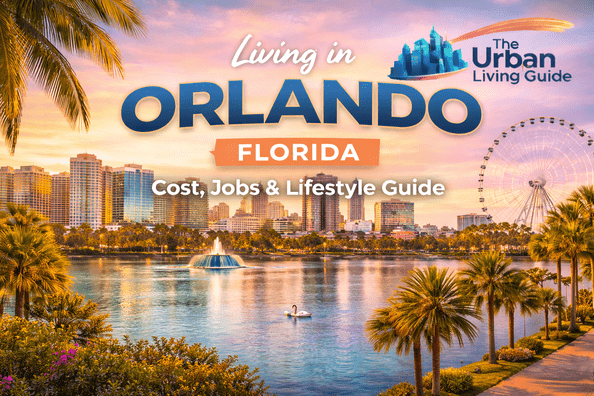
Living in Orlando, Florida: What Life Is Like Beyond the Theme Parks
Living in Orlando, Florida offers a unique combination of year-round sunshine, booming economic opportunity, diverse suburban communities, and world-class entertainment infrastructure. As the county seat of Orange County and the central anchor of the Central Florida region, Orlando spans over 110 square miles, with a metropolitan footprint that extends into Seminole County, Osceola County, and Lake County. Known globally as the “Theme Park Capital of the World,” Orlando attracts over 70 million visitors annually. However, behind its resort facade lies a rapidly expanding, permanent residential community home to over 2.5 million metro residents.
Relocating to Orlando requires a realistic evaluation of local real estate trends, sprawling freeway commutes, and seasonal climate realities. While Florida levies no state personal income tax, local property prices, home insurance rates, and toll road fees along primary transit routes can impact monthly household budgets. Whether you are transferring to a healthcare role at AdventHealth, taking an engineering position in Lake Nona Medical City, or searching for family-friendly housing along SR 417, this comprehensive relocation guide details real estate costs, employment sectors, top neighborhoods, and daily living realities in Orlando.
If you are new to Central Florida, review the interactive map below to understand how Orlando is situated relative to major highways, lakes, and surrounding suburban districts.
All real estate metrics, utility estimates, and neighborhood insights in this guide are compiled from municipal planning records, regional economic publications, and long-term local resident expertise updated for 2026.
What Makes Orlando So Unique & Popular
Orlando holds a distinct position among major American cities. While many metropolitan areas are built around heavy industrial shipping ports or dense urban finance centers, Orlando developed as a sprawling inland hub surrounded by hundreds of natural freshwater lakes, such as Lake Eola, Lake Fairview, and the Butler Chain of Lakes. The city successfully leverages its global tourism infrastructure to support high-end dining, international airport connectivity, and world-class entertainment venues that benefit permanent residents year-round.
Beyond tourism, Orlando has evolved into a major center for modeling, simulation, and training (MST), defense technology, biotechnology, and aviation engineering. The presence of The University of Texas at Austin-tier institutions like The University of Central Florida (UCF) provides a steady pipeline of skilled graduates. Combined with diverse suburban neighborhoods, top-ranked healthcare systems, and zero state income tax, Orlando continues to rank among the nation’s fastest-growing relocation destinations.
Primary reasons people relocate to Orlando:
- Zero individual state income tax across Florida, maximizing take-home pay
- Robust employment markets spanning hospitality, healthcare, aerospace, and simulation tech
- Substantially lower real estate purchase prices than coastal markets like Miami or West Palm Beach
- Rich recreational choices including freshwater lakes, golf courses, and world-renowned theme parks
- Expansive family-friendly suburban developments with modern amenities
- Immediate access to global destinations via Orlando International Airport (MCO)
Orlando at a Glance: Key Relocation Metrics
Reviewing key baseline metrics provides essential financial and demographic context prior to planning a relocation to Greater Orlando for 2026.
| Relocation Metric | Orlando Local Benchmark | National / Regional Comparison |
|---|---|---|
| Total Population | 320,000+ (City) / 2.6+ Million (Metro) | 4th largest metro in Florida; top 25 in the U.S. |
| Median Home Purchase Price | $375,000–$395,000 | Slightly lower than national average; lower than Miami |
| Average Monthly Rent (1-Bed) | $1,500–$2,100 | Competitive compared to coastal Florida markets |
| State Income Tax Rate | 0.00% | No state personal income tax in Florida |
| Average Property Tax Rate | 0.9%–1.1% (Effective rate in Orange County) | Moderate rate, but rising home values affect totals |
| Average Daily Commute Time | 28.5 Minutes | Subject to heavy rush-hour delays along I-4 |
| Primary Economic Sectors | Tourism, Healthcare, Simulation Tech, Aviation | Global leader in hospitality and defense simulation |
While baseline real estate prices are moderate, prospective buyers should calculate property insurance premiums, hurricane deductibles, and HOA fees into their monthly housing allocations.
Famous Personalities, Sports Teams & Major Brands in Orlando
Orlando maintains a strong national profile across sports, entertainment, and commercial enterprise. Famous figures associated with the city include NBA legend Shaquille O’Neal, golf icons Tiger Woods and Arnold Palmer (who made Bay Hill his home), actor Wesley Snipes, and pop culture icons like NSYNC and the Backstreet Boys, who formed in the city during the 1990s entertainment boom.
Professional sports are a major source of community pride across Orange County. Local fans cheer on the Orlando Magic (NBA) at the Kia Center in Downtown Orlando, support Orlando City SC (MLS) and the Orlando Pride (NWSL) at Inter&Co Stadium, and follow college athletics led by the UCF Knights in the Big 12 Conference at FNB Stadium.
Major international brands headquartered or operating massive regional hubs in Orlando include casual dining powerhouse Darden Restaurants (parent company of Olive Garden and LongHorn Steakhouse), hotel giant Marriott Vacations Worldwide, defense contractor Lockheed Martin, industrial technology leader Siemens Energy, and cruise operator Disney Cruise Line.
Job Market & Business Opportunities with Major Employers
The job market in Orlando is famous for tourism, but its economy has diversified into a major high-tech industrial hub. The city forms the eastern anchor of Florida’s High Tech Corridor, hosting the nation’s highest concentration of military simulation, training, and modeling contracts at the Central Florida Research Park adjacent to UCF.
Tourism anchors employment through massive resort operators. Walt Disney World Resort stands as the largest single-site employer in the United States, employing over 75,000 cast members across its four theme parks and resort hotels. Universal Orlando Resort and SeaWorld Orlando also employ tens of thousands of hospitality, entertainment, and administrative professionals.
Major corporate employers and health institutions:
- Walt Disney World Resort: Premier regional employer spanning entertainment, operations, hospitality, and corporate management.
- Universal Orlando Resort: Major entertainment destination expanding its footprint with the massive Epic Universe development.
- AdventHealth: Major non-profit healthcare system headquartered in Altamonte Springs, operating dozens of regional hospital campuses.
- Orlando Health: Comprehensive hospital network operating Orlando Health Orlando Regional Medical Center (ORMC) in downtown.
- Lockheed Martin Missiles and Fire Control: Defense technology anchor maintaining major research and manufacturing facilities on Sand Lake Road.
- University of Central Florida (UCF): Second-largest public university in the nation by enrollment, employing thousands of faculty and researchers.
- Darden Restaurants: Corporate headquarters campus located off John Young Parkway in South Orlando.
Salaries across software engineering, healthcare management, defense simulation, and corporate logistics yield strong net purchasing power when combined with Florida’s zero state income tax structure.
Housing & Real Estate Overview in Orlando
Housing accessibility remains a primary driver for home buyers relocating to Living in Orlando, Florida. Buyers can find diverse residential architecture, from historic 1920s brick-street bungalows in Winter Park and Thornton Park to modern master-planned developments in Lake Nona and Winter Garden.
The rental market features modern amenity-rich high-rise apartments in Downtown Orlando alongside garden-style apartment complexes and single-family rental homes in suburban districts.
Average monthly rent estimates for 2026:
- Studio Apartments: $1,300–$1,600 per month
- 1-Bedroom Apartments: $1,500–$2,100 per month
- 2-Bedroom Apartments: $1,900–$2,800 per month
- 3-Bedroom Single-Family Rental Homes: $2,400–$3,500 per month
When purchasing single-family real estate, prospective home buyers should review municipal utility districts (MUDs), community development district (CDD) fees common in newer master-planned developments, and inspect roof condition and home elevation for storm resilience.
Best Neighborhoods in Orlando: Finding Your Ideal Community
Selecting the right neighborhood in Orlando depends on your daily workplace location, commute tolerance for tourist traffic, and preferred lifestyle pace. The metro area is geographically structured by central transit routes including Interstate 4 (I-4), SR 408 (East-West Expressway), and SR 417 (Central Florida GreeneWay).
- Southeast Master-Planned | Median Home Price: $550,000–$920,000 | Modern tech-forward community, home to Lake Nona Medical City, autonomous shuttles, top-rated schools, popular with medical and tech executives.
- North Central Historic Suburb | Median Home Price: $620,000–$1,500,000+ | Brick-lined streets, historic estates, fine dining along Park Avenue, Rollins College, upscale arts and culture.
- Southwest Suburb (Near Parks) | Median Home Price: $480,000–$850,000 | Established family neighborhood, famous Restaurant Row on Sand Lake Road, high-performing schools, near theme parks.
- Northeast Suburb (Seminole County) | Median Home Price: $420,000–$680,000 | Quiet suburban feel, top-ranked Seminole County public schools, near UCF, family-oriented parks.
- Urban Core (Central) | Median Home Price: $350,000–$620,000 | High-rise luxury condos, historic Craftsman bungalows around Lake Eola, walkable dining, active nightlife.
- West Suburb (Orange County) | Median Home Price: $450,000–$780,000 | Historic downtown district, West Orange Trail, sprawling new construction, family-centric atmosphere.
In-Depth Breakdown of Popular Neighborhood Profiles:
Lake Nona: A 17-square-mile visionary master-planned development located near MCO Airport. Lake Nona features the USTA National Campus, VA Medical Center, Nemours Children’s Hospital, and fiber-optic tech infrastructure.
Winter Park: An independent municipality founded in the late nineteenth century as a winter resort. Famous for its chain of lakes connected by navigable canals, Morse Museum of American Art, and cobblestone shopping district.
Dr. Phillips & Windermere: Located in southwest Orange County near the Butler Chain of Lakes, offering luxury gated golf communities like Bay Hill Club & Lodge and proximity to major employment corridors along I-4.
Baldwin Park: A traditional neighborhood development (TND) built on a former naval training center site just 3 miles from downtown, featuring walkable town centers, parks, and lakefront trails around Lake Baldwin.
What It’s Really Like Living in Orlando (Daily Life & Vibe)
Daily life in Orlando is active, suburban, and community-driven. Local residents generally live outside the primary tourist corridors of International Drive and Lake Buena Vista, focusing their daily routines around lakefront parks, neighborhood farmers markets, youth athletics, and local dining.
To gain authentic visual perspectives on neighborhood dynamics, commute routes, and local lifestyle realities when Living in Orlando, Florida, view the detailed vlog overview below.
Food culture across Orlando extends far beyond theme park food courts. The city features a nationally recognized independent dining scene, including a vibrant Vietnamese culinary district along Mills 50, upscale dining along Park Avenue in Winter Park, and craft barbecue spots. Popular routines include grabbing coffee at Lineage Coffee Roasting, enjoying Latin comfort food at Black Bean Deli, getting craft barbecue at 4 Rivers Smokehouse, or picking up baked goods at Gideon’s Bakehouse in East End Market.
Cost of Living in Orlando: Monthly Expenses & Salary Needs
While overall expenses in Orlando remain moderate compared to coastal Florida metros like Miami, living costs sit slightly above the national average. Home buyers and renters must budget for summer electric bills, auto insurance premiums, and toll highway expenses.
Estimated monthly cost breakdown for a single adult in 2026:
- Housing (1-Bedroom Lease): $1,500–$2,100
- Utilities (FPL/OUC Electricity, Water, Trash): $150–$300 (Peaks during summer A/C usage)
- Groceries & Household Goods: $350–$600
- Transportation (Gasoline, Tolls, Auto Insurance): $150–$320 (Toll roads are heavily utilized)
- Healthcare & Insurance: Moderate costs backed by regional health networks
To live comfortably, cover savings, and enjoy Central Florida recreation while Living in Orlando, Florida, a single adult generally requires a gross annual salary of $70,000–$95,000. Families purchasing single-family homes in desirable suburban school districts typically require combined annual household earnings starting at $110,000–$145,000.
Transportation, Highway Bottlenecks & Airport Connectivity
Orlando is fundamentally an automobile-dependent metropolis. While public transit options exist, personal vehicles are necessary for the vast majority of suburban residents.
Key transportation infrastructure and highway corridors include:
- Interstate 4 (I-4): Primary east-west highway (geographically running north-south through Orlando) bisecting the region. Heavily traveled by commuters and tourists, subject to peak bottlenecks near I-Drive and downtown.
- SR 408 (Spessard L. Holland East-West Expressway): Essential toll road connecting eastern suburbs near UCF directly to Downtown Orlando and western communities.
- SR 417 (Central Florida GreeneWay): Eastern toll loop providing smooth bypass travel around I-4 traffic toward Lake Nona and MCO Airport.
- SunRail Commuter Rail: Regional commuter train operating along a 61-mile route connecting Volusia County, Seminole County, Downtown Orlando, and Osceola County.
Air connectivity is anchored by Orlando International Airport (MCO), featuring the state-of-the-art Terminal C, offering non-stop domestic and international flights. The airport also hosts the Brightline High-Speed Rail station, connecting Orlando directly to West Palm Beach, Fort Lauderdale, and Miami.
Weather Patterns, Seasonal Realities & Climate Factors
Orlando experiences a humid subtropical climate marked by long, hot summers, pleasantly mild winters, and abundant year-round sunshine.
Seasonal characteristics and weather realities:
- Summers (May–September): Hot and humid. Afternoon temperatures consistently reach 90°F–95°F, accompanied by near-daily afternoon thunderstorm downpours. High-capacity central air conditioning is mandatory.
- Winters (December–February): Mild and sunny. High temperatures average 70°F–78°F with low humidity, representing peak outdoor weather. Overnight freezes are extremely rare.
- Atlantic Hurricane Season: Official season runs from June 1 through November 30. Inland Central Florida is protected from direct oceanic storm surges, but high winds, heavy rain, and power outages can occur during tropical storm events.
Education, Schools & Major Universities
Higher education institutions in Orlando drive workforce development, technical innovation, and cultural events throughout Central Florida.
Major higher education anchors include:
- University of Central Florida (UCF): Leading public research university enrolling over 68,000 students, nationally recognized for computer science, engineering, optics (CREOL), and hospitality management (Rosen College).
- Rollins College: Historic, prestigious private liberal arts college located along Lake Virginia in Winter Park.
- Valencia College: Award-winning community college network providing associate and bachelor degree pathways across multiple campuses.
Primary K-12 public education is managed primarily by Orange County Public Schools (OCPS) and neighboring Seminole County Public Schools (SCPS). Suburban districts in Winter Park, Lake Nona, Dr. Phillips, and Oviedo consistently earn top ratings for academic and extracurricular performance.
Medical Facilities, Hospitals & Healthcare Systems
Healthcare is one of Orlando’s primary employment pillars, featuring state-of-the-art research centers and major teaching hospitals.
Key healthcare anchors include:
- AdventHealth Orlando: The flagship hospital of the AdventHealth system, operating as a major medical center specializing in cardiology, neuroscience, and oncology.
- Orlando Health Orlando Regional Medical Center (ORMC): Central Florida’s only Level 1 Trauma Center, located in downtown Orlando.
- Nemours Children’s Hospital: World-class pediatric specialty hospital located in Lake Nona Medical City.
- Orlando VA Medical Center: Advanced medical facility providing comprehensive healthcare services to military veterans in Lake Nona.
Popular Hotels, Cafes, Dining & Culinary Scene
The hospitality landscape in Orlando blends luxury resort style with local culinary innovation. Iconic resort destinations include The Ritz-Carlton Orlando, Grande Lakes, Four Seasons Resort Orlando at Walt Disney World Resort, and the historic Alfond Inn in Winter Park.
Coffee culture thrives across central neighborhoods, featuring popular local roasters like Lineage Coffee Roasting in Winter Park and East End Market, Craft & Common downtown, and Foxtail Coffee Co.
The local dining scene ranges from casual Latin eateries to Michelin-recognized fine dining. Popular destinations include Chatham’s Place in Dr. Phillips, The Ravenous Pig for gastropub fare in Winter Park, Black Bean Deli for authentic Cuban cuisine, and Kadence for sushi.
Sightseeing, Cultural Spots & Tourist Attractions
Orlando provides an abundance of recreational, historical, and family attractions throughout the Central Florida region.
Top cultural and outdoor destinations include:
- Walt Disney World & Universal Orlando Resort: Premier global theme park destinations offering world-class entertainment and resort amenities.
- Lake Eola Park: Scenic 23-acre park in the heart of Downtown Orlando, featuring swan paddle boats, walking trails, and weekly farmers markets.
- Winter Park Scenic Boat Tour: Historic pontoon boat tours navigating through the waterways and canals of the Winter Park Chain of Lakes.
- Harry P. Leu Gardens: Lush 50-acre botanical garden located near Audubon Park featuring historic oak canopies and camellia collections.
- Kennedy Space Center Visitor Complex: Located just 45 minutes east in Titusville, offering rocket launch viewings and space exploration exhibits.
Honest Trade-offs: Pros and Cons of Living in Orlando
Evaluating balanced trade-offs ensures Orlando aligns with your career goals and family lifestyle expectations before moving.
Pros of Living in Orlando:
- Zero State Income Tax: Favorable state tax climate allows higher net income retention.
- Diverse Employment Opportunities: High-wage job growth across healthcare, simulation technology, defense, and tourism.
- Moderate Real Estate Affordability: Housing purchase prices remain more accessible than in coastal South Florida.
- World-Class Entertainment & Recreation: Access to theme parks, freshwater lakes, golf, and dining amenities year-round.
- Family-Friendly Suburban Growth: Modern master-planned communities with excellent public school options.
Cons of Living in Orlando:
- Intense Summer Heat & Humidity: Extended summer weather with daily thunderstorm risks and temperatures consistently above 90°F.
- Heavy Automobile Dependency & Toll Costs: Sprawling metro layout mandates driving and heavy toll road usage.
- Highway Commuter Traffic: Congestion along major thoroughfares like I-4 and SR 408 during rush hour and tourist peaks.
- Hurricane & Storm Insurance Expenses: Tropical weather exposure increases homeowners insurance rates across Central Florida.
- Tourism-Driven Wage Caps in Service Roles: Entry-level hospitality positions may offer lower base compensation.
Who Is Orlando Ideal For (and Who Should Avoid It?)
Orlando is ideal for:
- Healthcare workers, simulation engineers, software developers, and hospitality management professionals seeking strong career growth.
- Growing families looking for spacious single-family homes in master-planned suburban communities with top public schools.
- Remote professionals and retirees who enjoy warm winter weather, golf, lakes, and world-class resort entertainment.
Orlando may not be ideal for:
- Individuals seeking a dense, car-free urban lifestyle reliant on extensive public subway or rail networks.
- People with low tolerance for hot, humid summer weather and high seasonal tourist traffic.
- Individuals who prefer coastal beach access directly outside their front door (beaches are 45–60 minutes away).
Real Experiences: Perspectives from Long-Term Residents (5 to 10+ Years)
Chris T. (9-Year Resident in Lake Nona): “Relocating to Lake Nona for a healthcare role at the VA Hospital was the best move my family made. The autonomous shuttles, modern parks, and incredible schools in Orange County give our kids a great environment. Commuting to downtown via SR 417 is smooth as long as you account for toll fees.”
Amanda B. (14-Year Resident in Winter Park): “Winter Park offers a completely different world from the theme park corridors. Walking down Park Avenue for weekend coffee, taking boat tours on the chain of lakes, and enjoying local arts gives you a genuine hometown feel. Just make sure your home has hurricane shutters and high-efficiency A/C for the summer!”
Frequently Asked Questions About Living in Orlando, Florida
Is Orlando an expensive city to live in?
Orlando is moderately priced compared to coastal Florida cities like Miami. Real estate prices are reasonable, though home insurance premiums and summer utility bills increase overall monthly outlays.
What salary do you need to live comfortably in Orlando?
A single adult typically needs a gross annual salary of $70,000–$95,000 to live comfortably. Families purchasing single-family homes in desirable suburban school districts generally require combined household earnings starting at $110,000–$145,000.
Is Orlando safe for families?
Yes, Orlando offers many safe, family-oriented suburban areas. Communities such as Lake Nona, Winter Park, Dr. Phillips, Oviedo, and Winter Garden rank among the safest residential districts in Central Florida.
Can you live in Orlando without owning a car?
Living without a vehicle is difficult in Orlando. While central walkable pockets exist in Downtown Orlando or Winter Park, the city’s geographic sprawl mandates personal driving for daily errands.
What are the main non-tourism job sectors in Orlando?
Major non-tourism sectors include healthcare systems, modeling and defense simulation (MST) at Central Florida Research Park, higher education at UCF, and aerospace manufacturing.
How far is Orlando from the ocean and beaches?
Atlantic coast beaches such as Cocoa Beach and New Smyrna Beach are located approximately 45 to 60 minutes east of Downtown Orlando along SR 528 or SR 44.
🔗 Explore More Cities in Florida
If you’re exploring more options beyond Orlando , The Urban Living Guide has covered several other popular cities in Florida. You can also check:
- Living in Miami, Florida
- Living in Tampa, Florida
- Living in Jacksonville, Florida
- Living in Fort Lauderdale, Florida
These guides give you a complete picture of what it’s like living across different cities, covering everything from cost of living, housing, and job opportunities to neighborhoods, commute, weather, education, popular places, and major employers.
Before moving to Orlando, make sure you check:
For everything you need in one place, read our complete guide: Moving to Orlando
The Urban Living Guide brings together these local insights in one place, helping you compare cities easily and make a confident, well-informed decision based on your lifestyle and goals.