

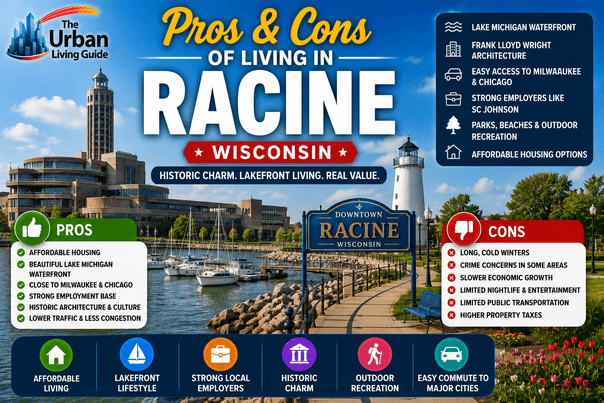
Pros and Cons of Living in Racine Between Lakefront Living and Milwaukee Opportunity
If you’re considering a move to Wisconsin, understanding the pros and cons of living in Racine can help you decide whether this historic lakefront city fits your lifestyle and long-term goals.
Located along the shores of Lake Michigan, Racine combines affordable housing, waterfront recreation, and a rich industrial heritage. The city is perhaps best known as the home of SC Johnson, one of Wisconsin’s largest employers, and for its stunning architecture designed by Frank Lloyd Wright.
Residents enjoy lakefront views, historic neighborhoods, and easy access to both Milwaukee and Chicago. However, challenges such as harsh winters, neighborhood-specific crime concerns, and slower economic growth can influence the overall living experience.
Watch this cute video by a local Racine kid to better understand the real pros and cons of living in Racine before moving.
Whether you’re relocating for affordability, lakefront living, retirement, or career opportunities, this guide covers the real pros and cons of living in Racine.
Pros of Living in Racine
Affordable Housing Near Lake Michigan
One of the biggest advantages in the pros and cons of living in Racine is affordability.
Compared to many lakefront communities throughout the Midwest, Racine offers relatively affordable housing options.
The city offers:
-
- Affordable home prices
- Lower housing costs than many nearby metro areas
- Historic homes with character
- Family-friendly neighborhoods
- Good value for first-time buyers
Many residents appreciate being able to enjoy a Lake Michigan lifestyle without paying premium waterfront-city prices.
Beautiful Lake Michigan Waterfront
Another major positive in the pros and cons of living in Racine is its location on Lake Michigan.
The city’s waterfront remains one of its strongest lifestyle advantages.
Popular lakefront attractions include:
-
- North Beach
- Racine Harbor
- Pershing Park
- Lake Michigan Pathways
- Samuel Myers Park
Residents enjoy:
-
- Walking trails
- Beach access
- Boating
- Fishing
- Waterfront recreation
The city’s lakefront lifestyle, waterfront views, and natural beauty contribute significantly to its appeal.
Easy Access to Milwaukee and Chicago
Location is another significant benefit.
Residents can enjoy a smaller-city atmosphere while remaining close to two major metropolitan areas.
Nearby destinations include:
-
- Milwaukee
- Chicago
- Regional airports
- Employment centers
- Entertainment districts
This accessibility makes Racine attractive to commuters and remote workers alike.
Strong Manufacturing and Corporate Presence
Racine continues to benefit from its industrial and corporate history.
Major employers include:
-
- SC Johnson
- CNH Industrial
- Ascension Wisconsin
- Twin Disc
- Regional manufacturers
The city’s manufacturing heritage, corporate employment base, and stable local employers continue supporting the economy.
Historic Architecture and Community Character
Racine offers a unique architectural identity that sets it apart from many Midwestern cities.
Notable landmarks include:
-
- SC Johnson Administration Building
- Wingspread
- Historic downtown districts
- Lakefront architecture
- Preserved neighborhoods
Residents who appreciate history and design often find Racine especially appealing.
Less Traffic Than Larger Metro Areas
Compared to nearby metropolitan regions, Racine offers easier commuting and less congestion.
Residents benefit from:
-
- Shorter commute times
- Easier parking
- Less traffic stress
- Simpler daily travel
- Better accessibility within the city
This slower pace appeals to many families and retirees.
Cons of Living in Racine
Long, Cold Winters
One of the biggest downsides in the pros and cons of living in Racine is winter weather.
Its location along Lake Michigan contributes to cold temperatures and occasional lake-effect snowfall.
Winter challenges include:
-
- Snow accumulation
- Freezing temperatures
- Wind chills
- Winter driving conditions
- Higher heating costs
Residents relocating from warmer regions often need time to adapt.
Crime Concerns in Certain Neighborhoods
Crime remains a concern in some parts of the city.
Common concerns include:
-
- Property crime
- Vehicle theft
- Neighborhood safety differences
- Certain higher-crime areas
While many neighborhoods remain stable and family-oriented, location selection is important when moving to Racine.
Slower Economic Growth Than Nearby Cities
Compared to Milwaukee and some suburban communities, economic growth in Racine has been slower.
Common concerns include:
-
- Fewer new developments
- Slower population growth
- Limited corporate expansion
- Reduced economic diversification
This can affect job availability in certain industries.
Limited Nightlife and Entertainment
While Racine has local attractions and events, entertainment options remain more limited than in larger cities.
Residents may notice fewer:
-
- Major concerts
- Large nightlife districts
- Professional sports venues
- Major cultural events
Many residents travel to Milwaukee for expanded entertainment opportunities.
Public Transportation Limitations
Transportation options remain somewhat limited for residents without personal vehicles.
Transportation challenges include:
-
- Car dependency
- Limited transit routes
- Regional commuting requirements
- Fewer transportation alternatives
Most households rely on personal vehicles for daily transportation.
Higher Property Taxes for Some Homeowners
Property taxes can be a concern for homeowners throughout Wisconsin.
Common homeowner concerns include:
-
- Annual tax burdens
- Rising ownership costs
- Municipal expenses
- Long-term affordability considerations
These costs can reduce some of the savings associated with affordable housing.
Final Thoughts on the Pros and Cons of Living in Racine
Understanding the pros and cons of living in Racine is important before making a relocation decision.
The city stands out for its lakefront lifestyle, affordable housing, historic architecture, manufacturing heritage, and convenient access to both Milwaukee and Chicago. At the same time, residents should prepare for long winters, neighborhood-specific crime concerns, slower economic growth, and limited entertainment options.
For families, retirees, commuters, and anyone seeking affordable Lake Michigan living, Racine remains one of the most underrated places to live in Wisconsin.
| Pros | Cons |
|---|---|
| Affordable lakefront housing | Long, cold winters |
| Beautiful Lake Michigan waterfront | Crime concerns in some areas |
| Milwaukee and Chicago access | Slower economic growth |
| Strong employers like SC Johnson | Limited nightlife |
| Historic architecture and neighborhoods | Public transportation limitations |
FAQs
Is Racine a good place to live?
Many residents choose Racine because of its affordable housing, lakefront location, and easy access to Milwaukee and Chicago. It offers a quieter lifestyle than larger metro areas while still providing urban conveniences.
What is Racine known for?
Racine is known for SC Johnson, Frank Lloyd Wright architecture, North Beach, and its historic location along Lake Michigan.
Is Racine affordable compared to Milwaukee?
In many cases, yes. Housing prices are often lower than those found in many Milwaukee-area communities, making Racine attractive to first-time buyers and retirees.
Does Racine get lake-effect snow?
Yes, Racine can experience lake-effect snow and cold winter conditions because of its location along Lake Michigan.
Do you need a car in Racine?
For most residents, yes. While local transit exists, many people rely on personal vehicles for commuting and daily activities.
Continue Exploring Wisconsin with The Urban Living Guide
Read our full guide on living in Racine, Wisconsin, and make sure you also check: