
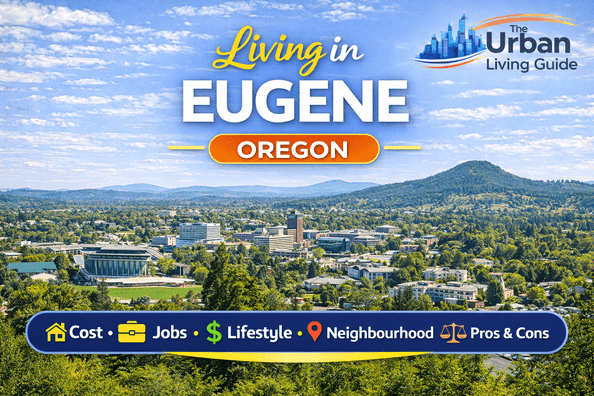
Living in Eugene, Oregon – Introduction
Living in Eugene, Oregon offers a relaxed Pacific Northwest lifestyle surrounded by forests, rivers, and mountains. Located in the Willamette Valley along the Willamette River, Eugene is the second-largest city in Oregon with a population of about 175,000 residents.
The city is often called “TrackTown USA” because of its long tradition of track and field athletics and its connection to the University of Oregon, which hosts world-class sporting events at Hayward Field. Eugene is also known for its environmentally conscious culture, vibrant arts community, and strong focus on outdoor recreation.
Many people choose living in Eugene, Oregon because of its laid-back lifestyle, beautiful natural surroundings, and growing education and healthcare sectors. The city sits between the Cascade Mountains and the Oregon Coast, giving residents easy access to hiking trails, rivers, lakes, and scenic landscapes.
Downtown Eugene features local markets, cafes, craft breweries, and art galleries, while the nearby Skinner Butte Park and Mount Pisgah provide stunning views and outdoor adventure opportunities.
Watch a recent video by a popular vlogger to understand daily life and vibes in Eugene.
Information in this guide is compiled from publicly available data, official city resources, economic reports, and local housing databases to ensure accuracy and reliability.
What Makes Eugene So Popular
Key reasons why people move here include:
• Beautiful location in the Willamette Valley surrounded by mountains and forests
• Home of the University of Oregon and vibrant college culture
• Access to outdoor recreation like hiking, biking, and kayaking
• Strong arts, music, and farmers market culture
• Eco-friendly lifestyle and green initiatives
Eugene is widely known as “TrackTown USA.”
Famous Personalities, Sports & Major Brands from Eugene
Eugene has strong connections to sports, culture, and innovation.
• Steve Prefontaine – Legendary long-distance runner and University of Oregon athlete
• Phil Knight – Co-founder of Nike and former University of Oregon student
• Ken Kesey – Influential American author who lived in the Eugene area
Sports are an important part of the city’s identity.
Major teams and institutions include:
• Oregon Ducks (NCAA athletics)
• Track and field events at Hayward Field
Major organizations and employers connected with Eugene include:
• University of Oregon
• PeaceHealth Medical Center
• Biotechnology companies in the region
Best Neighborhoods in Eugene
Eugene offers a variety of neighborhoods with scenic views and community atmosphere.
South Eugene
Popular residential area known for great schools and hillside homes.
Friendly Area
Quiet and family-oriented neighborhood with parks and walkable streets.
Downtown Eugene
Urban district filled with restaurants, markets, and entertainment venues.
Whiteaker District
Creative neighborhood known for art galleries, breweries, and local culture.
River Road
Suburban neighborhood near the Willamette River with scenic outdoor access.
Santa Clara
Growing residential area popular with families and commuters.
👉 If you’re new to this region, the map below will help you get a clear idea of the city’s location.
Housing & Rent in Eugene
Eugene’s housing market has grown due to university demand and population growth.
Typical monthly rent estimates include:
• Studio apartment – $1,100 – $1,400
• 1 Bedroom – $1,300 – $1,700
• 2 Bedroom – $1,700 – $2,400
• Family home – $2,700 – $4,200
Homes near the university or scenic areas like the Willamette River tend to be more expensive.
Rental figures are based on aggregated listing data and recent market trends.
Job Market & Business Opportunities
Eugene has a stable economy driven by education, healthcare, and technology.
Major industries include:
• Education and university employment
• Healthcare and medical services
• Technology startups and software companies
• Manufacturing and local businesses
• Tourism and outdoor recreation industries
The University of Oregon is one of the largest employers in the region.
Average salaries typically range between $60,000 and $100,000 depending on profession.
Major Companies & Headquarters in Eugene
Several major organizations operate in Eugene.
Key employers include:
• University of Oregon
• PeaceHealth Medical Center
• Symantec regional operations
• Arcimoto electric vehicle company
• Lane County Government
These institutions contribute significantly to the city’s economy.
What It’s Really Like Living in Eugene, Oregon
Daily life in Eugene revolves around nature, community, and outdoor recreation. Residents often bike along the Ruth Bascom Riverbank Path System, a network of scenic trails that follow the Willamette River through the city.
Local farmers markets, music festivals, and university sporting events create a lively community atmosphere. Many residents enjoy weekend trips to nearby destinations like Crater Lake, Mount Hood, and the Oregon Coast.
For many residents, living in Eugene, Oregon provides a peaceful lifestyle with strong connections to nature and culture.
Cost of Living in Eugene
Eugene has a moderate cost of living compared to larger cities like Portland.
Typical monthly costs include:
• Rent – $1,500 – $2,100
• Utilities – $140 – $220
• Groceries – $320 – $480
• Transportation – $100 – $180
• Healthcare – $320 – $480
Compared to nearby cities like Portland, Eugene generally has slightly lower housing costs.
Transportation & Commute
Eugene offers several transportation options.
• Lane Transit District (LTD) bus system
• Extensive bike-friendly streets and trails
• Major highways connecting Oregon cities
Average commute time is around 22 minutes.
Eugene Airport provides regional flights.
Weather & Environment
Eugene experiences a mild oceanic climate.
Summer: Warm and pleasant around 75–85°F
Winter: Cool and rainy with occasional frost
Spring/Fall: Lush greenery and scenic landscapes
The surrounding Cascade Mountains and Willamette River Valley provide beautiful natural scenery.
Popular Hotels, Cafes & Restaurants
Eugene has a vibrant local food scene.
Popular hotels include:
• Graduate Eugene Hotel
• Inn at the 5th Boutique Hotel
• Valley River Inn
The city is known for its farm-to-table restaurants, craft breweries, and local coffee culture.
Sightseeing & Attractions
Eugene offers many cultural and outdoor attractions.
• Hayward Field Stadium
• Skinner Butte Park
• Mount Pisgah Arboretum
• Saturday Market Eugene
• Jordan Schnitzer Museum of Art
These locations highlight the city’s arts culture and natural beauty.
Budget Stay / Hostels
Visitors can find affordable accommodations in Eugene.
Examples include:
• Budget hotels near downtown Eugene
• Guesthouses near the university
• Affordable short-term rental apartments
Quick Snapshot of Living in Eugene, Oregon
• Population – ~175,000
• Average Rent – $1,800/month
• Average Salary – $75,000/year
• Average Commute Time – 22 minutes
• Climate – Mild and rainy winters, pleasant summers
Education & Universities
Eugene is a major education hub in Oregon.
• University of Oregon
• Lane Community College
• Northwest Christian University
These institutions attract students from across the country.
Pros and Cons of Living in Eugene, Oregon
Pros
• Beautiful natural surroundings and outdoor activities
• Strong university and cultural environment
• Relaxed lifestyle with vibrant arts community
• Lower housing costs than Portland
• Eco-friendly and bike-friendly city 🙂
Cons
• Rainy winters with limited sunshine
• Smaller job market compared to big cities
• Housing demand increasing due to university population
• Limited nightlife compared to large metropolitan areas
• Some traffic near university districts
Is Eugene a Good Place to Live?
For many residents, living in Eugene, Oregon offers a peaceful and environmentally conscious lifestyle surrounded by beautiful landscapes. The city’s strong university presence creates a vibrant cultural atmosphere while supporting jobs in education, healthcare, and research.
Outdoor enthusiasts enjoy easy access to mountains, rivers, forests, and coastal areas, making Eugene one of the most scenic cities in the Pacific Northwest.
Although the job market is smaller than larger metropolitan areas, Eugene remains a desirable destination for students, families, and professionals seeking a balanced lifestyle close to nature.
FAQs
Is Eugene expensive to live in?
Eugene has a moderate cost of living compared to larger Oregon cities like Portland.
What salary is needed to live comfortably in Eugene?
A salary between $70,000 and $90,000 per year is typically comfortable.
Is Eugene a safe city to live in?
Many neighborhoods are considered safe and family-friendly.
What are the best neighborhoods in Eugene?
South Eugene, Friendly Area, and Whiteaker are popular places to live.
Can you live in Eugene without a car?
Yes, the city is very bike-friendly and has public transportation.
What is Eugene known for?
Eugene is known as “TrackTown USA” and for its outdoor lifestyle and university culture.
🔗 Explore More Cities in Oregon
If you’re exploring more options beyond Eugene, The Urban Living Guide has covered several other popular cities in Oregon. You can also check:
These guides give you a complete picture of what it’s like living across different cities, covering everything from cost of living, housing, and job opportunities to neighborhoods, commute, weather, education, popular places, and major employers.
The Urban Living Guide brings together these local insights in one place, helping you compare cities easily and make a confident, well-informed decision based on your lifestyle and goals.