

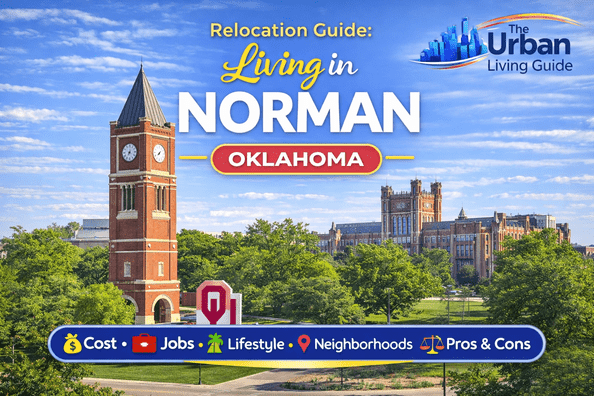
University Energy Meets Quiet Outdoor Escapes, Making Living in Norman, Oklahoma a Surprisingly Balanced College-Town Experience
If you are actively considering living in Norman, Oklahoma, you are looking at a city that flawlessly balances the high-voltage energy of a premier college town with the tranquil, deeply rooted comfort of a midwestern suburban enclave. Located just 20 miles south of downtown Oklahoma City, Norman is anchored by the sprawling, historic campus of the University of Oklahoma (OU), which dictates much of the city’s economic, cultural, and architectural identity.
However, writing Norman off as just another college town would be a massive oversight. As the third-largest city in the state, boasting a population of over 130,000 residents, it has carved out a unique global reputation as the meteorological capital of the world, housing the National Weather Center and the NOAA Severe Storms Laboratory. Geographically diverse, the city stretches from the bustling commercial corridors along I-35 in West Norman to the heavily forested, red-dirt shores of Lake Thunderbird in the east. Families, researchers, and young professionals are flocking to Norman to take advantage of its top-rated public school system, remarkably affordable real estate, and a community-centric lifestyle that offers world-class collegiate athletics and fine arts without the crushing traffic or cost of living found in larger coastal metros.
Watch this highly detailed local vlogger tour to genuinely understand the daily rhythm, neighborhood architecture, and street-level atmosphere across Norman before you start packing your boxes.
To ensure your relocation planning is as accurate and stress-free as possible, the economic metrics, housing insights, and neighborhood breakdowns provided within this comprehensive guide have been cross-referenced with official municipal databases, the Norman Chamber of Commerce, and active real estate market analytics.
What Makes Norman’s Culture So Distinct and Highly Sought-After
Norman operates with a dual identity. From August to November, it is the undisputed epicenter of Oklahoma sports culture, completely consumed by college football. But for the rest of the year, it is a highly intellectual, arts-driven, and family-oriented community.
The core elements defining Norman’s distinct character include:
- The University of Oklahoma Ecosystem: The OU campus is the beating heart of the city, providing stunning Cherokee Gothic architecture, expansive public lawns, and a massive influx of international students and esteemed faculty.
- The Weather Capital of the World: Norman is home to the highest concentration of severe weather researchers globally. The National Weather Center sits on the southern edge of the OU campus, driving a massive local meteorological tech industry.
- Lake Thunderbird State Park: Affectionately (and sometimes jokingly) called “Lake Dirtybird” by locals due to its red-clay tint, this massive reservoir provides the city with extensive boating, hiking, and camping opportunities just minutes from downtown.
- The Arts and Music Scene: Unlike typical suburbs, Norman has a fiercely independent creative streak, highlighted by the annual Norman Music Festival and the renowned Fred Jones Jr. Museum of Art.
- Exceptional Affordability: Despite offering major university amenities, the city maintains a cost of living and median housing price that sits comfortably below the national average.
Norman at a Glance: Essential Relocation Statistics
Before planning your budget and logistics, it is vital to understand the foundational numbers driving the local economy. Here is a snapshot of current real estate and lifestyle metrics:
| Relocation Parameter | Statistical Overview |
|---|---|
| Median Home Value | $230,000 – $270,000 (Substantially higher in West Norman and historic districts) |
| Average Monthly Rent | $900 – $1,400 (Student luxury housing near campus commands premiums) |
| Median Household Income | $58,000 – $64,000 (Skews slightly lower due to the large student population) |
| Average Commute Time | 18 to 22 minutes (Commuting to OKC typically takes 25 to 35 minutes) |
| Primary Transportation Corridors | I-35, Highway 9, Lindsey Street, Main Street |
| Tax Climate | Low property taxes paired with standard state income tax |
Famous Personalities, Athletic Legacies & Major Corporate Brands
Because Norman is an academic and athletic epicenter, its most famous figures are often legends of the gridiron or celebrated actors. The city’s cultural footprint is massive compared to its geographical size.
Legendary figures and cultural icons rooted in the area include:
- James Garner: The legendary Hollywood actor and star of The Rockford Files and Maverick was born and raised in Norman, and is honored with a prominent statue downtown.
- Toby Keith: The late, iconic country music megastar had deep roots in the Norman and Moore area, actively supporting local OU athletics and regional businesses.
- Barry Switzer & Bob Stoops: Legendary, national championship-winning OU football coaches who fundamentally shaped the modern era of the city and remain highly active in the local community.
- Baker Mayfield & Sam Bradford: Celebrated Heisman Trophy-winning quarterbacks whose collegiate careers defined the city’s sports culture for years.
Economically, the city is dominated by large-scale institutions, research labs, and regional healthcare:
- The University of Oklahoma: The undeniable economic engine of the city, employing over 12,000 faculty, researchers, and administrative staff.
- National Oceanic and Atmospheric Administration (NOAA): Operating out of the National Weather Center, employing hundreds of top-tier federal meteorologists and atmospheric scientists.
- Norman Regional Health System: The primary regional healthcare provider, maintaining multiple massive hospital campuses and offering incredibly stable medical employment.
- Hitachi Vantara & Astellas Pharma: Major corporate players maintaining significant manufacturing and technological operations within the city limits.
Finding Your Space: The Best Neighborhoods in Norman
The residential market in Norman is heavily segmented. You must choose whether you want to be in the walkable, historic core near the university, in the sprawling modern suburbs of the west, or on the quiet, wooded acreage to the east.
| Neighborhood Name | Best For | Vibe & Architectural Style | Estimated Price Range |
|---|---|---|---|
| Campus Corner & Central Norman | Students & University Faculty | Highly walkable, dense with game-day nightlife, historic 1920s homes mixed with student rentals | $200,000 – $450,000 |
| Miller & Chautauqua Historic Districts | Professors & History Enthusiasts | Beautiful craftsman bungalows, tree-lined streets, strict historic preservation, quiet academic vibe | $300,000 – $600,000 |
| Brookhaven (West Norman) | Executives & Established Families | Upscale suburban enclave, massive manicured lawns, proximity to country clubs and I-35 retail | $400,000 – $900,000+ |
| Hall Park | Families & Commuters | Mid-century modern aesthetic, heavily wooded, highly family-friendly, once its own independent town | $220,000 – $380,000 |
| East Norman (Near Lake Thunderbird) | Nature Lovers & Land Seekers | Rural atmosphere, multi-acre lots, custom-built homes, privacy, direct access to state park trails | $300,000 – $800,000+ |
👉 If you are unfamiliar with how I-35 and the university divide the city geographically, review the interactive map below.
Housing Market Analysis and Rental Economics
The housing market in Norman is profoundly influenced by the academic calendar. August brings a massive rush of leasing activity, and the areas directly surrounding the university are heavily dominated by investor-owned rentals. However, step just a mile away, and you find beautifully preserved, owner-occupied neighborhoods.
Current aggregate housing and rental data reflect the following trends:
- Studio & 1 Bedroom Apartments: $700 to $1,200 per month (Luxury, resort-style student complexes command the highest premiums).
- 2 to 3 Bedroom Apartments: $1,100 to $1,600 per month (Often leased per-bedroom in student-heavy zones).
- Single-Family Rental Homes: Generally start around $1,500 to $2,000 per month in family-focused areas like West Norman.
- Home Purchasing: The median sits comfortably around $230,000 to $270,000, making homeownership highly accessible for young professionals and families relocating from out of state.
Job Market: Higher Education, Healthcare, and Meteorology
While many residents choose to commute 30 minutes up I-35 to jobs in Oklahoma City, Norman possesses a highly robust, localized economy. The University of Oklahoma provides a massive, recession-proof foundation, employing thousands in research, academia, and facility management.
However, Norman’s true unique economic driver is weather technology. The presence of the National Weather Center has birthed an entire ecosystem of private meteorological start-ups, radar engineering firms, and environmental consultants right within the city limits. Additionally, the Norman Regional Health System is expanding rapidly, providing lucrative, stable careers for nurses, specialists, and hospital administrators. Average local salaries generally fall between $45,000 and $85,000, though federal researchers and university executives earn considerably more.
Daily Life, Culture, and the College Town Atmosphere
Living in Norman requires adapting to two distinct seasons: football season and the rest of the year. During the fall, the population practically doubles on weekends. RVs fill every available parking lot, the smell of barbecue blankets the city, and dining out requires strategic planning. The energy is infectious, bringing a massive economic boost to local businesses.
When the students depart for the summer, the city transforms into a quiet, peaceful midwestern town. Residents spend their weekends walking the trails at George M. Sutton Wilderness Park, browsing the incredible Saturday morning Farmers Market at the Cleveland County Fairgrounds, or enjoying upscale dining along Main Street. The local food scene is iconic, featuring legendary spots like The Mont (famous for its patio and Swirl margaritas) and classic diners that have served generations of locals.
Cost of Living: Maximizing Your Budget
One of the primary benefits of living in Norman, Oklahoma is the low financial barrier to entry, particularly regarding property taxes and daily services.
A typical monthly household budget looks approximately like this:
- Rent / Mortgage Base: $900 to $1,500
- Utilities (Electricity, Water, Trash): $160 to $260 (Summer air conditioning drives costs to their peak)
- Groceries & Household Goods: $300 to $500
- Transportation (Gas & Insurance): $110 to $160
- Healthcare & Wellness: $200 to $350
Compared to major sunbelt cities or coastal tech hubs, your dollar stretches significantly further here, allowing for higher savings and easier wealth accumulation.
Highway Networks, Commuting, and Traffic Rhythms
Norman is entirely car-dependent. While the university operates its own transit system (CART) which serves students well, professionals commuting to work rely heavily on personal vehicles. The transportation grid is anchored by I-35, which runs directly through the western half of the city.
Traffic within the city revolves around major east-west arteries like Main Street, Lindsey Street, and Robinson Street. These corridors can experience heavy congestion during afternoon rush hours and university class-change times. If you work in downtown Oklahoma City, you can expect a very manageable 25 to 35-minute commute, assuming there are no major accidents on the interstate.
Climate Realities: The Heat and Tornado Alley
The climate is officially humid subtropical. Summers are intensely hot, sticky, and prolonged, with temperatures routinely breaking the 90-degree mark from June through September. Air conditioning is a non-negotiable necessity, and many residents escape the heat by taking their boats out on Lake Thunderbird.
Winters are relatively mild and brief, though occasional ice storms can cause temporary power outages. However, the most critical weather reality newcomers must understand is the spring severe storm season. Norman sits in the heart of Tornado Alley. Because the city houses the world’s leading severe weather experts, the warning systems and local media coverage are unparalleled. Having a severe weather plan and access to a storm shelter is a standard part of local life.
Landmarks, Museums, and Recreational Hubs
Beyond the classroom and the office, the city offers excellent cultural and historical diversions that rival much larger metropolitan areas.
- Sam Noble Oklahoma Museum of Natural History: A massive, world-class museum located on the OU campus, featuring towering dinosaur skeletons and deep explorations of Native American history.
- Fred Jones Jr. Museum of Art: One of the finest university art museums in the country, boasting an incredible collection of French Impressionism and Native American art.
- Gaylord Family – Oklahoma Memorial Stadium: The towering, 80,000+ seat cathedral of college football that dominates the city skyline.
- Lake Thunderbird State Park: Offering miles of equestrian trails, mountain biking, archery ranges, and extensive water sports just east of the city center.
Weighing the Realities: Pros and Cons of Relocating
Before committing to a move, it is crucial to balance the charm of a university town against its inherent logistical challenges. Here is an honest breakdown.
Primary Advantages of Moving Here:
- Highly affordable housing market, especially for growing families seeking spacious suburbs.
- An incredibly robust public school system (Norman Public Schools) paired with top-tier university access.
- Vibrant, youth-driven community energy supported by world-class fine arts and collegiate sports.
- Strong, stable employment via the University of Oklahoma and the meteorological tech sector.
- Easy, direct highway access to Oklahoma City for expanded dining, aviation jobs, and an international airport.
Notable Challenges to Prepare For:
- The Game Day Gridlock: Traffic, grocery shopping, and dining out become incredibly difficult during fall home games.
- Severe Weather Risks: The very real and consistent threat of spring tornados requires serious preparation and situational awareness.
- Intense Summer Heat: July and August bring sweltering humidity that heavily limits comfortable outdoor recreation.
- Student Dominance: Certain areas of town (like Campus Corner) are almost entirely student-focused and can be loud, crowded, and heavily transitioned every August.
- Absolute Car Dependency: Despite the presence of campus transit, living a fully integrated life in Norman requires a personal vehicle.
Is Norman the Right Move for You?
Norman offers a highly specific, passionately vibrant lifestyle. If you love the energy of collegiate athletics, desire a highly educated southern community, and want an affordable place to buy a home with excellent public schools, this city is an absolute gem. The economic stability provided by the university and the nearby OKC metro ensures long-term security.
However, if you strongly dislike sports culture, prefer a massive urban concrete jungle with subway transit, or want to avoid living alongside a massive college demographic, the town’s dynamics may feel overwhelming. For those who embrace the academic energy, the rich local arts scene, and the undeniable spirit of the Sooners, living in Norman, Oklahoma is a deeply rewarding experience.
Real Experiences: Perspectives from Long-Term Residents (5 to 10+ Years)
“Living near campus in Norman for over a decade gives you a unique perspective. During football season, the town vibrates with Sooner pride, which is incredible if you love college sports. But during the summer, it transforms into a quiet, tree-lined university town with great local parks and an easygoing pace.”
[Source: r/normanok Community Discussions — u/SoonerAlum04, resident of 11 years]
“The big adjustment for newcomers is managing game-day traffic around Campus Corner. Outside of autumn weekends, though, Norman offers top-tier schools, wonderful neighborhoods, and a safe, family-friendly environment that is hard to beat in Oklahoma.”
[Source: Local Resident Panels & Community Forums — Rachel K., Norman resident of 8 years]
Frequently Asked Questions About Living in Norman, Oklahoma
Is living in Norman entirely centered around OU football?
During the fall, football dictates traffic, commerce, and social events. However, during the spring and summer, the city is a highly family-friendly community with a strong focus on local arts festivals, farmers markets, and lake recreation.
How bad is the tornado risk in Norman?
Norman is in Tornado Alley and faces significant severe weather threats during the spring. However, because it is the home of the National Weather Center, the city possesses the most advanced weather tracking and warning systems in the world.
What exactly is “Lake Dirtybird”?
“Lake Dirtybird” is the affectionate local nickname for Lake Thunderbird State Park. The water has a reddish-brown tint due to the natural red clay soil of central Oklahoma, but it remains a highly popular spot for boating, fishing, and hiking.
How is the commute from Norman to Oklahoma City?
It is very manageable. Taking I-35 North into downtown Oklahoma City typically takes 25 to 35 minutes, making Norman a highly popular bedroom community for OKC professionals.
Does the student population make it hard to buy a home?
It creates a unique market. Homes near the university (especially east of I-35) are often highly sought after by real estate investors for student rentals. However, family-focused areas in West Norman and East Norman have ample, affordable inventory unaffected by the student rush.
Explore More Cities in Oklahoma
If you’re exploring more options beyond Norman, The Urban Living Guide has covered several other popular cities across Oklahoma. You can also check:
- Living in Oklahoma City, Oklahoma
- Living in Tulsa, Oklahoma
- Living in Broken Arrow, Oklahoma
- Living in Lawton, Oklahoma
Before deciding if Norman is right for you, check out these detailed breakdowns:
- Cost of Living in Norman, Oklahoma
- Pros and Cons of Living in Norman, Oklahoma
- Best Neighborhoods in Norman, Oklahoma
Then explore our complete relocation logistics guide: Moving to Norman, Oklahoma
These guides give you a complete picture of what it’s like living across different cities, covering everything from cost of living, housing, and job opportunities to neighborhoods, commute, weather, education, popular places, and major employers.
The Urban Living Guide brings together these local insights in one place, helping you compare cities easily and make a confident, well-informed decision based on your lifestyle and goals.