

From Buckeye Pride to Midwest Tech Boom: What Living in Columbus Actually Feels Like in 2026
Situated in the heart of the Buckeye State in central Ohio, Living in Columbus, Ohio offers a compelling mix of explosive economic growth, major university energy, and Midwestern hospitality. As the capital and largest city of Ohio, Columbus supports a rapidly expanding population of nearly 920,000 residents, with the broader metropolitan area home to more than 2 million people. Driven by the massive presence of The Ohio State University and a surging technology and corporate sector, the city has evolved into one of the most dynamic urban centers in the Midwest.
Relocating to the region places you in a forward-looking metropolitan hub famously nicknamed a “Test Market City” due to its diverse demographics. Propelled by major employers like Nationwide Insurance and Cardinal Health, the local economy supports stable careers while maintaining housing costs well below coastal markets. However, thriving here requires navigating rapid population growth, increasing housing demand, and a car-dependent suburban layout. Whether you want a historic home in German Village or a modern loft in the Short North Arts District, Columbus delivers a vibrant and accessible lifestyle.
What Makes Columbus So Popular & Unique
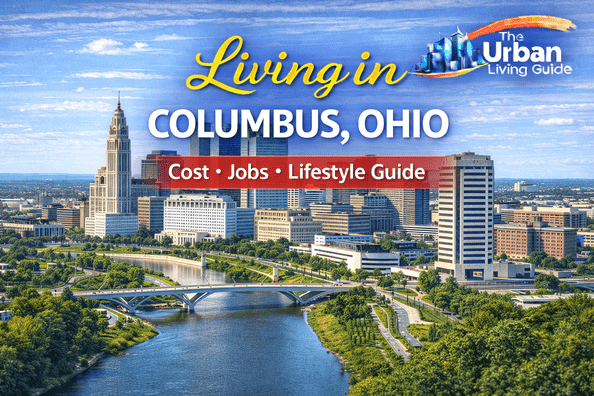
Columbus commands national attention because it successfully pairs a massive student and academic culture with a fast-growing business and tech economy, all while remaining remarkably affordable compared to coastal metros. Centered around vibrant cultural districts and the expansive Scioto Mile riverfront, the city functions as a magnet for young professionals and families. For newcomers looking to access municipal services, utility maps, or community event schedules, the official City of Columbus portal serves as an essential digital gateway.
- Explosive Economic Expansion: Celebrated as one of the fastest-growing metropolitan areas in the Midwest, fueled by tech startups and advanced manufacturing.
- The Ohio State University Influence: A massive academic and research powerhouse driving innovation, healthcare, and legendary Buckeye sports culture.
- Exceptional Housing Affordability: Median home prices and rental rates offer superior value compared to major U.S. coastal cities.
- Vibrant Arts & Entertainment: Anchored by the trendy Short North Arts District and world-class attractions like the Columbus Zoo and Aquarium.
Columbus at a Glance: Key Relocation Metrics
Reviewing these baseline statistics helps establish realistic expectations for your transition to Franklin County. These figures reflect current central Ohio market conditions and regional economic benchmarks.
| Metric | Columbus City Data | Metropolitan Context |
|---|---|---|
| City Population | ~920,000 Residents | Exceeds 2 Million across the greater metro area |
| Median Home Price | $310,000 – $390,000 | Significantly below national coastal medians, though rising rapidly |
| Average 1BR Rent | $1,200 – $1,700 | Competitive rental market driven by student and professional demand |
| Average Commute | 20 – 30 Minutes | Navigates I-270 outerbelt and major radial highway arteries |
| Top Industries | Government, Higher Ed, Tech, Insurance, Healthcare | Retail commerce, logistics, and corporate banking |
If you’re not familiar with this part of the state, the map below will help you understand the city’s exact location.
Famous Personalities, Olympic Athletes & Major Brands in Columbus
Columbus’s cultural footprint has produced legendary authors, world-class Olympic champions, and massive insurance and retail corporations that drive the state’s economy.
- Notable Personalities: The city is proud to be associated with legendary author R. L. Stine (creator of the Goosebumps series) and world-renowned Olympic gymnast Simone Biles, who trained extensively in the Columbus region.
- Professional Sports: Sports run through the local community, supported by enthusiastic fanbases cheering for the Columbus Blue Jackets (NHL) and the Columbus Crew (Major League Soccer), alongside fierce devotion to Ohio State football.
- Corporate Footprint: The regional economy acts as the command center for world-class enterprises like Nationwide Insurance, Cardinal Health, Bath & Body Works, and historic L Brands.
Job Market & Business Opportunities with Major Employers
Columbus’s job market is characterized by exceptional strength and economic diversification, anchored by state government administration, a massive university health system, insurance headquarters, and a growing tech sector. Whether you are managing corporate financial portfolios or researching technology startups, the local employment base offers steady, reliable career pathways.
Key employers driving local prosperity include Nationwide Insurance, Cardinal Health, OhioHealth, and regional operations for JPMorgan Chase. Official economic reference data from the Ohio Department of Job and Family Services highlights that average salaries typically range between $65,000 and $110,000 annually, providing solid middle-class purchasing power relative to regional housing costs.
- Entry-level salaries: Typically range between $45,000 – $60,000 across administrative, retail management, and healthcare support.
- Mid-career professionals: Generally span $65,000 – $110,000 for experienced insurance underwriters, registered nurses, and software developers.
- Specialized medical or corporate executive roles: Frequently scale to $120,000+, supporting comfortable homeownership across Franklin County.
Housing & Real Estate Overview in Columbus
Housing affordability remains a major factor drawing homebuyers to Columbus, though rapid population growth has increased real estate demand. In 2026, median home prices range between $310,000 and $390,000, allowing buyers to acquire charming historic homes in German Village or spacious suburban properties for a fraction of what they cost on the coasts.
The rental market remains active, offering diverse options across urban districts and suburban master-planned communities. Current average monthly rent projections are:
- Studio Apartment: $950 – $1,200
- 1 Bedroom Apartment: $1,200 – $1,700
- 2 Bedroom Apartment: $1,800 – $2,400
- Family Home Rentals: $2,600 – $3,600+
Achieving homeownership in Columbus is entirely realistic for middle-income earners, making it a premier destination for individuals looking to build long-term real estate equity.
Best Neighborhoods in Columbus: Finding Your Ideal Community
Choosing the right neighborhood in Columbus defines your daily commute, social life, and architectural surroundings. Each district offers an entirely unique character. Neighborhood insights are based on local housing trends, safety reports, and resident surveys. The table below outlines the most prominent residential zones.
| Neighborhood / Category | Location, Pricing & Community Overview |
|---|---|
| Short North Arts District (Trendy & Vibrant) | One of the trendiest neighborhoods in Columbus. Known for art galleries, upscale restaurants, boutique shopping, and energetic nightlife just north of downtown. |
| German Village (Historic & Charming) | A meticulously preserved historic neighborhood featuring authentic brick-paved streets, 19th-century brick homes, local bakeries, and quiet cafes. |
| Dublin (Suburban Family Hub) | A fast-growing suburb renowned for exceptional public schools, master-planned family communities, corporate offices, and a charming historic Irish district. |
| Clintonville (Relaxed & Residential) | Offers a relaxed, community-oriented atmosphere with neighborhood parks, local independent shops, and stable residential housing north of the university. |
| Downtown Columbus (Urban Core) | Features modern high-rise apartments, corporate office towers, theaters, and walking access to the Scioto Mile riverfront. |
What It’s Really Like Living in Columbus, Ohio (Daily Life & Vibe)
Daily life in Columbus moves at an energetic yet friendly pace that blends big-city ambition with Midwestern warmth. Residents enjoy a comfortable routine filled with weekend strolls through the Scioto Mile, shopping at local markets in German Village, and cheering on the Buckeyes during autumn Saturdays. The city’s modern infrastructure and planned highway layout help keep daily travel manageable.
Spring and autumn bring gorgeous outdoor weather, featuring vibrant foliage across city parks and visits to the Columbus Zoo and Aquarium. When winter arrives, locals embrace the seasonal climate with winter sports and cozy neighborhood gatherings. The combination of economic growth, affordability, and friendly community spirit creates an exceptionally balanced lifestyle.
Step into the rhythm of central Ohio and explore everyday sights through the lens of local creators:
Cost of Living in Columbus: Monthly Expenses & Salary Needs
Columbus offers a moderate cost of living that remains balanced compared to national U.S. averages. Cost estimates are derived from official statistics and city-level cost databases. To maintain a secure, comfortable standard of living and achieve homeownership, an individual professional should target a salary of $70,000+, while households generally require $110,000+.
- Average Rent: $1,200 to $2,400 depending on apartment size and neighborhood choice.
- Monthly Utilities: $140 – $220 (Covering electricity, water, and heating).
- Groceries & Household Goods: $350 – $600 per month based on household needs.
- Transportation: $90 – $170 for public transit passes or vehicle upkeep.
- Healthcare Costs: Aligned with regional benchmarks, supported by massive health networks like OhioHealth.
Transportation, Commute Dynamics & Transit Realities
Getting around Columbus and connecting to the wider Franklin County region is supported by a multi-modal transportation network:
- COTA Public Bus System: Operated by the Central Ohio Transit Authority, providing extensive public bus routes across Columbus and suburban corridors.
- Major Highways & Airport: Excellent driving connectivity via the I-270 outerbelt and I-70/I-71 corridors, alongside John Glenn Columbus International Airport (CMH) for domestic and international travel.
- Short Commutes: The average daily commute time is an exceptionally manageable 20 to 30 minutes each way.
- Car Preference: While public transit serves urban corridors well, many residents prefer personal vehicles to navigate suburban shopping and regional highway travel.
Weather Patterns, Seasonal Realities & Climate Factors
Columbus experiences distinct four-season weather influenced heavily by its central Ohio geography:
- Spring: Mild and blossoming, offering wonderful conditions for exploring parks and outdoor trails.
- Summer: Warm and humid with daytime temperatures averaging around 80°F to 90°F.
- Autumn: Crisp, cool weather accompanied by breathtaking fall foliage across central Ohio.
- Winter: Cold with freezing temperatures and occasional snowstorms, requiring proper winter gear and snow tires.
- Climate Reference: Official meteorological tracking and climate data are provided by the National Weather Service Central Ohio region.
Education, Schools & Major Universities
Higher education serves as a massive intellectual and economic asset for the entire region. Columbus is home to prestigious higher education institutions such as The Ohio State University, Columbus State Community College, and Franklin University. For families navigating K-12 schooling, neighborhood options vary, with suburban districts like Dublin offering exceptional public school performance.
Medical Facilities, Hospitals & Healthcare Systems
Access to advanced, cutting-edge healthcare is one of Columbus’s strongest community assets. The city is home to world-class medical institutions, anchored by OhioHealth, Nationwide Children’s Hospital, and The Ohio State University Wexner Medical Center. These premier hospital systems provide exceptional specialized care, trauma emergency services, and comprehensive medical research facilities locally.
Popular Hotels, Cafes, Dining & Culinary Scene
Columbus’s hospitality and culinary scene has expanded dramatically, blending historic brick architecture with innovative dining.
- Popular Hotels: Visitors and executive travelers frequently book stays at standout local luxury properties like the Hilton Columbus Downtown, Graduate Columbus, or Le Méridien Columbus, The Joseph.
- Cafes & Social Hubs: Independent coffee roasters and artisan bakeries thrive throughout the Short North, German Village, and university blocks, acting as vibrant spots for remote work and casual meetups.
- Restaurants: From upscale dining in the Short North and historic pubs in German Village to vibrant food halls and craft breweries, Columbus’s food scene is diverse and thriving.
Sightseeing, Cultural Spots & Tourist Attractions
Residents live surrounded by remarkable cultural museums, scenic waterways, and historic American landmarks.
- Columbus Zoo and Aquarium: A world-renowned zoological facility featuring thousands of animal species and interactive exhibits.
- Franklin Park Conservatory and Botanical Gardens: A magnificent Victorian-style greenhouse and botanical garden showcasing exotic plant collections and glass art.
- Scioto Mile Riverfront: A gorgeous urban oasis featuring walking trails, interactive fountains, and parks winding along the river.
- Short North Arts District: A vibrant cultural corridor filled with public art installations, galleries, and independent boutiques.
Regional Trade-offs: Pros and Cons of Living in Columbus
Every major city requires compromise. Here is the unvarnished reality for anyone planning a move to the capital city in 2026:
Pros:
- A strong, rapidly growing job market anchored by technology, finance, and healthcare.
- Affordable housing and rental markets compared to coastal U.S. metros.
- A vibrant arts, sports, and food culture driven by a large student population.
- Excellent university presence and modern civic infrastructure.
- Safe, clean neighborhoods and family-oriented suburban communities.
Cons:
- Cold, snowy winters and humid summers requiring seasonal home and vehicle maintenance.
- A limited heavy rail transit system, creating car dependency in outer suburbs.
- Rapid population growth increasing housing demand and real estate prices.
- Traffic congestion along major highway arteries during peak rush hours.
- A flat midwestern geography that lacks mountain or coastal topography.
Who Is Columbus Ideal For (and Who Should Avoid It?)
Ideal For: Young professionals seeking tech and corporate career growth, first-time homebuyers wanting market entry, families prioritizing elite suburban schools, and university graduates.
Who Should Avoid It: Individuals who require extensive heavy rail transit, buyers expecting cheap rural housing, and those craving mountain or oceanfront geography.
Real Experiences: Perspectives from Long-Term Residents (5 to 10+ Years)
Data gives you the metrics, but daily life gives you the truth. Here is what veteran locals have to say about navigating Columbus:
“Moving from Chicago to Columbus gave us double the square footage for our house budget, and the energy here is unbelievable—it feels like the whole city is growing in real-time. Game days in autumn are an absolute spectacle around campus, and the food scene in Short North punches way above its weight class.”
[Source: r/columbus Community Discussions]
“The job market in tech and insurance is super solid, and traffic is a breeze compared to bigger coastal cities as long as you avoid I-270 during rush hour. It’s clean, friendly, and progressive, making it a fantastic place to plant roots.”
[Source: Local Neighborhood Survey Threads]
Frequently Asked Questions About Living in Columbus, Ohio
Is Columbus, Ohio expensive to live in?
No, Columbus has a moderate cost of living compared to many major U.S. cities, offering median home prices between $310,000 and $390,000.
What salary do you need to live comfortably in Columbus?
An annual salary between $70,000 and $110,000 is generally sufficient for individuals or families to live comfortably, depending heavily on housing choices and lifestyle.
Is Columbus safe to live in?
Safety varies by neighborhood; established residential communities like German Village, Dublin, and Clintonville are widely considered very secure and family-friendly.
Can you live in Columbus without a car?
While COTA buses serve central neighborhoods like Downtown and the Short North effectively, many residents prefer owning a car for suburban commuting and errands.
What are the best neighborhoods for families in Columbus?
Dublin and Clintonville are among the most popular residential areas praised for their excellent local public schools, family parks, and community safety.
What is Columbus best known for economically and culturally?
Columbus is internationally celebrated as Ohio’s capital, the home of The Ohio State University, and a primary test market city for national business innovations.
🔗 Explore More Cities in Ohio
If you’re exploring more options beyond Columbus, The Urban Living Guide has covered several other popular cities in Ohio. You can also check:
Thinking about Columbus? Here are a few must-read guides:
- Cost of Living in Columbus, Ohio
- Pros and Cons of Living in Columbus, Ohio
- Best Neighborhoods in Columbus, Ohio
And if you’re planning your move, don’t miss our complete guide: Moving to Columbus, Ohio
These guides offer a comprehensive view of life in different cities, covering key aspects like cost of living, housing, job opportunities, neighborhoods, commute, weather, education, popular spots, and major employers.
The Urban Living Guide brings all these insights together in one place, making it easier to compare cities and choose the one that best fits your lifestyle, priorities, and long-term goals.