

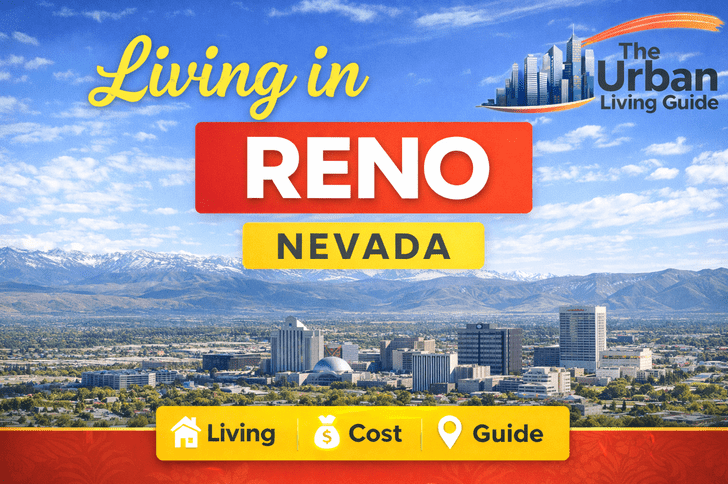
Living in Reno, Nevada in 2026: An Insider’s Look at Sierra Nevada Mountains, Tech Gigafactories, and Tax-Free Living
Stretching across the high-desert floor of the Truckee Meadows where the roaring waters of the Truckee River emerge directly from the eastern slopes of the towering Sierra Nevada mountains, living in Reno, Nevada offers an extraordinary fusion of alpine wilderness access, a booming technology and advanced manufacturing economy, and independent western culture. As the commercial anchor of Washoe County with an incorporated population of approximately 275,000 residents (anchoring a broader metropolitan region exceeding 500,000 people), Reno delivers a vibrant mid-sized urban standard of living just minutes away from the California border.
Universally celebrated across the American West as “The Biggest Little City in the World,” Reno commands a dynamic modern identity that has successfully transcended its historical reputation as a purely gaming-driven tourist town. Whether you are browsing indie art galleries and craft coffee shops in walkable Midtown, hiking through the shaded foothill trails of Northwest Reno, or making the quick 45-minute drive up to the alpine shores of Lake Tahoe and world-class ski resorts like Mount Rose, life here delivers an active, nature-obsessed, and fiscally advantageous lifestyle. Local municipal governance, public safety initiatives, and regional economic development programs are centrally administered through the official City of Reno Government Portal under the direction of city leadership.
Watch a recent video by a popular local vlogger to experience daily life and vibes in Reno:
Why Reno Has Evolved Into Northern Nevada’s Tech and Wilderness Capital
Over recent decades, Reno has captured national acclaim as a premier destination for tech engineers, remote executives, active families, and outdoor enthusiasts seeking high-altitude adventure and tax freedom without coastal housing inflation. Key factors driving its sustained popularity include:
- Unrivaled Proximity to Lake Tahoe and Ski Slopes: Immediate backyard access to the crystal-clear alpine waters of Lake Tahoe and world-class powder skiing at Mount Rose and Palisades Tahoe. Explore regional tourism and economic initiatives via the official Visit Reno Tahoe Tourism Portal.
- Zero Personal State Income Tax: A tax-friendly fiscal climate featuring 0% personal income tax, corporate franchise tax, or inheritance tax, allowing households to maximize earnings.
- Explosive Tech and Industrial Expansion: Massive capital investments from global giants like Tesla, Google, and Switch transforming the Tahoe Reno Industrial Center (TRIC) into a western powerhouse.
- Manageable Commutes and Clean Infrastructure: An efficient highway grid system that keeps average daily commutes under 25 minutes.
Reno At a Glance: Key Living Metrics
Famous Personalities, Local Icons & Major Brands in Reno
Reno boasts a rich history of nurturing influential First Ladies, literary figures, professional sports teams, and massive international technology campuses:
- Pat Nixon: The former First Lady of the United States who spent her formative teenage years and graduated from high school right in Reno (White House Pat Nixon Archival Portal).
- Reno Aces (MiLB): The Triple-A Minor League Baseball affiliate of the Arizona Diamondbacks, bringing energetic summer sports fandom to Greater Nevada Field along the Truckee River (Reno Aces Official Portal).
- University of Nevada Wolf Pack: The premier Division I collegiate athletic programs uniting the community with passionate local pride (Nevada Wolf Pack Official Portal).
- Tesla Gigafactory & Switch Data Centers: Massive technological manufacturing and green data center operations driving billions in regional economic investment across the Tahoe Reno Industrial Center (Tesla Official Portal).
Career Landscape & Major Employers in Northern Nevada
The employment landscape in Reno offers exceptional professional stability, high-paying technical roles, and recession-resistant manufacturing sectors:
- Advanced Manufacturing and Battery Production: Anchored by the Tesla Gigafactory east of the city, supporting thousands of engineering, automation, and lithium-ion production careers. Track regional workforce data via the Nevada Department of Employment, Training and Rehabilitation.
- Healthcare and Regional Medicine: Supported by Renown Health and Saint Mary’s Regional Medical Center, delivering comprehensive medical, nursing, and trauma care employment.
- Logistics and E-Commerce Distribution: Massive fulfillment networks operated by Amazon, Walmart, and Chewy leveraging Reno’s strategic position on Interstate 80 for Western state shipping.
- Green Data Infrastructure: High-tech cloud and data storage operations managed by Switch and Google.
Housing Market Dynamics & Real Estate Overview in Reno
Navigating the real estate market in Reno requires understanding its mountain valley geography, historic preservation districts, and suburban master-planned growth:
- Diverse Architectural Stock: Features charming 1920s historic homes in the Old Southwest, trendy urban lofts in Midtown, and master-planned single-family subdivisions across South Reno and Northwest Reno. Track property assessments via the Washoe County Assessor Portal.
- Market Valuations: High inward migration from Northern California has elevated property values and rental rates over past decades, though prices remain significantly more accessible than San Francisco or Silicon Valley.
- Rental Market Inventory: Average monthly rent spans $1,200 to $1,500 for studio units, $1,400 to $1,800 for one-bedroom apartments, $1,800 to $2,500 for two-bedroom properties, and $2,600 to $4,500+ for single-family rental homes.
- HOA Governance: Many suburban subdivisions enforce Homeowners Association regulations to maintain community parks and neighborhood aesthetics, with monthly dues averaging $30 to $150.
Best Neighborhoods in Reno: Finding Your Ideal Community
Check the interactive map below to understand the exact geographical position of Reno:
What Daily Life Really Looks Like in Reno (Rhythm & Vibe)
Daily life in Reno is characterized by an active, outdoor-obsessed, and unpretentious rhythm that prioritizes weekend wilderness over city congestion:
- Morning Coffee and River Walks: Residents often start mornings with craft coffee at Hub Coffee Roasters along the Truckee River or jogging down the Truckee River Walk. Check municipal recreation schedules via the official City of Reno Parks and Recreation Portal.
- Weekend Alpine Escapes: Weekends are defined by outdoor adventure, with locals making the quick 45-minute drive up to Lake Tahoe for summer paddleboarding or winter powder skiing.
- Brewery and Cultural Engagement: Exploring local craft breweries in the Brewery District, attending Artown summer festival events, or browsing the Nevada Museum of Art.
- Social Atmosphere: Independent, adventurous, welcoming, community-oriented, and tailored for active lifestyles.
Cost of Living Breakdown: Monthly Expenses & Salary Expectations
Commute Realities, Highway Corridors & Transit Options
Reno provides an efficient freeway grid and transportation infrastructure designed to avoid massive urban gridlocks:
- Interstate 80: Major east-west freeway crossing directly through Reno, connecting the city to Sacramento and Northern California to the west (RTC Washoe Official Portal).
- U.S. Route 395 / Interstate 580: Primary north-south arterial route providing swift transit between North Valleys and South Reno.
- Commute Times: Average daily local commutes remain exceptionally fast at approximately 18 to 23 minutes.
- Aviation Convenience: Unmatched proximity to Reno–Tahoe International Airport (RNO) just 10 minutes from downtown and Midtown.
Desert Climate Realities, Seasons & Environmental Factors
The environmental rhythm of Reno follows a classic semi-arid high-desert climate featuring four distinct seasons:
- Warm, Dry Summers: Summer daytime highs routinely average 85°F to 92°F with low humidity and cool evening breezes dropping temperatures comfortably at night. Track active forecasts via the National Weather Service Reno Portal.
- Cold, Snowy Winters: Winter seasons bring cold temperatures and seasonal mountain snow accumulation, varying by neighborhood elevation.
Higher Education, Schools & Academic Excellence
Educational infrastructure stands as a premier anchor for academic research, medical training, and intellectual community engagement:
- University of Nevada, Reno (UNR): Premier flagship public land-grant research university established in 1874, featuring acclaimed engineering, medical, and journalism programs (UNR Official Portal).
- Truckee Meadows Community College (TMCC): Comprehensive community college offering associate degrees and technical vocational certificates.
- Washoe County School District: Operating numerous neighborhood public schools and specialized magnet academies.
Healthcare Infrastructure & Regional Medical Networks
Healthcare infrastructure in Reno is advanced, highly specialized, and serves as the primary medical destination for all of Northern Nevada:
- Renown Regional Medical Center: Major integrated healthcare network and trauma center operating Northern Nevada’s only designated Children’s Hospital and adult Level 2 Trauma Center (Renown Health Official Portal).
- Saint Mary’s Regional Medical Center: Premier acute-care Catholic hospital offering advanced surgical suites, cardiology, and comprehensive outpatient clinics.
Hospitality, Mountain Resorts & Local Culinary Scene
The hospitality and culinary identity of Reno reflects luxury resort comfort, craft coffee roasters, and farm-to-table dining:
- Peppermill Resort Spa Casino & Atlantis Casino Resort: Landmark luxury resort properties providing award-winning dining, convention spaces, and spa retreats (Peppermill Reno Portal).
- Local Cafes & Bistros: Independent coffee pioneers like Hub Coffee Roasters and Coffeebar Reno anchoring a thriving local food scene.
Cultural Venues, Museums & Iconic Sightseeing
Landmark cultural institutions and natural wonders significantly enhance the daily quality of life for local residents:
- National Automobile Museum: World-class museum housing one of the finest collections of historic and vintage automobiles (National Automobile Museum Portal).
- Nevada Museum of Art (NMA): Nevada’s only accredited art museum featuring striking architecture and contemporary collections (Nevada Museum of Art Portal).
- Truckee River Walk: Scenic urban pathway featuring public art installations, whitewater parks, and riverside dining.
Regional Trade-offs: Pros and Cons of Living in Reno
Who Is Reno Ideal For — And Who Should Avoid It?
Who Reno Is Ideal For
- Outdoor and Ski Enthusiasts: Residents who prioritize weekend powder skiing at Lake Tahoe, alpine hiking, and mountain biking.
- Tech and Engineering Professionals: Workers pursuing robust careers across Tesla, Switch, and regional tech gigafactories.
- Remote Workers Seeking Seasons: Professionals wanting four distinct seasons, zero state income tax, and mid-sized urban culture.
- Active Families: People looking for safe master-planned suburban neighborhoods, good schools, and community parks.
Who Should Avoid Reno
- Humid Tropical Climate Seekers: Individuals who struggle with high-desert semi-arid dryness and winter snow accumulation.
- Subway and Rapid Transit Purists: People requiring extensive urban underground heavy-rail transit networks without driving.
- Ultra-Low Budget Homebuyers: Buyers seeking bargain real estate markets with minimal market competition.
- Smoke-Sensitive Individuals: Those vulnerable to respiratory issues during regional California wildfire smoke events.
Real Experiences: Perspectives from Long-Term Residents (5 to 10+ Years)
“Moving to Northwest Reno nine years ago from the Bay Area was the absolute best lifestyle and financial choice for my family. Keeping our state income tax savings, being minutes from the Truckee River, and driving up to Lake Tahoe for skiing on winter weekends is unbeatable. Housing has gotten more expensive, but the outdoor lifestyle and friendly community make it home.”
[Source: r/reno Community Discussions — u/SierraNevadaHiker08, resident of 10 years]
“The big reality check for newcomers is adjusting to winter snow driving and monitoring late-summer wildfire smoke reports. However, once you embrace the four seasons, the quality of life is fantastic. The university brings great culture, Midtown has incredible food and coffee, and you simply cannot beat having the Sierra Nevadas in your backyard.”
[Source: Local Resident Panels & Community Forums — Marcus V., South Reno homeowner of 9 years]
Frequently Asked Questions About Living in Reno, Nevada
Is living in Reno, Nevada expensive compared to California?
No. Overall housing expenses, property taxes, and living costs in Reno sit 20% to 35% lower than comparable Northern California metros like San Francisco, San Jose, or Sacramento, with the massive advantage of zero state income tax.
What salary do you need to live comfortably when living in Reno, Nevada?
A single adult needs an annual income of approximately $65,000 to $80,000 to comfortably rent an apartment and cover expenses, while families typically require $95,000 to $120,000+ to purchase a single-family home.
Is Reno, Nevada a safe place to live?
Yes. While certain urban core blocks experience typical property crime associated with mid-sized entertainment cities, suburban neighborhoods in South Reno and Northwest Reno are quiet, family-oriented, and secure.
Do you need a car when living in Reno, Nevada?
Yes. While RTC Washoe operates public buses, Reno’s geographic layout and proximity to mountain trails mean owning a personal vehicle is essential for daily life.
How far is Reno–Tahoe International Airport (RNO) from residential areas?
The airport is exceptionally close—just a 10-to-15-minute drive from downtown, Midtown, and most South Reno suburban neighborhoods.
Are there state income taxes when living in Reno, Nevada?
No. Nevada does not levy a personal state income tax, making it a primary tax-haven destination for professionals and businesses.
🔗 Explore More Cities in Nevada
If you’re evaluating relocation options across Nevada, explore our other detailed city guides:
- Living in Las Vegas, Nevada
- Living in Henderson, Nevada
- Living in North Las Vegas, Nevada
- Living in Carson City, Nevada
If you want to know more about living in Reno, explore these guides:
- Cost of Living in Reno, Nevada
- Pros and Cons of Living in Reno, Nevada
- Best Neighborhoods in Reno, Nevada
For a complete overview, check our full guide: Moving to Reno, Nevada
These guides give you a complete picture of what it’s like living across different cities, covering everything from cost of living, housing, and job opportunities to neighborhoods, commute, weather, education, popular places, and major employers.
The Urban Living Guide brings together these local insights in one place, helping you compare cities easily and make a confident, well-informed decision based on your lifestyle and goals.