
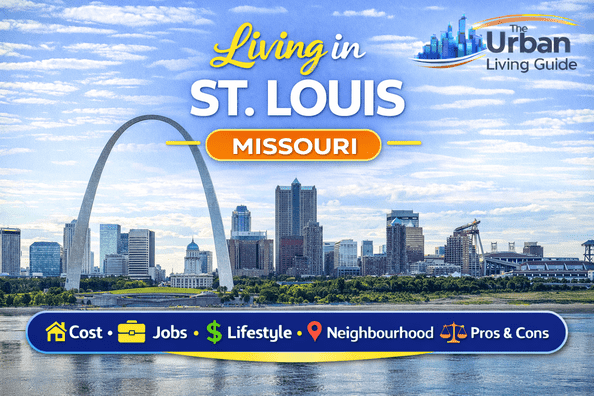
Living in St. Louis, Missouri – Introduction
Living in St. Louis, Missouri offers a vibrant mix of history, culture, sports, and affordable living in the American Midwest. Located along the Mississippi River, St. Louis is one of the largest metropolitan areas in Missouri with a city population of around 280,000 residents and a metro population exceeding 2.8 million.
The city is widely known for the iconic Gateway Arch, the tallest monument in the United States and a symbol of America’s westward expansion. Because of its historical role in American exploration and trade, St. Louis is often called “The Gateway to the West.”
Many people consider living in St. Louis, Missouri because it offers a lower cost of living compared to other major U.S. cities while still providing strong employment opportunities in healthcare, biotechnology, finance, and manufacturing.
The city features beautiful parks, historic neighborhoods, major sports teams, and cultural institutions such as museums, theaters, and music venues. Nearby natural attractions along the Mississippi and Missouri Rivers also provide scenic views and outdoor recreation.
Watch a recent video by a popular vlogger to understand daily life and vibes in St. Louis.
Information in this guide is compiled from publicly available data, official city resources, economic reports, and local housing databases to ensure accuracy and reliability.
What Makes St. Louis So Popular
Key reasons why people move here include:
• Iconic Gateway Arch landmark and historic riverfront
• Affordable housing compared to many U.S. metro areas
• Strong healthcare and biotechnology industries
• Major professional sports teams and fan culture
• Vibrant music, arts, and cultural institutions
St. Louis is famously known as “The Gateway to the West.”
Famous Personalities, Sports & Major Brands from St. Louis
St. Louis has produced many famous personalities.
• Chuck Berry – Legendary rock and roll musician from St. Louis
• Nelly – Grammy-winning rapper associated with the city
• Maya Angelou – Influential poet and civil rights activist who grew up in the region
Sports play a major role in the city’s culture.
Major teams include:
• St. Louis Cardinals (MLB)
• St. Louis Blues (NHL)
• St. Louis City SC (MLS)
Major companies connected with St. Louis include:
• Anheuser-Busch Brewery Headquarters
• Emerson Electric Headquarters
• Edward Jones Investments
Best Neighborhoods in St. Louis
St. Louis offers a variety of neighborhoods with unique character.
Central West End
Upscale neighborhood known for historic architecture, cafes, and cultural attractions.
Clayton
Business district with modern offices, restaurants, and luxury housing.
Soulard
Historic neighborhood famous for nightlife, music venues, and the annual Mardi Gras celebration.
Lafayette Square
Beautiful district with Victorian homes and scenic parks.
The Hill
Traditional Italian-American neighborhood known for restaurants and family homes.
Tower Grove
Residential area near Tower Grove Park with charming historic houses.
👉 If this area is new to you, check the map below to see where the city is positioned geographically.
Housing & Rent in St. Louis
St. Louis offers affordable housing compared to many U.S. metropolitan areas.
Typical monthly rent estimates include:
• Studio apartment – $800 – $1,100
• 1 Bedroom – $1,000 – $1,400
• 2 Bedroom – $1,400 – $1,900
• Family home – $2,200 – $3,600
Homes near downtown or historic districts may have higher rental prices.
Rental figures are based on aggregated listing data and recent market trends.
Job Market & Business Opportunities
St. Louis has a diverse and stable economy.
Major industries include:
• Healthcare and medical research
• Biotechnology and pharmaceuticals
• Finance and banking
• Manufacturing and logistics
• Education and universities
Large institutions like Washington University School of Medicine and BJC HealthCare provide thousands of jobs.
Average salaries typically range between $65,000 and $105,000 depending on profession.
Major Companies & Headquarters in St. Louis
Several major companies are headquartered in St. Louis.
Key employers include:
• Anheuser-Busch
• Emerson Electric
• Edward Jones Investments
• BJC HealthCare
• Enterprise Holdings
These organizations contribute significantly to the city’s economy.
What It’s Really Like Living in St. Louis, Missouri
Daily life in St. Louis combines Midwestern friendliness with a strong sense of local pride. Residents enjoy attending baseball games at Busch Stadium, exploring museums in Forest Park, or visiting restaurants and breweries across the city.
Forest Park itself is one of the largest urban parks in the United States and hosts several major attractions including the St. Louis Zoo, Art Museum, and Science Center.
For many residents, living in St. Louis, Missouri offers a dynamic city lifestyle with affordable housing and rich cultural experiences.
Cost of Living in St. Louis
St. Louis has a relatively low cost of living compared to many major U.S. cities.
Typical monthly costs include:
• Rent – $1,200 – $1,700
• Utilities – $140 – $220
• Groceries – $300 – $450
• Transportation – $100 – $180
• Healthcare – $320 – $480
Compared to cities like Chicago or Denver, St. Louis offers significantly lower housing costs.
Transportation & Commute
St. Louis offers several transportation options.
• MetroLink light rail system
• Public bus network
• Major highways including I-64, I-44, and I-70
Average commute time is around 24 minutes.
St. Louis Lambert International Airport provides domestic and international flights.
Weather & Environment
St. Louis experiences a humid continental climate.
Summer: Hot and humid around 85–95°F
Winter: Cold with occasional snowfall
Spring/Fall: Mild weather with colorful foliage
Nearby rivers and parks provide scenic landscapes.
Popular Hotels, Cafes & Restaurants
St. Louis has a vibrant hospitality and dining scene.
Popular hotels include:
• Four Seasons Hotel St. Louis
• The Chase Park Plaza Hotel
• Live! by Loews St. Louis
The city is known for breweries, barbecue restaurants, and Italian cuisine on The Hill.
Sightseeing & Attractions
St. Louis offers many iconic attractions.
• Gateway Arch National Park
• Forest Park
• St. Louis Zoo
• City Museum
• Missouri Botanical Garden
These locations highlight the city’s history and culture.
Budget Stay / Hostels
Visitors can find affordable accommodation options.
Examples include:
• Budget hotels near downtown St. Louis
• Guesthouses in historic neighborhoods
• Affordable short-term rentals
Quick Snapshot of Living in St. Louis, Missouri
• Population – ~280,000
• Average Rent – $1,500/month
• Average Salary – $85,000/year
• Average Commute Time – 24 minutes
• Climate – Hot summers and cold winters
Education & Universities
St. Louis hosts several well-known universities.
• Washington University in St. Louis
• Saint Louis University
• University of Missouri-St. Louis
These institutions support research and higher education.
Pros and Cons of Living in St. Louis, Missouri
Pros
• Affordable housing compared to major cities
• Strong sports culture and entertainment
• Rich historical and cultural heritage
• Growing healthcare and biotechnology sector
• Friendly Midwestern community 🙂
Cons
• Hot summers and cold winters
• Crime rates higher in some neighborhoods
• Public transportation limited in certain areas
• Some traffic congestion during rush hours
• Weather storms during spring
Is St. Louis a Good Place to Live?
For many residents, living in St. Louis, Missouri offers an excellent combination of affordability, cultural attractions, and career opportunities. The city’s strong healthcare and biotechnology industries provide stable employment, while historic neighborhoods and parks create a pleasant living environment.
St. Louis also has a vibrant sports culture and many cultural institutions, making it a lively and engaging place to live.
Overall, St. Louis continues to attract residents who want the amenities of a large city without the extremely high cost of living found in many coastal metropolitan areas.
FAQs
Is St. Louis expensive to live in?
No, St. Louis has a relatively affordable cost of living compared to many large U.S. cities.
What salary is needed to live comfortably in St. Louis?
A salary between $70,000 and $90,000 per year is typically comfortable.
Is St. Louis a safe place to live?
Many neighborhoods are safe, though safety varies across districts.
What are the best neighborhoods in St. Louis?
Central West End, Clayton, and Lafayette Square are popular areas.
Can you live in St. Louis without a car?
Public transit exists, but most residents prefer owning a car.
What is St. Louis known for?
St. Louis is famous for the Gateway Arch and its baseball culture.
🔗 Explore More Cities in Missouri
If you’re exploring more options beyond St. Louis, The Urban Living Guide has covered several other popular cities in Missouri. You can also check:
These guides offer a comprehensive view of life in different cities, covering key aspects like cost of living, housing, job opportunities, neighborhoods, commute, weather, education, popular spots, and major employers.
The Urban Living Guide brings all these insights together in one place, making it easier to compare cities and choose the one that best fits your lifestyle, priorities, and long-term goals.