

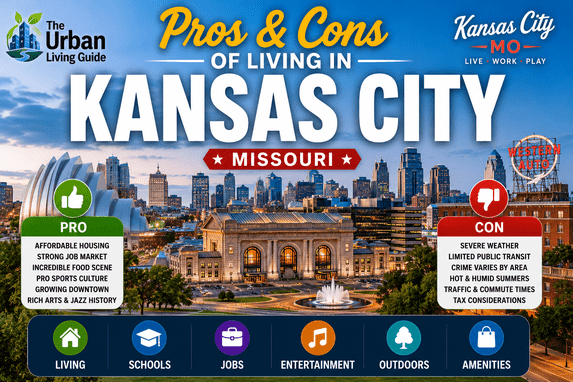
Pros and Cons of Living in Kansas City Near Its Famous Barbecue, Jazz, and Sports Culture
If you’re considering a move to Missouri, understanding the pros and cons of living in Kansas City can help you determine whether this growing Midwest metro is the right fit for your lifestyle and career goals.
Known nationally for Kansas City barbecue, jazz history, and championship sports teams like the Kansas City Chiefs and Kansas City Royals, the city offers a unique blend of affordability, career opportunities, entertainment, and community-focused living.
The city has experienced significant redevelopment over the past decade, particularly in areas like Downtown Kansas City, the Crossroads Arts District, and the Power & Light District. At the same time, residents also face challenges such as severe weather, public transportation limitations, and neighborhood-by-neighborhood differences in safety.
Watch local Kansas City videos to better understand the real pros and cons of living in Kansas City before moving.
Whether you’re relocating for work, affordability, family life, or entertainment, this guide covers the real pros and cons of living in Kansas City.
Pros of Living in Kansas City
Affordable Housing Compared to Many Major U.S. Cities
One of the biggest advantages in the pros and cons of living in Kansas City is affordability. While housing prices have risen in recent years, the city still offers significantly better value than many large metro areas across the country.
The city offers:
-
- Lower home prices than many coastal cities
- More square footage for the money
- Affordable suburban communities
- Lower rental costs in many neighborhoods
- Strong value for first-time buyers
Families and young professionals often find they can afford larger homes and more space compared to cities such as Denver, Seattle, or Austin.
Strong Job Market and Diverse Economy
Another major positive in the pros and cons of living in Kansas City is the city’s diversified economy. Unlike cities heavily dependent on one industry, Kansas City benefits from multiple employment sectors.
Major industries include:
-
- Healthcare
- Financial services
- Logistics
- Manufacturing
- Technology
- Government
Major employers include:
-
- Cerner (Oracle Health)
- HCA Midwest Health
- Hallmark
- Burns & McDonnell
- T-Mobile
The region’s central location also makes it an important transportation and distribution hub.
Incredible Food Scene Beyond Barbecue
While most people associate the city with barbecue, the food scene goes much deeper.
One of the city’s biggest attractions is its combination of local restaurants, breweries, and food markets.
Popular culinary highlights include:
-
- Kansas City-style barbecue
- Craft breweries
- International restaurants
- Local coffee roasters
- Farmers markets
- Food festivals
Neighborhoods like Crossroads, Westport, and the River Market have become dining destinations throughout the Midwest.
Professional Sports and Entertainment
Sports culture plays a huge role in daily life throughout Kansas City.
The city offers:
-
- NFL football
- MLB baseball
- Major concerts
- Sporting events
- Entertainment districts
- Family attractions
The success of the Kansas City Chiefs has made the city one of the most passionate sports markets in the country.
Residents also enjoy events at GEHA Field at Arrowhead Stadium, Kauffman Stadium, and the T-Mobile Center.
Growing Downtown and Revitalized Neighborhoods
One of the most noticeable changes in recent years has been the revitalization of downtown neighborhoods.
Areas that have seen significant growth include:
-
- Crossroads Arts District
- Power & Light District
- River Market
- Crown Center
- Union Hill
These districts offer modern apartments, restaurants, nightlife, and walkable environments that attract younger professionals.
Strong Arts, Jazz, and Cultural Heritage
Another major advantage in the pros and cons of living in Kansas City is its rich cultural history.
The city is famous for its connection to American jazz and continues to support a thriving arts community.
Popular cultural attractions include:
-
- American Jazz Museum
- Nelson-Atkins Museum of Art
- Kauffman Center for the Performing Arts
- 18th & Vine Historic District
- Local galleries and music venues
Residents who enjoy arts and culture often find far more options than expected in a Midwest city.
Cons of Living in Kansas City
Severe Weather and Tornado Risk
One of the biggest downsides in the pros and cons of living in Kansas City is the weather.
The city experiences all four seasons, but weather can sometimes become extreme.
Common weather challenges include:
-
- Severe thunderstorms
- Tornado warnings
- Hail storms
- High summer humidity
- Winter ice events
New residents often need time to adjust to the region’s unpredictable weather patterns.
Public Transportation Is Limited
While public transit exists, many residents still depend heavily on personal vehicles.
Transportation challenges include:
-
- Car-dependent neighborhoods
- Limited regional transit coverage
- Longer suburban commutes
- Traffic during peak hours
- Limited rail options
Although the downtown streetcar has helped improve mobility, much of the metro area remains vehicle-oriented.
Crime Varies Significantly by Neighborhood
Crime is another factor frequently discussed in the pros and cons of living in Kansas City.
The experience varies dramatically depending on where someone lives.
Common concerns include:
-
- Property crime
- Vehicle theft
- Certain high-crime corridors
- Neighborhood safety differences
However, many suburban and residential neighborhoods remain safe and family-friendly.
Researching neighborhoods carefully is important before relocating.
Hot and Humid Summers
Summer weather can be uncomfortable for some residents.
Summer challenges include:
-
- High humidity
- Temperatures in the 90s
- Strong storms
- Seasonal allergies
- Elevated cooling costs
People moving from cooler climates may find summers more intense than expected.
State and Local Tax Considerations
Taxes can occasionally surprise newcomers.
Depending on where someone lives and works within the metro area, residents may encounter different city and state tax situations.
Potential considerations include:
-
- Earnings taxes in some areas
- Property taxes
- Sales taxes
- Cross-state tax complexities
Understanding local tax obligations is important when comparing housing costs.
Traffic Continues to Increase
Although traffic remains lighter than many large U.S. cities, congestion has increased as the metro area grows.
Traffic concerns include:
-
- Rush-hour bottlenecks
- Highway construction
- Longer suburban commutes
- Downtown event traffic
- Population growth impacts
Residents commuting across the metro region may spend more time driving than expected.
Final Thoughts on the Pros and Cons of Living in Kansas City
Understanding the pros and cons of living in Kansas City is important before making a relocation decision.
The city stands out for its affordable housing, diverse economy, famous barbecue culture, professional sports scene, and growing downtown districts. At the same time, residents should prepare for severe weather, transportation limitations, neighborhood-specific safety differences, and humid summers.
For professionals, families, and anyone seeking a balance of affordability and big-city amenities, Kansas City continues to be one of the most attractive places to live in the Midwest.
FAQs
Is Kansas City a good place to live for families?
Many families choose Kansas City because of its affordability, suburban neighborhoods, schools, and recreational opportunities. The metro area offers a strong balance between cost of living and quality of life.
What is Kansas City best known for?
Kansas City is famous for its barbecue, jazz heritage, professional sports teams, and historic cultural districts. It is also known as a major business and transportation hub in the Midwest.
Is Kansas City expensive to live in?
Compared to many major U.S. metro areas, Kansas City remains relatively affordable. Housing costs are generally lower than those found in many coastal and Sun Belt cities.
Does Kansas City get tornadoes?
The region occasionally experiences severe weather and tornado warnings, particularly during spring and early summer. Residents typically stay informed through weather alerts and preparedness systems.
Do you need a car in Kansas City?
In most cases, yes. While public transportation exists in certain areas, many residents rely on personal vehicles for commuting and daily errands.
Explore More
Read our full guide on living in Kansas City, make sure you check: