
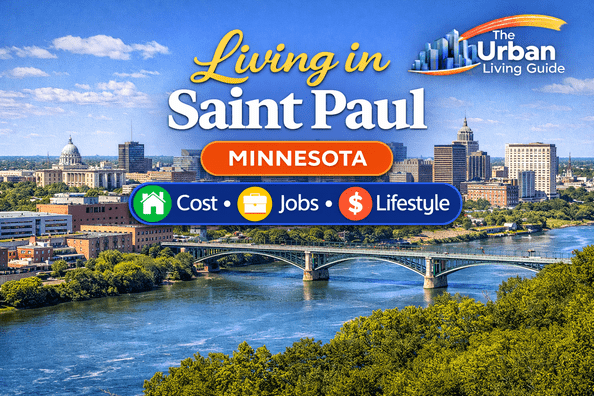
Living in Saint Paul, Minnesota – Introduction
Living in Saint Paul, Minnesota offers a blend of historic charm, government influence, and a relaxed urban lifestyle. Located along the Mississippi River, Saint Paul is the capital city of Minnesota and forms one half of the famous Twin Cities metropolitan area together with Minneapolis.
The city has a population of about 310,000 residents, while the greater Twin Cities region is home to more than 3.5 million people. Saint Paul is known for its beautiful historic architecture, tree-lined streets, and strong cultural institutions.
Many people choose living in Saint Paul, Minnesota because of its strong job market, excellent schools, and family-friendly neighborhoods. The city has a quieter and more traditional feel compared to Minneapolis but still provides easy access to major employment centers, entertainment venues, and public transportation.
Watch a recent video by a popular vlogger to understand daily life and vibes in Saint Paul.
Information in this guide is compiled from publicly available data, official city resources, economic reports, and local housing databases to ensure accuracy and reliability.
What Makes Saint Paul So Popular
Key reasons why people move here include:
• One half of the famous Twin Cities metropolitan area
• Beautiful historic architecture and neighborhoods
• Strong government and public sector employment
• Easy access to Minneapolis jobs and entertainment
• High quality of life with parks and riverfront areas
Famous Personalities, Sports & Major Brands from Saint Paul
Saint Paul has connections to several famous figures.
• F. Scott Fitzgerald – Author of The Great Gatsby who grew up in Saint Paul
• Garrison Keillor – Radio personality known for A Prairie Home Companion
• Judy Garland – Legendary actress and singer associated with Minnesota
Sports culture in the region includes several major teams.
Teams connected to the Twin Cities area include:
• Minnesota Wild (NHL) – Based in Saint Paul
• Minnesota Vikings (NFL)
• Minnesota Twins (MLB)
Major companies and institutions connected with Saint Paul include:
• 3M Headquarters (nearby)
• Ecolab
• Securian Financial
These organizations contribute to the regional economy.
Best Neighborhoods in Saint Paul
Saint Paul offers many beautiful neighborhoods.
Summit Hill
Historic neighborhood known for Victorian homes and tree-lined streets.
Highland Park
Popular residential area with parks, shops, and family-friendly communities.
Downtown Saint Paul
Urban living with apartments, offices, and entertainment venues.
Macalester-Groveland
A charming neighborhood near Macalester College with cafes and local shops.
Como Park Area
Family-friendly neighborhood near parks and the famous Como Zoo.
West Seventh District
Historic district with restaurants, breweries, and entertainment.
👉 If you’re new to this region, the map below will help you get a clear idea of the city’s location.
Housing & Rent in Saint Paul
Housing costs in Saint Paul are generally slightly lower than nearby Minneapolis.
Typical monthly rent estimates include:
• Studio apartment – $1,100 – $1,400
• 1 Bedroom – $1,300 – $1,700
• 2 Bedroom – $1,700 – $2,300
• Family home – $2,700 – $4,200
Historic homes and suburban-style neighborhoods are common throughout the city.
Rental figures are based on aggregated listing data and recent market trends.
Job Market & Business Opportunities
Saint Paul has a stable job market supported by government, healthcare, and corporate headquarters.
Major industries include:
• Government and public administration
• Healthcare and medical services
• Finance and insurance
• Manufacturing and corporate services
• Education and universities
Many residents also work in nearby Minneapolis due to the strong regional job market.
Average salaries typically range between $65,000 and $115,000 depending on profession.
Major Companies & Headquarters in Saint Paul
Several major companies operate in the Saint Paul region.
Key employers include:
• Ecolab Headquarters
• Securian Financial Group
• 3M Company (nearby headquarters)
• Regions Hospital
• State of Minnesota Government
These institutions support employment throughout the region.
What It’s Really Like Living in Saint Paul, Minnesota
Daily life in Saint Paul is often described as peaceful and community-oriented. The city offers beautiful parks, historic neighborhoods, and riverfront walking trails.
Residents enjoy cultural attractions such as theaters, museums, and festivals throughout the year. The downtown area hosts concerts, sporting events, and seasonal markets.
For many residents, living in Saint Paul, Minnesota offers the benefits of a major metropolitan area while maintaining a quieter, more traditional city atmosphere.
Cost of Living in Saint Paul
Saint Paul has a moderate cost of living compared to major U.S. cities.
Typical monthly costs include:
• Rent – $1,500 – $2,100
• Utilities – $160 – $260
• Groceries – $350 – $520
• Transportation – $120 – $220
• Healthcare – $350 – $520
Compared to Minneapolis, housing costs are often slightly lower in Saint Paul.
Transportation & Commute
Saint Paul has good transportation connections.
Options include:
• METRO Green Line Light Rail (Saint Paul – Minneapolis)
• Metro Transit buses
• Bike trails and pedestrian paths
Average commute time is around 24 minutes.
The Minneapolis–Saint Paul International Airport serves the entire region.
Weather & Environment
Saint Paul experiences four distinct seasons.
Summer: Warm with temperatures around 75–85°F
Winter: Very cold with frequent snowfall
Spring/Fall: Pleasant weather and colorful scenery
Residents enjoy winter sports and summer outdoor activities.
Popular Hotels, Cafes & Restaurants
Saint Paul has a growing hospitality and dining scene.
Popular hotels include:
• The Saint Paul Hotel
• InterContinental Saint Paul Riverfront
• Celeste of St. Paul Hotel
Neighborhood districts feature cafes, breweries, and local restaurants.
Sightseeing & Attractions
Saint Paul offers many cultural attractions.
• Minnesota State Capitol Building
• Como Park Zoo & Conservatory
• Science Museum of Minnesota
• Cathedral of Saint Paul
• Mississippi River Boulevard
These landmarks highlight the city’s history and culture.
Budget Stay / Hostels
Affordable accommodations are available for visitors.
Examples include:
• Budget hotels near downtown Saint Paul
• Guesthouses near university districts
• Affordable short-term rental apartments
Quick Snapshot of Living in Saint Paul, Minnesota
• Population – ~310,000
• Average Rent – $1,700/month
• Average Salary – $75,000/year
• Average Commute Time – 24 minutes
• Climate – Warm summers, cold snowy winters
Education & Universities
Saint Paul has several respected educational institutions.
• University of St. Thomas
• Macalester College
• Hamline University
These institutions attract students from across the country.
Pros and Cons of Living in Saint Paul, Minnesota
Pros
• Beautiful historic neighborhoods
• Strong job market in the Twin Cities region
• Good public transportation connections
• Excellent parks and riverfront areas
• High quality of life 🙂
Cons
• Cold winters with heavy snowfall
• Higher taxes compared to some states
• Traffic during peak hours
• Housing demand increasing
• Smaller nightlife scene compared to Minneapolis
Is Saint Paul a Good Place to Live?
For many people, living in Saint Paul, Minnesota offers a great balance between urban living and peaceful community life. The city provides access to a strong job market, excellent schools, and beautiful historic neighborhoods.
Saint Paul is especially attractive to families and professionals who prefer a quieter environment while still being close to the larger Minneapolis job market and entertainment scene.
Residents enjoy outdoor recreation along the Mississippi River, cultural institutions, and vibrant seasonal events.
Overall, Saint Paul continues to rank among the most livable cities in the Midwest.
FAQs
Is Saint Paul expensive to live in?
Saint Paul has a moderate cost of living compared to major U.S. cities.
What salary is needed to live comfortably in Saint Paul?
Around $70,000–$90,000 per year is typically comfortable.
Is Saint Paul safe to live in?
Many neighborhoods are considered safe and family-friendly.
What are the best neighborhoods in Saint Paul?
Summit Hill, Highland Park, and Macalester-Groveland are popular areas.
Can you live in Saint Paul without a car?
Yes, the light rail and bus systems provide good public transportation.
Does Saint Paul get heavy snow?
Yes, winters can bring significant snowfall and cold temperatures.
🔗 Explore More Cities in Minnesota
If you’re considering options beyond Saint Paul, The Urban Living Guide has also explored several other well-known cities across Minnesota. You may also want to check:
Each of these guides highlights what daily life looks like in different cities, including insights on cost of living, housing trends, job opportunities, local neighborhoods, commute patterns, weather conditions, education options, popular areas, and major employers.
With The Urban Living Guide, all this information is organized in one place so you can easily compare cities and decide which one suits your lifestyle, budget, and future plans.