
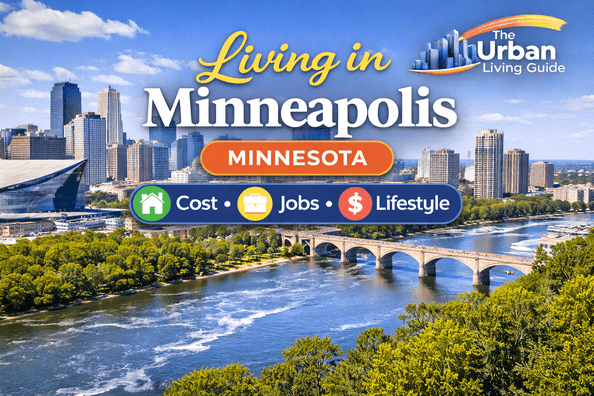
Living in Minneapolis, Minnesota – Introduction
Living in Minneapolis, Minnesota offers a vibrant urban lifestyle combined with beautiful natural surroundings and a strong economy. Located in the northern United States along the Mississippi River, Minneapolis is the largest city in Minnesota with a population of around 430,000 residents.
Minneapolis is often paired with its neighboring city Saint Paul, forming the famous “Twin Cities.” Together they create one of the most important economic and cultural centers in the Midwest.
Many people choose living in Minneapolis, Minnesota because of its strong job market, high quality of life, and abundant green spaces. The city is known for its parks, lakes, bike-friendly infrastructure, and modern urban development.
Minneapolis also has a diverse economy with major industries in finance, healthcare, retail, and technology. Large corporations headquartered in the region attract professionals from across the United States.
Watch a recent video by a popular vlogger to understand daily life and vibes in Minneapolis.
Information in this guide is compiled from publicly available data, official city resources, economic reports, and local housing databases to ensure accuracy and reliability.
What Makes Minneapolis So Popular
Key reasons why people move here include:
• Part of the Twin Cities metropolitan area
• Strong job market with major corporate headquarters
• Extensive parks, lakes, and outdoor recreation
• Excellent public transportation and bike infrastructure
• High quality of life and cultural diversity
Famous Personalities, Sports & Major Brands from Minneapolis
Minneapolis has produced many famous musicians, athletes, and business leaders.
• Prince – Legendary musician and cultural icon from Minneapolis
• Bob Dylan – Nobel Prize-winning singer-songwriter from Minnesota
• Josh Hartnett – Actor known for major Hollywood films
Sports are a major part of the city’s culture.
Major teams include:
• Minnesota Vikings (NFL)
• Minnesota Timberwolves (NBA)
• Minnesota Twins (MLB)
• Minnesota Wild (NHL)
Major companies headquartered in the Minneapolis region include:
• Target Corporation
• Best Buy
• UnitedHealth Group
• General Mills
These companies contribute significantly to the city’s economy.
Best Neighborhoods in Minneapolis
Minneapolis offers diverse neighborhoods suited for different lifestyles.
Downtown Minneapolis
Urban living with modern apartments, offices, and entertainment venues.
North Loop
A trendy district with restaurants, loft apartments, and nightlife.
Uptown
Popular with young professionals due to lakes, cafes, and nightlife.
Linden Hills
Charming neighborhood near lakes with boutiques and cafes.
Northeast Minneapolis
Known for arts, breweries, and historic industrial buildings.
Edina (nearby suburb)
Upscale residential area with excellent schools and shopping.
👉 If you’re not familiar with the area, take a look at the map below to understand where the city is located.
Housing & Rent in Minneapolis
Housing prices in Minneapolis vary depending on neighborhood and proximity to downtown.
Typical monthly rent estimates include:
• Studio apartment – $1,200 – $1,600
• 1 Bedroom – $1,400 – $1,900
• 2 Bedroom – $1,900 – $2,600
• Family home – $3,000 – $4,500
Popular neighborhoods near lakes and downtown tend to have higher housing costs.
Rental figures are based on aggregated listing data and recent market trends.
Job Market & Business Opportunities
Minneapolis has one of the strongest job markets in the Midwest.
Major industries include:
• Finance and banking
• Healthcare and medical services
• Retail and corporate headquarters
• Technology and software development
• Manufacturing and logistics
The Twin Cities region is home to several Fortune 500 companies.
Average salaries typically range between $70,000 and $130,000 depending on profession.
Major Companies & Headquarters in Minneapolis
Several major corporations operate headquarters in Minneapolis.
Key employers include:
• Target Corporation
• UnitedHealth Group
• General Mills
• Best Buy (nearby headquarters)
• U.S. Bancorp
These companies provide thousands of high-paying jobs.
What It’s Really Like Living in Minneapolis, Minnesota
Daily life in Minneapolis combines modern city living with outdoor recreation. Residents enjoy biking along lakeside trails, kayaking on the Mississippi River, and visiting parks during the summer.
The city has a vibrant arts scene with theaters, music venues, and cultural festivals. Restaurants, breweries, and cafes are spread across neighborhoods like North Loop and Uptown.
For many residents, living in Minneapolis, Minnesota offers a balance between career opportunities and outdoor lifestyle.
Cost of Living in Minneapolis
Minneapolis has a moderate cost of living compared to major U.S. cities.
Typical monthly costs include:
• Rent – $1,600 – $2,300
• Utilities – $160 – $260
• Groceries – $350 – $520
• Transportation – $120 – $220
• Healthcare – $350 – $520
Compared to cities like Chicago or New York, Minneapolis offers more affordable housing.
Transportation & Commute
Minneapolis offers strong public transportation.
Options include:
• METRO Light Rail system
• Metro Transit bus network
• Extensive bike lanes and trails
Average commute time is around 24 minutes.
Minneapolis–Saint Paul International Airport is one of the busiest airports in the Midwest.
Weather & Environment
Minneapolis experiences four distinct seasons.
Summer: Warm with temperatures around 75–85°F
Winter: Cold with heavy snowfall and temperatures often below freezing
Spring/Fall: Mild weather with beautiful seasonal scenery
Residents often participate in winter sports and summer lake activities.
Popular Hotels, Cafes & Restaurants
Minneapolis has a strong hospitality and food culture.
Popular hotels include:
• The Hewing Hotel
• Four Seasons Minneapolis
• Radisson Blu Mall of America
Dining districts such as North Loop and Uptown feature trendy restaurants and breweries.
Sightseeing & Attractions
Minneapolis has many cultural attractions.
• Minneapolis Sculpture Garden
• Walker Art Center
• Stone Arch Bridge
• Chain of Lakes Park System
• Mall of America (nearby)
These attractions highlight the city’s art and outdoor culture.
Budget Stay / Hostels
Visitors and students can find affordable accommodations.
Examples include:
• Budget hotels near downtown Minneapolis
• Hostels near university districts
• Affordable short-term rental apartments
Quick Snapshot of Living in Minneapolis, Minnesota
• Population – ~430,000
• Average Rent – $1,900/month
• Average Salary – $80,000/year
• Average Commute Time – 24 minutes
• Climate – Warm summers, cold snowy winters
Education & Universities
Minneapolis has several major universities.
• University of Minnesota Twin Cities
• Minneapolis College
• Augsburg University
These institutions attract students from around the world.
Pros and Cons of Living in Minneapolis, Minnesota
Pros
• Strong job market and corporate presence
• Beautiful parks and lakes throughout the city
• Excellent public transportation
• Vibrant arts and music scene
• High quality of life 🙂
Cons
• Very cold winters with heavy snowfall
• Higher taxes compared to some states
• Housing demand increasing in popular areas
• Traffic during peak hours
• Cost of living higher than smaller Midwest cities
Is Minneapolis a Good Place to Live?
For many people, living in Minneapolis, Minnesota offers an excellent balance between career opportunity, culture, and outdoor recreation. The city’s strong economy, corporate headquarters, and diverse industries attract professionals from across the country.
Minneapolis is especially appealing to individuals who enjoy an active lifestyle. With lakes, parks, and bike trails throughout the city, outdoor activities are a major part of daily life.
Families benefit from good schools, safe neighborhoods, and access to cultural attractions. Although winters can be harsh, many residents embrace the seasonal lifestyle.
Overall, Minneapolis remains one of the most livable cities in the Midwest.
FAQs
Is Minneapolis expensive to live in?
Minneapolis has a moderate cost of living compared to major U.S. cities, though housing costs have increased in recent years.
What salary is needed to live comfortably in Minneapolis?
A salary between $70,000 and $90,000 per year is generally considered comfortable for a single professional.
Is Minneapolis a safe city to live in?
Many neighborhoods are considered safe, though safety can vary by area. Popular neighborhoods like Linden Hills and North Loop are well regarded.
What are the best neighborhoods in Minneapolis?
Some of the most popular neighborhoods include North Loop, Uptown, Linden Hills, Northeast Minneapolis, and Downtown.
Can you live in Minneapolis without a car?
Yes, many residents rely on light rail, buses, and bike lanes, especially in central areas.
How cold are winters in Minneapolis?
Winters can be very cold, often dropping below 0°F, with regular snowfall between November and March.
Is Minneapolis a good city for jobs?
Yes, the Twin Cities area has a strong job market with several Fortune 500 companies and opportunities in healthcare, finance, and technology.
What outdoor activities are popular in Minneapolis?
Residents enjoy biking, kayaking, hiking, and visiting the city’s many lakes and parks, especially during summer.
🔗 Explore More Cities in Minnesota
If you’re considering options beyond Minneapolis, The Urban Living Guide has also explored several other well-known cities across Minnesota. You may also want to check:
Each of these guides highlights what daily life looks like in different cities, including insights on cost of living, housing trends, job opportunities, local neighborhoods, commute patterns, weather conditions, education options, popular areas, and major employers.
With The Urban Living Guide, all this information is organized in one place so you can easily compare cities and decide which one suits your lifestyle, budget, and future plans.