
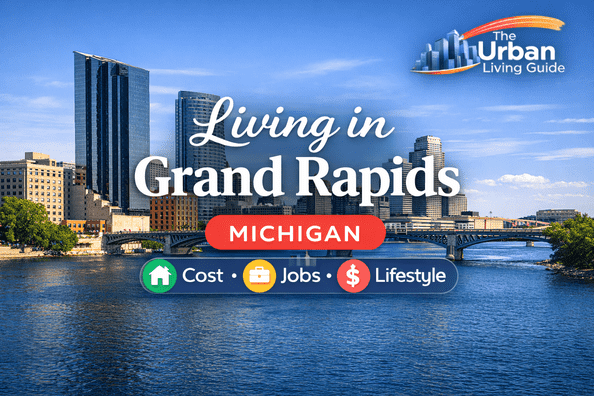
Living in Grand Rapids, Michigan – Introduction
Living in Grand Rapids, Michigan offers a balance of urban energy, Midwestern charm, and strong economic opportunities. Located in western Michigan along the Grand River, the city is about 30 miles from the eastern shore of Lake Michigan. With a population of around 200,000 residents, Grand Rapids is the second-largest city in Michigan and a key economic center in the region.
The city is widely known for its thriving craft beer scene, earning the nickname “Beer City USA.” Grand Rapids hosts dozens of breweries and annual beer festivals that attract visitors from across the country. Beyond brewing, the city has developed into a diverse economic hub with strong sectors in healthcare, manufacturing, technology, and education.
Many professionals and families are choosing living in Grand Rapids, Michigan because of its affordable housing, growing job market, and vibrant downtown lifestyle. The city offers scenic riverfront areas, cultural attractions, and easy access to beaches along Lake Michigan.
Watch a recent video by a popular vlogger to understand daily life and vibes in Grand Rapids.
Information in this guide is compiled from publicly available data, official city resources, economic reports, and local housing databases to ensure accuracy and reliability.
What Makes Grand Rapids So Popular
Key reasons why people move here include:
• Strong job opportunities in healthcare and manufacturing
• A vibrant craft beer culture earning the nickname “Beer City USA”
• Affordable housing compared to larger Midwest cities
• A walkable downtown with restaurants, museums, and nightlife
• Easy access to Lake Michigan beaches and outdoor recreation
👉 If you’re new to this region, the map below will help you get a clear idea of the city’s location.
Famous Personalities, Sports & Major Brands from Grand Rapids
Grand Rapids has produced several well-known figures across business, sports, and entertainment.
• Gerald Ford – 38th President of the United States, raised in Grand Rapids
• Floyd Mayweather Sr. – Former professional boxer and trainer
• Anthony Kiedis – Lead singer of the Red Hot Chili Peppers (raised nearby)
Sports are also part of the city’s culture.
Teams include:
• Grand Rapids Griffins (AHL Hockey)
• West Michigan Whitecaps (Minor League Baseball)
Major companies connected with the city include:
• Amway
• Steelcase
• Meijer
• Spectrum Health
These companies contribute significantly to the local economy.
Best Neighborhoods in Grand Rapids
Grand Rapids offers neighborhoods that suit different lifestyles.
Heritage Hill
A historic district known for beautiful Victorian homes and tree-lined streets.
Eastown
Popular with young professionals and artists thanks to cafes, music venues, and independent shops.
Downtown Grand Rapids
Urban living with apartments, offices, restaurants, and entertainment venues.
Midtown
A lively area with cultural attractions and easy access to downtown.
Creston
A growing neighborhood known for breweries and renovated homes.
Alger Heights
A quiet residential area with parks and family-friendly communities.
Housing & Rent in Grand Rapids
The housing market in Grand Rapids is considered affordable compared to many U.S. cities while still offering strong property value growth.
Typical monthly rent estimates include:
• Studio apartment – $900 – $1,200
• 1 Bedroom – $1,100 – $1,500
• 2 Bedroom – $1,400 – $1,900
• Family home – $2,100 – $3,200
Many neighborhoods feature historic homes, modern condos, and suburban-style housing.
Rental figures are based on aggregated listing data and recent market trends.
Job Market & Business Opportunities
Grand Rapids has a strong and diverse local economy.
Major industries include:
• Healthcare and medical services
• Manufacturing and engineering
• Office furniture production
• Retail and logistics
• Technology and innovation
The healthcare sector is particularly strong, with several major hospitals and research centers.
Average salaries typically range between $55,000 and $105,000 depending on profession.
Major Companies & Headquarters in Grand Rapids
Several well-known companies are headquartered or have major operations in the city.
Key employers include:
• Amway Corporation
• Steelcase Inc.
• Meijer
• Spectrum Health
• Herman Miller
These organizations provide thousands of jobs and help support the region’s economic growth.
What It’s Really Like Living in Grand Rapids, Michigan
Daily life in Grand Rapids combines a relaxed Midwestern atmosphere with a lively cultural scene. Residents enjoy riverfront parks, breweries, farmers markets, and frequent community events.
The downtown area offers museums, restaurants, theaters, and music venues. Weekend activities often include outdoor recreation, brewery tours, and festivals such as ArtPrize, one of the largest public art competitions in the world.
For many residents, living in Grand Rapids, Michigan offers a comfortable lifestyle with strong community connections and outdoor access.
Cost of Living in Grand Rapids
The cost of living in Grand Rapids is generally moderate and lower than many large metropolitan areas.
Typical monthly costs include:
• Rent – $1,200 – $1,800
• Utilities – $150 – $230
• Groceries – $350 – $450
• Transportation – $120 – $220
• Healthcare – $300 – $450
Compared to nearby cities like Chicago or Detroit, Grand Rapids often offers a balanced mix of affordability and quality of life.
Transportation & Commute
Grand Rapids offers several transportation options.
Public transit includes:
• The Rapid bus system
• Regional commuter routes
• Bike-friendly streets and trails
Average commute time is around 20–25 minutes.
Gerald R. Ford International Airport provides domestic flights to major U.S. cities.
Weather & Environment
Grand Rapids experiences four distinct seasons.
Summer: Warm with temperatures around 75–85°F
Winter: Cold with lake-effect snow from Lake Michigan
Spring/Fall: Mild weather and colorful seasonal changes
Outdoor lovers enjoy parks, riverside trails, and nearby beaches along Lake Michigan.
Popular Hotels, Cafes & Restaurants
Grand Rapids has a growing hospitality scene.
Popular hotels include:
• Amway Grand Plaza Hotel
• JW Marriott Grand Rapids
• Canopy by Hilton Grand Rapids Downtown
Dining areas such as Downtown and Eastown offer diverse restaurants, cafes, and breweries.
Sightseeing & Attractions
The city offers many cultural and recreational attractions.
• Frederik Meijer Gardens & Sculpture Park
• Grand Rapids Art Museum
• John Ball Zoo
• Grand River waterfront parks
• Van Andel Arena
These destinations highlight the city’s cultural and natural attractions.
Budget Stay / Hostels
Travelers and students visiting Grand Rapids can find affordable accommodation options.
Examples include:
• Hostel Grand Rapids
• Budget inns near downtown
• Affordable guesthouses near universities
These options are ideal for short-term stays.
Quick Snapshot of Living in Grand Rapids, Michigan
• Population – ~200,000
• Average Rent – $1,350/month
• Average Salary – $65,000/year
• Average Commute Time – 22 minutes
• Climate – Warm summers, snowy winters
Education & Universities
Grand Rapids is home to several respected educational institutions.
• Grand Valley State University
• Calvin University
• Davenport University
These universities attract students from across the country.
Pros and Cons of Living in Grand Rapids, Michigan
Pros
• Growing job market and economic stability
• Strong healthcare and manufacturing industries
• Affordable housing compared to many cities
• Vibrant craft beer and food scene
• Friendly community atmosphere 🙂
Cons
• Cold winters with lake-effect snow
• Smaller public transportation network
• Some areas experiencing rapid housing demand
• Limited nightlife compared to major metro cities
• Seasonal weather changes
Is Grand Rapids a Good Place to Live?
For many people, living in Grand Rapids, Michigan offers an appealing combination of affordability, career opportunities, and community-focused living. The city continues to grow while maintaining a welcoming Midwestern atmosphere.
Young professionals appreciate the expanding job market in healthcare, manufacturing, and technology. Families are drawn to safe neighborhoods, good schools, and access to parks and outdoor activities.
Grand Rapids also offers cultural experiences through museums, art events, and a nationally recognized craft beer scene.
For individuals looking for a city that blends economic opportunity with a relaxed lifestyle, Grand Rapids is often considered one of the most livable cities in the Midwest.
FAQs
Is Grand Rapids expensive to live in?
Grand Rapids is moderately priced compared to larger U.S. cities.
What salary is needed to live comfortably in Grand Rapids?
Around $60,000–$75,000 per year is typically comfortable.
Is Grand Rapids a safe city?
Many neighborhoods are considered safe and family-friendly.
What are the best neighborhoods in Grand Rapids?
Heritage Hill, Eastown, Downtown, and Creston are popular.
Can you live in Grand Rapids without a car?
It is possible near downtown, but many residents own cars.
Does Grand Rapids get heavy snow?
Yes, the city experiences lake-effect snowfall during winter.
Is Grand Rapids good for families?
Yes, it offers good schools, parks, and family-friendly neighborhoods.
🔗 Explore More Cities in Michigan
If you’re considering options beyond Grand Rapids, The Urban Living Guide has also explored several other well-known cities across Michigan. You may also want to check:
Each of these guides highlights what daily life looks like in different cities, including insights on cost of living, housing trends, job opportunities, local neighborhoods, commute patterns, weather conditions, education options, popular areas, and major employers.
With The Urban Living Guide, all this information is organized in one place so you can easily compare cities and decide which one suits your lifestyle, budget, and future plans.