
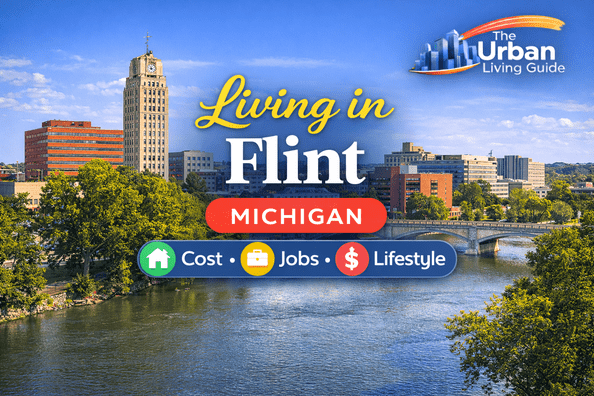
Living in Flint, Michigan – Introduction
Living in Flint, Michigan offers a mix of industrial heritage, affordable housing, and a community working toward revitalization. Flint is located in southeastern Michigan along the Flint River, about 65 miles northwest of Detroit. The city has a population of around 80,000 residents and is part of the larger Genesee County region.
Flint historically played a major role in the American automobile industry and is closely connected with General Motors, which once had several large manufacturing facilities in the area. Because of its automotive legacy, the city became known as an important manufacturing hub during the 20th century.
Today, many people consider living in Flint, Michigan because of its low housing costs, educational institutions, and growing community redevelopment projects. Universities, healthcare facilities, and local businesses continue to play a role in rebuilding the city’s economy.
Watch a recent video by a popular vlogger to understand daily life and vibes in Flint.
Information in this guide is compiled from publicly available data, official city resources, economic reports, and local housing databases to ensure accuracy and reliability.
What Makes Flint So Popular
Key reasons why people move here include:
• Very affordable housing compared to most U.S. cities
• Strong history connected to the American auto industry
• Home to universities and healthcare institutions
• Active community redevelopment and revitalization projects
• Access to parks, cultural centers, and regional job markets
👉 If you haven’t explored this area before, the map below will give you a better sense of its location.
Famous Personalities, Sports & Major Brands from Flint
Flint has produced several well-known figures in sports, entertainment, and activism.
• Michael Moore – Documentary filmmaker known for social commentary
• Magic Johnson – NBA legend raised in nearby Lansing but closely connected to the region
• Claressa Shields – Olympic gold medalist boxer from Flint
Sports and education play an important role in the local community.
Local institutions and organizations include:
• University of Michigan–Flint athletics
• Kettering University engineering programs
Major companies historically connected with the city include:
• General Motors
• Lear Corporation
Best Neighborhoods in Flint
Flint has several neighborhoods offering different lifestyles.
Downtown Flint
The city center with restaurants, cultural venues, and renovated loft apartments.
College Cultural Neighborhood
A historic district known for museums, parks, and beautiful homes.
Mott Park
Quiet residential area with tree-lined streets and community parks.
Carriage Town Historic District
One of Flint’s oldest neighborhoods with historic architecture.
East Village
A growing area with renovated homes and small businesses.
Housing & Rent in Flint
One of the biggest advantages of living in Flint, Michigan is the very low cost of housing.
Typical monthly rent estimates include:
• Studio apartment – $600 – $800
• 1 Bedroom – $700 – $950
• 2 Bedroom – $900 – $1,300
• Family home – $1,400 – $2,200
Homeownership is also relatively affordable compared to many U.S. cities.
Rental figures are based on aggregated listing data and recent market trends.
Job Market & Business Opportunities
Flint’s economy continues to diversify beyond traditional manufacturing.
Major industries include:
• Healthcare and hospitals
• Education and universities
• Automotive manufacturing
• Logistics and supply chain
• Small business and retail
While manufacturing jobs have declined over the years, healthcare and education have become key employment sectors.
Average salaries typically range between $45,000 and $90,000 depending on profession.
Major Companies & Headquarters in Flint
Several major employers operate in the Flint area.
Key employers include:
• General Motors Flint Assembly Plant
• Hurley Medical Center
• McLaren Flint Hospital
• University of Michigan–Flint
• Kettering University
These institutions support employment and economic development in the region.
What It’s Really Like Living in Flint, Michigan
Daily life in Flint is centered around community organizations, universities, and local events. Downtown Flint has seen gradual redevelopment with restaurants, cafes, and cultural spaces opening in historic buildings.
Residents enjoy outdoor areas such as Flint River Trail and nearby parks. Community festivals, farmers markets, and arts events help bring residents together throughout the year.
For many people, living in Flint, Michigan offers affordability and a strong sense of local community.
Cost of Living in Flint
Flint has one of the lowest costs of living in Michigan.
Typical monthly costs include:
• Rent – $900 – $1,400
• Utilities – $140 – $220
• Groceries – $300 – $420
• Transportation – $100 – $180
• Healthcare – $280 – $400
Compared to nearby cities like Ann Arbor or Detroit, Flint’s housing costs are significantly lower.
Transportation & Commute
Flint provides several transportation options.
Public transit includes:
• Mass Transportation Authority (MTA) bus system
• Regional bus services
• Car travel is common for most residents
Average commute time is around 20–24 minutes.
Bishop International Airport provides regional flights.
Weather & Environment
Flint experiences a typical Midwestern climate.
Summer: Warm and comfortable with temperatures around 75–85°F
Winter: Cold with snow and freezing temperatures
Spring/Fall: Mild seasons with changing foliage
Parks and rivers provide outdoor recreational opportunities.
Popular Hotels, Cafes & Restaurants
Flint has several notable hospitality spots.
Popular hotels include:
• Hilton Garden Inn Flint Downtown
• Holiday Inn Express Flint Campus Area
• Courtyard by Marriott Flint
Downtown restaurants and cafes offer diverse dining options.
Sightseeing & Attractions
Flint has several cultural and historic attractions.
• Flint Institute of Arts
• Longway Planetarium
• Flint Cultural Center
• Applewood Estate
• Crossroads Village & Huckleberry Railroad
These destinations highlight the city’s cultural heritage.
Budget Stay / Hostels
Affordable accommodations are available for travelers and students.
Examples include:
• Budget motels near downtown Flint
• Guesthouses near the university district
• Affordable short-term rental apartments
Quick Snapshot of Living in Flint, Michigan
• Population – ~80,000
• Average Rent – $1,050/month
• Average Salary – $55,000/year
• Average Commute Time – 22 minutes
• Climate – Warm summers, snowy winters
Education & Universities
Flint has several educational institutions.
• University of Michigan–Flint
• Kettering University
• Mott Community College
These schools bring students and research opportunities to the city.
Pros and Cons of Living in Flint, Michigan
Pros
• Extremely affordable housing
• Lower cost of living than many U.S. cities
• Strong sense of community
• Access to universities and healthcare facilities
• Ongoing redevelopment projects 🙂
Cons
• Limited job market compared to large cities
• Some neighborhoods still recovering economically
• Public transportation options are limited
• Cold winters
• Fewer entertainment options than major metro areas
Is Flint a Good Place to Live?
For many residents, living in Flint, Michigan offers affordability and opportunity during a time of transformation. The city has faced challenges in the past but continues working toward economic redevelopment and community improvement.
Flint’s universities, healthcare institutions, and cultural centers provide employment opportunities and support local growth. The low cost of housing makes it attractive for first-time homeowners and people seeking a more affordable lifestyle.
Families and professionals often choose neighborhoods with strong community ties and access to parks, schools, and local amenities.
While Flint may not offer the same job market size as larger cities, it provides a practical and affordable living option for people seeking a quieter lifestyle with a strong community spirit.
FAQs
Is Flint expensive to live in?
No, Flint is considered one of the most affordable cities in Michigan.
What salary is needed to live comfortably in Flint?
Around $50,000–$65,000 per year is typically comfortable.
Is Flint safe to live in?
Safety varies by neighborhood, so researching areas is recommended.
What are the best neighborhoods in Flint?
College Cultural Neighborhood, Downtown Flint, and Mott Park are popular.
Can you live in Flint without a car?
Most residents rely on cars, although buses are available.
Does Flint get heavy snow?
Yes, winters bring moderate snowfall.
🔗 Explore More Cities in Michigan
If you’re considering options beyond Flint, The Urban Living Guide has also explored several other well-known cities across Michigan. You may also want to check:
Each of these guides highlights what daily life looks like in different cities, including insights on cost of living, housing trends, job opportunities, local neighborhoods, commute patterns, weather conditions, education options, popular areas, and major employers.
With The Urban Living Guide, all this information is organized in one place so you can easily compare cities and decide which one suits your lifestyle, budget, and future plans.