
Living in Frederick, Maryland – Introduction
Living in Frederick, Maryland offers a perfect blend of historic charm, scenic landscapes, and a growing economy in the Mid-Atlantic region of the United States. Located in western Maryland near the foothills of the Catoctin Mountains, Frederick is a rapidly growing city with a population of around 80,000 residents.
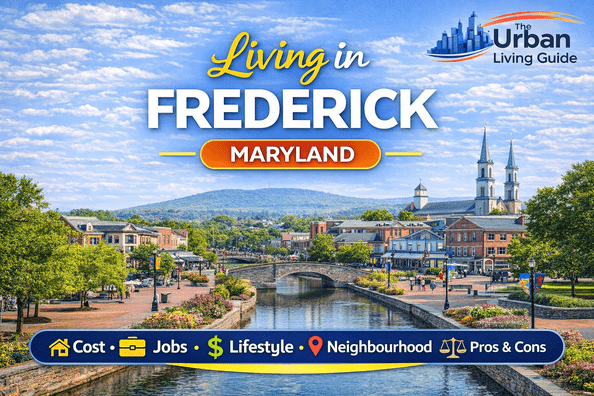
Often referred to as “Clustered Spires City,” Frederick is known for its beautiful historic skyline featuring church spires that rise above the downtown district. The city sits along Carroll Creek, which runs through the vibrant downtown promenade filled with restaurants, shops, and art installations.
Many people choose living in Frederick, Maryland because of its balance between small-town atmosphere and access to major metropolitan job markets. Frederick is within commuting distance of Washington D.C., Baltimore, and Northern Virginia, making it popular among professionals and families.
The surrounding countryside features rolling farmland, scenic parks, and outdoor recreation areas such as Catoctin Mountain Park and the Appalachian Trail, providing a high quality of life for residents who enjoy nature.
Watch a recent video by a popular vlogger to understand daily life and vibes in Frederick.
Information in this guide is compiled from publicly available data, official city resources, economic reports, and local housing databases to ensure accuracy and reliability.
What Makes Frederick So Popular
Key reasons why people move here include:
• Charming historic downtown with the Carroll Creek Promenade
• Scenic mountain landscapes near Catoctin Mountain Park
• Easy commuting access to Washington D.C. and Baltimore
• Thriving arts scene and local breweries
• Family-friendly neighborhoods and strong community vibe
Frederick’s nickname “Clustered Spires City” comes from the historic church towers that define its skyline.
Famous Personalities, Sports & Major Brands from Frederick
Frederick has historical connections with several notable figures.
• Francis Scott Key – Author of the U.S. national anthem who lived in the Frederick area
• Thomas Johnson – Maryland’s first elected governor who was born near Frederick
• Braddock Heights historic community – Connected to early American political history
Sports culture includes:
• Frederick Keys Baseball Team – Minor league baseball club
Major employers and institutions connected with Frederick include:
• Fort Detrick Military Research Base
• Leidos Biomedical Research
• Frederick Health Hospital
These organizations play an important role in the local economy.
Best Neighborhoods in Frederick
Frederick offers a range of attractive neighborhoods for different lifestyles.
Downtown Frederick
Historic district known for brick sidewalks, art galleries, and restaurants along Carroll Creek.
Baker Park Area
Beautiful neighborhood near a large city park with tree-lined streets and historic homes.
Ballenger Creek
Family-friendly suburban community with schools, parks, and modern housing.
Urbana
A rapidly growing area with new developments and excellent schools.
Wormans Mill
Planned community with walkable streets, shops, and community events.
Spring Ridge
Residential neighborhood popular with families and commuters.
👉 If you haven’t come across this city before, the map below gives you a quick view of its location.
Housing & Rent in Frederick
Frederick’s housing market has grown significantly due to its popularity with commuters.
Typical monthly rent estimates include:
• Studio apartment – $1,300 – $1,700
• 1 Bedroom – $1,600 – $2,100
• 2 Bedroom – $2,100 – $2,900
• Family home – $3,000 – $4,800
Homes near historic downtown or scenic mountain views often command higher prices.
Rental figures are based on aggregated listing data and recent market trends.
Job Market & Business Opportunities
Frederick has a growing economy supported by biotechnology, government research, and healthcare.
Major industries include:
• Biotechnology and life sciences
• Military research and defense
• Healthcare and hospitals
• Education and public administration
• Tourism and hospitality
The presence of Fort Detrick, a major U.S. Army biomedical research facility, provides thousands of jobs.
Average salaries typically range between $70,000 and $115,000 depending on profession.
Major Companies & Headquarters in Frederick
Several major employers operate in Frederick.
Key employers include:
• Fort Detrick Military Research Center
• Leidos Biomedical Research
• Frederick Health Hospital
• AstraZeneca regional operations
• Legal & General America
These organizations support employment and economic growth in the city.
What It’s Really Like Living in Frederick, Maryland
Daily life in Frederick blends small-town charm with modern amenities. Residents often spend weekends exploring the historic downtown district, attending festivals, or walking along the scenic Carroll Creek Linear Park.
The city hosts popular events such as First Saturday art walks, farmers markets, and outdoor concerts. Breweries and cafes have also become an important part of Frederick’s growing cultural scene.
For many residents, living in Frederick, Maryland offers a relaxed lifestyle while still being close to major metropolitan job centers.
Cost of Living in Frederick
Frederick has a moderately high cost of living compared to smaller towns in Maryland.
Typical monthly costs include:
• Rent – $1,900 – $2,600
• Utilities – $150 – $240
• Groceries – $350 – $500
• Transportation – $120 – $200
• Healthcare – $350 – $520
Compared to nearby cities like Rockville or Bethesda, Frederick typically offers slightly lower housing costs.
Transportation & Commute
Transportation options include:
• MARC commuter rail connecting to Washington D.C.
• Interstate highways including I-70 and I-270
• Regional bus services
Average commute time is around 30 minutes, though many residents commute to Washington D.C.
Weather & Environment
Frederick experiences a humid subtropical climate.
Summer: Warm with temperatures around 85–90°F
Winter: Cool with occasional snow
Spring/Fall: Pleasant weather with scenic mountain views
The nearby Catoctin Mountains and Monocacy River provide outdoor recreation opportunities.
Popular Hotels, Cafes & Restaurants
Frederick’s hospitality industry has grown with tourism and local events.
Popular hotels include:
• Visitation Hotel Frederick
• Hampton Inn Frederick
• Hilton Garden Inn Frederick
Downtown Frederick features local restaurants, craft breweries, and coffee shops.
Sightseeing & Attractions
Frederick has many historic and natural attractions.
• Carroll Creek Park Promenade
• Baker Park
• Monocacy National Battlefield
• Catoctin Mountain Park
• Historic Downtown Frederick
These attractions highlight Frederick’s historic heritage and scenic surroundings.
Budget Stay / Hostels
Visitors and students can find affordable accommodations.
Examples include:
• Budget hotels near downtown Frederick
• Guesthouses near historic districts
• Affordable vacation rentals
Quick Snapshot of Living in Frederick, Maryland
• Population – ~80,000
• Average Rent – $2,200/month
• Average Salary – $85,000/year
• Average Commute Time – 30 minutes
• Climate – Warm summers, mild winters
Education & Universities
Frederick has several respected educational institutions.
• Hood College
• Frederick Community College
• Mount St. Mary’s University (nearby)
These institutions attract students from across the region.
Pros and Cons of Living in Frederick, Maryland
Pros
• Charming historic downtown district
• Scenic mountain landscapes nearby
• Strong biotech and research economy
• Family-friendly communities
• Easy commuting to Washington D.C. 🙂
Cons
• Housing prices rising due to demand
• Traffic during peak commuting hours
• Smaller nightlife compared to big cities
• Limited public transportation options
• Growing population increasing development pressure
Is Frederick a Good Place to Live?
For many residents, living in Frederick, Maryland provides the ideal balance between small-town charm and modern economic opportunity. The city’s historic architecture, vibrant arts culture, and beautiful mountain surroundings make it one of Maryland’s most attractive places to live.
Frederick is particularly appealing for families and professionals who want access to major job markets like Washington D.C. while enjoying a quieter suburban lifestyle.
With its strong biotech sector, cultural festivals, and scenic outdoor spaces, Frederick continues to grow as one of the most desirable cities in Maryland.
FAQs
Is Frederick, Maryland expensive to live in?
Frederick has a moderately high cost of living, mainly due to housing demand from commuters.
What salary is needed to live comfortably in Frederick?
A salary between $80,000 and $100,000 per year is generally comfortable.
Is Frederick a safe place to live?
Yes, Frederick is considered one of the safer cities in Maryland.
What are the best neighborhoods in Frederick?
Downtown Frederick, Baker Park, Urbana, and Ballenger Creek are popular areas.
Can you live in Frederick without a car?
Living downtown is walkable, but most residents rely on cars.
What is Frederick known for?
Frederick is known for its historic downtown, Carroll Creek promenade, and mountain scenery.
🔗 Explore More Cities in Maryland
Looking beyond Frederick? The Urban Living Guide has also covered multiple popular cities across Maryland that you can explore further:
These city guides provide detailed insights into everyday living, including housing costs, employment opportunities, neighborhoods, commute options, climate, education, local attractions, and key industries shaping each city.
By bringing all these insights together, The Urban Living Guide helps you compare different cities side by side and choose the one that aligns best with your lifestyle, priorities, and long-term goals.