
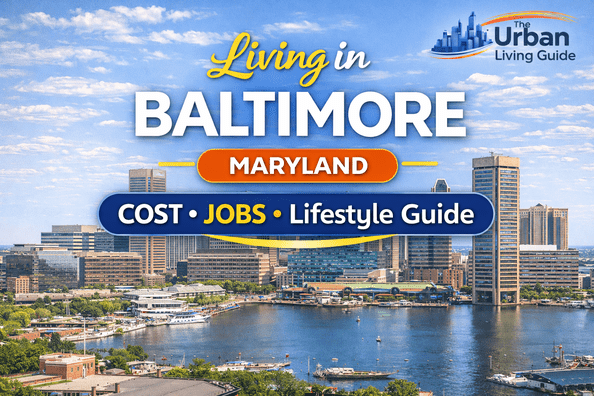
Living in Baltimore, Maryland – Introduction
Living in Baltimore, Maryland offers a mix of historic charm, waterfront lifestyle, and strong economic opportunities along the U.S. East Coast. Located on the Patapsco River and Chesapeake Bay, Baltimore is the largest city in Maryland with a population of about 580,000 residents. Its strategic location between Washington D.C. and Philadelphia makes it an important economic and transportation hub.
Often called “Charm City”, Baltimore is known for its historic harbor, vibrant arts culture, and diverse neighborhoods. The famous Inner Harbor waterfront district features museums, restaurants, marinas, and attractions that draw millions of visitors every year.
Many people consider living in Baltimore, Maryland because of its strong healthcare, education, and technology sectors. The city is home to world-renowned institutions such as Johns Hopkins University and Johns Hopkins Hospital, which play a major role in Baltimore’s economy and global reputation.
Baltimore also offers access to scenic waterfront parks, historic architecture, and cultural landmarks like Fort McHenry, the birthplace of the U.S. national anthem.
Watch a recent video by a popular vlogger to understand daily life and vibes in Baltimore.
Information in this guide is compiled from publicly available data, official city resources, economic reports, and local housing databases to ensure accuracy and reliability.
What Makes Baltimore So Popular
Key reasons why people move here include:
• Waterfront living around the famous Inner Harbor
• Strong job market in healthcare, education, and government
• Historic architecture and cultural districts
• Easy access to Washington D.C., Philadelphia, and New York
• Vibrant food culture including Maryland blue crab seafood
Baltimore’s famous nickname “Charm City” reflects its historic character and lively neighborhoods.
Famous Personalities, Sports & Major Brands from Baltimore
Baltimore has produced several well-known personalities across entertainment, sports, and business.
• Michael Phelps – Olympic swimming legend and the most decorated Olympian in history
• Tupac Shakur – Iconic hip-hop artist who attended the Baltimore School for the Arts
• John Waters – Influential filmmaker and cultural figure
Sports play a major role in the city’s identity.
Major teams include:
• Baltimore Ravens (NFL)
• Baltimore Orioles (MLB)
Major organizations and companies connected with Baltimore include:
• Johns Hopkins University & Hospital
• Under Armour Headquarters
• T. Rowe Price Investment Firm
These institutions support thousands of jobs in the region.
Best Neighborhoods in Baltimore
Baltimore offers a wide variety of neighborhoods with distinct lifestyles.
Federal Hill
A popular neighborhood overlooking the harbor known for historic homes, nightlife, and scenic parks.
Fells Point
Historic waterfront district famous for cobblestone streets, pubs, and maritime heritage.
Canton
Modern waterfront neighborhood with restaurants, parks, and young professionals.
Mount Vernon
Historic cultural district known for museums, theaters, and classical architecture.
Hampden
Trendy arts district with local boutiques, street festivals, and unique restaurants.
Locust Point
Quiet waterfront neighborhood near Fort McHenry with strong community vibes.
👉 If you’re not familiar with this part of the state, the map below will help you understand the city’s exact location.
Housing & Rent in Baltimore
Baltimore offers a relatively affordable housing market compared to nearby East Coast cities like Washington D.C.
Typical monthly rent estimates include:
• Studio apartment – $1,200 – $1,600
• 1 Bedroom – $1,400 – $1,900
• 2 Bedroom – $1,800 – $2,500
• Family home – $2,800 – $4,200
Waterfront neighborhoods around the harbor often command higher rental prices.
Rental figures are based on aggregated listing data and recent market trends.
Job Market & Business Opportunities
Baltimore has a diverse economy driven by healthcare, research, finance, and maritime industries.
Major industries include:
• Healthcare and medical research
• Education and universities
• Government and defense contracting
• Finance and insurance
• Port logistics and shipping
The Port of Baltimore is one of the busiest ports in the United States.
Average salaries typically range between $65,000 and $120,000 depending on profession.
Major Companies & Headquarters in Baltimore
Several major employers operate in Baltimore.
Key employers include:
• Johns Hopkins University & Hospital
• Under Armour
• T. Rowe Price
• Baltimore Gas & Electric
• Morgan Stanley regional offices
These organizations play an important role in Baltimore’s economy.
What It’s Really Like Living in Baltimore, Maryland
Daily life in Baltimore blends historic city culture with waterfront recreation. Residents often spend weekends walking along the Inner Harbor promenade, visiting museums, or enjoying seafood restaurants overlooking the marina.
Community festivals, art events, and neighborhood markets are common throughout the year. Baltimore also has a growing creative scene with galleries, theaters, and music venues spread across districts like Hampden and Mount Vernon.
For many residents, living in Baltimore, Maryland offers a unique mix of historic charm, urban energy, and coastal lifestyle.
Cost of Living in Baltimore
Baltimore has a moderate cost of living compared to other major East Coast cities.
Typical monthly costs include:
• Rent – $1,600 – $2,200
• Utilities – $150 – $250
• Groceries – $350 – $500
• Transportation – $120 – $200
• Healthcare – $350 – $520
Compared to nearby cities like Washington D.C. or Philadelphia, Baltimore generally offers lower housing costs.
Transportation & Commute
Baltimore offers several transportation options.
• Baltimore Metro SubwayLink
• Light RailLink system
• MARC commuter rail to Washington D.C.
• Major highways connecting the East Coast
Average commute time is around 27 minutes.
Baltimore/Washington International Airport provides domestic and international flights.
Weather & Environment
Baltimore experiences a humid subtropical climate.
Summer: Warm and humid with temperatures around 85–90°F
Winter: Mild to cool with occasional snowfall
Spring/Fall: Pleasant weather with colorful seasonal scenery
The city’s location along Chesapeake Bay provides beautiful waterfront landscapes.
Popular Hotels, Cafes & Restaurants
Baltimore’s harbor district offers many hospitality options.
Popular hotels include:
• Four Seasons Hotel Baltimore
• Sagamore Pendry Baltimore
• Hyatt Regency Inner Harbor
Local dining culture is famous for Maryland blue crab, crab cakes, and seafood markets.
Sightseeing & Attractions
Baltimore features many historic and cultural attractions.
• Inner Harbor Waterfront
• Fort McHenry National Monument
• National Aquarium Baltimore
• Baltimore Museum of Art
• Camden Yards Baseball Stadium
These landmarks highlight the city’s history and culture.
Budget Stay / Hostels
Travelers and students can find affordable accommodations.
Examples include:
• Budget hotels near downtown Baltimore
• Guesthouses in historic neighborhoods
• Affordable Airbnb rentals near the harbor
Quick Snapshot of Living in Baltimore, Maryland
• Population – ~580,000
• Average Rent – $1,900/month
• Average Salary – $75,000/year
• Average Commute Time – 27 minutes
• Climate – Warm summers, mild winters
Education & Universities
Baltimore is home to several prestigious universities.
• Johns Hopkins University
• University of Maryland Baltimore
• Loyola University Maryland
These institutions attract students from around the world.
Pros and Cons of Living in Baltimore, Maryland
Pros
• Beautiful waterfront and historic harbor
• Strong job market in healthcare and education
• Rich cultural and arts scene
• Lower housing costs than nearby major cities
• Famous seafood cuisine 🙂
Cons
• Some neighborhoods have higher crime rates
• Traffic during peak commute hours
• Hot and humid summers
• Aging infrastructure in some areas
• Cost of living higher than smaller towns
Is Baltimore a Good Place to Live?
For many residents, living in Baltimore, Maryland offers the perfect combination of historic charm, economic opportunity, and waterfront living. The city’s strong healthcare and education sectors provide stable employment, while its proximity to Washington D.C. makes it attractive for professionals working across the region.
Baltimore also offers a vibrant cultural scene, historic architecture, and beautiful harbor views that make everyday life unique. Outdoor activities around the Chesapeake Bay and Inner Harbor provide plenty of recreational opportunities.
Although the city faces some urban challenges, many neighborhoods offer safe and welcoming communities for families and professionals.
Overall, Baltimore continues to attract residents who want an East Coast lifestyle with more affordable housing than larger metropolitan cities.
FAQs
Is Baltimore expensive to live in?
Baltimore has a moderate cost of living compared to other major East Coast cities.
What salary is needed to live comfortably in Baltimore?
Around $70,000–$90,000 per year is typically comfortable.
Is Baltimore a safe city to live in?
Safety varies by neighborhood, but many areas like Federal Hill and Canton are considered desirable.
What are the best neighborhoods in Baltimore?
Federal Hill, Canton, Fells Point, and Mount Vernon are popular places to live.
Can you live in Baltimore without a car?
Yes, public transportation and walkable neighborhoods make it possible.
What food is Baltimore famous for?
Baltimore is known for Maryland blue crab and crab cakes.
🔗 Explore More Cities in Maryland
Looking beyond Baltimore? The Urban Living Guide has also covered multiple popular cities across Maryland that you can explore further:
These city guides provide detailed insights into everyday living, including housing costs, employment opportunities, neighborhoods, commute options, climate, education, local attractions, and key industries shaping each city.
By bringing all these insights together, The Urban Living Guide helps you compare different cities side by side and choose the one that aligns best with your lifestyle, priorities, and long-term goals.