
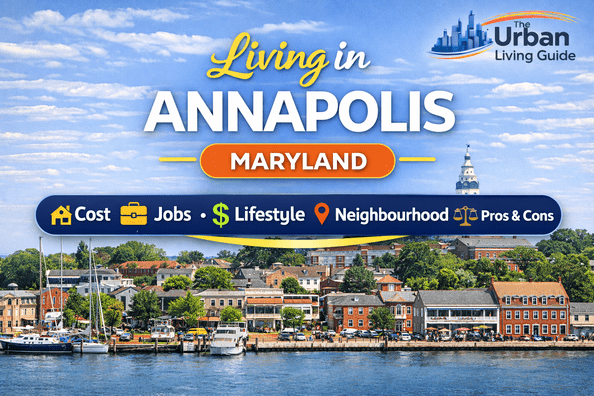
Living in Annapolis, Maryland – Introduction
Living in Annapolis, Maryland offers a charming waterfront lifestyle, historic architecture, and a strong connection to American history. Located along the shores of the Chesapeake Bay and the Severn River, Annapolis is the capital city of Maryland and has a population of around 40,000 residents.
Often called “America’s Sailing Capital,” Annapolis is known for its beautiful harbor, marinas filled with sailboats, and maritime culture. The city’s historic downtown district features colonial-era buildings, brick streets, and waterfront restaurants that create a unique coastal atmosphere.
Many people consider living in Annapolis, Maryland because of its scenic waterfront views, strong tourism industry, and proximity to major metropolitan areas like Washington D.C. and Baltimore. The city is also home to the prestigious United States Naval Academy, which plays a major role in the local economy and cultural identity.
With its coastal scenery, historic charm, and relaxed lifestyle, Annapolis attracts professionals, retirees, and families seeking a peaceful yet vibrant community.
Watch a recent video by a popular vlogger to understand daily life and vibes in Annapolis.
Information in this guide is compiled from publicly available data, official city resources, economic reports, and local housing databases to ensure accuracy and reliability.
What Makes Annapolis So Popular
Key reasons why people move here include:
• Beautiful waterfront location along Chesapeake Bay
• Historic colonial architecture and charming downtown
• Home to the U.S. Naval Academy
• Strong sailing and boating culture
• Easy access to Baltimore and Washington D.C.
Annapolis is famously known as “America’s Sailing Capital.”
Famous Personalities, Sports & Major Brands from Annapolis
Annapolis has connections to several well-known historical figures and institutions.
• James Madison – Former U.S. President who worked in early American government in Annapolis
• Bill Belichick – Legendary NFL coach who has connections with the Naval Academy football program
• Kevin Plank – Founder of Under Armour, who has ties to Maryland’s business community
Sports in Annapolis are strongly influenced by the U.S. Naval Academy athletics programs, especially football and sailing competitions.
Major organizations connected to Annapolis include:
• United States Naval Academy
• Anne Arundel Medical Center
• State Government of Maryland
These institutions contribute significantly to the city’s economy and employment opportunities.
Best Neighborhoods in Annapolis
Annapolis offers several beautiful neighborhoods, many with waterfront views.
Historic Downtown
Charming district with colonial buildings, boutiques, and waterfront restaurants.
Eastport
Popular maritime neighborhood known for boating culture and harbor views.
West Annapolis
Quiet residential area with small shops and tree-lined streets.
Admiral Heights
Family-friendly neighborhood close to the Naval Academy and parks.
Parole Area
Modern suburban neighborhood with shopping centers and newer housing developments.
Cape St. Claire
Coastal community near the Chesapeake Bay with beach access and quiet living.
👉 If this area is new to you, check the map below to see where the city is positioned geographically.
Housing & Rent in Annapolis
Housing in Annapolis can be more expensive than nearby towns because of its waterfront location and historic charm.
Typical monthly rent estimates include:
• Studio apartment – $1,400 – $1,800
• 1 Bedroom – $1,600 – $2,200
• 2 Bedroom – $2,200 – $3,000
• Family home – $3,200 – $5,000
Waterfront homes and historic properties near the harbor often command premium prices.
Rental figures are based on aggregated listing data and recent market trends.
Job Market & Business Opportunities
Annapolis has a stable economy supported by government, tourism, and maritime industries.
Major industries include:
• Government and public administration
• Tourism and hospitality
• Maritime and sailing industry
• Healthcare and education
• Retail and small business
The presence of the Maryland state government and the U.S. Naval Academy creates strong employment opportunities.
Average salaries typically range between $65,000 and $110,000 depending on profession.
Major Companies & Headquarters in Annapolis
Several major institutions and organizations operate in Annapolis.
Key employers include:
• United States Naval Academy
• Anne Arundel Medical Center
• State of Maryland Government Offices
• Northrop Grumman regional operations
• Local maritime businesses and tourism companies
These organizations provide stable employment in the region.
What It’s Really Like Living in Annapolis, Maryland
Daily life in Annapolis revolves around waterfront activities, historic charm, and community events. Residents often spend weekends sailing, kayaking, or walking along the harbor promenade.
The downtown area hosts festivals, farmers markets, and sailing events throughout the year. Restaurants and cafes overlooking the harbor offer some of the best seafood in Maryland.
For many residents, living in Annapolis, Maryland offers a relaxed coastal lifestyle with easy access to major cities.
Cost of Living in Annapolis
Annapolis has a moderately high cost of living compared to other cities in Maryland.
Typical monthly costs include:
• Rent – $1,800 – $2,600
• Utilities – $150 – $240
• Groceries – $350 – $500
• Transportation – $120 – $200
• Healthcare – $350 – $520
Compared to nearby cities like Baltimore or Washington D.C., Annapolis often has higher housing costs due to its waterfront location.
Transportation & Commute
Transportation options include:
• Regional bus services connecting Annapolis to Baltimore and Washington D.C.
• Easy access to Interstate 50 and U.S. Route 301
• Short driving distance to major airports
Average commute time is around 26 minutes.
Baltimore/Washington International Airport is about 30 minutes away.
Weather & Environment
Annapolis has a humid subtropical climate influenced by the Chesapeake Bay.
Summer: Warm and humid around 85–90°F
Winter: Mild with occasional snow
Spring/Fall: Pleasant coastal weather
The waterfront setting provides scenic views and outdoor activities throughout the year.
Popular Hotels, Cafes & Restaurants
Annapolis has a vibrant hospitality scene.
Popular hotels include:
• Graduate Annapolis Hotel
• Historic Inns of Annapolis
• The Westin Annapolis
Local restaurants are famous for Maryland crab cakes and Chesapeake Bay seafood.
Sightseeing & Attractions
Annapolis features many historic landmarks and waterfront attractions.
• United States Naval Academy Campus
• Maryland State House
• Annapolis Harbor & City Dock
• Chesapeake Bay Maritime Museum (nearby)
• William Paca House Historic Gardens
These attractions highlight the city’s colonial heritage and maritime culture.
Budget Stay / Hostels
Visitors can find affordable accommodation options.
Examples include:
• Budget hotels near downtown Annapolis
• Guesthouses near the waterfront
• Affordable vacation rentals
Quick Snapshot of Living in Annapolis, Maryland
• Population – ~40,000
• Average Rent – $2,100/month
• Average Salary – $75,000/year
• Average Commute Time – 26 minutes
• Climate – Warm summers, mild winters
Education & Universities
Annapolis hosts several respected educational institutions.
• United States Naval Academy
• St. John’s College Annapolis
• Anne Arundel Community College
These institutions bring students and professionals from across the country.
Pros and Cons of Living in Annapolis, Maryland
Pros
• Beautiful Chesapeake Bay waterfront
• Historic and charming downtown district
• Strong sailing and boating culture
• Close to Baltimore and Washington D.C.
• Excellent seafood cuisine 🙂
Cons
• Higher housing costs due to waterfront demand
• Tourist crowds during peak seasons
• Limited nightlife compared to bigger cities
• Traffic during summer tourism months
• Smaller job market than major metro areas
Is Annapolis a Good Place to Live?
For many residents, living in Annapolis, Maryland offers a unique coastal lifestyle combined with historic charm and strong community culture. The city’s waterfront location along the Chesapeake Bay provides incredible scenic beauty and recreational opportunities.
Professionals benefit from proximity to major employment centers in Baltimore and Washington D.C., while families enjoy the city’s safe neighborhoods and excellent schools.
With its colonial architecture, sailing culture, and vibrant harbor life, Annapolis remains one of the most desirable small coastal cities in the United States.
FAQs
Is Annapolis, Maryland expensive to live in?
Yes, Annapolis has a moderately high cost of living compared to many cities in Maryland, mainly because of its waterfront location and historic neighborhoods.
What salary is needed to live comfortably in Annapolis?
A salary between $75,000 and $95,000 per year is generally considered comfortable for individuals or small families.
Is Annapolis a safe place to live?
Annapolis is considered relatively safe, especially in neighborhoods like Eastport, West Annapolis, and Admiral Heights.
What are the best neighborhoods in Annapolis?
Popular neighborhoods include Historic Downtown, Eastport, Admiral Heights, West Annapolis, and Cape St. Claire.
Can you live in Annapolis without a car?
Living without a car is possible in the downtown area, but most residents prefer having a vehicle for commuting and shopping.
What is Annapolis famous for?
Annapolis is famous for the United States Naval Academy, historic colonial architecture, and being known as “America’s Sailing Capital.”
Is Annapolis a good city for families?
Yes, Annapolis offers good schools, parks, waterfront recreation, and a strong community atmosphere.
How far is Annapolis from Washington D.C.?
Annapolis is about 30–35 miles from Washington D.C., making it a reasonable commuting distance.
🔗 Explore More Cities in Maryland
Looking beyond Annapolis? The Urban Living Guide has also covered multiple popular cities across Maryland that you can explore further:
These city guides provide detailed insights into everyday living, including housing costs, employment opportunities, neighborhoods, commute options, climate, education, local attractions, and key industries shaping each city.
By bringing all these insights together, The Urban Living Guide helps you compare different cities side by side and choose the one that aligns best with your lifestyle, priorities, and long-term goals.