

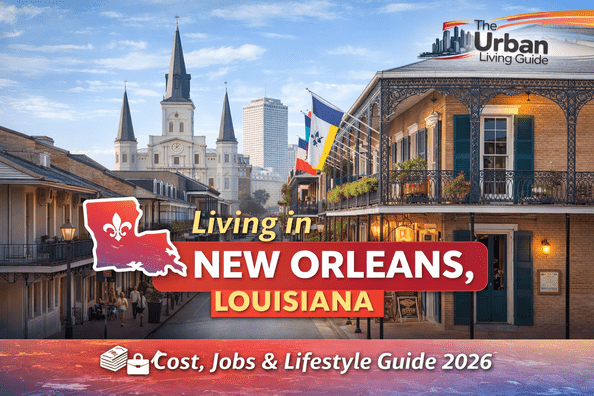
Living in New Orleans, Louisiana in 2026: An Insider’s Look at Creole Heritage, Jazz Culture, and Mississippi Delta Resilience
Stretching across the sweeping crescent curves of the Mississippi River near the Gulf of Mexico where French, Spanish, and West African traditions have converged over three centuries, living in New Orleans, Louisiana offers an extraordinary fusion of world-famous jazz music, legendary Creole cuisine, historic architecture, and an unshakeable community spirit. As the cultural and economic heartbeat of the Gulf South with an incorporated city population of approximately 380,000 residents, New Orleans delivers an unmatched artistic rhythm and neighborhood soul.
Universally celebrated across the globe as “The Big Easy,” New Orleans commands a distinct residential identity that extends far beyond the tourist energy of Bourbon Street and the French Quarter. Whether you are admiring the opulent antebellum mansions beneath majestic live oaks in the Garden District, exploring the colorful artistic community of the Bywater, or participating in weekly second-line jazz parades, life here delivers a deeply immersive, historically rich standard of living. Local municipal governance, public safety programs, and neighborhood preservation initiatives are centrally administered through the official City of New Orleans Operations Portal under the direction of city leadership.
Explore the actual streets and neighborhood character of New Orleans through this recent local capture:
Why New Orleans Has Evolved Into America’s Most Culturally Distinct Metropolis
Over recent decades, New Orleans has captured international acclaim as a premier destination for musicians, remote workers, healthcare specialists, and culture enthusiasts seeking authentic historical architecture and unmatchable community character. Key factors driving its sustained popularity include:
- Unmatched Cultural and Architectural Heritage: Centuries of blended French, Spanish, and Creole influences creating distinct neighborhoods filled with historic shotgun homes and wrought-iron balconies. Explore regional tourism initiatives via the official New Orleans Official Tourism Portal.
- Legendary Culinary Arts and Jazz Scene: An internationally celebrated culinary landscape anchored by Creole dining, Cajun traditions, and nightly live jazz performances.
- Resilient Healthcare and Maritime Economy: A robust metropolitan job market driven by healthcare titan Ochsner Health, Entergy Corporation, and the Port of New Orleans.
- Accessible Urban Rental Market: More attainable housing values and rental options compared to major coastal U.S. metropolitan hubs.
New Orleans At a Glance: Key Living Metrics
Famous Personalities, Local Icons & Major Brands in New Orleans
New Orleans boasts a proud history of nurturing legendary jazz musicians, global hip-hop superstars, passionate sports franchises, and vital healthcare titans:
- Louis Armstrong: The legendary jazz trumpet innovator and global musical icon who was born and raised in New Orleans, shaping modern American music (Louis Armstrong House Museum Portal).
- Lil Wayne: The GRAMMY Award-winning global hip-hop superstar and cultural icon who proudly developed his artistic roots in New Orleans.
- New Orleans Saints (NFL) & New Orleans Pelicans (NBA): Passionate professional sports franchises bringing electric NFL football to the Caesars Superdome and NBA basketball to the Smoothie King Center (New Orleans Saints Official Portal).
- Ochsner Health & Entergy Corporation: Massive healthcare and energy empires maintaining their headquarters and operations in the city (Ochsner Health Official Portal).
Career Landscape & Major Employers in the Big Easy
The employment landscape in New Orleans offers professional stability across healthcare, maritime logistics, energy, and tourism management:
- Healthcare and Medical Systems: Anchored by Ochsner Health, Tulane Medical Center, and LSU Health Sciences Center, delivering extensive nursing, medical research, and clinical careers. Track regional workforce data via the Louisiana Workforce Commission.
- Energy and Utilities: Entergy Corporation providing stable corporate finance, electrical engineering, and power management careers.
- Maritime Trade and Port Logistics: The Port of New Orleans managing international cargo shipping, trade, and river cruise logistics.
- Tourism and Hospitality Administration: A vibrant visitor economy supporting hotel management, culinary arts, and festival operations.
Housing Market Dynamics & Real Estate Overview in New Orleans
Navigating the real estate market in New Orleans requires understanding its historic architectural styles, neighborhood elevation, and localized pricing:
- Diverse Architectural Stock: Features classic historic shotgun homes, Creole townhouses in the French Quarter, grand antebellum mansions in the Garden District, and contemporary suburban properties. Track property assessments via the Orleans Parish Assessor Portal.
- Market Valuations: Home prices remain more attainable than national coastal averages, though property values vary significantly based on neighborhood elevation and historic preservation status.
- Rental Market Inventory: Average monthly rent spans $900 to $1,200 for studio units, $1,100 to $1,500 for one-bedroom apartments, $1,500 to $2,000 for two-bedroom properties, and $2,500+ for single-family rental homes and historic properties.
- Historic Restoration: Many buyers purchase historic properties requiring careful preservation adherence and specialized property insurance policies.
Best Neighborhoods in New Orleans: Finding Your Ideal Community
Check the interactive map below to understand the geographic layout of New Orleans:
What Daily Life Really Looks Like in New Orleans (Rhythm & Vibe)
Daily life in New Orleans is characterized by an energetic, culturally immersive, and deeply communal rhythm that celebrates art and celebration:
- Morning Café au Lait and Strolls: Residents often start mornings with chicory coffee and beignets before strolling through neighborhood green spaces or working in creative local hubs. Check municipal recreation schedules via the official City of New Orleans Parks Portal.
- Afternoon Park and Riverwalk Leisure: Spending warm afternoons biking through Audubon Park, exploring local art markets, or walking along the Mississippi Riverwalk.
- Evening Music and Culinary Gatherings: Attending live jazz performances, neighborhood crawfish boils, and world-class dining.
- Social Atmosphere: Warm, welcoming, vibrant, historically proud, and deeply communal.
Cost of Living Breakdown: Monthly Expenses & Salary Expectations
Commute Realities, Highway Corridors & Transit Options
New Orleans provides diverse transportation infrastructure combining historic streetcars and modern highway corridors:
- Interstate 10 & U.S. Route 90: Primary arterial highways connecting New Orleans directly to regional Gulf Coast hubs (Louisiana Department of Transportation Portal).
- Commute Times: Average daily local commutes remain manageable at approximately 20 to 30 minutes depending on traffic.
- RTA Streetcar & Bus Network: Historic streetcars and municipal bus routes providing functional public transit through central urban districts (RTA New Orleans Official Portal).
- Aviation Convenience: Proximity to Louis Armstrong New Orleans International Airport (MSY) just west of the city for efficient travel.
Subtropical Climate Realities, Seasons & Environmental Factors
The environmental rhythm of New Orleans follows a humid subtropical climate featuring warm summers and mild winters:
- Hot, Humid Summers: Summer afternoons routinely bring high humidity, passing rain showers, and temperatures exceeding 90°F from June through September. Track active forecasts via the National Weather Service New Orleans Portal.
- Mild, Short Winters: Winter seasons bring pleasant daytime temperatures hovering comfortably between 50°F and 65°F with rare freezing nights.
Higher Education, Schools & Major Universities
Educational infrastructure stands as a premier anchor for intellectual life, medical training, and research innovation:
- Tulane University: Prestigious private research university renowned for its medical, law, and liberal arts programs (Tulane University Official Portal).
- University of New Orleans (UNO): Prominent public research university contributing extensively to local workforce development (UNO Official Portal).
- Loyola University New Orleans: Respected private Jesuit university offering comprehensive undergraduate and graduate degrees (Loyola University Official Portal).
Healthcare Infrastructure & Regional Medical Networks
Healthcare infrastructure in New Orleans is advanced, highly specialized, and serves as the premier medical destination for the Gulf South region:
- Ochsner Health System: Massive regional health provider operating advanced hospital campuses and specialized research facilities (Ochsner Health Portal).
- Tulane Medical Center & LSU Health: Elite medical training grounds and acute care hospitals delivering specialized emergency and surgical treatments.
Hospitality, Historic Hotels & Local Culinary Scene
The hospitality and culinary identity of New Orleans reflects legendary hotel luxury, chic bourbon lounges, and iconic Creole dining:
- Hotel Monteleone & The Roosevelt New Orleans: Landmark historic hotels featuring legendary revolving cocktail bars and refined luxury (The Roosevelt New Orleans Portal).
- Ace Hotel New Orleans: Trendy boutique accommodation anchoring cultural events in the warehouse district.
- Authentic Creole Dining: Iconic regional dishes including authentic gumbo, jambalaya, crawfish étouffée, po’boys, and chicory coffee with beignets.
Cultural Landmarks, Music Venues & Iconic Sightseeing
Landmark cultural institutions and historic sites significantly enhance the daily quality of life for local residents:
- French Quarter & Bourbon Street: Historic 18th-century neighborhood and world-famous entertainment strip known for nightlife and music clubs.
- Jackson Square & St. Louis Cathedral: Historic park overlooking the Mississippi River framed by the oldest continuously operating cathedral in the United States (St. Louis Cathedral Portal).
- Mississippi Riverwalk: Scenic paved walkway providing relaxing views of passing steamboats and cargo ships.
Regional Trade-offs: Pros and Cons of Living in New Orleans
Who Is New Orleans Ideal For — And Who Should Avoid It?
Who New Orleans Is Ideal For
- Music Lovers and Artists: Individuals who thrive in a vibrant creative arts community surrounded by live jazz and festivals.
- Culinary Enthusiasts: People who prioritize world-class Creole dining, culinary arts, and unique food traditions.
- Healthcare Professionals: Workers pursuing rewarding careers across Ochsner Health, Tulane, and LSU medical networks.
- History Buffs: Residents who appreciate preserved 18th-century architecture, historic French-Spanish heritage, and museums.
Who Should Avoid New Orleans
- Extreme Heat and Humidity Avoiders: Individuals who struggle with prolonged subtropical summer moisture and high afternoon temperatures.
- Storm-Anxious Individuals: People who experience severe anxiety during Atlantic hurricane seasons and coastal flood alerts.
- Sterile Suburban Seekers: Those looking for uniform master-planned subdivisions without urban character.
- Subway and Rapid Transit Purists: Residents requiring extensive urban underground rail rapid transit systems without driving.
Real Experiences: Perspectives from Long-Term Residents (5 to 10+ Years)
“Moving to the Garden District twelve years ago after taking a nursing position at Ochsner Health was the best decision of my life. Walking beneath the live oaks, listening to neighborhood jazz, and experiencing the warmth of community pride here is unlike anywhere else in America. Summers get steamy and you have to prep for hurricane season, but the soul of this city captures your heart forever.”
[Source: r/NewOrleans Community Discussions — u/GardenDistrictRN05, resident of 12 years]
“The big reality check for newcomers is learning how the drainage system works and accepting that infrastructure here has quirks. However, if you embrace the krewe culture, support local artists, and live in a secure neighborhood like Uptown, the quality of life is rich, colorful, and endlessly entertaining.”
[Source: Local Resident Panels & Community Forums — Antoine B., Uptown homeowner of 10 years]
Frequently Asked Questions About Living in New Orleans, Louisiana
Is New Orleans expensive to live in compared to other major U.S. cities?
No. New Orleans is moderately affordable compared to major national hubs like New York, San Francisco, or Chicago, offering solid value for urban housing and daily living expenses.
What level of annual salary do individuals need to live comfortably in New Orleans?
Most single professionals and working families require an annual household income between $55,000 and $90,000 to comfortably cover housing, utilities, transportation, and discretionary spending.
Can residents successfully navigate daily life in New Orleans without owning a personal vehicle?
Yes, central historic districts are walkable and connected by RTA streetcars and buses, making car-free living possible for downtown and Uptown residents.
What are the standout residential neighborhoods recommended for new residents?
Top residential districts include the Garden District for stunning antebellum mansions, Uptown for university proximity and streetcars, and Bywater for artistic creative vibes.
How do daily commute dynamics function for working professionals across the city?
Commuters primarily utilize Interstate 10 and U.S. Route 90, managing average daily commute times of around 20 to 30 minutes during standard rush hours.
What core natural and cultural highlights define the local New Orleans experience?
Residents enjoy participating in Mardi Gras and jazz festivals, dining on Creole cuisine, walking through Jackson Square, and relaxing in Audubon Park.
🔗 Explore More Cities in Louisiana
If you’re exploring options beyond New Orleans, The Urban Living Guide has journeyed across several other vibrant destinations throughout Louisiana. You might also want to check out:
- Living in Baton Rouge, Louisiana
- Living in Shreveport, Louisiana
- Living in Lafayette, Louisiana
- Living in Lake Charles, Louisiana
Interested in uncovering more details about New Orleans? Dive into these specialized resources:
- Cost of Living in New Orleans, Louisiana
- Pros and Cons of Living in New Orleans, Louisiana
- Best Neighborhoods in New Orleans, Louisiana
For a complete transition breakdown from initial research to settling in, explore our extensive relocation manual: Moving to New Orleans, Louisiana
Our curated municipal profiles cut through the noise to examine what really matters on a day-to-day basis—from localized real estate inventory and school district ratings to regional job markets, seasonal micro-climates, and authentic neighborhood personalities.
By keeping all these hyper-local benchmarks in one place, The Urban Living Guide empowers you to weigh regional trade-offs effortlessly, evaluate employment corridors side by side, and secure a residential setting tailored precisely to your long-term personal and professional ambitions.