

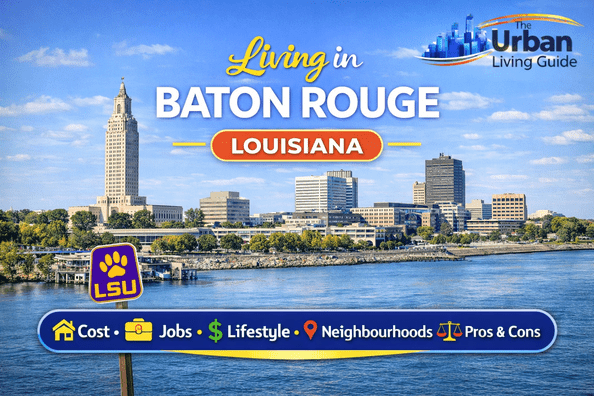
Living in Baton Rouge, Louisiana in 2026: An Insider’s Look at SEC Collegiate Energy, State Capital Stability, and Mississippi River Culture
Stretching gracefully along the eastern banks of the mighty Mississippi River where southern political administration meets the high-energy collegiate spirit of the American South, living in Baton Rouge, Louisiana offers an engaging and practical fusion of government career stability, intense SEC college-town culture, petrochemical industry power, and exceptional housing affordability. As the official state capital and the commercial anchor of East Baton Rouge Parish with a municipal population of approximately 220,000 residents (anchoring a broader metropolitan community exceeding 800,000 people), Baton Rouge delivers authentic Louisiana culture paired with accessible economic opportunity.
Universally celebrated across the nation for the colossal presence of Louisiana State University (LSU), Baton Rouge commands a dynamic residential identity shaped by oak-shaded campus quadrangles, historic state monuments, and world-class Cajun and Creole culinary traditions. Whether you are catching an autumn Saturday football game inside Tiger Stadium, walking along the scenic riverfront levee, or exploring the cultural arts scene in Mid City, life here delivers an energetic, unpretentious, and deeply communal standard of living. Local municipal governance, public safety initiatives, and urban development programs are centrally administered through the official City of Baton Rouge Government Portal under the direction of city leadership.
Check out this boots-on-the-ground video tour to get a genuine feel for Baton Rouge’s local rhythm and surroundings:
Why Baton Rouge Has Evolved Into the Heart of Louisiana’s Capital Region
Over recent decades, Baton Rouge has captured regional acclaim as a premier destination for civil service professionals, engineering experts, growing families, and students seeking major-city career stability and cultural depth without exorbitant cost-of-living pressures. Key factors driving its sustained popularity include:
- Exceptional Housing Affordability: Real estate valuations and rental rates sitting significantly below national metropolitan averages, offering outstanding value for homebuyers. Explore regional economic and tourism initiatives via the official Visit Baton Rouge Tourism Portal.
- SEC Collegiate Energy and LSU Pride: The vibrant academic and athletic engine of Louisiana State University driving world-class research facilities, cultural events, and legendary college sports traditions.
- Resilient Industrial and Government Economy: A stable economic backbone anchored by state administrative offices, massive petrochemical refining operations, and advanced healthcare networks.
- Rich Culinary and Musical Heritage: Deep-rooted Cajun and Creole food traditions, live blues, and authentic southern hospitality defining everyday neighborhood life.
Baton Rouge At a Glance: Key Living Metrics
Famous Personalities, Local Icons & Major Brands in Baton Rouge
Baton Rouge boasts a proud history of nurturing global basketball legends, influential hip-hop artists, passionate SEC sports traditions, and massive petrochemical corporations:
- Shaquille O’Neal: The global basketball icon, NBA Hall of Famer, and cultural superstar who built his legendary athletic legacy during his standout years at LSU (LSU Official Portal).
- LSU Tigers Athletics: The powerhouse NCAA Division I athletic programs uniting the community with electric SEC football fandom inside Tiger Stadium (LSU Sports Official Portal).
- ExxonMobil Baton Rouge Refinery: One of the largest and most historic petrochemical refining complexes in the United States, driving profound economic stability across the region (ExxonMobil Corporate Portal).
- Ochsner Health: A premier regional medical network and healthcare titan anchoring clinical excellence across East Baton Rouge Parish.
Career Landscape & Major Employers in the Capital Region
The employment landscape in Baton Rouge offers exceptional civil service security, high-paying technical engineering careers, and robust healthcare employment:
- Petrochemical and Heavy Industrial Engineering: Anchored by the historic ExxonMobil refinery and Dow Chemical production facilities, supporting specialized chemical engineering and industrial operations. Track regional workforce data via the Louisiana Workforce Commission.
- State Government and Public Administration: As the state capital, thousands of professional administrative careers are driven by the Louisiana State Government Offices.
- Healthcare Networks: Regional hospital systems led by Ochsner Health and Baton Rouge General delivering extensive nursing, emergency medicine, and specialist medical careers.
- Higher Education and Academic Research: Louisiana State University and Southern University supporting continuous faculty, research, and institutional management employment.
Housing Market Dynamics & Real Estate Overview in Baton Rouge
Navigating the real estate market in Baton Rouge reveals an attractive landscape of historic charm, collegiate proximity, and exceptional housing attainability:
- Diverse Architectural Stock: Features historic character homes near downtown, stately executive properties in Bocage, and vibrant student housing subdivisions near the LSU campus. Track property assessments via the East Baton Rouge Parish Assessor Portal.
- Market Valuations: Housing values remain significantly more accessible than national metropolitan averages, offering homebuyers high square footage and spacious lots for their investment.
- Rental Market Inventory: Average monthly rent spans $800 to $1,100 for studio units, $1,000 to $1,300 for one-bedroom apartments, $1,300 to $1,700 for two-bedroom properties, and $2,200 to $3,500+ for single-family rental homes and upscale executive properties.
- Homestead Exemptions: Louisiana offers favorable homestead property tax exemptions for owner-occupied primary residences, providing long-term relief for homeowners.
Best Neighborhoods in Baton Rouge: Finding Your Ideal Community
Check the interactive map below to understand the geographic layout of Baton Rouge:
What Daily Life Really Looks Like in Baton Rouge (Rhythm & Vibe)
Daily life in Baton Rouge is characterized by a vibrant, sports-obsessed, and Southern-rooted rhythm that blends professional civil service with riverfront leisure:
- Morning Levee Walks and Coffee Routines: Residents often start mornings with quiet walks along the Mississippi River levee or grabbing espresso near the university gates. Check municipal recreation schedules via the official City of Baton Rouge Parks and Recreation Portal.
- Afternoon Park and Swamp Explorations: Spending warm afternoons exploring the Bluebonnet Swamp Nature Center or biking through city parks.
- Game Day and Culinary Evenings: Attending energetic LSU football tailgates, dining on authentic Cajun crawfish étouffée, or enjoying downtown entertainment.
- Social Atmosphere: Warm, energetic, collegiate, historically proud, and deeply communal.
Cost of Living Breakdown: Monthly Expenses & Salary Expectations
Commute Realities, Highway Corridors & Transit Options
Baton Rouge provides established highway infrastructure designed for regional Mississippi River commuting:
- Interstate 10 & Interstate 12: Primary arterial highways intersecting directly through the city, linking residents to New Orleans and Lafayette (Louisiana Department of Transportation Portal).
- Commute Times: Average daily local commutes span 20 to 30 minutes, keeping peak bridge-crossing traffic bottlenecks in mind.
- CATS Bus System: Capital Area Transit System providing public bus routes across municipal corridors (CATS Public Transit Portal).
- Aviation Convenience: Proximity to Baton Rouge Metropolitan Airport (BTR) for convenient regional and domestic flights.
Subtropical Climate Realities, Seasons & Environmental Factors
The environmental rhythm of Baton Rouge follows a classic humid subtropical climate featuring long, warm, humid summers and very mild winters:
- Hot, Humid Summers: Summer afternoons bring high humidity, passing rain showers, and temperatures routinely topping 90°F from June through September. Track active forecasts via the National Weather Service New Orleans / Baton Rouge Portal.
- Mild, Short Winters: Winter seasons bring pleasant daytime temperatures hovering comfortably between 50°F and 65°F with rare freezing nights.
Higher Education, Schools & Major Universities
Educational infrastructure stands as a premier anchor for intellectual life, scientific innovation, and collegiate culture:
- Louisiana State University (LSU): Prestigious flagship public research university driving academic excellence, scientific innovation, and legendary collegiate sports culture (LSU Official Portal).
- Southern University and A&M College: Renowned historic HBCU providing comprehensive degree programs and rich community leadership (Southern University Official Portal).
Healthcare Infrastructure & Regional Medical Networks
Healthcare infrastructure in Baton Rouge is advanced, highly specialized, and serves as a premier medical destination for the region:
- Ochsner Health System: Massive regional health provider operating advanced hospital campuses, emergency trauma units, and specialized outpatient clinics (Ochsner Health Portal).
- Baton Rouge General: Award-winning regional hospital network maintaining acute-care facilities and emergency services across the parish.
Hospitality, Capitol Hotels & Local Culinary Scene
The hospitality and culinary identity of Baton Rouge reflects historic riverfront hotel comfort, Southern charm, and legendary Cajun dining:
- Hilton Baton Rouge Capitol Center: Sophisticated riverfront hotel offering fine dining, Mississippi River views, and historic architectural elegance (Hilton Capitol Center Portal).
- Watermark Baton Rouge Hotel: Historic boutique accommodation anchoring architectural design in downtown.
- Authentic Cajun & Creole Dining: World-class regional dishes including authentic jambalaya, crawfish étouffée, po’boys, and local seafood specialties.
Political Landmarks, Nature Centers & Iconic Sightseeing
Landmark political monuments and natural preserves significantly enhance the daily quality of life for local residents:
- Louisiana State Capitol: Tallest state capitol building in the United States, featuring striking art deco architecture and soaring observation decks (Louisiana State Government Portal).
- USS Kidd Veterans Museum: Historic Fletcher-class destroyer permanently berthed on the Mississippi River as a floating memorial.
- Bluebonnet Swamp Nature Center: 103-acre conservation area featuring boardwalks, educational exhibits, and diverse local wildlife.
Regional Trade-offs: Pros and Cons of Living in Baton Rouge
Who Is Baton Rouge Ideal For — And Who Should Avoid It?
Who Baton Rouge Is Ideal For
- Budget-Conscious Homebuyers: Residents seeking affordable housing stock, spacious properties, and home attainability.
- State Civil Service Professionals: Workers wanting stable career tracks in state government administration and legislative offices.
- College Sports and LSU Fans: Individuals who thrive in an energetic SEC university town with legendary football traditions.
- Healthcare and Engineering Experts: Professionals pursuing rewarding careers across Ochsner Health, petrochemical plants, and LSU research.
Who Should Avoid Baton Rouge
- Extreme Heat and Humidity Avoiders: Individuals who struggle with prolonged subtropical summer moisture and high afternoon temperatures.
- Subway and Heavy-Rail Purists: Residents requiring extensive urban rail rapid transit systems without driving.
- Storm-Anxious Individuals: People who experience severe anxiety during tropical storm seasons and flood watches.
- Quiet Rural Purists: Those seeking low-density countryside living away from capital city commerce and traffic.
Real Experiences: Perspectives from Long-Term Residents (5 to 10+ Years)
“Buying our home near the LSU campus ten years ago after taking a position with state government was the best financial and lifestyle decision we’ve ever made. The oak-lined streets, the excitement of Tiger football Saturdays, and the incredible warmth of our neighbors make Baton Rouge feel like home. Summers get steamy, but the food, the low cost of living, and the community spirit are unbeatable.”
[Source: r/batonrouge Community Discussions — u/LSACampusDad08, resident of 11 years]
“The big reality check for newcomers is learning to plan around bridge traffic during rush hour and prepping for July humidity. However, once you settle into a great neighborhood like Bocage or Mid City, you realize Baton Rouge offers incredible professional value and cultural depth for families.”
[Source: Local Resident Panels & Community Forums — Claire D., Bocage homeowner of 9 years]
Frequently Asked Questions About Living in Baton Rouge, Louisiana
Is living in Baton Rouge, Louisiana expensive compared to other U.S. cities?
No. Baton Rouge maintains a very accessible cost of living that sits comfortably below the national average, making it one of the more budget-friendly capital cities in the country.
What level of annual salary do individuals need to live comfortably in Baton Rouge?
Most single professionals and working families require an annual household income between $55,000 and $90,000 to comfortably cover housing, utilities, transportation, and discretionary spending.
Can residents successfully navigate daily life in Baton Rouge without owning a personal vehicle?
While CATS bus lines operate municipal routes, Baton Rouge’s sprawling suburban layout makes owning a personal vehicle essential for daily commuting and errands.
What are the standout residential neighborhoods recommended for new residents?
Top residential districts include Downtown Baton Rouge for riverfront views, LSU Area for collegiate energy, Bocage for upscale executive comfort, and Mid City for artistic creative charm.
How do daily commute dynamics function for working professionals across the city?
Commuters primarily utilize Interstates 10 and 12, managing average daily commute times of around 20 to 30 minutes, keeping bridge-crossing bottlenecks in mind during peak hours.
What core natural and cultural highlights define the local Baton Rouge experience?
Residents enjoy visiting the State Capitol, attending LSU football games, exploring the Bluebonnet Swamp Nature Center, and dining on authentic Cajun and Creole cuisine.
🔗 Explore More Cities in Louisiana
If you’re exploring more options beyond Baton Rouge, The Urban Living Guide has journeyed across several other vibrant destinations throughout Louisiana. You might also want to check out:
- Living in New Orleans, Louisiana
- Living in Shreveport, Louisiana
- Living in Lafayette, Louisiana
- Living in Lake Charles, Louisiana
Interested in uncovering more details about Baton Rouge? Dive into these specialized resources:
- Cost of Living in Baton Rouge, Louisiana
- Pros and Cons of Living in Baton Rouge, Louisiana
- Best Neighborhoods in Baton Rouge, Louisiana
For a complete transition breakdown from initial research to settling in, explore our extensive relocation manual: Moving to Baton Rouge, Louisiana
Our curated municipal profiles cut through the noise to examine what really matters on a day-to-day basis—from localized real estate inventory and school district ratings to regional job markets, seasonal micro-climates, and authentic neighborhood personalities.
By keeping all these hyper-local benchmarks in one place, The Urban Living Guide empowers you to weigh regional trade-offs effortlessly, evaluate employment corridors side by side, and secure a residential setting tailored precisely to your long-term personal and professional ambitions.