
Introduction
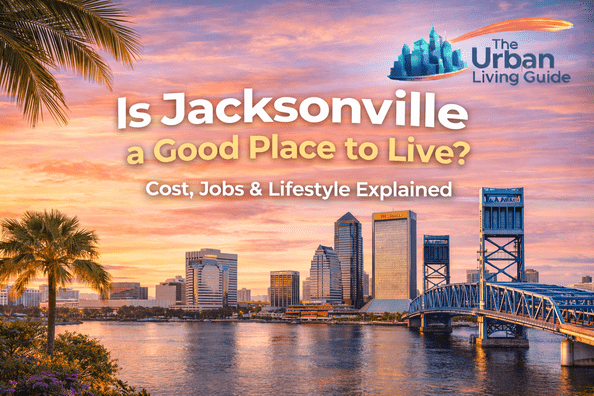
Living in Jacksonville, Florida offers a combination of coastal living, expanding job opportunities, and comparatively affordable housing within Florida. Jacksonville is the largest city by land area in the continental United States, giving residents access to beaches, riverfront neighborhoods, and suburban communities.
Unlike Miami or Orlando, Living in Jacksonville, Florida often means lower housing costs and less tourism-driven congestion. The city has a strong military presence, logistics industry, healthcare growth, and port-based economy. However, climate risks and transportation dependency remain important considerations. This guide explores housing, employment, neighborhoods, sports culture, and overall affordability before relocating.
👉 If this city is new to you, use the map below to see exactly where it’s located and what’s nearby.
Information is based on publicly available housing data, economic reports, and official city sources.
What Makes Jacksonville So Popular?
Jacksonville appeals to families, military personnel, and professionals seeking affordability.
Reasons people relocate:
• Lower housing costs than South Florida
• Atlantic Ocean beaches
• Strong military presence
• Expanding healthcare and logistics sectors
• No state income tax
• Suburban-style communities
The city blends coastal lifestyle with Southern metropolitan scale 🌊
📺 What It’s Really Like Living in Jacksonville
Jacksonville offers a slower pace compared to Miami and Orlando. Many neighborhoods feel suburban, even within city limits.
Watch a recent video by a popular vlogger to get a better feel for the city’s real-life vibe.
Weekend activities often include:
• Visiting Jacksonville Beach
• Boating along the St. Johns River
• Exploring Riverside and Avondale
• Attending games of the Jacksonville Jaguars
The lifestyle feels relaxed and family-oriented compared to South Florida’s fast pace.
Major Employers & Big Brands in Jacksonville
Jacksonville’s economy is driven by logistics, finance, healthcare, and military installations.
Major employers include:
• CSX – Headquarters
• Fidelity National Financial – Headquarters
• Mayo Clinic Florida
• Naval Air Station Jacksonville
• Southeastern Grocers
The Port of Jacksonville is one of the largest vehicle-handling ports in the United States.
For official economic information, refer to the City of Jacksonville.
🏠 Housing & Rent in Jacksonville
Housing remains one of Jacksonville’s biggest advantages.
Average monthly rent ranges:
• Studio: $1,100–$1,400
• 1-bedroom: $1,300–$1,800
• 2-bedroom: $1,700–$2,500
Median home prices are significantly lower than Miami and slightly lower than Tampa. However, insurance costs due to storm exposure must be considered.
Rental data reflects aggregated market listings and regional housing trends.
Best Neighborhoods in Jacksonville
Jacksonville’s large land area makes neighborhood selection important.
Riverside & Avondale
• Historic charm
• Walkable districts
• Popular with young professionals
Jacksonville Beach
• Coastal lifestyle
• Higher rental prices
• Tourist activity
Mandarin
• Suburban feel
• Family-friendly
• Moderate pricing
Southside
• Growing residential development
• Corporate presence
• Convenient access to highways
Ponte Vedra (Nearby)
• Upscale coastal community
• Golf-focused lifestyle
• Higher property values
Each neighborhood varies in pricing and amenities.
💼 Job Market & Salary Expectations
Jacksonville’s job market is stable but less tech-driven than Miami or Orlando.
Main sectors:
• Logistics & Transportation
• Military & Defense
• Healthcare
• Financial Services
• Retail
Average salary ranges:
• Entry-level roles: $45,000–$65,000
• Mid-level professionals: $65,000–$95,000
• Senior roles: $120,000+
Lower housing costs help balance moderate salary levels.
💰 Cost of Living in Jacksonville
The cost of living in Jacksonville is close to the national average and lower than many Florida coastal cities.
Typical monthly expenses:
• Rent: $1,300–$2,200
• Utilities: $150–$280
• Groceries: $350–$550
• Transportation: $120–$250
• Insurance: Moderate to high
To live comfortably while Living in Jacksonville, Florida, individuals often need $65,000–$85,000 annually.
Compared to Miami, Jacksonville offers significantly lower housing costs and less congestion.
🚗 Transportation & Connectivity
Jacksonville is car-dependent due to its large geographic area.
Transportation overview:
• Limited public transit
• Extensive highway network
• Moderate traffic compared to South Florida
• Served by Jacksonville International Airport
Most residents rely on personal vehicles for commuting.
🌤 Weather & Environment
Jacksonville has a humid subtropical climate.
Climate characteristics:
• Hot summers
• Mild winters
• Hurricane season exposure
• Occasional heavy rainfall
Storm preparedness and insurance planning are essential 🌦
🎓 Education & Universities
Major institutions include:
• University of North Florida
• Jacksonville University
School quality varies depending on district and neighborhood.
👍 Pros and Cons of Living in Jacksonville
Pros:
• Affordable housing
• Beach access
• Strong military presence
• Lower congestion than South Florida
• No state income tax
Cons:
• Car dependency
• Hurricane risk
• Moderate salary levels
• Limited nightlife compared to Miami
• Insurance costs
Jacksonville suits families and professionals seeking affordability with coastal access 😊
🏡 Should You Move to Jacksonville?
For families, military personnel, and logistics professionals, Living in Jacksonville, Florida offers affordability and access to beaches without Miami-level costs. The city provides suburban comfort with economic stability.
However, those seeking dense urban nightlife or high-paying finance roles may prefer Miami or Tampa. Careful neighborhood selection plays a major role in lifestyle satisfaction.
FAQs
Is Jacksonville expensive to live in?
Jacksonville is more affordable than most major Florida cities, particularly in housing. While insurance and utility costs can be elevated due to climate conditions, overall living expenses remain closer to the national average than coastal South Florida markets.
What salary do you need to live comfortably in Jacksonville?
Most individuals require between $65,000 and $85,000 annually for comfortable living. Families may need additional income depending on school district choice and proximity to beach communities.
Is Jacksonville family-friendly?
Yes. Many neighborhoods such as Mandarin and Southside are popular with families due to suburban layout, parks, and access to schools. The city’s slower pace compared to Miami also appeals to families.
Can you live in Jacksonville without a car?
Living without a car is challenging due to the city’s size and limited public transportation. Most residents rely on personal vehicles for commuting and daily errands.
Is Jacksonville safer than Miami?
Crime levels vary by neighborhood in both cities. Jacksonville generally experiences less tourism-related congestion but still requires careful neighborhood selection for safety.
Is Jacksonville better than Tampa?
Jacksonville typically offers lower housing costs, while Tampa provides stronger sports culture and beach proximity on the Gulf Coast.
🔗 Explore More Cities in Florida
If you’re exploring more options beyond Jacksonville , The Urban Living Guide has covered several other popular cities in Florida. You can also check:
These guides give you a complete picture of what it’s like living across different cities, covering everything from cost of living, housing, and job opportunities to neighborhoods, commute, weather, education, popular places, and major employers.
The Urban Living Guide brings together these local insights in one place, helping you compare cities easily and make a confident, well-informed decision based on your lifestyle and goals.