

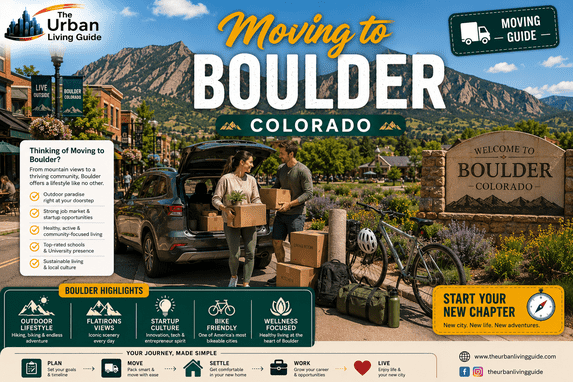
Moving to Boulder, Colorado – Outdoor Living, Startup Energy, and One of Colorado’s Most Unique Lifestyles
Moving to Boulder, Colorado attracts a very specific type of newcomer. The city is known for its mountain backdrop, outdoor culture, startup scene, health-conscious lifestyle, and University of Colorado presence — but Boulder is also one of the most competitive and expensive places to relocate within Colorado.
Many people initially move here for hiking, biking, remote work flexibility, or access to nature, then realize the city has a much deeper identity built around wellness, sustainability, education, and work-life balance. Boulder feels less like a traditional city and more like a lifestyle ecosystem.
At the same time, adjusting here can take preparation. Housing costs, limited inventory, parking, and local culture expectations surprise many newcomers during the first few months.
Watch how locals experience Boulder through this video by a well-known Colorado lifestyle vlogger.
Where Are You Moving From?
Your Boulder relocation experience depends heavily on your previous lifestyle and location.
Same-State Move
If you are relocating from Denver, Fort Collins, Longmont, or Colorado Springs, the move itself is usually manageable, though Boulder’s housing process can still feel competitive.
Interstate Move
People moving from places like California, Washington, Texas, or New York often transition more smoothly because they are already familiar with higher housing costs and active lifestyle culture.
Long-Distance / Cross-Country Move
Cross-country relocations usually require extra planning around storage, temporary housing, and lease timing because Boulder inventory moves quickly.
Coming from a major metro, Boulder may feel calmer and healthier. But if you are arriving from a more traditional suburban or rural area, the city’s culture and pricing can feel unexpectedly intense.
Who Should Move Here
Boulder works best for people who genuinely connect with the city’s lifestyle priorities.
A strong fit for:
-
- Remote workers and tech professionals
- Startup founders and entrepreneurs
- Outdoor-focused residents
- University-connected students and faculty
- Cyclists, hikers, and fitness-oriented movers
- People prioritizing wellness and community culture
Many newcomers moving here often notice that Boulder residents treat outdoor activity as part of everyday life rather than occasional recreation.
Who May Struggle Here
Boulder is beautiful, but it can feel restrictive or overwhelming for some movers.
You may struggle here if:
-
- You want lower housing costs
- You prefer highly traditional suburban living
- You dislike active/outdoor-focused culture
- You need extensive nightlife or major-city entertainment
- You expect abundant parking and easy commuting everywhere
- You want large homes at moderate prices
One thing that surprises newcomers is how quickly housing competition and daily costs add up compared to nearby Colorado cities.
Moving Process & Transportation Planning
Relocating to Boulder requires more coordination than many people initially expect because access, parking, and housing logistics can become complicated quickly.
Smaller apartment moves may only require a compact truck, while larger household relocations often involve container storage or full-service movers.
A few practical things to plan early:
-
- Reserve movers ahead of university move-in season
- Confirm parking permits or HOA access before moving day
- Prepare for tighter downtown streets and limited unloading areas
- Expect higher labor and moving costs than nearby suburbs
- Compare storage options if lease dates overlap poorly
Boulder’s location near the foothills also means winter weather can affect moving schedules more than newcomers anticipate.
Many interstate movers prefer arriving first, exploring neighborhoods in person, and then finalizing long-term housing afterward.
Housing Strategy Before & After Moving
Housing is usually the biggest adjustment for newcomers moving to Boulder. Prices, inventory, and neighborhood culture vary significantly depending on proximity to downtown, the university, and mountain access.
Some areas feel heavily student-oriented, while others are quiet, wellness-focused, and residential.
Before signing a lease or buying property:
-
- Visit the neighborhood during different times of day
- Check parking restrictions carefully
- Compare commute times to Denver or nearby cities
- Ask about heating, cooling, and utility costs
- Review pet restrictions and HOA rules
- Watch for highly competitive rental timelines near CU Boulder
Short-term rentals, local inns, and temporary leases can help reduce pressure while learning the city layout properly.
Storage & Setup Essentials
Storage can help simplify your relocation if housing timing becomes complicated or if downsizing is part of the move.
Facilities like Public Storage and smaller local storage providers are available throughout the Boulder area, though availability can tighten during peak relocation months.
Setup priorities usually include:
-
- Scheduling internet and utilities early
- Confirming parking access before unloading
- Organizing bike and outdoor gear storage
- Preparing for weather shifts during colder months
- Keeping essentials accessible during the first week
Most essential services can usually be activated within a few days, though premium housing areas sometimes have stricter move-in scheduling rules.
First Few Weeks After Moving (Reality Check)
The first few weeks in Boulder often feel exciting because the scenery and lifestyle are genuinely impressive. But adjustment still happens.
Many newcomers don’t realize how deeply the city revolves around outdoor culture, wellness habits, and active routines. Social expectations can sometimes feel intimidating for people not used to highly fitness-oriented environments.
Common early adjustments include:
-
- Altitude and dry weather adaptation
- Higher grocery and dining costs
- Parking limitations in central areas
- Busy hiking and biking traffic on weekends
- Competitive rental atmosphere
- Slower nightlife compared to Denver
Most newcomers feel more comfortable once they settle into routines and stop trying to experience everything immediately.
Things to Know Before Moving
Boulder offers a very specific lifestyle experience, and preparation makes the transition smoother.
A few realities to keep in mind:
-
- Housing costs are among Colorado’s highest
- Outdoor recreation shapes local culture heavily
- Parking can become frustrating near downtown areas
- Many residents prioritize sustainability and wellness
- Winter weather still affects transportation and routines
Locals usually recommend choosing Boulder because the lifestyle genuinely fits you—not simply because the scenery looks appealing online.
Local Insights & Lifestyle Feel
Boulder feels highly intentional compared to many growing Colorado cities. The community values outdoor activity, environmental awareness, local businesses, and active living.
The city’s atmosphere is energetic but less corporate than Denver. Daily life often revolves around coffee shops, trails, farmers markets, fitness culture, startups, and university influence. For the right person, Boulder can feel inspiring. For others, it may feel expensive and socially demanding.
Quick Moving Checklist
A smoother Boulder relocation usually comes down to housing preparation, parking coordination, and realistic budgeting.
30 Days Before Moving
-
- Compare movers and temporary storage options
- Research neighborhoods carefully before signing
- Organize utility transfer dates
- Reserve parking access if required
- Begin downsizing unnecessary furniture or bulky items
1 Week Before Moving
-
- Confirm mover timing and building access
- Check weather forecasts and road conditions
- Pack essentials separately for the first few days
- Schedule internet installation
- Prepare outdoor gear and winter essentials accessibly
Moving Day
-
- Inspect the property before unloading
- Photograph existing damages
- Confirm utility activation immediately
- Test parking and garage access
- Assemble sleeping and kitchen essentials first
Boulder Works Best When the Lifestyle Truly Fits You
Boulder is not the easiest or cheapest Colorado move, but many newcomers feel the lifestyle payoff is worth the effort. The city combines mountain access, strong community identity, outdoor culture, and career flexibility in a way few places in the country fully replicate.
At the same time, relocating here requires realistic expectations around housing costs, daily expenses, and social culture. Boulder works best for people who genuinely value the lifestyle the city promotes instead of simply chasing the image of living near the mountains. For outdoor-focused professionals, remote workers, entrepreneurs, and wellness-driven movers, Boulder often feels less like a temporary relocation and more like a long-term lifestyle decision.
Helpful Local Resources Before Moving
Before relocating to Boulder, these local resources may help with transportation, utilities, and community services:
- City of Boulder Official Website
- University of Colorado Boulder
- RTD Denver/Boulder Transit Services
- Xcel Energy Colorado
FAQs
Is Boulder expensive to live in?
Yes. Boulder is one of Colorado’s most expensive cities for housing and daily living costs.
Do I need a car in Boulder?
Many residents still use cars, though biking and local transit are more common here than in many nearby cities.
What is Boulder known for?
Boulder is known for outdoor culture, startups, wellness-focused living, hiking access, and the University of Colorado.
Is Boulder good for remote workers?
Yes, especially for people prioritizing lifestyle flexibility, outdoor recreation, and community culture.
When is the best time to move to Boulder?
Spring and early fall are usually easiest for weather, housing searches, and moving logistics.
Explore More With The Urban Living Guide
Want a deeper look into daily life in Boulder? Check out these related guides:
- Living in Boulder, Colorado
- Cost of Living in Boulder, Colorado
- Pros and Cons of Living in Boulder, Colorado
- Best Neighborhoods in Boulder, Colorado