

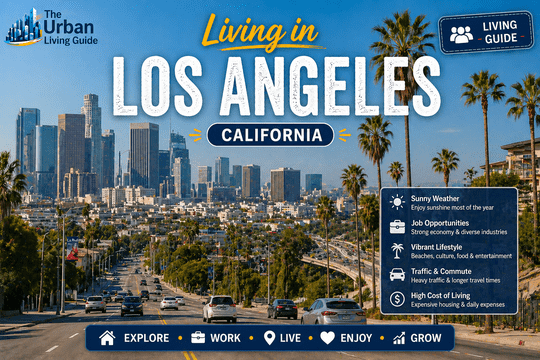
Inside Everyday Life in Los Angeles — From Freeways to Palm Trees
Having called Los Angeles home for over a decade, you quickly learn that life here is a fascinating mix of world-famous glamour and laid-back daily routines. LA isn’t just a city—it’s a massive, sprawling network of micro-cities bound together by year-round sunshine, endless freeway lanes, and a uniquely creative energy.
Living here means getting used to the everyday quirks of Southern California: passing film crews on your morning commute, seeing major entertainment and tech headquarters down the block, and choosing your neighborhood based on microclimates and freeway access. In this 2026 guide, we step past the typical postcard clichés and dive into what daily life in LA actually feels like—from the iconic Hollywood pulse and beach culture to finding your rhythm in a metropolis of nearly four million people.
📊 Los Angeles Living Snapshot — At a Glance
| Living Metric | Los Angeles Local Reality (2026) |
|---|---|
| Primary City Vibe | Creative ambition, coastal outdoor lifestyle, and Hollywood entertainment energy |
| Avg. 1-Bed Rent Range | $2,400 – $3,500/month (depends on coastal proximity and neighborhood demand) |
| Comfort Income (Single) | $85,000 – $105,000+ per year (pre-tax for a balanced lifestyle) |
| Key Economic Drivers | Hollywood Studios, Silicon Beach Tech, Aerospace, Fashion, and Global Trade |
| Commute Realities | Car-dependent; major freeway arteries (I-405, I-10, US-101); expanding Metro Rail |
| Weather & Climate | 280+ days of annual sunshine; Mediterranean microclimates across the basin |
| Best Fit For | Ambitious professionals, media creators, outdoor enthusiasts, and culinary lovers |
👉 If you’re trying to wrap your head around how vast the LA Basin really is, check out the interactive map below to explore its geography:
Los Angeles is one of the most romanticized and talked-about places on earth. Between movie studio backlots, Silicon Beach innovation, high-fashion avenues, and legendary coastal views, it’s a city that shapes global culture every single day. But for those of us who live here year after year, the real question is simple:
What is daily life actually like when the Hollywood film sets, tech hubs, and sunny beaches become your everyday backdrop in 2026?
Let’s break down the real local experience, culture, and neighborhood flow.
🌴 What Makes Los Angeles So Popular?
When long-time locals talk about why they wouldn’t live anywhere else, it usually comes down to the sheer energy and variety of the city. LA is a global powerhouse where world-shaping industries sit right next to ocean waves and mountain trails. It’s an environment where ambitious hustle coexists with a deeply rooted outdoor lifestyle.
It’s known for:
- Hollywood and the global entertainment industry: Home to iconic studio lots like Warner Bros., Paramount, Disney, and Universal. Living here means film shoots on neighborhood streets and seeing production crews on your daily commute are just ordinary local occurrences.
- Beach culture and Pacific coastline: Miles of stunning coastline stretching from Malibu and Santa Monica down to Manhattan Beach, where morning surf sessions, beach volleyball, and coastal boardwalk walks define the weekend routine.
- Creative careers and media production: A magnetic hub for screenwriters, media producers, sound designers, and independent artists building careers across West Hollywood, Burbank, and the Arts District.
- Tech startups and innovation hubs: The rise of “Silicon Beach” across Santa Monica, Venice, Playa Vista, and Culver City, anchoring major engineering hubs for Google, Snap, Hulu, and groundbreaking startups.
- Fashion, design, and influencer culture: From the high-fashion boutiques of Rodeo Drive and streetwear hubs along Fairfax Avenue to digital media studios and independent design houses across Mid-City.
- Year-round sunny weather: Over 280 days of annual Mediterranean sunshine that make rooftop patio dining, weekend hikes in Griffith Park, and outdoor living a 12-month reality.
From the iconic view of the Hollywood Sign on your daily drive to catching a Pacific sunset after work, LA combines major-league opportunity with California cool. It’s competitive, fast-moving, and endlessly fascinating once you know how to navigate it.
Watch a recent video by a popular vlogger to get a better feel for the city’s real-life vibe.
Housing & Rent Realities in Los Angeles
Ask any long-time Angeleno and they will tell you the same thing: housing isn’t just your largest monthly expense—it dictates your entire daily geography, your social circle, and your commute. Rent prices vary drastically across the LA Basin depending on proximity to the ocean, highway access, and neighborhood demand, but overall, living in Los Angeles requires a deliberate housing strategy.
Central corridors like Downtown LA, Mid-Wilshire, West LA, and iconic coastal pockets command premium rental prices. More budget-friendly options certainly exist across the valley and eastern sectors, but they almost always involve a direct trade-off with extended commute times.
What to expect from the local housing market in 2026:
- Studio apartments in prime corridors: Expect higher price points in walkability hubs like Santa Monica, Culver City, or Silver Lake where location premium is built into the square footage.
- 1-bedroom units near major hubs: Coastal areas, West Hollywood, and high-rise Downtown complexes represent top-tier rental costs, often requiring dedicated parking fees.
- Suburban options across the Valley: Neighborhoods in the San Fernando Valley or San Gabriel Valley offer larger layouts and slightly lower price-per-square-foot ratios.
- Buying home property in Southern California: Navigating real estate purchase demands substantial capital, strong credit planning, and a long-term commitment to the local market.
Popular residential areas where newcomers often land include:
- Hollywood: Central, high-energy, historic, and ideal for entertainment industry professionals wanting to be near major studio lots.
- Westwood: Anchored by UCLA, offering a lively, student-friendly vibe with classic village commercial blocks.
- Downtown LA (DTLA): Urban high-rises, converted industrial lofts in the Arts District, and excellent central transit connectivity.
- Santa Monica: Oceanside living, walkable streets, Silicon Beach tech campuses, and fresh coastal air.
- Koreatown: High-density, 24/7 food culture, central location, and some of the best apartment availability per block in central LA.
If your housing budget is tight or you prefer a slightly more relaxed residential feel, locals frequently point toward suburbs like Burbank, Glendale, or Pasadena. They offer incredible municipal services, tree-lined streets, great mountain backdrops, and excellent overall value while keeping you connected to the city core.
Ultimately, getting your housing choice right is the single biggest factor in determining whether life in Los Angeles feels deeply fulfilling or financially taxing.
Job Market & Business Opportunities Across LA’s Economic Hubs
While outsiders often assume everyone in LA works in film or TV, long-time residents know that Southern California powers one of the most diversified, heavy-hitting regional economies in the entire nation. It’s a global market built on creative vision, technical innovation, international trade, and corporate enterprise.
Major industries anchoring the local job market:
- Film and television production: The legacy bedrock of the city, encompassing major studio lots, independent production companies, and post-production houses.
- Digital media and content creation: Streaming networks, digital agency hubs, gaming studios, and creator management management systems.
- Aerospace and defense innovation: Deep historic roots in Southern California, leading modern commercial space exploration and advanced engineering.
- Tourism, hospitality, and dining: A multi-billion-dollar ecosystem driven by global travelers, luxury hotels, and world-class culinary venues.
- Fashion, apparel, and lifestyle brands: From high-end luxury atelier studios in West Hollywood to streetwear empires rooted in the Downtown Fashion District.
- Technology startups and Silicon Beach: A thriving tech community drawing software engineers, product designers, and venture capitalists.
Major corporate powerhouses with a massive local presence include:
Freelancers, creative directors, and independent contractors often find Los Angeles to be an incredible incubator, though the market is undeniably competitive. As any local will tell you, networking is a fundamental daily habit here—major career shifts and client deals frequently happen over coffee in Culver City or West Hollywood rather than formal online job portals.
If you are proactive, highly skilled, and willing to build genuine professional relationships, LA’s job market offers incredible upward mobility and creative freedom.
How Much Salary Do You Actually Need to Live Comfortably?
Living in Los Angeles comfortably requires a realistic view of expenses. While survival budgets exist, truly enjoying the California lifestyle—dining out at neighborhood spots, weekend trips up the coast, and saving for the future—demands a solid financial foundation in 2026.
While exact figures depend on your household setup and neighborhood choice, here is the ground reality:
- Single professionals: Typically require an above-average salary (generally $85,000–$105,000+) to secure a private 1-bedroom apartment and comfortably cover vehicle costs without stress.
- Families and households: Frequently depend on dual incomes to manage multi-bedroom housing costs, childcare, and everyday suburban lifestyle needs.
- Housing ratio: Rent or mortgage payments typically represent the largest chunk of monthly net pay across all income levels.
- Vehicle ownership costs: Owning a car means budgeting for California gas prices, auto insurance premiums, local parking fees, and regular maintenance.
To build a long-term life here without living paycheck to paycheck, disciplined financial management is vital. Remote professionals earning competitive salaries or mid-to-senior industry specialists often find navigating LA’s cost structure far smoother than those entering the market in entry-level roles.
Traffic & Transportation: The Unwritten Rules of Commuting in LA
Let’s speak plainly: navigating traffic in Los Angeles is an art form every resident must master. In LA, distance is never measured in miles—it’s always measured in travel time.
- Peak traffic windows: Expect heavy freeway slowdowns during weekday morning and late afternoon commute hours.
- Major freeway arteries: Iconic freeways like the I-405, I-10, US-101, and I-110 form the city’s circulation system and require smart timing.
- Rush-hour navigation strategies: Long-time locals rely on surface street detours, side-street shortcuts, and traffic apps to bypass freeway bottlenecks.
Public transit options continue to expand significantly through LA Metro’s light rail lines and express bus routes, offering reliable transit across central corridors like Downtown, Pasadena, Santa Monica, and Culver City. However, unlike high-density East Coast cities, owning a reliable car remains practical for exploring the wider region.
If you work remotely, hybrid-commute, or choose an apartment close to your work hub, your daily quality of life jumps exponentially. Managing your daily commute is the ultimate key to enjoying everyday life in Southern California.
Beaches & Outdoor Life: The Southern California Lifestyle Return
Ask a resident why they put up with the traffic and high costs, and they will likely point toward the Pacific horizon. LA’s immediate proximity to world-class coastal beauty and mountain ranges offers a daily quality-of-life return that few global cities can match.
Iconic coastal stretches loved by locals and visitors alike:
- Venice Beach
- Malibu: Picturesque ocean bluffs, famous surf breaks, and coastal canyon hideaways.
- Santa Monica: Expansive sandy shores, the historic pier, and wide oceanfront bike paths.
Beyond the oceanfront, locals take full advantage of:
- Canyon hiking trails: Scenic trail runs through Runyon Canyon, Fryman Canyon, and Will Rogers State Historic Park.
- Griffith Park
- Scenic coastal and mountain drives: Weekend cruises along the Pacific Coast Highway (PCH) or winding mountain roads in the Santa Monica Mountains.
With consistent Mediterranean weather throughout the year, an active outdoor culture isn’t just a weekend treat—it’s built right into the daily rhythm of living in LA.
Sports & Live Entertainment Options Across the Basin
For sports fans and live event enthusiasts, Los Angeles is an absolute paradise. The city’s sports culture is deep-rooted, passionate, and historic, with iconic stadiums scattered across the basin.
Championship sports franchises anchoring the city:
Beyond major league sports, the city’s entertainment calendar never rests. From summer night concerts under the stars at the Hollywood Bowl and intimate comedy sets in West Hollywood to red-carpet movie premieres and stadium tours at SoFi Stadium or Crypto.com Arena, LA offers a world-class front-row seat to global pop culture every single week.
Culture & Lifestyle: Diversity, Hustle, and Open-Minded Energy
At its core, everyday life in Los Angeles is defined by being:
- Multicultural and diverse: A vibrant mix of global cultures reflected in everyday neighborhood festivals, languages, and food scenes.
- Fast-paced yet relaxed: High corporate ambition wrapped in a casual, California coastal attitude.
- Ambitious and career-focused: A city populated by self-starters, creators, and professionals striving to build something distinct.
- Deeply creative: Art galleries, architecture, music studios, and culinary innovation embedded in daily city life.
Angelenos are generally welcoming, open-minded, and friendly, though daily schedules can be packed. Because people move here from all over the globe to pursue big goals, networking and ambition are natural conversational topics. While it lacks the compact, small-town feel of smaller metros, LA rewards those who seek out local community groups, neighborhood markets, and shared passions.
Building a long-term life here requires focus, resilience, and an open mind—but the cultural rewards are unmatched.
Political & Tax Environment: State Regulations & Business Climate
Understanding the broader administrative and state economic landscape is an important part of settling into Southern California. California’s state tax structure features progressive income tax rates, high sales tax rates, and specific local assessments that factor into overall annual budgeting.
For business owners, entrepreneurs, and independent contractors, state labor protections, environmental standards, and compliance guidelines require thoughtful planning. However, the sheer size of the Southern California economy, its massive consumer base, access to venture capital, and proximity to international trade routes continue to make Los Angeles a premier magnet for global investment and ambitious startup ventures.
Environment & Air Quality: Managing California Microclimates
Air quality across the Los Angeles Basin has improved drastically over recent decades thanks to strict state emissions standards, but environmental factors remain a key part of daily life. Because LA is framed by the Pacific Ocean on one side and steep mountain ranges on the other, air flow varies significantly depending on your distance from the coast.
Key environmental realities every resident should know:
- Smog and Inland Heat Traps: Coastal areas benefit from regular ocean breezes that clear the air, whereas inland regions like the San Fernando and San Gabriel Valleys often trap summer heat and ozone pollution.
- Wildfire Season Smoke (Late Summer & Fall): Seasonal Santa Ana winds can cause periodic smoke advisories and compromised outdoor air quality during peak dry seasons.
- Freeway Pollution Corridors: Residential blocks positioned directly adjacent to major freeway interchanges (like the I-405 or I-10) experience higher particulate concentrations.
While oceanfront breezes keep coastal neighborhoods like Santa Monica and Manhattan Beach fresh year-round, residents with respiratory sensitivities often favor living west of the 405 freeway or elevated hillside communities.
🏡 Suburbs Around Los Angeles: Finding Residential Balance
For residents who find central LA’s urban density or fast-paced energy overwhelming, Southern California’s suburban cities provide a perfect middle ground. These surrounding municipalities operate with their own city services, top-tier school districts, and distinct downtown strips while keeping you connected to the metro core.
Top surrounding suburban hubs favored by long-time locals:
- Burbank (Media Hub Capital): Known as the media production powerhouse containing Warner Bros. and Disney studios. It offers its own independent police department, outstanding municipal services, and family-friendly residential streets.
- Glendale (Residential, Polished & Organized): Located at the base of the Verdugo Mountains, Glendale features clean residential neighborhoods, excellent public parks, and premier commercial walkability around Americana at Brand.
- Pasadena (Historic Charm & Cultural Depth): Famous for its Craftsman architecture, Old Pasadena shopping district, Caltech campus, and calmer, intellectual atmosphere nestled against the San Gabriel Mountains.
Suburban living generally yields larger home floor plans, private yards, and quieter nights, though commute times into central job hubs like West LA or Santa Monica will require strategic routing during rush hours.
👍 Pros of Living in Los Angeles
- Great weather year-round: Over 280 days of annual sunshine and a dry Mediterranean climate that encourages continuous outdoor living.
- Strong career opportunities: Access to a massive, multi-industry economy spanning Hollywood entertainment, Silicon Beach tech, aerospace, trade, and fashion.
- Iconic beach access: World-famous Pacific coastlines extending from Malibu and Santa Monica to the South Bay beaches.
- Creative and innovative environment: A global capital for media production, culinary trends, independent art, and digital content creation.
- Entertainment capital of the world: Unmatched front-row access to live concerts, red-carpet premieres, major sports franchises, and global cultural events.
👎 Cons of Living in Los Angeles
- High rent and housing costs: Elevated real estate prices and rental premiums that absorb a significant percentage of monthly income.
- Traffic congestion: Heavy freeway congestion during morning and evening commute windows that requires constant schedule management.
- Costly lifestyle: High local sales tax rates, elevated gas prices, and expensive daily dining and entertainment costs.
- Competitive job market: High density of talented professionals vying for creative, tech, and entertainment roles.
- State and local taxes: California’s progressive income tax rates require careful personal financial planning.
🏡 Is Los Angeles a Good Place to Live?
Whether Los Angeles is a good place to live ultimately depends on your lifestyle priorities, career ambitions, and financial expectations.
Los Angeles is an exceptional fit if you:
- Seek rapid career growth in entertainment, digital media, aerospace, tech, or international business.
- Thrive in a fast-paced, highly ambitious urban environment filled with diverse opportunities.
- Prioritize year-round sunshine, outdoor recreation, canyon hikes, and quick ocean access.
- Value world-class dining diversity, vibrant arts, and endless social activities.
Los Angeles may feel challenging if you:
- Prefer quiet, low-density neighborhoods with minimal daily noise.
- Want a low cost of living where housing costs represent a small fraction of your earnings.
- Dislike driving or dealing with daily traffic congestion.
- Prefer a slower-paced, predictable small-town lifestyle.
🌴 Is Los Angeles the Right City for You?
Los Angeles offers a unique combination of career opportunities, cultural diversity, entertainment, and year-round sunshine that few global metropolises can match. From major movie studios and Silicon Beach tech hubs to international commerce and creative startups, the city continually attracts ambitious individuals from around the globe.
However, building a successful long-term life in LA requires strategic planning. High housing costs, heavy freeway traffic, and intense professional competition mean newcomers must arrive with clear goals. Securing housing near your workplace, establishing a sensible monthly budget, and finding your local neighborhood community make all the difference between feeling overwhelmed and truly thriving.
For those prepared for its high-energy environment and Southern California financial realities, Los Angeles provides exceptional career mobility, world-class culture, and an outdoor lifestyle that is unmatched anywhere else. 🌴
Real Experiences: Perspectives from Long-Term Residents (5 to 10+ Years)
Marcus V. (11-Year Resident in Culver City): “Living in LA comes down to one golden rule: live close to where you work. Moving to Culver City cut my commute on the I-405 and I-10 down significantly, which completely changed my perspective on the city. Yes, rent is high, but having access to the E Line Metro Rail, local farmers markets, and being 15 minutes from Marina del Rey makes the cost of living worth it.”
Elena R. (8-Year Resident in Pasadena): “People think LA is just beach traffic and Hollywood, but neighborhoods like Pasadena offer a totally different pace. We bought a home near the San Gabriel Mountains for the school district and quiet streets. You definitely need a car, and summer heatwaves in the valley can be intense, but the cultural depth, food scene, and career options in Greater Los Angeles keep us here for the long haul.”
Frequently Asked Questions About Living in Los Angeles
Is Los Angeles more expensive than most U.S. cities?
Yes, Los Angeles is significantly more expensive than the national average. Housing is the largest cost driver, with rents and home purchase prices running 100% to 150% higher than median U.S. figures. Additionally, California gas prices, state income taxes, and everyday dining expenses contribute to higher overall living costs.
Can you live in Los Angeles comfortably without owning a car?
While living in LA without a car is technically possible, it is only practical if you live and work along major transit corridors. Neighborhoods like Downtown LA, Koreatown, Santa Monica, and Culver City offer strong walkability and access to LA Metro rail lines. However, exploring the broader metro region, beaches, and canyons typically requires a vehicle or rideshare service.
Is Los Angeles a safe city to move to?
Los Angeles is a vast metropolis where safety varies considerably by neighborhood. Established areas like Santa Monica, Pasadena, Brentwood, Burbank, and Glendale maintain relatively low crime rates. Like any major global city, urban cores require standard awareness. Researching specific neighborhood blocks before signing a lease is strongly recommended.
Is Los Angeles a good environment for raising a family?
Yes, LA offers excellent suburban options for families, particularly in communities like Pasadena, Glendale, Burbank, Manhattan Beach, and Rancho Palos Verdes. These areas feature strong public and private school options, extensive parks, and safe streets, though family-sized housing commands a premium price.
What is the single biggest monthly expense when living in LA?
Housing is unequivocally the largest monthly expense in Los Angeles. Whether renting a studio apartment in Mid-City or paying a mortgage on a single-family home in the Valley, housing typically accounts for 35% to 50% of a resident’s net monthly earnings.
What income do you need to live comfortably in Los Angeles in 2026?
To live comfortably as a single professional in a safe neighborhood without living paycheck to paycheck, an annual salary of $85,000 to $105,000 before taxes is recommended. Families generally require a dual-income setup earning upwards of $150,000 to cover multi-bedroom housing, childcare, and routine expenses comfortably.
Explore More Cities in California
If you’re exploring more options beyond Los Angeles, The Urban Living Guide has covered several other popular cities in California. You can also check:
These guides give you a complete picture of living across different cities, covering cost of living, housing, job opportunities, neighborhoods, commute, and lifestyle.
The Urban Living Guide also shares local insights on weather, education, popular places, and major employers, helping you make a confident and well-informed decision.
Wanted to know more about Los Angeles, you can also check:
So, if you want to make decision, check our complete guide here – Moving to Los Angeles, , California