

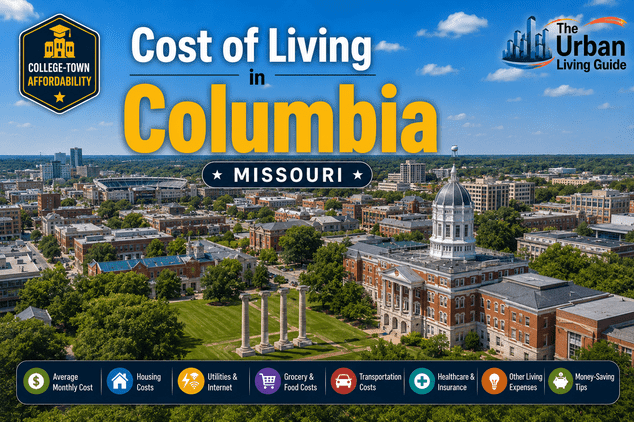
Cost of Living in Columbia, MO: University Town, Student Housing Markets & Real Living Expenses
Columbia offers a unique cost-of-living experience because it’s shaped by more than just the local economy—it’s heavily influenced by the presence of the University of Missouri (Mizzou). The university brings jobs, students, research activity, healthcare opportunities, and a steady stream of new residents, creating a housing market that behaves differently from many cities of similar size. For newcomers, understanding these dynamics can make a significant difference when choosing where to live.
💵 Key Cost Factors in Columbia
- 🎓 Student demand affects rents near campus
- 🏠 Housing costs vary significantly by neighborhood
- 🚗 Transportation costs stay relatively low due to short commutes
- 🛒 Groceries and daily essentials remain reasonably priced
- 🏥 Healthcare access is strong without big-city costs
- 💰 Overall living expenses are typically below many comparable university cities
One of the most important factors affecting affordability in Columbia is neighborhood choice. Areas close to campus often experience higher rental demand, student turnover, and seasonal fluctuations tied to the academic calendar. In contrast, neighborhoods such as South Hills, West Columbia, and nearby suburban communities tend to attract families, professionals, and long-term residents looking for a more stable living environment.
This guide explores the real cost of living in Columbia, Missouri, including housing, utilities, transportation, groceries, healthcare, and other everyday expenses, helping you determine how far your budget can go and which areas may offer the best value for your lifestyle.
Average Monthly Cost in Columbia
Here’s what monthly living typically looks like:
-
- Single person: Around $2,000–$2,700
- Couple: Typically $3,300–$4,400
- Family of four: Approximately $4,800–$6,300
These estimates include rent, utilities, groceries, transportation, and essential expenses. Your actual spending shifts dramatically based on neighborhood—near-campus areas cost less but offer student housing instability; family neighborhoods cost more but provide stability.
Housing Costs in Columbia
Rent here reflects Mizzou’s massive presence on the local market:
-
- Studio: Typically $550–$950 near campus; $700–$1,100 in family neighborhoods
- 1-bedroom apartment: Averages $700–$1,300, dramatically higher in newer student housing complexes
- 2-bedroom units: Range from $900–$1,600, varies wildly by location and lease terms
- Family homes (3+ bedrooms): Cost $1,200–$1,900 monthly in stable neighborhoods
Near-Campus Housing (Rollins Ave, Providence Rd, Virginia Ave area) floods with students. Nine-month leases dominate; landlords turn units frequently between academic years. Rent appears cheap—$550–$800 for 1-bedrooms—but includes student-focused amenities and constant turnover. If you want stability, avoid it.
South Hills, West Columbia, Ashland, and East Campus neighborhoods serve professionals and families. Rents run 15–25% higher, but you get year-round stability, mature demographics, and actual peace. If you’re coming from Kansas City or St. Louis, housing here feels reasonable—Mizzou staff and professionals from larger metros choose these areas specifically.
The rental market fractures into two worlds: student-focused near-campus housing (seasonally unstable) and family-oriented neighborhoods (stable but pricier). Mizzou employees, healthcare workers at University Hospital and Boone Hospital Center, and young families navigate these competing markets.
Utilities & Internet
Monthly costs breakdown:
-
- Utilities (electricity, gas, water, trash): $110–$170 for standard apartments
- Internet: $50–$75 for reliable speeds (essential for Mizzou students and remote work)
- Seasonal variations: Summer AC in humid climate; winter heating in moderate cold
Columbia’s humid summers mean AC bills climb noticeably June through August. Winter heating is moderate compared to northern states.
Grocery & Food Costs
Expect to spend $280–$430 monthly per person on groceries:
- Columbia has Hy-Vee, Dillons, Schnucks, Walmart, Save-A-Lot, Aldi, Trader Joe’s
- Dining out: Runs $11–$25 per meal at casual spots, breweries, and restaurants
- Student-focused dining: Cheap eats proliferate near campus—taco stands, pizza joints, sandwich shops run $5–$12 per meal
- No grocery sales tax: Missouri exempts groceries from sales tax, helping stretch budgets
- Local food culture: Working-class restaurants dominate rather than trendy options
Shopping at Hy-Vee or Aldi keeps costs reasonable. The student population means abundant cheap dining options, but professional neighborhoods lean toward home cooking.
Transportation Costs
Transportation depends on where you live and work:
-
- Car owners: Gas, insurance, and parking average $160–$280 monthly
- MU Transit (for Mizzou students/staff): Free with Mizzou ID; $80 monthly for non-affiliated riders
- Parking: Free in most neighborhoods; Mizzou campus has paid lots and permit systems
- Commuting: Most residents drive; public transit beyond campus is limited
Mizzou employees get free transit passes—a real benefit. Others drive or pay modest fees. Unlike larger metros, Columbia’s size means short commutes from any neighborhood to downtown or campus.
Healthcare & Insurance
Health insurance and medical expenses:
-
- Employer health insurance: Typically $160–$390 per month for individuals
- University Hospital, Boone Hospital Center, Columbia Regional Hospital serve the area
- Specialist visits and prescriptions: Budget $45–$130 monthly for regular care
Other Living Expenses
Entertainment, gym memberships, phone plans, and personal care add $150–$320 monthly:
-
- Columbia offers Mizzou events, downtown concerts, Katy Trail State Park, college sports culture
- Tigers football and basketball create passionate local culture
- Many outdoor activities and university events are free or low-cost
- College-town nightlife is affordable; bars and restaurants cater to student budgets
Monthly Expense Snapshot
| Expense Category | Single Person (Family Neighborhood) | Couple | Family of Four |
|---|---|---|---|
| Rent (1-BR/2-BR/3-BR) | $800–$1,300 | $1,000–$1,600 | $1,200–$1,800 |
| Utilities | $110–$170 | $120–$180 | $140–$210 |
| Groceries | $280–$430 | $450–$700 | $800–$1,200 |
| Transportation | $160–$280 | $220–$380 | $280–$480 |
| Healthcare (basic) | $45–$130 | $90–$260 | $135–$390 |
| Entertainment/Personal | $150–$320 | $220–$450 | $250–$550 |
| TOTAL (avg monthly) | $1,545–$2,630 | $2,100–$3,630 | $2,805–$4,630 |
Annual & Yearly Expenses
Beyond monthly costs, budget for these regular annual expenses:
Vehicle-Related:
-
- Car insurance: $650–$1,300 yearly
- Vehicle registration/renewal: $150–$250 yearly
- Maintenance & inspections: Budget $400–$800 yearly
- Tire rotation, oil changes, inspection: Plan $300–$600 yearly
Insurance & Protection:
-
- Renters insurance: $100–$200 yearly if renting
- Life insurance: $200–$700 yearly if applicable
- Homeowners insurance: $700–$1,500 yearly if purchasing
Subscriptions & Memberships:
-
- Streaming services: $200–$400 yearly
- Gym membership: $300–$600 yearly (many Mizzou employees get free access)
- Parking permits (if campus-adjacent): $100–$300 yearly
Professional/Administrative:
-
- Annual vehicle inspection: $20–$40 yearly
- Healthcare checkups: $100–$300 if not fully covered
- Tax preparation: $100–$300 if using professionals
Typical Yearly Non-Housing Expenses: $2,700–$5,500 depending on vehicle and insurance needs
Is Columbia Expensive or Affordable?
Columbia lands in the moderately affordable zone. It’s cheaper than Kansas City or St. Louis but slightly more expensive than Springfield. The student population actually helps keep housing competitive—student-focused landlords undercut family neighborhoods, creating pressure on overall rents. Housing affordability is the main draw; everything else costs typical Midwest prices.
Real talk: Columbia works well if you choose smart neighborhoods. Near-campus living saves money but sacrifices peace. Family neighborhoods cost more but deliver stability. The city rewards informed neighborhood selection.
👤 Who Can Afford to Live Comfortably
A household income around $45,000–$60,000+ makes Columbia comfortable. Mizzou employees (who get transit benefits and healthcare discounts), healthcare workers at hospitals, educators, and dual-income families handle costs well. Remote workers from higher-cost areas find Columbia very affordable.
⚠️ Who May Find Columbia Challenging
Single earners making under $32,000 will feel rent pressure, especially outside student-focused neighborhoods. Part-time workers or minimum-wage earners can survive near campus (rent as low as $550), but deal with transient populations and noise. The real challenge: choosing between cheap-but-unstable near-campus housing and stable-but-pricier family neighborhoods.
Money-Saving Tips
-
- Choose your neighborhood carefully: near-campus for savings, family neighborhoods for stability
- Avoid newer student housing complexes (overpriced for the transience)
- Mizzou employees: Leverage free transit and employee discounts
- Shop at Aldi, Walmart, or Save-A-Lot for lowest grocery costs
- Use MU Transit if affiliated; excellent service on campus and to downtown
- Take advantage of Katy Trail State Park and free university events
- Eat at cheap student-oriented restaurants if near campus
- Cook at home; dining out adds costs quickly in a college town
- Bundle insurance policies for discounts
FAQs
Is Columbia cheaper than Kansas City or St. Louis?
Columbia costs slightly less than both. Housing is comparable to Springfield, utilities are similar, and student-driven dining options provide cheap eating. Overall 10–20% less expensive than larger metros.
What salary do I need to live comfortably in Columbia?
A household income of $45,000–$60,000+ covers rent, utilities, food, and lifestyle comfortably. Single individuals can manage on $32,000–$42,000, especially with Mizzou benefits.
Are groceries expensive in Columbia?
Groceries run below national averages—$280–$430 per person monthly. Shopping at Aldi or Walmart keeps costs very low, and no grocery sales tax helps stretch budgets.
Do I need a car in Columbia?
Depends on where you live. MU Transit covers campus and downtown well. Living near campus and working for Mizzou, you might skip a car. Everywhere else, car ownership is practical.
Should I live near campus or in a family neighborhood?
Live near campus if you value lowest rent and don’t mind student populations. Live in family neighborhoods (South Hills, West Columbia, Ashland) if you want stability, quiet, and predictable year-round living. The choice shapes your entire Columbia experience.
Explore more with The Urban Living Guide
Before moving to Columbia, make sure you check: