

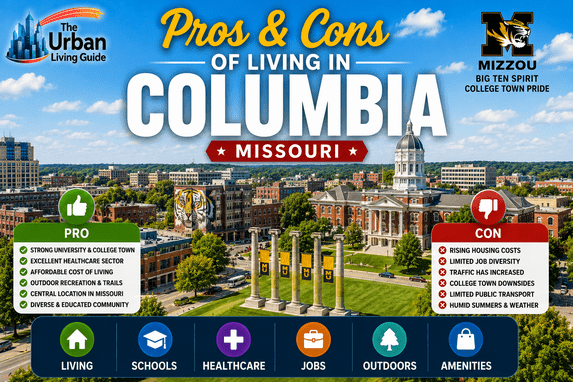
Pros and Cons of Living in Columbia in Missouri’s Education and Healthcare Hub
If you’re considering a move to Missouri, understanding the pros and cons of living in Columbia can help you determine whether this fast-growing college city fits your lifestyle and career goals.
Home to the flagship University of Missouri (Mizzou), Columbia is one of the most educated and fastest-growing cities in the state. The city blends a vibrant college-town atmosphere with strong healthcare employment, outdoor recreation, and a relatively affordable cost of living.
Unlike larger cities such as Kansas City or St. Louis, Columbia offers a more manageable pace while still providing cultural attractions, sporting events, and career opportunities.
At the same time, residents also face rising housing costs, traffic growth, limited public transportation, and a smaller job market outside major industries.
Watch local Columbia neighborhood tours and relocation videos to better understand the real pros and cons of living in Columbia before moving.
Whether you’re relocating for education, healthcare, family life, or career opportunities, this guide covers the real pros and cons of living in Columbia.
Pros of Living in Columbia
Strong University and College Town Atmosphere
One of the biggest advantages in the pros and cons of living in Columbia is its connection to the University of Missouri.
The university influences nearly every aspect of city life and contributes significantly to the local economy.
The city offers:
-
- Big Ten athletics
- Cultural events
- Research opportunities
- College-town energy
- Diverse student population
Residents enjoy a vibrant atmosphere that feels more dynamic than many cities of similar size.
Excellent Healthcare and Research Opportunities
Another major positive in the pros and cons of living in Columbia is the city’s healthcare sector.
Healthcare is one of the largest employers in the region and provides stable career opportunities.
Major healthcare employers include:
-
- MU Health Care
- Boone Health
- University of Missouri School of Medicine
- Regional specialty clinics
The city’s strong healthcare sector, research opportunities, and educated workforce continue attracting professionals from across Missouri.
Affordable Cost of Living
Compared to many university cities across the country, Columbia remains relatively affordable.
Housing costs are generally lower than major metro areas while still providing access to strong amenities.
Residents benefit from:
-
- Affordable home prices
- Reasonable rental costs
- Lower utility expenses
- Moderate property taxes
- Good overall value
This affordability appeals to students, families, and retirees alike.
Central Location Between St. Louis and Kansas City
Location is another significant advantage.
Situated almost halfway between St. Louis and Kansas City, Columbia offers convenient access to Missouri’s two largest metropolitan areas.
The city provides easy access to:
-
- St. Louis
- Kansas City
- State government centers
- Major airports
- Business opportunities
Many residents appreciate being close to larger cities without dealing with daily metropolitan congestion.
Outdoor Recreation and Trail System
Another strength in the pros and cons of living in Columbia is the city’s outdoor lifestyle.
The community invests heavily in parks, trails, and green spaces.
Popular outdoor destinations include:
-
- MKT Nature and Fitness Trail
- Rock Bridge Memorial State Park
- Cosmo Park
- Finger Lakes State Park
- Katy Trail State Park
The city’s outdoor recreation opportunities, green spaces, and active lifestyle attract many residents.
Highly Educated and Diverse Community
Because of the university and healthcare sectors, Columbia has one of the most educated populations in Missouri.
Residents often appreciate:
-
- Diverse perspectives
- Cultural events
- Educational opportunities
- Community involvement
- Progressive local initiatives
This creates a welcoming atmosphere for newcomers from different backgrounds.
Cons of Living in Columbia
Rising Housing Costs
One of the biggest downsides in the pros and cons of living in Columbia is increasing housing costs.
As the city grows, home prices and rental rates have steadily increased.
Housing challenges include:
-
- Competitive rental market
- Rising home prices
- Limited inventory
- Student-driven housing demand
- Higher costs near campus
While still affordable compared to many regions, costs have climbed noticeably in recent years.
Limited Job Opportunities Outside Key Industries
Although healthcare and education remain strong, other sectors can be more limited.
Common concerns include:
-
- Fewer corporate headquarters
- Limited technology sector
- Smaller finance industry
- Reduced manufacturing opportunities
Professionals in specialized fields may find fewer opportunities than in larger metropolitan areas.
Traffic Has Increased with Growth
While traffic remains manageable compared to major cities, growth has created congestion in certain areas.
Common traffic concerns include:
-
- Campus-area congestion
- Rush-hour bottlenecks
- Construction projects
- Game-day traffic
- Population growth impacts
Areas near the university often experience the heaviest traffic.
College Town Drawbacks
While the university brings many benefits, it can also create challenges.
Residents sometimes deal with:
-
- Student-related noise
- Crowded events
- Seasonal population fluctuations
- Parking shortages
- Increased traffic during sports seasons
These issues tend to be most noticeable near campus.
Limited Public Transportation
Public transportation options exist but remain limited for many residents.
Transportation challenges include:
-
- Car dependency
- Limited regional transit
- Fewer transit routes
- Longer travel times without a vehicle
Most residents find owning a car necessary for daily life.
Humid Summers and Seasonal Weather
Missouri weather can be unpredictable throughout the year.
Weather-related challenges include:
-
- Summer humidity
- Severe thunderstorms
- Winter ice events
- Seasonal allergies
- Rapid weather changes
New residents may need time to adapt to the changing conditions.
Final Thoughts on the Pros and Cons of Living in Columbia
Understanding the pros and cons of living in Columbia is important before making a relocation decision.
The city stands out for its college-town energy, strong healthcare sector, research opportunities, affordable lifestyle, and outdoor recreation opportunities. At the same time, residents should prepare for rising housing costs, limited job opportunities outside key industries, traffic growth, and the occasional challenges that come with living in a university community.
For students, healthcare professionals, educators, young families, and retirees seeking a balance between opportunity and affordability, Columbia continues to be one of the most attractive places to live in Missouri.
| Pros | Cons |
|---|---|
| Strong university atmosphere | Rising housing costs |
| Excellent healthcare sector | Limited job diversity |
| Affordable cost of living | Traffic growth |
| Outdoor recreation access | College-town drawbacks |
| Central Missouri location | Limited public transportation |
FAQs
Is Columbia, Missouri a good place to live?
Many residents consider Columbia one of Missouri’s best places to live because of its education opportunities, healthcare sector, outdoor recreation, and relatively affordable lifestyle.
What is Columbia, Missouri known for?
Columbia is best known as the home of the University of Missouri (Mizzou), along with its healthcare institutions, research programs, and vibrant college-town atmosphere.
Is Columbia affordable to live in?
Compared to many university cities nationwide, Columbia remains relatively affordable. However, housing costs have increased steadily due to population growth and demand.
Does Columbia have good job opportunities?
Healthcare and education offer strong employment opportunities. Outside those sectors, job availability may be more limited compared to larger metro areas.
Do you need a car in Columbia?
For most residents, yes. While local transit services exist, many people rely on personal vehicles for commuting and daily errands.
Your Next Missouri Read Starts Here
Read our full guide on living in Columbia, Missouri, and don’t miss: