

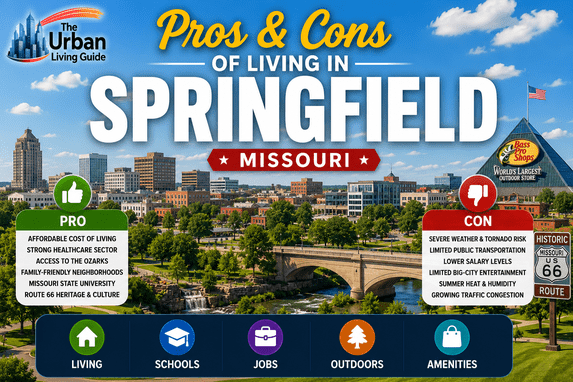
Pros and Cons of Living in Springfield Near the Ozarks and Route 66 Heritage
If you’re considering a move to Missouri, understanding the pros and cons of living in Springfield can help you decide whether this growing Southwest Missouri city matches your lifestyle and career goals.
Known as the gateway to the Ozarks, Springfield combines a relatively affordable cost of living with access to outdoor recreation, higher education, healthcare employment, and a strong sense of community. The city is also home to Missouri State University and serves as a regional hub for healthcare, retail, and business throughout Southern Missouri.
At the same time, residents also face challenges such as limited public transportation, severe weather risks, and fewer big-city amenities compared to larger metro areas.
Watch local Springfield relocation videos and neighborhood tours to better understand the real pros and cons of living in Springfield before moving.
Whether you’re relocating for affordability, education, healthcare, or outdoor recreation, this guide covers the real pros and cons of living in Springfield.
Pros of Living in Springfield
Affordable Cost of Living
One of the biggest advantages in the pros and cons of living in Springfield is affordability.
Compared to many cities across the Midwest and South, housing and everyday expenses remain relatively manageable.
The city offers:
-
- Affordable home prices
- Lower rent than many metro areas
- Reasonable property taxes
- Lower daily living costs
- Good value for families
Many newcomers find they can enjoy a comfortable lifestyle without the financial pressure common in larger cities.
Access to the Ozarks and Outdoor Recreation
Another major positive in the pros and cons of living in Springfield is its location near the Ozark Mountains.
The city provides excellent access to some of Missouri’s most popular outdoor destinations.
Popular outdoor attractions include:
-
- Lake Springfield
- Table Rock Lake
- Fantastic Caverns
- Busiek State Forest
- Mark Twain National Forest
Residents enjoy:
-
- Hiking
- Fishing
- Boating
- Camping
- Mountain biking
- Kayaking
The city’s outdoor recreation opportunities, natural beauty, and proximity to the Ozarks are among its strongest selling points.
Strong Healthcare Industry
Healthcare is one of Springfield’s largest economic drivers.
The city serves as a regional medical hub for much of Southern Missouri and Northern Arkansas.
Major healthcare employers include:
-
- CoxHealth
- Mercy Springfield
- Regional specialty clinics
- Healthcare support services
Healthcare professionals often find stable employment opportunities and career growth throughout the area.
College Town Benefits Without a Major Metro Price Tag
The presence of Missouri State University adds energy and economic activity to the city.
The city offers:
-
- College sports
- Cultural events
- Educational opportunities
- Student-driven businesses
- Community programs
Unlike many university towns, Springfield maintains a balance between student life and family-oriented neighborhoods.
Family-Friendly Neighborhoods
Many families choose Springfield because of its affordable lifestyle, family-friendly communities, and suburban atmosphere.
Popular residential areas include:
-
- Southern Hills
- Rountree
- Kickapoo
- Battlefield area
- Southeast Springfield
Residents appreciate the combination of space, parks, schools, and community involvement.
Growing Economy and Regional Importance
Springfield serves as a commercial center for a large portion of Southwest Missouri.
Major industries include:
-
- Healthcare
- Education
- Retail
- Manufacturing
- Logistics
- Tourism
Companies such as Bass Pro Shops, which was founded in Springfield, continue contributing to the local economy and national recognition.
Cons of Living in Springfield
Severe Weather and Tornado Risk
One of the most significant downsides in the pros and cons of living in Springfield is severe weather.
The region experiences strong storms throughout the year.
Weather-related challenges include:
-
- Tornado warnings
- Severe thunderstorms
- Hail storms
- Flash flooding
- Strong winds
Residents are generally well-prepared, but weather awareness is an important part of life in the region.
Limited Public Transportation
While public transit exists, Springfield remains largely car-dependent.
Transportation challenges include:
-
- Limited transit routes
- Car-dependent neighborhoods
- Longer drives in suburban areas
- Limited regional transportation options
Most residents rely on personal vehicles for commuting and daily errands.
Lower Salary Levels Than Larger Cities
Although the cost of living is lower, salaries are often lower as well.
Common concerns include:
-
- Lower average wages
- Fewer high-paying corporate jobs
- Limited opportunities in certain industries
- Slower salary growth
Professionals in highly specialized fields may find fewer opportunities compared to larger metropolitan areas.
Limited Big-City Entertainment
Springfield offers plenty of local attractions, but it lacks some of the amenities found in larger cities.
Residents may notice fewer:
-
- Major concerts
- Professional sports teams
- Large entertainment districts
- International cultural events
People seeking a fast-paced urban environment may find the city somewhat quiet.
Summer Heat and Humidity
Summer weather can become uncomfortable at times.
Summer challenges include:
-
- High humidity
- Hot temperatures
- Strong storms
- Seasonal allergies
- Increased cooling costs
The combination of heat and humidity can feel intense during peak summer months.
Population Growth Creating Traffic Issues
While traffic is relatively manageable compared to major metro areas, growth has started creating congestion in certain corridors.
Common traffic concerns include:
-
- Busy intersections
- Construction zones
- School-related congestion
- Peak-hour slowdowns
Areas near major retail centers often experience the most traffic.
Final Thoughts on the Pros and Cons of Living in Springfield
Understanding the pros and cons of living in Springfield is important before making a relocation decision.
The city stands out for its affordable cost of living, strong healthcare sector, outdoor recreation opportunities, family-friendly neighborhoods, and connection to the Ozarks. At the same time, residents should prepare for severe weather, limited public transportation, lower salary levels, and fewer big-city entertainment options.
For families, retirees, healthcare professionals, and outdoor enthusiasts seeking affordability and access to nature, Springfield continues to be one of the most attractive places to live in Missouri.
| Pros | Cons |
|---|---|
| Affordable cost of living | Severe weather risk |
| Strong healthcare sector | Limited public transportation |
| Access to Ozarks recreation | Lower salary levels |
| Family-friendly neighborhoods | Limited big-city entertainment |
| College-town benefits | Summer heat and humidity |
FAQs
Is Springfield, Missouri a good place to live?
Many residents choose Springfield because of its affordability, healthcare opportunities, and access to outdoor recreation. It offers a slower-paced lifestyle than larger metropolitan areas while still providing essential amenities.
What is Springfield, Missouri known for?
Springfield is known for Bass Pro Shops, Missouri State University, Route 66 history, and its location near the Ozark Mountains. It serves as a major regional center for Southwest Missouri.
Is Springfield affordable compared to other cities?
Yes, Springfield is generally considered one of the more affordable cities in the Midwest. Housing costs and daily living expenses remain lower than many larger metro areas.
Does Springfield get tornadoes?
The region occasionally experiences tornado warnings and severe storms, particularly during spring and early summer. Residents are accustomed to monitoring weather alerts.
Do you need a car in Springfield?
For most residents, yes. While public transit is available, many neighborhoods and employment centers are easiest to access by personal vehicle.
Continue Exploring Missouri with The Urban Living Guide
Read our full guide on living in Springfield, Missouri, and make sure you also check: