

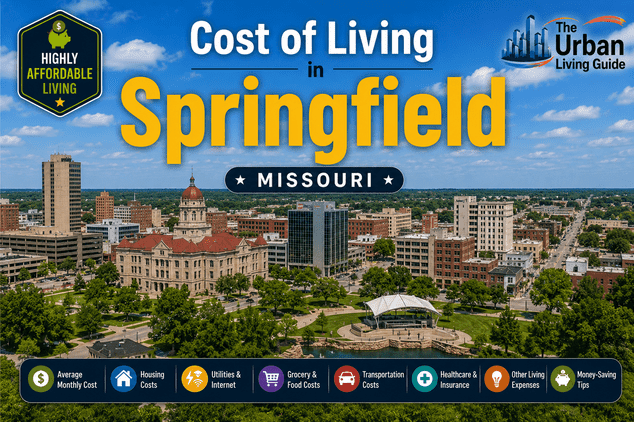
Cost of Living in Springfield, MO: Regional Hub, Affordable Housing & Real Daily Expenses
One of Springfield’s biggest advantages is simple: your money goes further here than it does in most American cities. While many metro areas have seen housing costs climb rapidly, Springfield continues to attract residents looking for affordable homeownership, lower rents, shorter commutes, and a comfortable Midwest lifestyle. It’s one of the reasons families, retirees, remote workers, and relocating professionals continue to put Springfield on their shortlist.
💰 Why people consider Springfield affordable:
-
- 🏠 Housing costs remain well below many national metro averages
- 🚗 Shorter commute times mean lower transportation expenses
- 🛒 Everyday essentials are generally budget-friendly
- 👨👩👧 Family-friendly neighborhoods offer strong value for money
- 🎓 A university presence helps support jobs, culture, and local amenities
- 🏥 Healthcare and education provide stable employment opportunities
That said, not every part of Springfield costs the same. Housing prices and rental rates can vary noticeably between neighborhoods, with areas near Downtown, Southern Hills, and historic districts often commanding higher prices than parts of North Springfield or other budget-focused communities. Understanding these differences is important because housing is typically the largest expense in any household budget.
This guide breaks down the real cost of living in Springfield, Missouri, including housing, utilities, transportation, groceries, healthcare, and other monthly expenses, helping you determine whether the city’s affordability aligns with your financial goals and lifestyle expectations.
Average Monthly Cost in Springfield
Here’s what monthly living typically looks like:
-
- Single person: Around $1,900–$2,500
- Couple: Typically $3,100–$4,100
- Family of four: Approximately $4,600–$6,000
These estimates include rent, utilities, groceries, transportation, and essential expenses. Your actual spending depends on neighborhood and lifestyle choices.
Watch this video to explore Springfield neighborhoods, job markets, and what daily life looks like before making your decision.
Housing Costs in Springfield
Rent here ranks among Missouri’s most affordable:
-
- Studio: Typically $600–$950 depending on area
- 1-bedroom apartment: Averages $750–$1,200, higher near downtown or Millionaires Row
- 2-bedroom units: Range from $950–$1,600, varies by neighborhood condition
- Family homes (3+ bedrooms): Cost $1,200–$1,900 monthly
Downtown Springfield, Millionaires Row, and areas near Springfield-Branson National Airport command higher rents due to newer construction or proximity. Locals often mention that North Springfield, Meadowbrook, South Springfield, and Glendale offer the most space for money while maintaining access to schools and services. If you’re coming from Kansas City, St. Louis, or any coastal city, housing here feels almost shocking in affordability.
The rental market serves families prioritizing savings, young professionals, remote workers from higher-cost areas, and educators working at Missouri State University. Demand stays steady without speculative pressure—this is genuine affordable living, not a transient investment play.
Utilities & Internet
Monthly costs breakdown:
-
- Utilities (electricity, gas, water, trash): $110–$170 for standard apartments
- Internet: $45–$70 for reliable speeds
- Seasonal variations: Summer AC and winter heating both impact bills in four-season climate
Springfield’s moderate size means utility providers offer competitive pricing. Summer heat and winter cold create noticeable seasonal variations.
Grocery & Food Costs
Expect to spend $270–$420 monthly per person on groceries:
-
- Springfield has Hy-Vee, Walmart, Dillons, Schnucks, Save-A-Lot, Aldi
- Dining out: Runs $10–$24 per meal at casual restaurants and chains
- Local food culture: Affordable, family-oriented spots dominate rather than trendy restaurants
- No grocery sales tax: Missouri doesn’t tax groceries
Shopping at Hy-Vee, Walmart, or Aldi keeps costs very low. Springfield’s working-class food culture means good food without premium pricing.
Transportation Costs
Transportation depends on work location and lifestyle:
-
- Car owners: Gas, insurance, and parking average $150–$260 monthly
- Public transit: Springfield-Greene County Transit monthly pass costs $45 for unlimited bus access
- Parking: Free in nearly all neighborhoods; limited paid downtown spots
- Commuting: Most residents drive; public transit has limited coverage
Most Springfield residents drive. Public transit covers basics but isn’t comprehensive. Car ownership is practical for families and anyone outside central corridors.
Healthcare & Insurance
Health insurance and medical expenses:
-
- Employer health insurance: Typically $160–$380 per month for individuals
- Mercy Hospital, CoxHealth, Springfield Clinic serve the region
- Specialist visits and prescriptions: Budget $40–$120 monthly for regular care
Other Living Expenses
Entertainment, gym memberships, phone plans, and personal care add $140–$300 monthly:
-
- Springfield offers Fantastic Caverns, Nathanael Greene Park, Botanical Gardens, Bass Pro Shops
- Many outdoor activities are free or low-cost
- Lake Springfield and Sunshine State Park provide recreation
- Family activities cost less than major metros
Monthly Expense Snapshot
| Expense Category | Single Person | Couple | Family of Four |
|---|---|---|---|
| Rent (1-BR/2-BR/3-BR) | $750–$1,200 | $950–$1,600 | $1,200–$1,800 |
| Utilities | $110–$170 | $120–$180 | $140–$210 |
| Groceries | $270–$420 | $450–$700 | $800–$1,200 |
| Transportation | $150–$260 | $200–$350 | $280–$480 |
| Healthcare (basic) | $40–$120 | $80–$240 | $120–$360 |
| Entertainment/Personal | $140–$300 | $200–$450 | $250–$550 |
| TOTAL (avg monthly) | $1,460–$2,470 | $2,000–$3,520 | $2,790–$4,600 |
Annual & Yearly Expenses
Beyond monthly costs, budget for these regular annual expenses:
Vehicle-Related:
-
- Car insurance: $600–$1,200 yearly (higher if financing)
- Vehicle registration/renewal: $150–$250 yearly
- Maintenance & inspections: Budget $400–$800 yearly (oil changes, tire rotation, inspections)
- Tag renewals: $50–$100 yearly
Insurance & Protection:
-
- Renters insurance: $100–$200 yearly if renting
- Life insurance: $200–$600 yearly if applicable
- Homeowners insurance: $600–$1,400 yearly if purchasing
Subscriptions & Memberships:
-
- Streaming services/subscriptions: $200–$400 yearly
- Gym membership: $300–$600 yearly (if not included with employer)
- Memberships (libraries, parks): Usually free to minimal cost
Professional/Administrative:
-
- Vehicle inspection: $20–$40 yearly
- Annual healthcare checkups: $100–$300 (if not covered by insurance)
- Tax preparation: $100–$300 if using professional services
Typical Yearly Non-Housing Expenses: $2,500–$5,000 depending on vehicle ownership and insurance coverage
Is Springfield Expensive or Affordable?
Springfield falls into the very affordable category for American cities. It’s cheaper than Kansas City, St. Louis, Columbia, and virtually every other mid-sized American metro. Housing is genuinely low-cost, and annual expenses stay manageable. Why? The city hasn’t experienced real estate speculation; it’s a practical, working city with stable prices and no artificial demand pressure.
Overall, this city works exceptionally well for families on modest budgets, young professionals, single parents, retirees on fixed income, and anyone prioritizing financial breathing room over trendy amenities. This is where affordability meets livability without compromise.
👤 Who Can Afford to Live Comfortably
A household income around $40,000–$55,000+ makes Springfield comfortable. Healthcare workers, educators, government employees, manufacturing workers, and families with modest dual incomes handle costs easily. Remote workers earning higher wages find Springfield extremely affordable.
⚠️ Who May Find Springfield Challenging
Even single earners making $28,000–$35,000 can find workable housing in Springfield—it’s that affordable. The challenge isn’t cost; it’s job availability and career growth. Low wages and limited high-paying job options mean you need either remote work, specialized skills, or willingness to accept local job market realities.
Money-Saving Tips
-
- Rent in North Springfield, Meadowbrook, South Springfield, or Glendale
- Shop at Aldi, Walmart, or Save-A-Lot for lowest grocery costs
- Use Springfield-Greene County Transit for local trips
- Take advantage of free parks and outdoor recreation—Nathanael Greene Park, Lake Springfield
- Eat at family-oriented local spots, not trendy restaurants
- Cook at home; dining out frequently increases costs
- Bundle insurance policies for discounts
- Maintain vehicle regularly to avoid expensive repairs
FAQs
Is Springfield cheaper than Kansas City or St. Louis?
Yes, Springfield costs 15–25% less than both Kansas City and St. Louis. Housing and overall living expenses are noticeably lower, making it Missouri’s most affordable mid-sized city.
What salary do I need to live comfortably in Springfield?
A household income of $40,000–$55,000+ covers rent, utilities, food, and lifestyle comfortably. Single individuals can manage on $28,000–$38,000, which is rare for American cities.
Are groceries expensive in Springfield?
Groceries run well below national averages—$270–$420 per person monthly. Shopping at Aldi or Walmart keeps costs very low, and no grocery sales tax helps stretch budgets.
Do I need a car in Springfield?
Yes, car ownership is practical for most residents. Public transit exists but has limited coverage. A vehicle is necessary for work commutes, family activities, and accessing services outside central areas.
How does Springfield compare to other Missouri cities?
Springfield is the most affordable. It costs less than Kansas City, St. Louis, Columbia, Joplin, and every other significant Missouri city while offering similar services and amenities.
Explore more with The Urban Living Guide
Before moving to Springfield, make sure you check: