

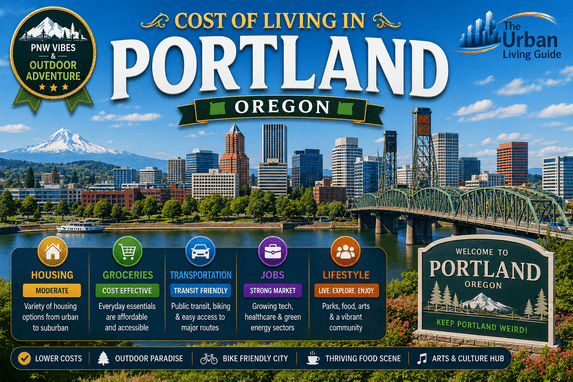
Cost of Living in Portland, OR: Downtown Living, Neighborhood Diversity & Monthly Expenses
Portland mixes urban energy with Pacific Northwest nature, and the cost of living reflects that appeal. This isn’t the budget-friendly city it once was—tech growth, remote workers, and limited housing supply have pushed prices steadily upward. If you’re relocating for work at Intel, Nike, or one of the tech startups, expect costs above the national average but still lower than Seattle or San Francisco.
This guide breaks down real monthly expenses so you can budget accurately. Many people moving to Portland notice that rent in Pearl District, Hawthorne, or near Alberta Arts District runs significantly higher than East Portland or suburbs like Beaverton. The absence of Oregon sales tax helps offset some costs, but housing remains the biggest challenge.
Average Monthly Cost in Portland
Here’s what monthly living typically looks like:
-
- Single person: Around $3,200–$4,100
- Couple: Typically $5,200–$6,500
- Family of four: Approximately $7,800–$9,800
These estimates include rent, utilities, groceries, transportation, and essential expenses. Your actual spending depends on neighborhood choice and whether you’re in inner Portland or outer areas.
Watch this video to explore Portland cost of living, public transit options, and what daily life looks like before making your move.
Housing Costs in Portland
Rent has climbed steadily as tech workers and remote employees compete for limited inventory:
-
- Studio: Typically $1,300–$1,900 in popular neighborhoods
- 1-bedroom apartment: Averages $1,600–$2,400 depending on location
- 2-bedroom units: Range from $2,000–$3,100, higher in Pearl District or Northwest Portland
- Family homes (3+ bedrooms): Cost $2,600–$4,200 monthly
Pearl District, Hawthorne, Alberta Arts District, and Mississippi Avenue command premium pricing due to walkability, restaurants, and cultural amenities. Locals often mention that East Portland, Jade District, Lents, and areas along 82nd Avenue offer more affordable options, though you’ll trade trendiness for space. If you’re coming from California, housing here feels reasonable—Seattle transplants find it comparable or slightly cheaper.
The rental market tightened during the pandemic as remote workers flooded in from pricier West Coast cities. Tech professionals, healthcare workers at OHSU, and young creatives all compete for inventory near transit and walkable neighborhoods.
Utilities & Internet
Monthly costs breakdown:
-
- Utilities (electricity, water, trash, sewer): $140–$220 for standard apartments
- Internet: $60–$85 for reliable speeds
- Winter heating: Mild winters keep heating costs lower than East Coast cities
Portland’s temperate climate means utility bills stay relatively stable year-round, though summer cooling and winter rain increase usage slightly.
Grocery & Food Costs
Expect to spend $380–$550 monthly per person on groceries:
-
- Portland has New Seasons, Trader Joe’s, Fred Meyer, Whole Foods, and numerous farmers markets
- Dining out: Runs $15–$35 per meal at food carts, breweries, or restaurants
- The food scene emphasizes farm-to-table, craft beer, and international cuisine
No sales tax helps grocery and dining costs, but restaurant-quality expectations and organic preferences can push spending higher.
Transportation Costs
Transportation varies significantly based on lifestyle:
-
- Car owners: Gas, insurance, and parking average $220–$380 monthly
- TriMet monthly pass: $100 for unlimited bus, MAX light rail, and streetcar
- Biking: Many residents bike year-round; initial bike investment $300–$1,500
- Parking: Downtown and inner neighborhoods often require paid permits or garage spots
TriMet covers Portland Metro well—MAX lines connect to Gresham, Hillsboro, Beaverton, and Portland Airport. Many residents skip car ownership if living near transit, though outer neighborhoods require driving.
Healthcare & Insurance
Health insurance and medical expenses:
-
- Employer health insurance: Typically $220–$480 per month for individuals
- OHSU, Legacy Health, and Providence anchor regional healthcare
- Specialist visits and prescriptions: Budget $60–$160 monthly for regular care
Other Living Expenses
Entertainment, gym memberships, phone plans, and personal care add $240–$450 monthly:
-
- Portland offers Forest Park, Powell’s Books, breweries, music venues, and art galleries
- Many outdoor activities—hiking, cycling, rivers—are free or low-cost
- Families should budget for childcare, which runs high in desirable neighborhoods
Cost Comparison with Nearby Cities
| Expense Category | Portland | Eugene | Salem | Gresham | Hillsboro |
|---|---|---|---|---|---|
| 1-BR Rent | $1,600–$2,400 | $1,200–$1,800 | $1,100–$1,600 | $1,300–$1,900 | $1,400–$2,000 |
| Groceries (monthly) | $380–$550 | $330–$490 | $320–$480 | $360–$530 | $370–$540 |
| Transportation | $220–$380 (or $100 TriMet) | $180–$320 | $170–$300 | $200–$350 | $210–$360 |
| Overall Affordability | High cost | Moderate | Moderate-low | Moderate | Moderate-high |
Portland runs significantly higher than Salem or Eugene but offers better job markets and cultural amenities. Gresham and Hillsboro cost less while maintaining TriMet access to Portland.
Is Portland Expensive or Affordable?
Portland falls into the expensive category for Oregon. It’s not San Francisco or Seattle pricing, but it’s climbed substantially in the past decade. Housing drives costs—limited supply, tech job growth, and desirability keep rents elevated. Why? Urban growth boundaries restrict sprawl, desirable neighborhoods have limited new construction, and demand from tech workers, creatives, and remote employees stays strong.
Overall, this city works well for tech professionals, dual-income households, healthcare workers at OHSU, or those prioritizing urban walkability and culture. Single earners on entry-level salaries struggle without roommates or living in outer neighborhoods.
👤 Who Can Afford to Live Comfortably
A household income around $85,000–$105,000+ makes Portland comfortable. Tech workers at Intel or startups, Nike employees, healthcare professionals, and dual-income couples typically handle costs well. Those with remote work flexibility earning California or Seattle salaries find Portland more affordable.
⚠️ Who May Find Portland Expensive?
Single earners making under $50,000 will feel significant rent pressure, especially living alone in desirable neighborhoods. Service workers, artists, recent graduates, or those in hospitality and retail may struggle without roommates or family support. The cost mismatch hits hardest if you want walkable inner Portland neighborhoods but earn below median income—you’ll need to compromise on location or share housing.
Money-Saving Tips
- Rent in East Portland, Jade District, Lents, or suburbs like Milwaukie
- Shop at Fred Meyer, WinCo, or Trader Joe’s instead of New Seasons
- Use TriMet or bike instead of owning a car
- Take advantage of free outdoor spaces—Forest Park, Waterfront Park, Mt. Tabor
- Cook at home and visit farmers markets for affordable produce
FAQs
Is Portland more expensive than Seattle?
Portland costs less than Seattle overall. Housing runs 15–25% cheaper, though both cities have high West Coast living costs. Portland’s lack of sales tax helps offset some expenses.
What salary do I need to live comfortably in Portland?
A household income of $85,000–$105,000+ covers rent, utilities, food, and lifestyle comfortably. Single individuals should aim for $50,000–$65,000 minimum, depending on neighborhood and lifestyle.
Are groceries expensive in Portland?
Groceries run above national averages—$380–$550 per person monthly. Oregon’s lack of sales tax helps, but organic and local food preferences push costs higher.
Do I need a car in Portland?
Not necessarily. TriMet covers the metro area well, and many neighborhoods are bike-friendly. However, outer areas and families with kids often find cars practical.
How does Portland compare to California cities in cost?
Portland is significantly cheaper than San Francisco, San Jose, or Los Angeles. Housing and overall costs run 30–50% lower, making it attractive to California transplants.
Explore more with The Urban Living Guide
Before moving to Portland, make sure you check: