
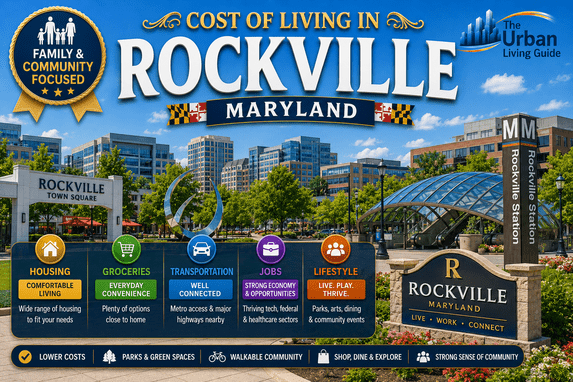
Cost of Living in Rockville, MD: Montgomery County Living, Tech Jobs & Housing Expenses
Rockville sits at the heart of Montgomery County’s economic engine, and that shows up in every expense category. This isn’t a quiet suburb anymore—it’s a tech and biotech hub with direct Metro Red Line access, top-rated schools, and a diverse international community. If you’re relocating for work at NIH, FDA, or one of the biotech firms lining I-270, expect costs that rival parts of D.C. itself.
This guide breaks down actual monthly expenses so you can plan realistically. Many people moving to Rockville notice that rent near Rockville Town Center or Twinbrook Metro is significantly higher than areas further from transit. The combination of federal employees, biotech professionals, and families chasing Montgomery County Public Schools keeps housing demand intense year-round.
Average Monthly Cost in Rockville
Here’s what monthly living typically looks like:
- Single person: Around $3,200–$4,000
- Couple: Typically $5,000–$6,200
- Family of four: Approximately $7,500–$9,500
These estimates include rent, utilities, groceries, transportation, and basic lifestyle costs. Your actual spending depends heavily on proximity to Metro stations and whether you’re in Rockville proper or neighborhoods like King Farm or West End.
Watch this video to explore Rockville neighborhoods, commute options, and what daily life looks like before making your decision.
Housing Costs in Rockville
Rent here reflects Metro access, school quality, and biotech corridor demand. Here’s the breakdown:
- Studio: Typically $1,600–$2,200 near Rockville Town Center or Twinbrook
- 1-bedroom apartment: Averages $1,900–$2,700, higher near Metro stations
- 2-bedroom units: Range from $2,400–$3,400 depending on location and amenities
- Family homes (3+ bedrooms): Cost $3,000–$4,500 monthly, more in sought-after school districts
Rockville Town Center and areas within walking distance of Metro stations command premium pricing. Locals often mention that King Farm, Fallsgrove, and neighborhoods east of I-270 offer more space for the money, though you’ll need a car for daily errands. If you’re coming from Frederick or Baltimore, housing here will feel expensive—but D.C. transplants usually find it comparable or slightly cheaper than Northwest D.C. or Arlington.
The rental market stays tight because NIH, FDA, Astrazeneca, and dozens of smaller biotech firms employ thousands locally. Families also move here specifically for Montgomery County schools, creating year-round competition for single-family rentals.
Utilities & Internet
Monthly costs breakdown:
- Utilities (electricity, gas, water, trash): $160–$240 for standard apartments
- Internet: $65–$95 for reliable high-speed connections
- Winter heating: Can spike bills $40–$60 during colder months
Newer developments near Rockville Town Center and King Farm tend to have better energy efficiency, which keeps utility costs on the lower end.
Grocery & Food Costs
Expect to spend $380–$550 monthly per person on groceries:
- Rockville has Trader Joe’s, Whole Foods, Giant, Safeway, and international markets along Rockville Pike
- Dining out: Runs $15–$35 per meal at spots like Paladar Latin Kitchen, Kappo Nara, or Urban BBQ
- The food scene leans diverse and international, reflecting the area’s Asian and Latin American communities
If you eat out frequently or shop at Whole Foods, expect grocery and dining costs to climb quickly.
Transportation Costs
Transportation depends heavily on your commute:
- Car owners: Gas, insurance, and parking average $220–$380 monthly
- Metro commuters: Monthly Metro pass runs around $240–$280 for regular commuting
- Parking: Downtown Rockville and Town Center offer garages, but spots fill during weekdays
- Public transit: Metro Red Line connects directly to D.C., Silver Spring, and Bethesda—many residents skip car ownership entirely if working downtown
If you’re commuting to NIH, FDA, or Shady Grove, driving is common. Those working in D.C. often Metro in to avoid parking costs and traffic.
Healthcare & Insurance
Health insurance and medical expenses:
- Employer health insurance: Typically $210–$480 per month for individuals, higher for families
- Adventist HealthCare Shady Grove Medical Center and Holy Cross Germantown Hospital serve the area
- Specialist visits and prescriptions: Budget $60–$160 monthly if you have regular healthcare needs
Other Living Expenses
Entertainment, gym memberships, phone plans, and personal care add $220–$420 monthly:
- Rockville Town Center offers shopping, dining, and entertainment
- Lake Needwood, Rock Creek Regional Park, and Cabin John Trail provide free outdoor recreation
- Families with kids should budget for activities, sports, and school-related costs
Cost Comparison with Nearby Cities
| Expense Category | Rockville | Frederick | Gaithersburg | Silver Spring |
|---|---|---|---|---|
| 1-BR Rent | $1,900–$2,700 | $1,400–$2,100 | $1,700–$2,400 | $1,800–$2,600 |
| Groceries (monthly) | $380–$550 | $330–$480 | $350–$520 | $370–$540 |
| Transportation | $220–$380 (or Metro) | $180–$320 | $200–$350 | $240–$400 (or Metro) |
| Overall Affordability | High cost | Moderate | Moderate-high | High cost |
Rockville runs slightly higher than Gaithersburg due to Metro access and school district reputation. Frederick is noticeably cheaper but requires longer commutes. Silver Spring costs about the same, though Rockville offers more suburban space.
Is Rockville Expensive or Affordable?
Rockville falls into the expensive category for Maryland. It’s not quite Bethesda or Chevy Chase pricing, but it’s close. Housing is the main cost driver—Metro proximity, Montgomery County schools, and biotech job concentration all push rents and home prices higher. Why? Limited supply, strict zoning, and continuous demand from well-paid professionals and families mean prices rarely soften.
Overall, this city works best for dual-income households, federal employees, biotech professionals, or families prioritizing school quality. Single earners on entry-level salaries will struggle unless they rent with roommates or live further from transit.
👤 Who Can Afford to Live Comfortably
A household income around $90,000–$110,000+ makes Rockville manageable. Biotech scientists, federal employees at NIH or FDA, IT professionals, and dual-income families typically handle costs comfortably. Those with government housing allowances or relocation packages also find the market accessible.
⚠️ Who May Find Rockville Expensive?
Single earners making under $55,000 will feel significant rent pressure, especially living alone near Metro stations. Service workers, retail employees, recent graduates, or those in lower-wage jobs may struggle without roommates or family support. The income mismatch hits hardest if you want walkable Metro access and top school districts but earn below the median—you’ll need to sacrifice location, space, or both.
Money-Saving Tips
- Rent in East Rockville, Twinbrook, or West End instead of Town Center
- Shop at Giant, Costco, or Aldi rather than Whole Foods
- Use Metro to avoid car ownership costs if working in D.C.
- Cook at home and explore international markets for affordable groceries
- Take advantage of free parks like Lake Needwood and Rock Creek Regional Park
FAQs
Is Rockville more expensive than Washington D.C.?
Rockville costs slightly less than Northwest D.C. neighborhoods like Dupont Circle or Cleveland Park, but it’s close. You’ll save on rent but still face high overall living costs.
What salary do I need to live comfortably in Rockville?
A household income of $90,000–$110,000+ covers rent, utilities, food, and lifestyle comfortably. Single individuals should aim for $55,000–$65,000 minimum, depending on housing and commute.
Are groceries expensive in Rockville?
Yes, groceries run higher than Maryland averages—$380–$550 per person monthly. Shopping at Giant or Costco helps manage costs, while Whole Foods pushes spending significantly higher.
Do I need a car in Rockville?
Not necessarily. If you work in D.C. and live near Metro stations, many residents skip car ownership. However, if you’re working locally or have kids, a car becomes much more practical.
How does Rockville compare to Bethesda in cost?
Rockville is slightly cheaper than Bethesda. Housing and dining run 10–15% lower, though both are expensive Montgomery County markets with similar quality of life.
Explore more with The Urban Living Guide
Before moving to Rockville, make sure you check: