
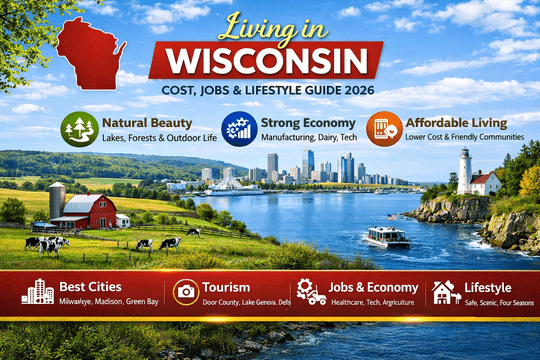
Living in Wisconsin: Milwaukee Jobs, Outdoor Living & Family-Friendly Towns
Wisconsin, located in the Midwestern United States, is known for its natural beauty, affordable living, and strong manufacturing and agricultural economy. The state offers a balanced lifestyle with access to both urban cities and peaceful rural areas.
If you’re considering Living in Wisconsin, it provides good opportunities in manufacturing, healthcare, agriculture, education, and tourism. Cities like Milwaukee, Madison, and Green Bay are key economic hubs.
Compared to states like Minnesota, Wisconsin offers a slightly lower cost of living and more affordable housing, making it attractive for families and budget-conscious individuals. However, it shares similar weather conditions, including cold winters.
Many people choose Wisconsin because of its low expenses, strong community culture, and access to nature, making it ideal for long-term living.
What Makes Wisconsin Unique
Wisconsin is known for its lakes, forests, and farmland, along with its strong dairy industry, earning it the nickname “America’s Dairyland.” The state is bordered by Lake Michigan and Lake Superior, giving it access to beautiful waterfront areas.
Culturally, Wisconsin is famous for its friendly communities, sports culture, and festivals. Cities like Milwaukee are known for brewing history, while Madison offers a more progressive and academic environment.
Unlike many states, Wisconsin combines industrial strength with natural beauty, offering a balanced lifestyle between work and leisure.
🗺️ Explore the map of Wisconsin to understand its regions and geography
Location, Geography & Climate
Wisconsin has a humid continental climate, which means:
-
- Cold, snowy winters
- Warm summers
- Pleasant fall seasons
Northern regions are more forested and colder, while southern areas are more urban and agricultural. Weather plays an important role in lifestyle decisions here.
Top Cities in Wisconsin
-
- Milwaukee – The largest city, known for manufacturing, healthcare, and lakefront lifestyle.
- Madison – The capital city, known for education, tech growth, and high quality of life.
- Green Bay – Smaller city with strong community culture and sports presence.
- Kenosha – Affordable city with proximity to Chicago.
- Appleton – Growing city with a family-friendly environment.
Tourism, Attractions & Things to Do in Wisconsin
Wisconsin offers a mix of outdoor and cultural attractions:
-
- Wisconsin Dells – Water parks and tourism
- Door County – Scenic coastal area
- Lake Michigan Shoreline – Beaches and relaxation
- Devil’s Lake State Park – Hiking and nature
- Milwaukee Riverwalk – Urban attraction
The state is known for its lakes, parks, and seasonal tourism.
Cost of Living in Wisconsin
The cost of living in Wisconsin is moderate and lower than the national average. Housing is affordable, especially outside major cities like Madison.
Compared to Illinois, Wisconsin offers lower housing costs and overall living expenses.
This makes it a budget-friendly state with good quality of life.
Job Market & Economy
Wisconsin has a stable economy driven by:
- Manufacturing
- Healthcare
- Agriculture
- Education
The job market is steady, with consistent demand in essential industries.
Major Industries & Economic Strength
Wisconsin leads in:
- Dairy and agriculture
- Manufacturing and machinery
- Healthcare services
Compared to many states, Wisconsin has a traditional but stable economic structure.
Rural Living in Wisconsin
Rural Wisconsin offers peaceful living surrounded by farmland, forests, and lakes. Agriculture plays a major role, especially dairy farming.
Living costs are low, making it ideal for families, retirees, and remote workers.
Pros:
- Very affordable housing
- Quiet and safe environment
- Strong sense of community
Cons:
- Limited job opportunities
- Harsh winters
- Limited access to advanced healthcare in remote areas
Top Counties in Wisconsin
-
- Milwaukee County – Economic hub
- Dane County – Madison region and education center
- Brown County – Green Bay area
- Kenosha County – Near Illinois border
- Outagamie County – Appleton region
Infrastructure & Connectivity
Wisconsin has solid transportation infrastructure, especially around Milwaukee and Madison. Most residents rely on personal vehicles for daily commuting outside major urban areas.
- Major highlights include:
- Interstate highways like I-94 and I-90
- Airports in Milwaukee and Madison
- Strong regional road connectivity
Government, Safety & Policies
Wisconsin is known for stable governance, moderate taxes, and generally safe suburban and rural communities. The state maintains a balanced Midwest economic environment.
- Wisconsin is recognized for:
- Stable public services
- Family-friendly suburban areas
- Manufacturing and healthcare economy
Lifestyle & Culture
Living in Wisconsin offers a relaxed Midwest lifestyle centered around community, outdoor recreation, and seasonal traditions.
- Wisconsin is popular for:
- Lakes and outdoor activities
- Sports and local festivals
- Slower-paced family living
Education & Healthcare
Wisconsin has respected universities and reliable healthcare systems, especially in larger cities. Access is strongest around major metro regions.
- Major institutions include:
- University of Wisconsin–Madison
- Regional healthcare networks
- Strong urban hospital systems
Pros and Cons of Living in Wisconsin
Pros:
- Affordable cost of living compared to many US states
- Strong sense of community and family-friendly environment
- Stable economy with consistent job opportunities in key sectors
- Access to lakes, nature, and outdoor recreation
- Good education system and healthcare access in cities
Cons:
- Long and cold winters which can be challenging for many residents
- Limited public transportation outside major cities
- Slower economic growth compared to high-tech states
- Fewer high-paying job opportunities in some sectors
- Rural areas may lack advanced healthcare and amenities
Who Should Move to Wisconsin
-
- Families looking for affordability and stability
- Retirees seeking peaceful and low-cost living
- Professionals in manufacturing, healthcare, and education
- Remote workers who prefer a quiet lifestyle
Major Companies & Investments
Wisconsin has a stable economy supported by manufacturing, healthcare, and consumer goods industries. The state continues attracting regional investment and long-term business growth.
- Major companies include:
- Kohl’s
- Harley-Davidson
- Johnson Controls
- Northwestern Mutual
Transport & Connectivity (Expanded)
Wisconsin offers strong highway connectivity and regional transportation access, especially around Milwaukee and Madison. Most residents rely on personal vehicles for daily travel.
- Major highlights include:
- Interstate highways like I-94 and I-90
- Airports in Milwaukee and Madison
- Regional rail connectivity in select areas
Final Thoughts
Wisconsin offers a balanced Midwest lifestyle with affordable living, strong community values, and access to natural beauty throughout the state. Many residents choose Wisconsin for its family-friendly suburbs, outdoor recreation, and slower-paced lifestyle compared to larger metro states.
While winters can be long and colder than many parts of the country, the state continues attracting long-term residents because of its stability, lower housing costs, healthcare access, and overall quality of life.
FAQs
Is Wisconsin a good state to live in?
Yes, Wisconsin is considered a good state for those seeking affordability, safety, and a strong community lifestyle. It is especially suitable for families and retirees.
What is the cost of living in Wisconsin?
The cost of living is moderate and generally lower than the national average, particularly for housing and daily expenses.
Which city is best in Wisconsin?
Madison is best for quality of life and education, Milwaukee for job opportunities, and Green Bay for a smaller community lifestyle.
Does Wisconsin have high taxes?
Taxes are moderate, not the lowest but manageable compared to many developed states.
Is Wisconsin safe?
Yes, most areas are safe, especially suburban and rural regions, though safety varies by city.
What jobs are in demand in Wisconsin?
Manufacturing, healthcare, agriculture, and education sectors provide steady job opportunities.
How is Wisconsin weather?
Winters are cold and snowy, while summers are warm and pleasant, offering seasonal variety.