
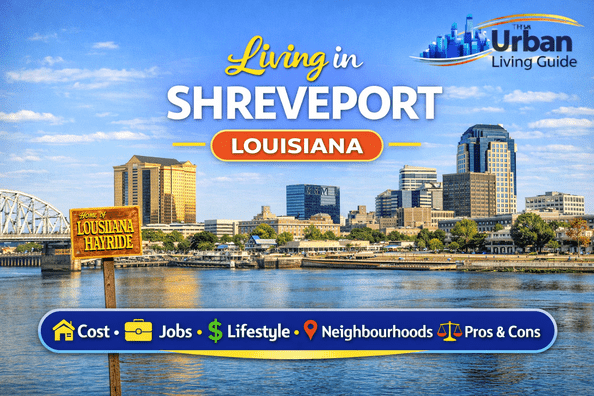
Living in Shreveport, Louisiana: What Life Is Like in the Heart of the Ark-La-Tex Region
Thinking about living in Shreveport? Here’s what you need to know before making the decision. Located in northwestern Louisiana along the Red River, Shreveport is one of the state’s key economic and cultural centers, known for its mix of southern charm and growing urban development.
With a population of around 185,000, Shreveport offers a balance between affordability and city living. The city has historically been a hub for the oil and gas industry, and today it continues to grow in sectors like healthcare, gaming, and logistics.
Many people consider Living in Shreveport, Louisiana because of its low cost of living, spacious housing options, and relaxed lifestyle. The presence of riverfront areas, casinos, and cultural institutions adds variety to daily life.
Watch a recent video by a popular vlogger to understand daily life and vibes in Shreveport.
Information in this guide is compiled from publicly available data, official city resources, economic reports, and local housing databases to ensure accuracy and reliability.
What Makes Shreveport So Unique & Popular
Shreveport stands out for its affordability, riverfront lifestyle, and entertainment options. It offers a slower pace of life while still providing urban conveniences.
-
- Located along the Red River
- Known for riverfront casinos and entertainment
- Affordable housing and living costs
- Growing healthcare and service sector
- Blend of city and small-town lifestyle
Famous Personalities, Sports & Major Brands from Shreveport
Shreveport has contributed to music, sports, and culture over the years.
-
- Huddie “Lead Belly” Ledbetter – Legendary blues musician
- Terry Bradshaw – NFL Hall of Fame quarterback
- Kix Brooks – Country music artist
The city also has a connection to music history through the Louisiana Hayride, a famous radio show.
Best Neighborhoods in Shreveport
Shreveport offers a range of neighborhoods catering to families, professionals, and retirees.
- Broadmoor / Anderson Island
One of the most desirable areas with family-friendly homes and good schools. - South Highlands
Historic neighborhood with beautiful homes and tree-lined streets. - Springlake / University Terrace
Quiet residential area popular with families. - Downtown Shreveport
Offers riverfront access, entertainment, and urban living. - Blanchard (nearby)
Suburban feel with peaceful surroundings and growing development.
👉 If you haven’t come across this city before, the map below gives you a quick view of its location.
Housing & Rent in Shreveport
Shreveport is one of the most affordable cities in Louisiana when it comes to housing.
As of recent housing data (Zillow, RentCafe, Redfin), average rent:
-
- Studio – $700–$900
- 1 Bedroom – $800–$1,100
- 2 Bedroom – $1,100–$1,500
- Family home – $1,800+
Rental figures are based on aggregated listing data and recent market trends.
Job Market & Business Opportunities
Shreveport’s economy is supported by healthcare, gaming, manufacturing, and energy sectors. While oil and gas played a major role historically, healthcare and service industries now dominate.
Major employers include –
- Ochsner LSU Health
- Willis-Knighton Health System
- The casino industry along the riverfront.
Average salaries typically range between $45,000 and $85,000 depending on profession.
Other Major Companies & Headquarters in Shreveport
Shreveport hosts several key employers across industries.
-
- Caesars Entertainment (casinos)
- Regional manufacturing and logistics companies
What It’s Really Like Living in Shreveport, Louisiana
Living in Shreveport offers a relaxed and affordable lifestyle with a strong sense of community. The city is less crowded than major metros, making it appealing for families and retirees.
Residents often spend time near the Red River, visiting casinos, or exploring local parks and restaurants. Living in Shreveport, Louisiana is ideal for those who prefer a slower pace with access to essential city amenities.
Cost of Living in Shreveport
Shreveport is one of the most budget-friendly cities in Louisiana.
-
- Rent – $900–$1,400
- Utilities – $150–$250
- Groceries – $300–$450
- Transportation – $100–$150
- Healthcare – $200–$350
Compared to Baton Rouge or New Orleans, living costs are significantly lower.
Transportation & Commute
-
- Mostly car-dependent
- Limited public transportation
- Average commute time: 15–25 minutes
- Easy road connectivity
Weather & Environment
Shreveport has a humid subtropical climate.
-
- Hot summers
- Mild winters
- Moderate to high rainfall
The Red River and surrounding greenery influence the environment.
Popular Hotels, Cafes & Restaurants
Shreveport offers a mix of southern cuisine and modern dining.
-
- Horseshoe Casino Hotel
- Sam’s Town Hotel & Casino
- Hilton Shreveport
Food options include Cajun dishes, barbecue, and local eateries.
Sightseeing & Attractions
-
- Shreveport Riverfront
- Louisiana Boardwalk Outlets
- Sci-Port Discovery Center
- American Rose Center
- R.W. Norton Art Gallery
Quick Snapshot of Living in Shreveport, Louisiana
-
- Population – ~185,000
- Average Rent – $900+
- Average Salary – $45,000–$80,000
- Commute Time – 15–25 minutes
- Climate – Humid subtropical
Education & Universities
Shreveport offers solid educational institutions.
-
- Louisiana State University Shreveport
- Southern University Shreveport
- Local colleges
Pros and Cons of Living in Shreveport, Louisiana
Pros 🙂
- Very affordable cost of living
- Spacious housing options
- Low traffic and easy commute
- Growing healthcare sector
- Relaxed lifestyle
Cons
- Limited job diversity
- Hot and humid weather
- Less nightlife compared to bigger cities
- Public transport limitations
🌟 Why Many Residents Choose Shreveport for Affordability and Space
Shreveport offers a lower cost of living than many Southern metro areas, making it an attractive option for families, retirees, and professionals seeking more space for their budget. Safety can vary by neighborhood, so researching specific areas is an important part of the relocation process. Many newcomers are drawn to Shreveport for its affordable housing, regional healthcare services, and role as a commercial center for the Ark-La-Tex region.
Many people choose Shreveport for:
-
- Affordable home prices and lower everyday living costs
- Career opportunities in healthcare, energy, logistics, and gaming
- Access to entertainment and casino resorts along the Red River
- Family-friendly suburban communities and residential neighborhoods
- A slower pace of life with less congestion than larger cities
- Its position as the economic hub of the Ark-La-Tex region
👉 For families, retirees, and budget-conscious movers, living in Shreveport, Louisiana can provide a practical balance of affordability, convenience, and long-term value.
FAQs
Is Shreveport expensive to live in?
No, Shreveport is one of the most affordable cities in Louisiana, especially when it comes to housing and daily expenses.
What salary is needed to live comfortably in Shreveport?
A salary of around $45,000 to $80,000 per year is generally sufficient for a comfortable lifestyle.
Is Shreveport a safe place to live?
Safety depends on the neighborhood, with many safe residential areas available.
Is Shreveport family-friendly?
Yes, the city offers affordable housing, schools, and a relaxed environment suitable for families.
Can you live in Shreveport without a car?
A car is recommended as public transportation is limited.
🔗 Explore More Cities in Louisiana
Looking beyond Shreveport? The Urban Living Guide has also covered multiple popular cities across Louisiana that you can explore further:
- Living in New Orleans, Louisiana
- Living in Baton Rouge, Louisiana
- Living in Lafayette, Louisiana
- Living in Lake Charles, Louisiana
Want to learn more about Shreveport? Check out these helpful guides:
- Cost of Living in Shreveport, Louisiana
- Pros and Cons of Living in Shreveport, Louisiana
- Best Neighborhoods in Shreveport, Louisiana
Ready to make your decision? Explore our complete guide here: Moving to Shreveport, Louisiana
These city guides provide detailed insights into everyday living, including housing costs, employment opportunities, neighborhoods, commute options, climate, education, local attractions, and key industries shaping each city.
By bringing all these insights together, The Urban Living Guide helps you compare different cities side by side and choose the one that aligns best with your lifestyle, priorities, and long-term goals.